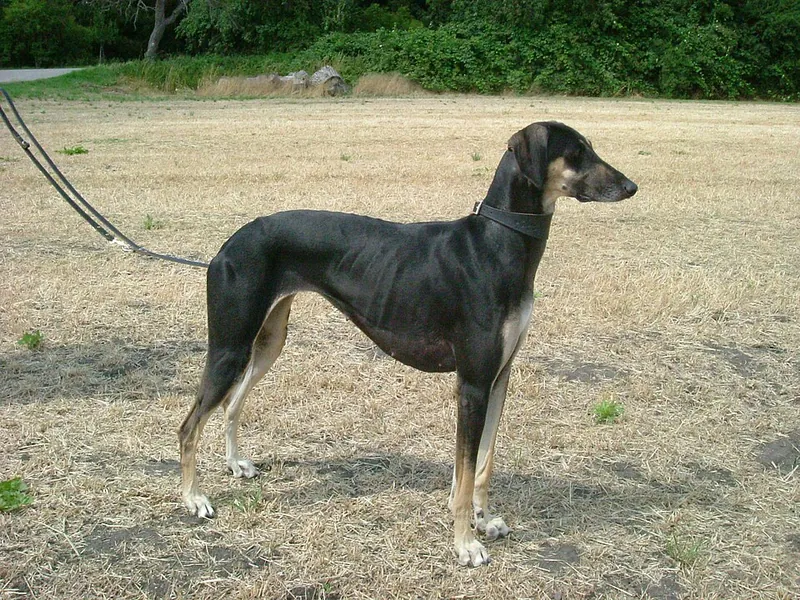
GreyhoundGentle giant of the sighthound world
The Greyhound is the classic sighthound: tall, lean and capable of bursts above 40 miles per hour, yet famously calm and sleepy indoors. Many people meet the breed through retired racing dogs, which often make quiet, affectionate pets for homes that can manage their strong chase instinct.
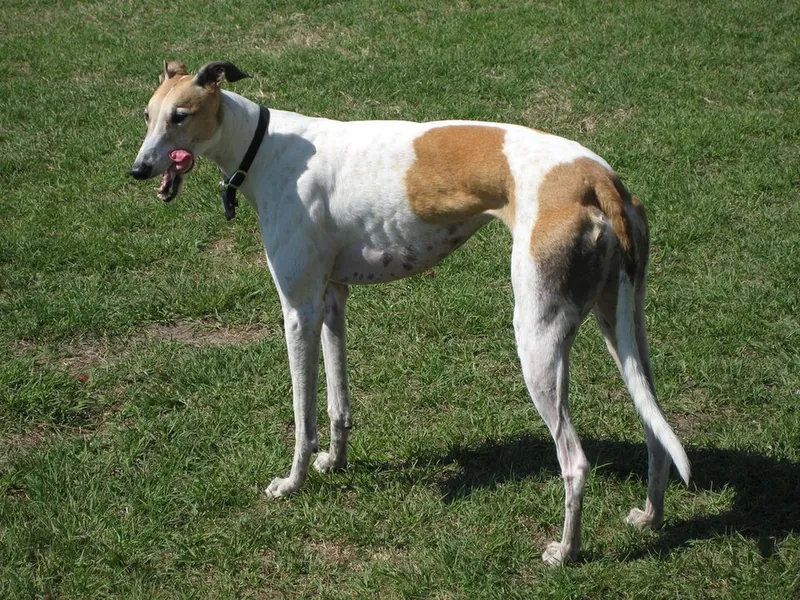
Why people love the Greyhound
- Calm, quiet and content to nap much of the day
- Retired racers widely available through adoption groups
- Short coat sheds lightly and needs minimal grooming
- Gentle and polite with people, rarely barks
- Moderate exercise needs despite enormous speed
Things to consider
- Very strong chase instinct around cats and small pets
- Recall unreliable, needs leash or secure fencing outside
- Thin skin and little body fat, needs coats and padding
- Prone to dental disease, needs regular tooth care
- Some anesthetics and lab values need a breed-aware vet
Is this breed right for you?
10 questions · live resultHistory and Origin
Dogs of Greyhound type appear in art from the ancient Near East and Egypt, though modern DNA studies show today's breed was shaped mainly in Britain. In medieval England, Greyhounds were prized by the nobility for coursing hare and deer, and forest laws at times restricted who could own them.
Formal coursing clubs developed in the 1700s, and oval-track racing with a mechanical lure followed in the early 1900s. As a result, the breed divided into racing lines, registered with greyhound racing bodies, and show lines, which are typically taller and deeper-chested. Both the AKC and The Kennel Club place it in the Hound group.
Size, Build and Coat Colors
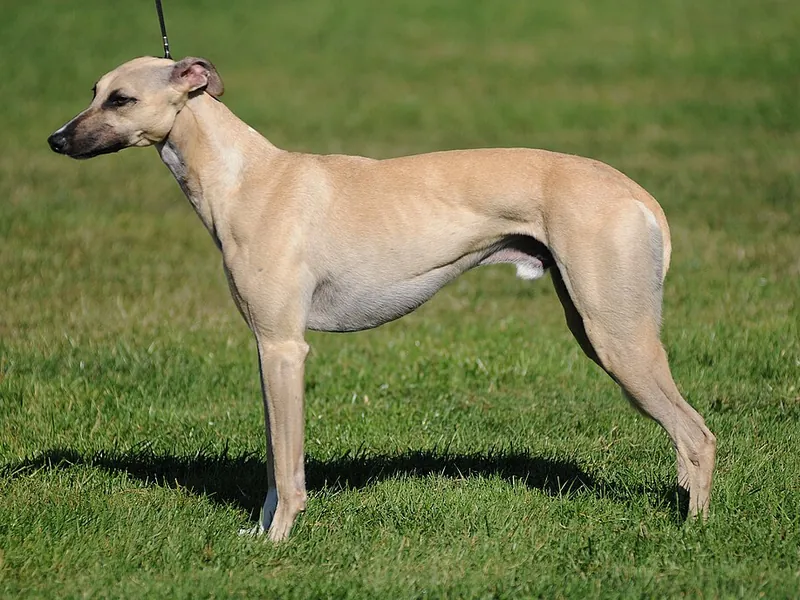
The Greyhound is a tall, streamlined sighthound standing 27 to 30 inches at the shoulder and weighing 60 to 70 lb. It has a long, narrow head, a deep chest with plenty of heart and lung room, a strongly arched loin and long, muscular hindquarters built for explosive acceleration.
Males are larger and heavier than females, typically by several inches and around 5 to 10 lb. Show-line Greyhounds registered with the AKC tend to be taller and more angulated, while racing-line dogs are usually more compact and heavily muscled.
The coat is short, smooth and firm, lying close to thin skin. The AKC standard says color is immaterial, so you will see:
- Brindle in many shades
- Solid black, red, fawn and blue
- White, or any color with white markings
Black and brindle are the most common colors among retired racers. Many Greyhounds also have bald patches on the thighs, a common, usually harmless trait in the breed.
Temperament and Personality
Greyhounds are gentle, sensitive and generally quiet. Many sleep for much of the day and enjoy soft bedding, as their bony frames make hard floors uncomfortable. They tend to be polite with strangers and are not reliable guard dogs.
Their prey drive is very strong. Small dogs, cats and wildlife can trigger chasing, so rescue groups often test ex-racers for cat compatibility before placement. Some retired racers have never lived in a house and need time to learn about stairs, glass doors and household noise.
They are emotionally sensitive and may become anxious if left alone for long periods, especially early on.
Are Greyhounds Good Family Dogs?
Yes, Greyhounds are often excellent family dogs for calm households. They are gentle, rarely snappy and happy to spend most of the day resting, which suits families who want a relaxed companion rather than a playmate for rough games.
A few points help things go well:
- Teach children to let a sleeping Greyhound rest; some dogs startle when woken
- Supervise toddlers, as a large dog can knock them over
- Manage small pets carefully because of prey drive
Adoption groups match ex-racers to families and can recommend dogs already known to be easygoing with children.
Do Greyhounds Bark a Lot?
No, Greyhounds are one of the quieter large breeds. Most bark rarely and are not reliable watchdogs, although they may give a short alert when someone comes to the door.
Retired racers sometimes whine or vocalize while settling into a home, especially when left alone in the first weeks, since kennel life is very different from a house. Some also make a distinctive "roo" sound, a kind of group howl, when excited or in the company of other Greyhounds. Barking that persists usually signals boredom or separation stress rather than a breed trait, and it tends to fade as the dog settles into a routine.
Can Greyhounds Be Left Alone?
Many adult Greyhounds can be left alone for a normal workday once settled, because they sleep so much. New adoptees are different: racing dogs have lived surrounded by other dogs and people, so being alone in a house can feel strange.
To build confidence:
- Start with very short absences in the first days
- Give a quiet space with a thick, padded bed
- Offer a long-lasting chew when you leave
- Walk before departures so the dog is ready to rest
Some Greyhounds settle faster with another calm dog at home. Ask your adoption group about each dog's history with being alone.
Exercise and Training
Despite their speed, Greyhounds are sprinters, not endurance dogs. Two walks a day plus the occasional chance to run in a fully enclosed area are usually enough.
- Keep them on leash in unfenced areas; recall is unreliable once they lock onto movement.
- Use a martingale collar or a well-fitted harness, since the head is narrower than the neck.
- Avoid strenuous exercise in heat; Greyhounds can overheat and some develop exercise-related muscle damage.
- Train with patience and rewards. They learn readily but switch off under pressure.
Grooming and Shedding
The short, smooth coat needs only a weekly going-over with a rubber brush, and Greyhounds shed lightly. They have very little body fat and thin skin, so they need a coat in cold or wet weather and padded bedding to prevent pressure sores.
Dental care deserves special attention. Greyhounds are prone to gum disease, so daily tooth brushing and regular dental checks are worthwhile.
Feeding and Nutrition
Greyhounds should look lean, with the last two or three ribs and the hip bones faintly visible. A Greyhound at a healthy weight often looks too thin to owners of other breeds, so ask your vet rather than adding food to cover the ribs.
Retired racers frequently gain weight after leaving the track because their activity drops sharply. Weigh monthly in the first year at home and adjust portions as needed.
Bloat is a risk because of the deep chest:
- Feed two meals a day rather than one large one
- Rest for an hour before and after exercise
- Raised bowls are a personal choice; discuss them with your vet
Dental disease is common in the breed, so chew items suited to the dog's size and daily tooth brushing support oral health. Some Greyhounds have sensitive stomachs and loose stools when food changes suddenly, so switch gradually over a week or more. Use small, low-fat treats for training.
| Adult weight | Less active | Typical adult | Very active |
|---|---|---|---|
| 60 lb | 1,170 kcal | 1,330 kcal | 1,670 kcal |
| 70 lb | 1,310 kcal | 1,500 kcal | 1,870 kcal |
Estimates use the resting energy formula veterinarians work with (70 × body weight in kg0.75) and standard activity factors. Use the feeding guide on your food as a starting point and adjust to body condition. Puppies, seniors, pregnant animals and pets that need to lose weight have different needs, so ask your vet.
Health and Lifespan
Greyhounds typically live 10 to 13 years. Health concerns include bloat (gastric dilatation-volvulus) because of the deep chest, periodontal disease, osteosarcoma (bone cancer), progressive retinal atrophy and von Willebrand disease, a bleeding disorder. They are sensitive to heat and can suffer exertional muscle damage.
Sighthound physiology differs from other breeds: normal blood values can look abnormal on standard reference ranges, and they handle some anesthetics differently. A vet familiar with the breed is a real advantage.
Greyhound Price and Cost of Ownership
Typical breeder price in the US$1,500 to $2,500
Most Greyhounds in the US are adopted, not bought. Adoption groups place retired racing dogs for a fee that usually covers spay or neuter, vaccinations, dental work and a health check. With commercial racing now banned in most US states, fewer ex-racers are available, and some groups import dogs or have waiting lists.
Puppies from AKC show-line breeders are rare and typically cost about $1,500 to $2,500, though prices vary by breeder, region and lines.
Breed-specific ongoing costs include:
- Professional dental cleanings, often needed more frequently than in other breeds
- Coats and padded beds for thin skin and low body fat
- Martingale collars and secure fencing
- A vet familiar with sighthound anesthesia and bloodwork
Insurance is worth considering because of osteosarcoma and bloat risk.
Is the Greyhound Right for You?
A Greyhound suits people who want a calm, low-maintenance companion and can keep it leashed or fenced outdoors. Many adapt well to apartment life thanks to their quiet nature.
It is less suited to homes with small pets that cannot be managed safely, owners wanting an off-leash hiking partner, or households where the dog would be alone all day.
Greyhound Traits at a Glance
Greyhound FAQ
Are Greyhounds good apartment dogs?
Often, yes. They are quiet and spend much of the day resting, provided they get regular walks and occasional safe running.
How big do Greyhounds get?
Greyhounds usually stand 27 to 30 inches at the shoulder and weigh about 60 to 70 lb.
Can retired racing Greyhounds live with cats?
Some can. Adoption groups often assess each dog with cats before placing it, and introductions should be careful and supervised.
How fast can a Greyhound run?
Greyhounds can reach speeds of around 40 to 45 miles per hour over short distances.
Do Greyhounds need a lot of exercise?
Less than many expect. Two daily walks plus occasional sprints in a fenced area usually suffice.
How long do Greyhounds live?
Most Greyhounds live 10 to 13 years.