PorcelaineThe glossy white hound of Franche-Comté
The Porcelaine is a graceful French scenthound named for its shining white coat, which can look like fine china. It is affectionate and good with children, but it is a passionate hunter with a ringing voice and real exercise needs.
Why people love the Porcelaine
- Gentle, affectionate and good with children
- Sociable with other dogs
- Very low-maintenance short coat
- Relatively healthy breed with no listed hereditary diseases
- Calm and soft-natured at home
Things to consider
- Loud, melodious bay when on scent
- Strong prey drive toward cats and small pets
- Unreliable off-leash around scent
- Thin coat offers little protection from cold or sun
- Rare in the US
Is this breed right for you?
10 questions · live resultHistory and Origin
The Porcelaine is considered one of the oldest French scenthounds. It comes from the Franche-Comté region near the Swiss border and is thought to descend from old French pack hounds, possibly including the extinct Montembœuf hound, along with Swiss hounds from across the border.
Like many French hounds, it almost disappeared after the French Revolution, when aristocratic packs were broken up. Breeders in France and Switzerland kept the type going, and it was reestablished in the 19th century. The breed is used mainly for hare and roe deer and is recognized by the FCI in Group 6. In the US it is part of the AKC Foundation Stock Service.
Size, Coat and Colors
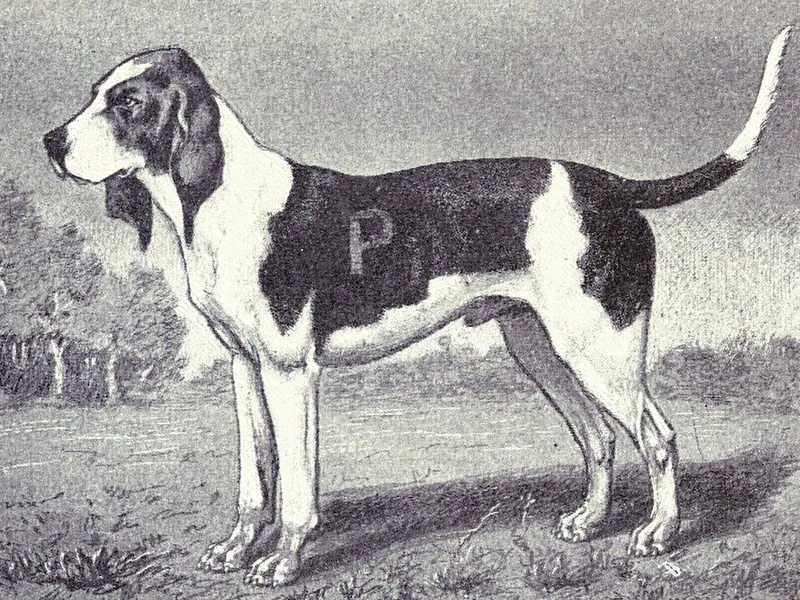
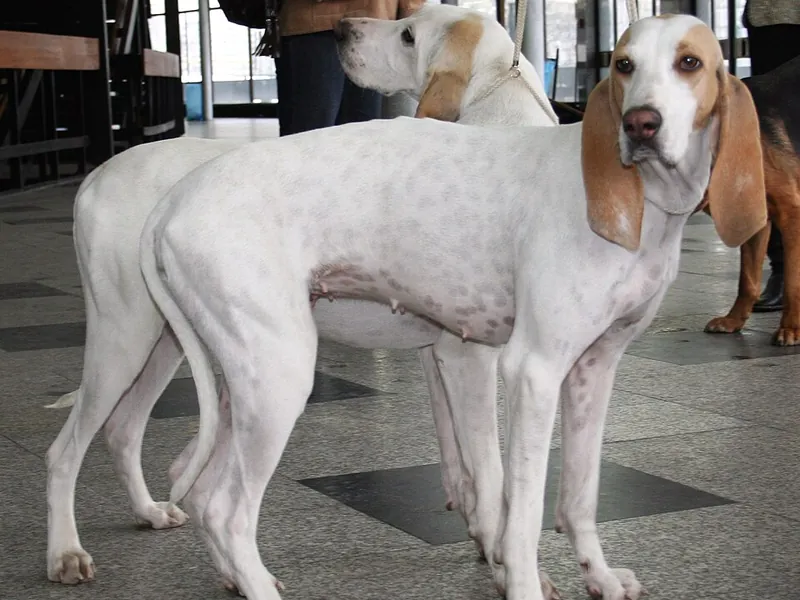
The Porcelaine is a medium-to-large, elegant scenthound with a fine, lean build. Dogs stand about 22 to 23 inches at the shoulder and weigh around 55 to 62 lb. Males are slightly taller and more substantial than females, though the difference is modest.
The head is long and fine, with a slightly domed skull and a straight, long muzzle. The ears are thin, fine and set low, hanging in a slight curl and reaching toward the nose. The eyes are dark and gentle. The chest is deep, and the tail is long and fine, carried in a gentle curve.
The coat is short, fine and glossy, giving the breed its name.
Accepted colors are:
- White base
- Orange spots, usually round and not merging into large patches
- Orange markings on the ears
The overall impression is of a refined, athletic hound with a polished appearance and a clear, ringing voice in the field.
Temperament and Personality
At home Porcelaines are typically gentle, affectionate and good with children. They are sociable pack hounds that usually enjoy canine company. Strangers are generally met calmly rather than with suspicion.
Outdoors the picture changes. The Porcelaine is an energetic, persistent hunter with a strong prey drive and a melodious but loud voice when on scent. Cats and small pets may be seen as quarry unless the dog has grown up with them.
Porcelaines tend to be soft-natured with their own people and can be a little sensitive to harsh voices. Many enjoy lounging on a sofa after a long day outside, and they often form close bonds with every family member rather than a single person.
Are Porcelaines Good With Cats?
Porcelaines are not a natural match for cats. They were bred to hunt hare and roe deer, and their prey drive is strong.
A puppy raised with a confident cat may accept it, but many still chase cats outdoors or unfamiliar animals. Introductions should be slow and supervised, with escape routes and dog-free areas for the cat. Homes with rabbits, poultry or other small animals should keep them securely separated. If you already have a cat, consult the breeder about the dog's background.
Are Porcelaines Easy to Train?
Porcelaines are moderately easy to train. They are gentle and willing at home, but scent can distract them quickly, especially outdoors.
Use consistent, positive training with high-value food rewards. Harsh methods tend to make this sensitive hound withdraw. Basic manners and house training are usually manageable. Recall is the hardest skill, so practice it in fenced areas and on long lines, and accept that it may fail when the dog catches a strong scent. Scent work and tracking are excellent outlets that build cooperation.
Can Porcelaines Be Left Alone?
Porcelaines can handle short absences, but long periods alone do not suit them. They are sociable pack hounds that prefer company.
A lonely Porcelaine may bay, dig or try to escape, which can disturb neighbors. Build alone time gradually with chews and puzzle feeders after exercise. Many do better with a second dog, given their pack background. For long workdays, a dog walker or daycare is a good solution. Its melodious bay carries a long way, so a lonely hound in a suburban yard is likely to draw complaints. Signs of stress include baying at the door, pacing and digging along the fence line.
Exercise and Training
Expect to provide at least an hour or two of activity per day, including long walks and chances to follow scent. Tracking games, mantrailing or hunting where legal give this hound a sense of purpose.
Training should be consistent and gentle. Porcelaines are sensitive and do not respond well to harshness, but they can be distracted by scent. Use high-value rewards and train recall in fenced areas and on long lines. A bored, under-exercised Porcelaine may bay, dig or roam.
A secure garden with a solid fence is a real asset, since a Porcelaine that catches the scent of a hare may try to follow it. Walks in varied countryside, where the dog can read the ground with its nose, are far more satisfying for this breed than laps of the same block.
Grooming and Shedding
The fine, short, glossy coat is very low maintenance. A weekly rub with a hound glove keeps it shining. The coat is white with orange spots, and the ears often carry orange markings.
The long, thin ears need weekly checks for dirt and infection. White, thin-coated dogs can sunburn on sparsely haired areas, so provide shade on bright days. Trim nails and brush teeth regularly.
Feeding and Nutrition
The Porcelaine is a lean, athletic hound, and its food needs follow its activity. Dogs hunting or tracking regularly need more than family companions with daily walks. Adjust portions to body condition, aiming for easily felt ribs and a visible waist.
Hounds are often keen eaters. Measure meals, secure food and trash, and avoid free feeding to prevent weight gain.
As a deep-chested hound, it benefits from two meals a day with rest before and after strenuous activity, which lowers the general risk of bloat.
The thin coat offers little insulation, so dogs living or working outdoors in cold weather may need more food to maintain condition.
Young dogs should grow steadily on a diet suited to their adult size, with no forced long runs before growth is complete.
Food rewards are very effective for recall and scent training. Use small, high-value treats and count them in the daily ration.
| Adult weight | Less active | Typical adult | Very active |
|---|---|---|---|
| 55 lb | 1,090 kcal | 1,250 kcal | 1,560 kcal |
| 62 lb | 1,200 kcal | 1,370 kcal | 1,710 kcal |
Estimates use the resting energy formula veterinarians work with (70 × body weight in kg0.75) and standard activity factors. Use the feeding guide on your food as a starting point and adjust to body condition. Puppies, seniors, pregnant animals and pets that need to lose weight have different needs, so ask your vet.
Health and Lifespan
The Porcelaine is regarded as a relatively healthy breed, and breed authorities do not list specific hereditary diseases. Typical lifespan is around 12 to 13 years.
General care points for this type of hound are ear hygiene, maintaining a lean weight and checking for injuries after running in rough country. Ask breeders about the health of the parents and any screening they carry out.
Porcelaine Price and Cost of Ownership
The Porcelaine is rare in the US, and there is no reliable published price range. A small number of breeders exist in North America, and some dogs are imported from France. Prices vary by breeder, region and lines, and imports add transport and paperwork costs.
Rescue options are very limited, but hound rescues occasionally take in similar dogs.
Ongoing cost drivers include:
- Secure fencing for a scenthound
- GPS tracking collar for off-leash work
- Sun protection and coats for the thin white coat
- Ear care for long, thin ears
- Insurance covering injuries and general conditions
Expect to budget for travel if you need to visit breeders, since the few US litters are spread widely.
Is the Porcelaine Right for You?
The Porcelaine suits active, patient owners, ideally with rural access, a fenced yard and a tolerance for hound music. It works well in homes with other dogs and considerate children.
- Good match: hunters, scent sport fans, families who walk and hike a lot.
- Less ideal: apartments, homes where the dog would be alone all day, owners who want off-lead reliability.
Porcelaine Traits at a Glance
Porcelaine FAQ
Why is it called a Porcelaine?
The name refers to its very fine, shiny white coat, which is said to resemble porcelain.
How big do Porcelaines get?
They stand roughly 22 to 23 inches at the shoulder with a lean, elegant build.
Are Porcelaines good with kids?
Yes, they are usually gentle and affectionate with children.
Do Porcelaines bark a lot?
They are vocal, especially on a scent trail, with a loud, ringing bay.
How long do Porcelaines live?
Typically about 12 to 13 years.
Is the Porcelaine a good apartment dog?
Usually not. Its exercise needs and loud voice suit a house with a fenced yard and easy access to countryside better than an apartment.