BloodhoundThe world's most famous nose
The Bloodhound is a large, gentle scent hound whose nose is so reliable that its trailing work has helped police and search teams find missing people. At home it is affectionate and easygoing, but its single-minded scenting drive, loud bay and constant drool make it a breed for dedicated owners.
Why people love the Bloodhound
- Gentle, affectionate and tolerant with people
- Outstanding nose for tracking and mantrailing
- Usually friendly with other dogs
- Calm indoors once mature and exercised
- Not a guard dog, welcomes visitors
Things to consider
- Heavy drool on floors, walls and clothes
- Deep bay carries far and can bother neighbors
- Rarely reliable off leash once on a scent
- Bloat risk is high in this deep-chested breed
- Slow to mature and stubborn in training
Is this breed right for you?
10 questions · live resultHistory and Origin
The breed traces back to the hounds kept by monks at the Abbey of Saint-Hubert in the Ardennes region of present-day Belgium, from around the 8th to 11th centuries. Each year the monks sent hounds to the French king, and the dogs spread to England after the Norman Conquest.
The name probably refers to blooded, meaning purebred, aristocratic hounds rather than any thirst for blood. Bloodhounds were used to track deer and boar and, later, people. In the United States, trailing by trained Bloodhounds has long been used in search and rescue and law enforcement.
Size, Coat and Colors
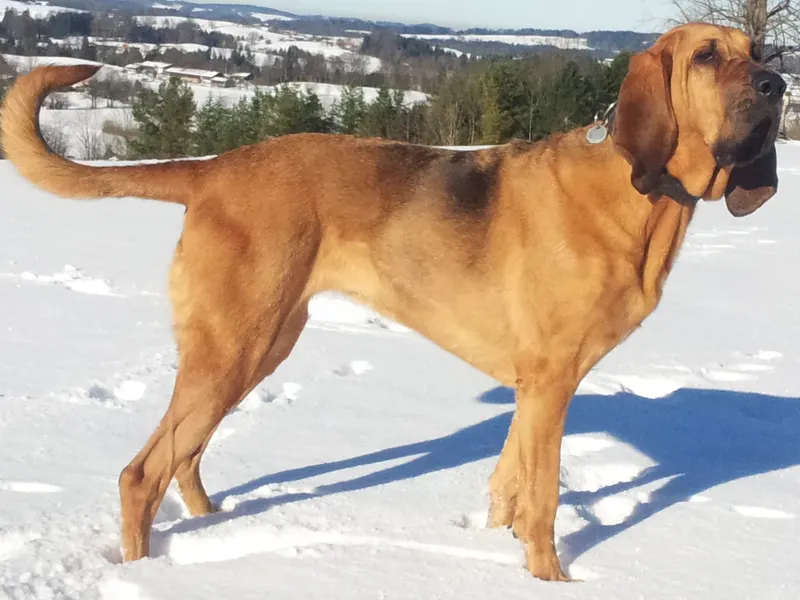
The Bloodhound is a large, powerful hound standing about 24 to 27 inches at the shoulder and weighing roughly 88 to 119 lb. Its trademark features are the loose, thin skin that falls into deep folds around the head and neck, long low-set ears that sweep the ground when it tracks, and deeply sunken eyes with a solemn expression.
The body is long and deep-chested with strong hindquarters built for following a trail for hours. The tail is long and carried high when the dog is working.
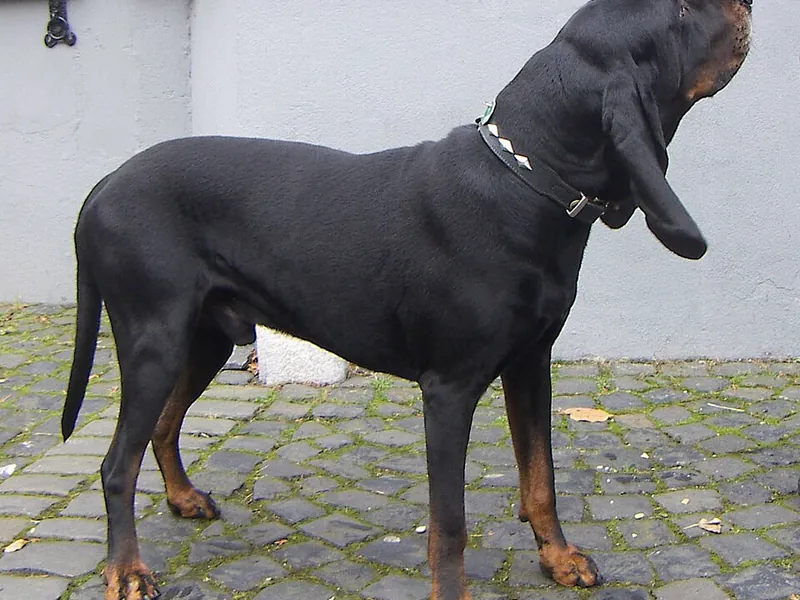
The coat is short, dense and fairly hard on the body, softer on the ears and head. Recognized colors are black and tan, liver and tan and red, with small white marks on the chest, feet and tail tip allowed. Males are noticeably taller and heavier than females, with more skin and larger heads. Responsible breeders avoid exaggerated wrinkles and very loose eyelids, which cause eye and skin problems.
Temperament and Personality
Bloodhounds are affectionate, mild-mannered and usually friendly to people and other dogs. They are not natural guard dogs. They may bay when someone approaches, but they are far more likely to welcome visitors than deter them.
Once they catch a scent, everything else fades. A Bloodhound on a trail ignores calls, traffic and boundaries, so it should be walked on leash or in securely fenced areas. Puppies are large, clumsy and mouthy, which can overwhelm small children.
Bloodhounds are usually patient with other dogs and gentle with children, though they lean, bump and drool on everything. They are sensitive to harsh words and may become stubborn if pressured.
Is the Bloodhound Good for First-Time Owners?
A Bloodhound can work for a first-time owner, but only one who has researched the breed well and has plenty of time and space. Its temperament is gentle and forgiving, which helps beginners, but managing a 100 lb scent hound is a big job.
The challenges are practical rather than behavioral: a puppy that grows into a strong, clumsy adolescent, heavy drool, a loud bay, near-zero off-leash reliability and slow training. Novice owners do best when they join a mantrailing or tracking group, use a sturdy harness and long line from day one, and have a securely fenced yard. Owners who want quick obedience or a tidy home tend to find the breed overwhelming.
Are Bloodhounds Easy to Train?
Bloodhounds are intelligent but not easy to train in the obedience sense. They were bred to follow a scent independently for hours, so everyday cues like recall, stay and loose-leash walking compete with a nose that is always working.
Training goes best when you:
- Use high-value food rewards and short sessions.
- Start leash manners while the puppy is still light enough to handle.
- Practice recall on a long line and never rely on it in open country.
- Expect puppy behavior until two or three years of age.
Scent work is where the breed shines. Most Bloodhounds learn trailing games quickly and with great enthusiasm, and a dog with a regular nose job is usually much more cooperative at home.
Are Bloodhounds Good with Cats?
Many Bloodhounds live peacefully with cats, especially when raised with them from puppyhood. Their prey drive is moderate for a hound, since they were bred to follow a trail rather than chase and catch, and most are too laid-back indoors to harass a resident cat.
The main risks are size and clumsiness. A boisterous young Bloodhound can knock over or frighten a cat without meaning harm. Give the cat high escape routes, a dog-free room and a feeding spot the dog cannot reach. Introductions to an adult dog should be slow and on leash. Outdoor or unfamiliar cats are another matter: a Bloodhound may follow their scent trail eagerly, so secure fencing and leash walks stay important.
Exercise and Training
Adults need at least an hour of exercise daily, including long, sniff-heavy walks. The best outlet is mantrailing or tracking, where the dog follows a specific person's scent. Many clubs offer these sports, and a sturdy harness and long line make trailing practice safe at home.
Bloodhounds are independent and can be stubborn. Training takes patience, food rewards and lots of repetition. They are slow to mature, often staying puppyish until two or three years old. Secure fencing is essential, as they can dig and climb when following a scent.
Grooming and Shedding
The short coat sheds moderately and needs a weekly brush with a hound glove. The real work is in the face: Bloodhounds drool heavily, and their loose skin and long ears trap moisture. Wipe the folds and lips daily and check the ears weekly for odor or redness. Some owners keep a towel handy for after meals and drinks.
Feeding and Nutrition
Bloat (gastric dilatation-volvulus) is a leading cause of death in Bloodhounds, so the feeding routine matters as much as the food. Split the daily ration into at least two or three meals rather than one large one, and keep exercise, excitement and large drinks of water away from the hour before and after eating. If the dog gulps, a slow-feeder bowl helps. Discuss a preventive gastropexy with your vet, often done at spay or neuter.
Puppies grow fast and should be raised on a diet formulated for large-breed growth, with portions that keep them lean. Rapid growth and extra weight both add strain to developing hips and elbows.
- Keep adults lean, with a visible waist under the loose skin.
- Lift and wipe the lips after meals to limit drool and fold irritation.
- Use part of the daily ration as rewards on trailing sessions.
- Store food securely, since Bloodhounds find it by scent.
| Adult weight | Less active | Typical adult | Very active |
|---|---|---|---|
| 88 lb | 1,560 kcal | 1,780 kcal | 2,220 kcal |
| 119 lb | 1,950 kcal | 2,230 kcal | 2,790 kcal |
Estimates use the resting energy formula veterinarians work with (70 × body weight in kg0.75) and standard activity factors. Use the feeding guide on your food as a starting point and adjust to body condition. Puppies, seniors, pregnant animals and pets that need to lose weight have different needs, so ask your vet.
Health and Lifespan
Bloodhounds typically live 8 to 12 years. Key health concerns include:
- Bloat (gastric dilatation-volvulus), a leading cause of death in the breed; learn the signs and discuss prevention with your vet
- Hip and elbow dysplasia
- Eyelid problems such as ectropion and entropion, linked to loose facial skin
- Ear and skin fold infections
The breed standard warns against exaggerated wrinkles and loose eyelids. Choose breeders who avoid excessive skin and screen for hips and elbows.
Bloodhound Price and Cost of Ownership
Typical breeder price in the US$1,000 to $2,500
Bloodhound puppies from reputable US breeders typically cost about $1,000 to $2,500. Prices vary by breeder, region and lines, with dogs from proven working or show lines often at the top of the range. Litters are not always available, so a waiting list is normal.
Breed rescues place adult Bloodhounds, often dogs whose owners underestimated the drool, noise or size, and adoption is a good option for experienced homes.
Ongoing costs reflect a large, deep-chested hound: food for a dog near 100 lb, a vehicle crate, sturdy fencing and a lot of towels. Insurance is worth comparing early because emergency bloat surgery is expensive, and many owners pay for a preventive gastropexy. Budget also for ear and skin-fold treatments, eyelid surgery in some dogs, and hip and elbow care.
Is the Bloodhound Right for You?
Bloodhounds suit patient, active owners with a large, secure yard who can embrace drool and noise. They do best when given scent work. They are not ideal for apartments, close neighbors or people who want reliable off-leash obedience.
Before getting one, consider your neighbors, since the deep bay carries a long way. Also plan for a vehicle with room for a large dog, and floors and furniture that can handle drool.
Bloodhound Traits at a Glance
Bloodhound FAQ
How big do Bloodhounds get?
Adults typically stand 24 to 27 inches tall and weigh about 88 to 119 lb.
Are Bloodhounds good family dogs?
Yes, they are gentle and affectionate, but puppies are boisterous and big. Supervise around small children.
Do Bloodhounds drool a lot?
Yes. Heavy drool is a breed trait due to their loose lips and jowls.
Are Bloodhounds loud?
They can be. Bloodhounds have a deep, carrying bay, especially when excited or on a scent.
Can Bloodhounds be off leash?
Generally not in open areas. Once on a scent, they tend to ignore recall.
How long do Bloodhounds live?
Typically 8 to 12 years.