Polish HoundDeep-voiced scenthound of Polish forests
The Polish Hound, or Ogar Polski, is a sturdy black-and-tan scenthound bred to trail game through Poland's forests with a deep, persistent voice. Calm and affectionate at home and usually easygoing with other dogs, it suits hunters and active rural owners.
Why people love the Polish Hound
- Calm, balanced and affectionate with its people
- Generally friendly with other dogs
- Easy-care, medium-short coat
- Built for endurance on long trails
- Often lives 13 to 14 years
Things to consider
- Deep, carrying bay; vocal on a scent
- Needs long daily walks and regular scent work
- Recall unreliable when tracking
- Howls when bored or left alone
- Very rare; hard to find in the US
Is this breed right for you?
10 questions · live resultHistory and Origin
Hounds of the Ogar type have been used in Poland for centuries to hunt in large forests, trailing deer, wild boar, fox and hare. The breed's development is linked to old European scenthounds, and it became a typical dog of Polish hunting estates.
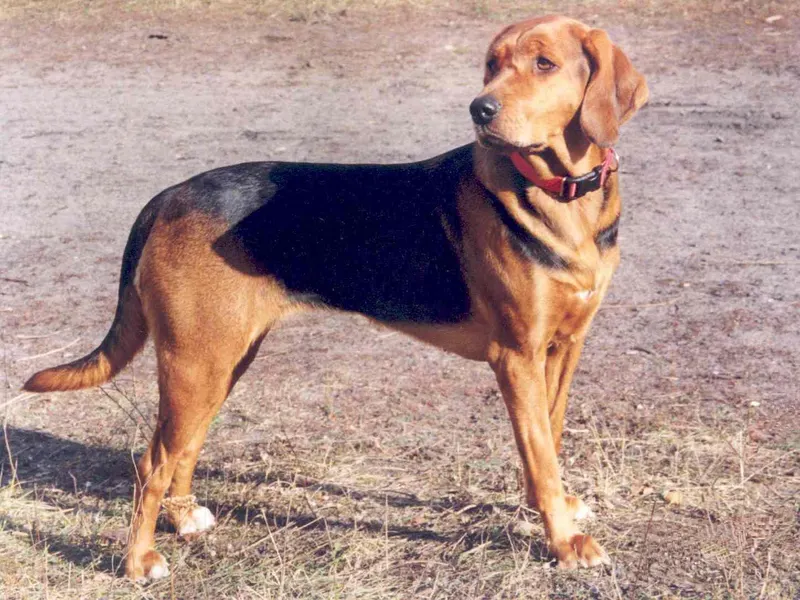
Like many Polish breeds, it almost disappeared after the Second World War. Polish breeders rebuilt it in the following decades, and the FCI recognizes it in Group 6 (scenthounds). It is a solidly built hound of about 22 to 26 inches and roughly 44 to 71 lb, with a black or dark saddle and tan markings.
Size, Coat and Saddle Markings
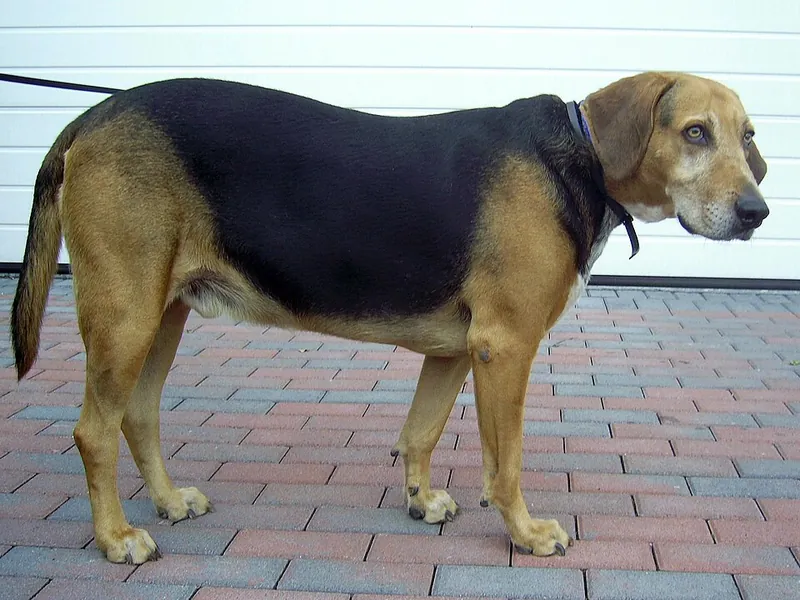
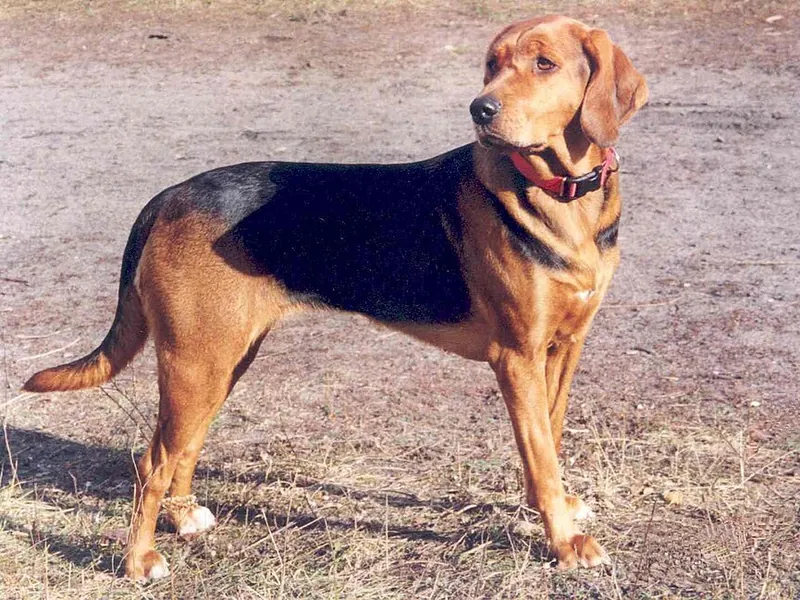
The Polish Hound (Ogar Polski) is a solidly built, heavy-boned scenthound standing about 22 to 26 inches and weighing roughly 44 to 71 lb. Males are larger and more massive than females. The body is rectangular, with a deep chest, strong back and powerful legs, built for endurance rather than speed.
The head is heavy and noble, with a broad skull, pronounced stop and loose lips. Long, low-set drop ears and a slight dewlap give the breed a classic old-world hound look. Eyes are dark brown with a calm expression.
The coat is medium-short, dense and harsh, with a thick undercoat. The standard calls for a black or dark gray saddle (mantle) covering the back and sides, with tan markings on the head, legs and chest. White markings on the chest and toes are allowed. The overall impression is of a sturdy, powerful hunting hound with a deep voice.
Temperament and Personality
The Polish Hound is calm, balanced and affectionate with its people. It is generally friendly and tolerant with other dogs, reflecting its pack-hunting background.
Its passion is the trail. Once on a scent, it works steadily and persistently, giving voice throughout. That deep, carrying bay is one of the breed's trademarks.
Are Polish Hounds Good Family Dogs?
Yes, for active, rural families who can tolerate a vocal dog. Polish Hounds are calm, balanced and affectionate with their people, and they usually get along well with other dogs.
They need long daily walks and regular scent work, and their deep bay can be a problem with close neighbors. Children who are respectful and calm usually do well with the breed. Supervise play with young children, as the dog is solidly built. Homes with cats or small pets need careful management due to the hound's prey drive.
Are Polish Hounds Good for First-Time Owners?
Generally not ideal. Polish Hounds are calm and affectionate, but their exercise needs, independence on a scent and vocal nature require experience with hounds.
First-time owners who are very active, have rural access and are willing to learn about scent work may succeed. Most beginners will find a less driven breed easier. Spending time with adult dogs and talking with breeders before committing is recommended. Joining a tracking or mantrailing group gives a beginner useful guidance and gives the dog the scent work it needs.
Are Polish Hounds Easy to Train?
Moderately easy. Polish Hounds respond well to patient, reward-based methods, but they are independent on a scent and may ignore cues when tracking.
Keep sessions short and positive, and use high-value food rewards. Practice recall in fenced areas or on a long line, since off-leash reliability is hard to achieve. Tracking, mantrailing and hunting are ideal outlets that build a working relationship. Harsh methods tend to make hounds stubborn rather than obedient. Expect slow but steady progress; once a Polish Hound understands a task, it tends to remember it well and works with real persistence.
Exercise and Training
This hound needs long daily walks and regular scent work. It is built for endurance rather than speed and is happiest following a track for a long time.
- Training is moderately easy with patient, reward-based methods.
- Recall is unreliable when it is tracking, so use a long line in unfenced areas.
- Tracking, mantrailing and hunting are ideal outlets.
- It does not like being left alone, and boredom often shows as howling.
Grooming and Shedding
The medium-short, dense coat is easy to keep. Brush weekly to remove dead hair, more often when shedding increases seasonally. The long drop ears need weekly checks and cleaning, especially after time in wet forest or water.
Feeding and Nutrition
Polish Hounds are endurance hounds, and their food needs vary with activity. A dog that hunts or tracks for hours may need considerably more food than a pet with less exercise. Feed a complete diet in two meals a day and keep the dog lean and well muscled.
Like many hounds, they often love food and can gain weight easily if exercise drops. Check body condition regularly by feeling the ribs.
As a medium-large, deep-chested hound, sensible bloat precautions apply: two meals a day and no hard exercise shortly before or after eating.
Food is a strong motivator in training, so use small, high-value treats and count them toward the daily ration. Keep food and trash out of reach, as scenthounds are expert at finding them. Puppies should grow steadily on a diet suited to large-breed growth.
| Adult weight | Less active | Typical adult | Very active |
|---|---|---|---|
| 44 lb | 930 kcal | 1,060 kcal | 1,320 kcal |
| 58 lb | 1,140 kcal | 1,300 kcal | 1,630 kcal |
| 71 lb | 1,320 kcal | 1,510 kcal | 1,890 kcal |
Estimates use the resting energy formula veterinarians work with (70 × body weight in kg0.75) and standard activity factors. Use the feeding guide on your food as a starting point and adjust to body condition. Puppies, seniors, pregnant animals and pets that need to lose weight have different needs, so ask your vet.
Health and Lifespan
Sources do not list breed-specific inherited diseases, although data on the breed is limited. Typical lifespan is about 13 to 14 years. General concerns for a medium-large hound include ear infections, hip dysplasia and weight gain if exercise is insufficient.
Choose breeders who evaluate hips and share health information about the parents.
Polish Hound Price and Cost of Ownership
The Polish Hound is very rare in the US and not recognized by the AKC. Most dogs come from Poland or other European countries. There is no reliable typical US price range. Prices vary by breeder, region and lines, and importing adds transport and paperwork costs. Ask breeders about hip evaluations and health information on the parents.
Rescue dogs of this breed are very rare in the US.
Ongoing costs are moderate. Grooming is minimal. Main cost drivers include secure fencing, long lines, GPS collars and pet insurance for ear infections and injuries in an active hound. Because few vets know the breed, keep good records of the parents' health and share them with your own vet.
Is the Polish Hound Right for You?
The Polish Hound is a good match for hunters and for active rural families who enjoy long walks and can tolerate a vocal dog. It is a poor fit for apartments because of its voice and exercise needs.
- Good fit: hunting households, homes with other dogs, rural properties.
- Poor fit: apartments, close neighbors, long workdays.
Polish Hound Traits at a Glance
Polish Hound FAQ
How big do Polish Hounds get?
They stand about 22 to 26 inches tall and weigh roughly 44 to 71 lb.
Are Polish Hounds good with other dogs?
Usually yes. As pack hounds, they generally get along well with other dogs.
Do Polish Hounds bark a lot?
They are vocal, especially on a scent, with a deep, carrying bay. Boredom can also lead to howling.
How long do Polish Hounds live?
Typically about 13 to 14 years.
Is the Ogar Polski the same as the Polish Hunting Dog?
No. The Polish Hunting Dog (Gończy Polski) is a separate, lighter Polish scenthound. The Ogar Polski is the heavier, deep-voiced Polish Hound.
How much exercise does a Polish Hound need?
Plan on long daily walks plus regular scent work such as tracking or mantrailing. It is built for steady endurance, so long, moderate outings suit it better than short sprints.