Grand Bleu de GascogneFrance's big blue pack hound
The Grand Bleu de Gascogne is a tall, slow, deliberate scent hound from southwest France, famous for its mottled blue coat and a deep, bell-like voice that carries across valleys. Calm and gentle with people, it was bred to follow a trail for hours with a pack, which makes it a wonderful hunting companion and a demanding pet for anyone without space and patience.
Why people love the Grand Bleu de Gascogne
- Calm, gentle and affectionate with people
- Exceptional nose for tracking and hunting
- Short coat is easy to maintain
- Sociable with other dogs, enjoys pack life
- Impressive stamina for long outings
Things to consider
- Deep, very loud baying voice
- Very strong prey drive, unreliable off leash
- Large size needs space and strong handling
- Dislikes being left alone for long
- Rare and mostly available from French breeders
Is this breed right for you?
10 questions · live resultHistory and Origin
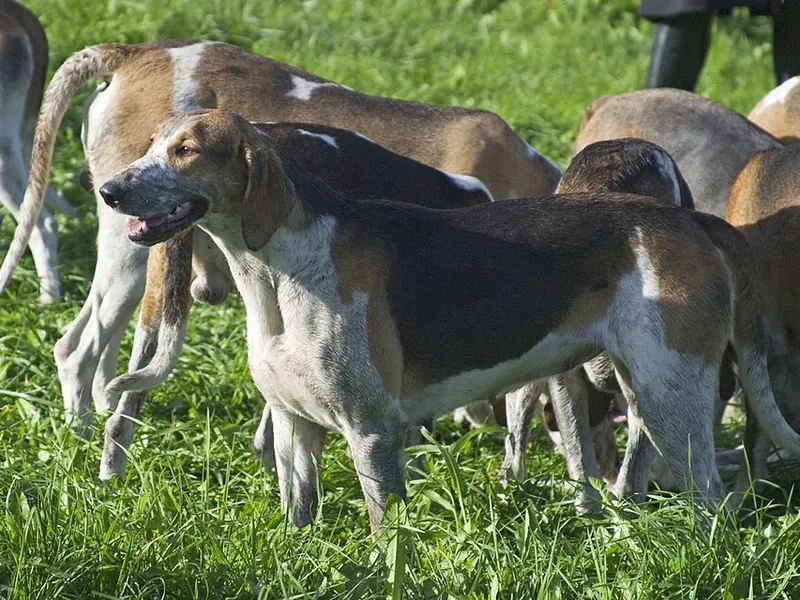
The Grand Bleu comes from Gascony, in the far southwest of France, where large hounds descended from old French and St. Hubert stock were used by the nobility to hunt wolf, boar and deer. It is considered one of the oldest French scent hound types, and the blue-ticked hounds of the region were already distinct centuries ago.
As wolves disappeared from France, the breed was turned to hare and other game, always hunting in packs. The Grand Bleu is also part of American hound history: the Marquis de Lafayette is said to have sent several to George Washington, and the breed contributed to some American coonhound lines. Today it remains a rare working hound, recognized by the FCI in Group 6 and kept mainly by hunting enthusiasts.
Size, Blue Coat and Markings
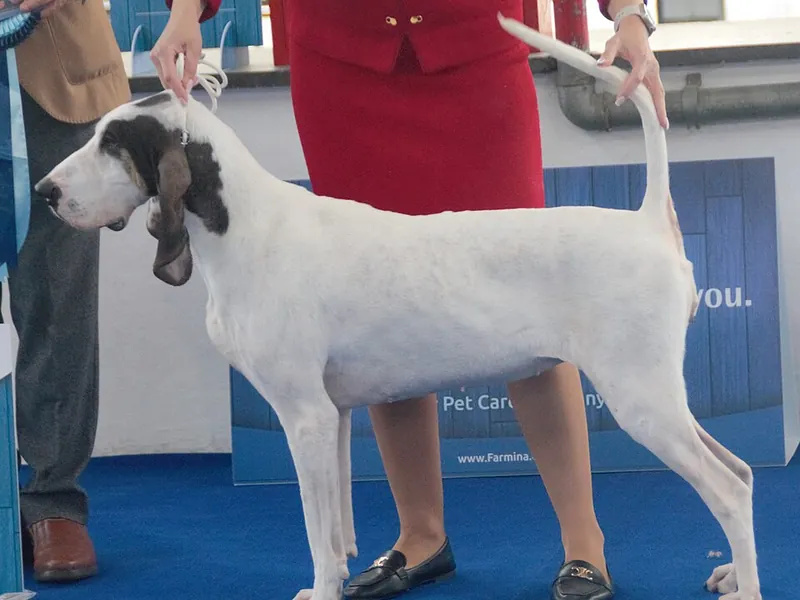
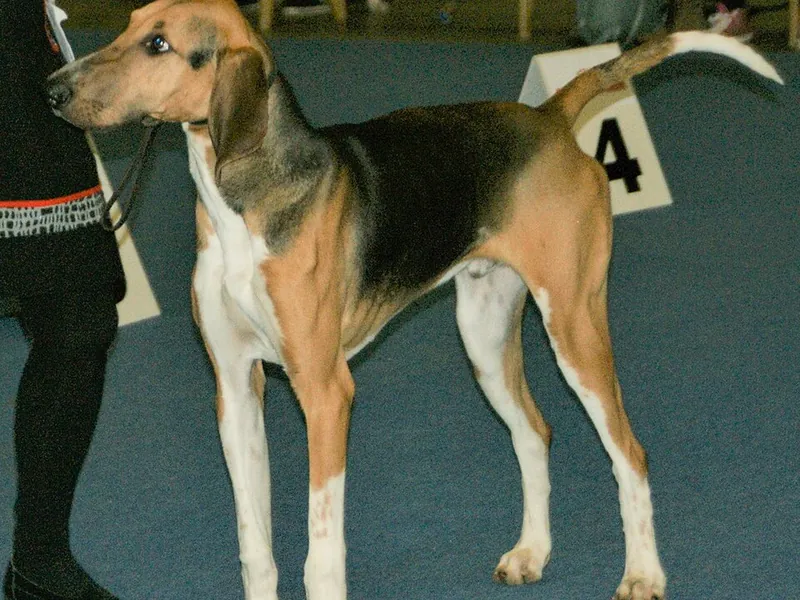
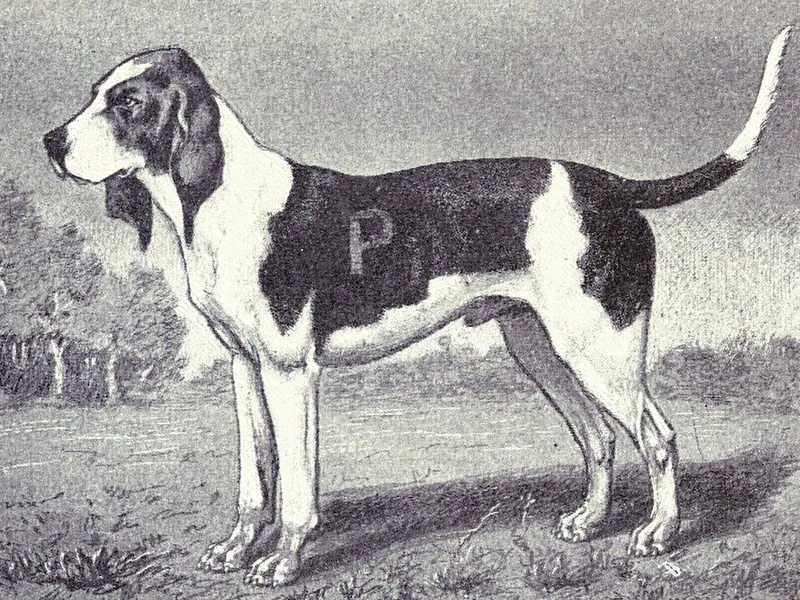
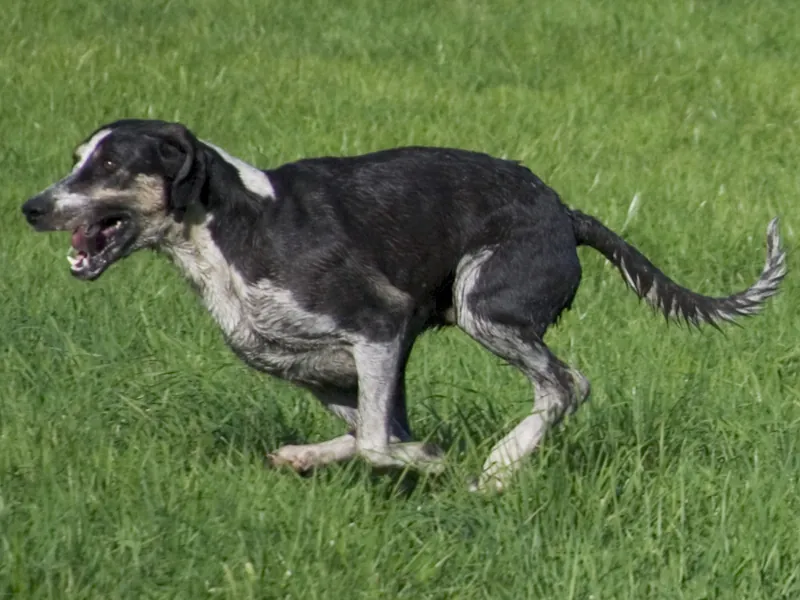
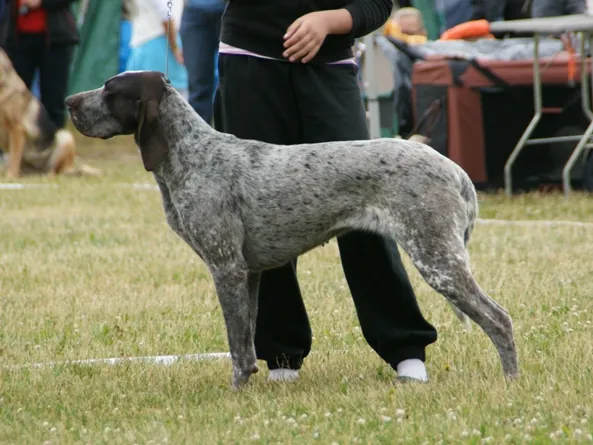
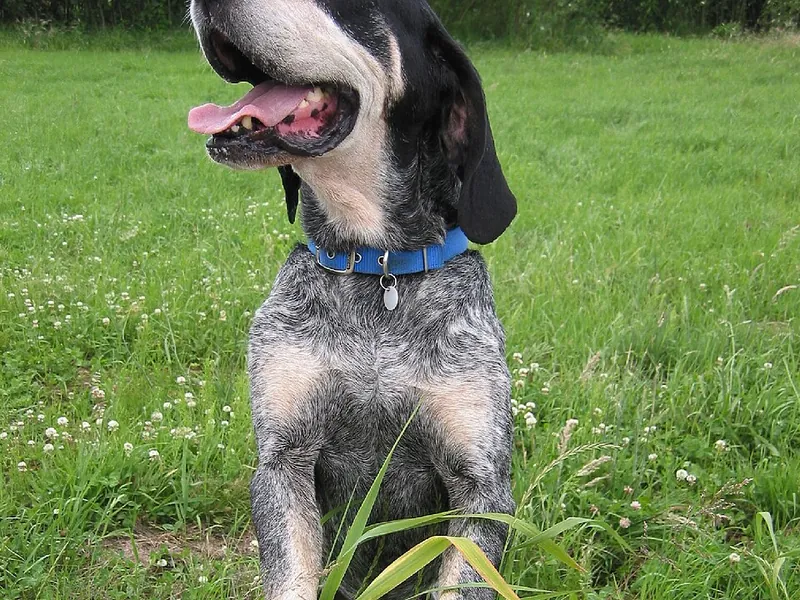
The Grand Bleu de Gascogne is a tall, powerful scent hound with a long head, droopy expression and very long, thin ears that fold and curl. It stands 24 to 28 inches tall and weighs about 79 to 119 lb. Males are larger, often 25.5 to 28 inches, while females are around 24 to 27 inches with a lighter build.
The body is long and strong, with a deep chest and long legs suited to steady, tireless trailing. The tail is long and carried like a saber. Movement is regular and steady rather than quick.
The coat is short, thick and dense. Its color gives the breed its name: a white background thickly mottled with black, creating a slate-blue appearance, with or without larger black patches. There are usually two black patches on the sides of the head, covering the ears and eyes, and tan markings above the eyes, on the cheeks, lips and legs. Some dogs show tan freckles on the legs.
Temperament and Personality
Despite its size, the Grand Bleu is usually quiet, mild and affectionate at home. It is not a sharp or suspicious dog, and most individuals greet visitors calmly rather than guarding. Its breed standard describes a hound that accepts direction readily, but that cooperation stops the moment a scent takes over.
Two traits define daily life with this breed:
- The voice. Its deep, sonorous bay is a prized hunting quality and is loud enough to bother neighbors.
- Pack orientation. Bred to live and work in groups, it dislikes long periods alone and is often happiest with another dog.
Is the Grand Bleu de Gascogne Good for First-Time Owners?
The Grand Bleu de Gascogne is usually not a good choice for first-time owners. It is gentle with people, but its size, voice, independence and prey drive require experience with scent hounds.
Beginners often underestimate how difficult recall can be with a hound that follows scent for hours, and how loud the baying can be. A first-time owner with rural property, tolerant neighbors and time for long daily walks and scent work might succeed with help from a hound club. Those who want a quiet, obedient dog should consider other breeds.
Are Grand Bleu de Gascognes Easy to Train?
The Grand Bleu is not easy to train in the obedience sense. It is cooperative and gentle, but once it finds a scent, its focus shifts completely to the trail.
Training should start early and focus on practical skills: recall on a long line, leash manners, calm behavior around livestock and wildlife and coming back to the handler. Use food rewards and short sessions. Harsh handling tends to make hounds shut down. Even with good training, most Grand Bleus should be kept on leash or in secure areas, because the instinct to follow a scent is very strong.
Can Grand Bleu de Gascognes Be Left Alone?
Grand Bleus do not do well with long periods alone. Bred to live and work in packs, they prefer company, and a lonely hound may bay or howl, which can disturb neighbors.
Most adults can cope with a few hours if they are well exercised and have practiced alone time from puppyhood. A second dog often helps a lot, since the breed is very sociable with other dogs. Provide a comfortable bed, a chew and a secure space. For long workdays, plan for a dog walker, a friend or daycare.
Exercise and Training
This is a stamina hound, not a sprinter. It needs long daily walks, ideally on varied ground where it can use its nose, plus regular opportunities to track. Scent games, man-trailing and drag trails are good outlets for non-hunting homes.
Training should start early and focus on recall, leash manners and calm behavior around livestock and wildlife. Even a well-trained Grand Bleu should be considered unreliable off leash in open country, because its prey drive is very strong. Use food rewards and short sessions; harsh handling tends to make hounds shut down.
Grooming and Shedding
The short, thick coat is easy to maintain: a weekly rub with a rubber mitt or hound glove removes loose hair and keeps the skin healthy. The coat sheds steadily, so it is not suitable for people with dog allergies.
The long, folded ears need more attention than the coat. Check and clean them weekly, especially after work in wet cover, and keep nails short, as heavy hounds that walk mostly on soft ground can grow long nails quickly.
Feeding and Nutrition
The Grand Bleu is a large, deep-chested hound, so feeding focuses on steady growth, lean adult condition and bloat prevention.
- Feed a large-breed puppy diet with controlled calcium and energy, and keep puppies lean to support developing joints.
- Split adult food into at least two meals a day. Avoid one large meal, discourage gulping and allow rest after eating, since deep-chested dogs carry a bloat risk.
- Adjust portions to activity: hunting and tracking hounds need more energy than family companions.
- Many hounds are opportunistic eaters and will steal food from counters or trash, so keep food secure.
Lean condition reduces strain on the hips, as hip dysplasia is a concern in large hounds. Use part of the daily ration for recall and scent training, and provide fresh water after long outings.
| Adult weight | Less active | Typical adult | Very active |
|---|---|---|---|
| 79 lb | 1,440 kcal | 1,640 kcal | 2,050 kcal |
| 119 lb | 1,950 kcal | 2,230 kcal | 2,790 kcal |
Estimates use the resting energy formula veterinarians work with (70 × body weight in kg0.75) and standard activity factors. Use the feeding guide on your food as a starting point and adjust to body condition. Puppies, seniors, pregnant animals and pets that need to lose weight have different needs, so ask your vet.
Health and Lifespan
There are few published health studies on the Grand Bleu de Gascogne, and no strongly breed-specific inherited disease is well documented. As a large, deep-chested hound it can be at risk of the problems common to dogs of its build, including hip dysplasia and bloat (gastric dilatation-volvulus). Feeding smaller meals and avoiding hard exercise right after eating are sensible precautions.
Long ears can trap moisture and lead to ear infections. Reliable lifespan figures are scarce; large hounds of this type typically live around 10 to 12 years. Ask breeders about hip scoring of the parents.
Grand Bleu de Gascogne Price and Cost of Ownership
The Grand Bleu de Gascogne is rare in the US, and there is no widely published US price range. Most puppies come from French breeders or hunting kennels, and some US hunters keep related lines. Expect import costs, travel and long waiting periods. Prices vary by breeder, region and lines. Ask for hip scores and the health history of the parents.
Rescue dogs are rare, though hound rescues may place related coonhound types.
Breed-specific ongoing costs include:
- Food for a large, active hound.
- Tall, secure fencing and long lines for safe exercise.
- Insurance or savings for bloat and joint problems.
- Ear care supplies and vet visits for ear infections.
Is the Grand Bleu de Gascogne Right for You?
The Grand Bleu suits rural owners with a securely fenced property, plenty of time outdoors and tolerant neighbors. Hunters who work with scent hounds will appreciate its nose and voice. It is a poor match for apartments, busy city schedules or anyone who needs a dog to stay quiet and stay home alone.
- Good fit: experienced hound people, multi-dog households, tracking hobbyists.
- Poor fit: small homes, long workdays, households with free-roaming small pets.
Grand Bleu de Gascogne Traits at a Glance
Grand Bleu de Gascogne FAQ
How big do Grand Bleu de Gascognes get?
They are tall hounds, roughly 24 to 28 inches at the shoulder and about 79 to 119 lb, with males at the upper end.
Are Grand Bleu de Gascognes good family dogs?
They are usually gentle and tolerant with people, including children, but their size, voice and exercise needs mean they fit best in active rural families.
Do Grand Bleu de Gascognes bark a lot?
They bay rather than yap, and the voice is deep and very loud. Expect noise when they pick up a scent or are left alone.
Can a Grand Bleu de Gascogne live with cats?
It depends on the individual and early socialization. The prey drive is very high, so many are not safe with cats or small pets.
How long do Grand Bleu de Gascognes live?
Reliable data is limited, but large hounds of this type commonly live around 10 to 12 years.