Grand Anglo-Français TricoloreLarge tricolor pack hound for big game
The Grand Anglo-Français Tricolore is a big, powerful French pack hound created by blending French scenthounds with the English Foxhound. Built for long days chasing deer and boar with dozens of other hounds, it is rarely suited to ordinary pet life and thrives with hunting packs or very experienced hound people.
Why people love the Grand Anglo-Français Tricolore
- Sociable and tolerant with other dogs
- Rarely aggressive toward people
- Exceptional stamina and scenting ability
- Short coat needs little grooming
- Robust pack-bred working hound
Things to consider
- Exercise needs among the highest of any breed
- Extremely strong prey drive
- Loud voice suited to the hunting field
- Focuses on the pack rather than one owner
- Almost unavailable outside French hunting packs
Is this breed right for you?
10 questions · live resultHistory and Origin
In 19th-century France, many old French hound strains had declined after the Revolution, and huntsmen began crossing their remaining French hounds with English Foxhounds. The goal was to combine French scenting ability and voice with the English hound's stamina, speed and pack discipline.
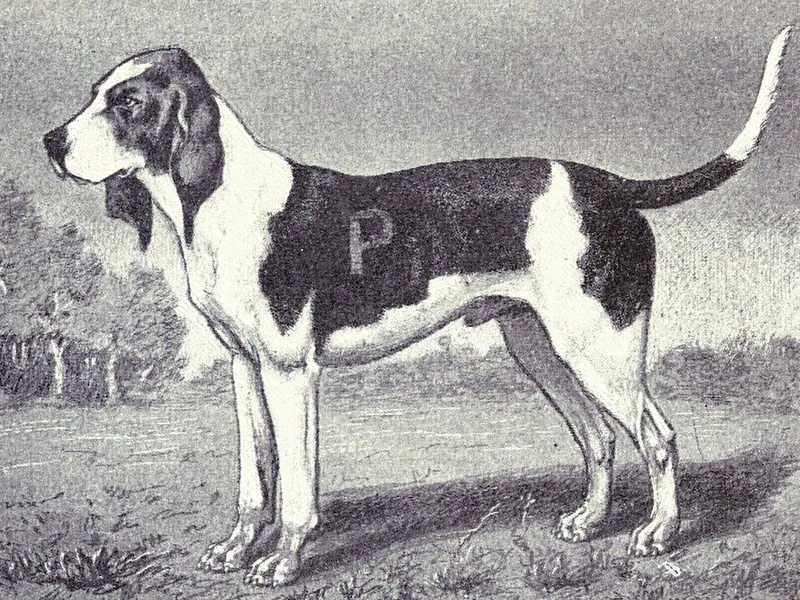
The resulting Anglo-French hounds were grouped by size and color. The Grand Anglo-Français Tricolore is the large, tricolored version, with French ancestry often traced to the Poitevin and Billy. It is recognized by the FCI and is used mainly in vénerie, the traditional French mounted hunting with a pack.
Size, Colors and Coat
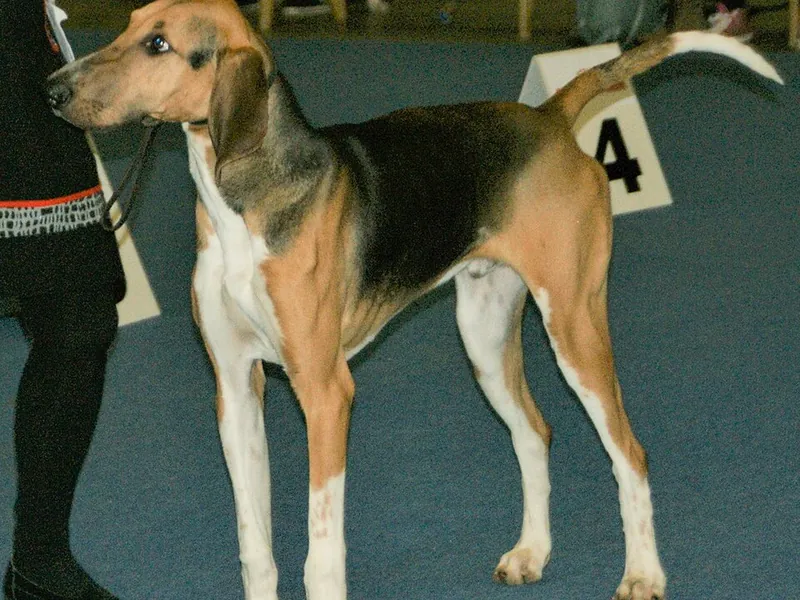
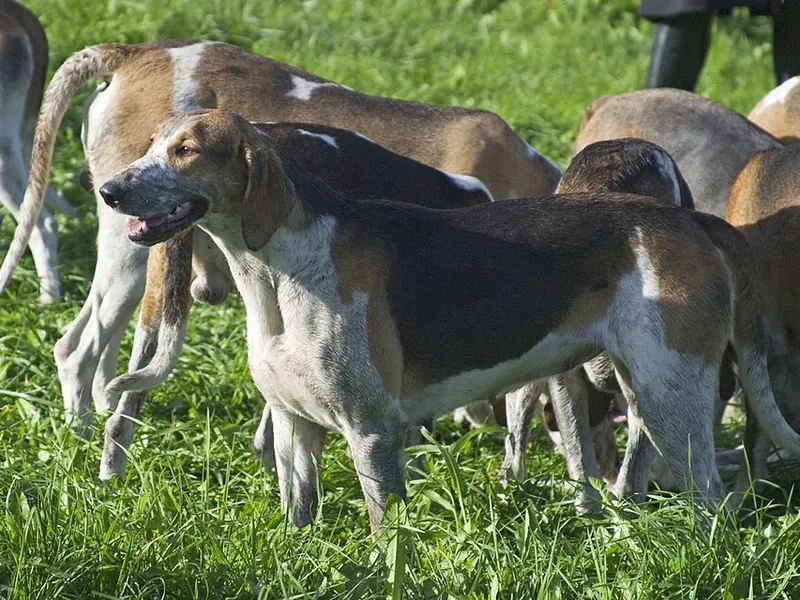
The Grand Anglo-Français Tricolore is a large, powerful pack hound standing 24 to 28 inches at the shoulder. Data for weight is limited and usually cited around 76 to 78 lb, though working hounds vary with condition and season. Males are taller and heavier than females.
The build reflects its mixed heritage: the strength and straight legs of the English Foxhound with the more elegant head and long, slightly turned ears of French scenthounds. The chest is deep, the back strong and the tail long and carried high when working.
The coat is short, dense and fairly coarse. As the name says, the color is always tricolor:
- White base with a black saddle or large black patches
- Tan markings, typically on the head, legs and above the eyes
- Tan may appear as a bright or a darker, coppery shade
Huntsmen often value uniform type within a pack, which makes a group of these hounds look strikingly similar.
Temperament and Personality
Pack hounds are bred to live and work with many other dogs, so the Grand Anglo-Français Tricolore is usually sociable with its own kind and rarely aggressive toward people. It tends to be good-natured and tolerant.
It is not, however, a dog built around a single owner. Its focus is on the pack and the hunt, and its prey drive is extremely strong. Many individuals have little experience of house life, and adapting to it can take time and patience.
Is the Grand Anglo-Français Tricolore Good for First-Time Owners?
No, this breed is not suitable for first-time owners and is challenging even for experienced dog people outside a hunting context.
Its exercise needs are extreme, its prey drive overrides training, and it is used to the structure and company of a pack. Many available hounds come from packs and need help adjusting to stairs, household noise and living indoors. A first-time owner would face constant management of escapes, scent-following and noise. People drawn to large, friendly hounds with an easier temperament usually find more suitable choices among common breeds with established pet lines.
Can a Grand Anglo-Français Tricolore Live with Cats?
It is generally not recommended. The breed's prey drive is extremely strong, and most hounds have no experience living with cats.
Pack hounds are selected to follow and chase game, and cats often trigger the same response. A rare hound raised from puppyhood with a confident cat might tolerate it indoors, but behavior outdoors is unpredictable. Most retired pack hounds rehomed to private homes have never lived with small animals. Households with cats should choose a different breed or be prepared for permanent separation and careful supervision.
Can a Grand Anglo-Français Tricolore Be Left Alone?
Being left alone is difficult for this breed, which is used to living with a large pack of other hounds.
A single hound left alone in a house or yard often bays, howls or tries to escape, which can quickly lead to complaints in residential areas. Company from another dog, ideally a hound with similar energy, helps greatly. Even then, long periods alone are not suitable. Owners should plan daily exercise before any absence, introduce alone time gradually and provide secure kenneling or a safe indoor space with chews.
Exercise and Training
Exercise needs are among the highest of any breed. These hounds may cover many miles in a day's hunt.
- Daily running on a long line or in very large fenced areas is a minimum for a hound kept outside a pack.
- Free running in open country is risky: once on scent it may travel far and ignore roads.
- Training is based on pack routines and voice commands; one-to-one obedience is not its strength.
- Another dog for company helps, as these hounds are lonely on their own.
For a hound living in a private home, a realistic plan is a long run every day on a long line or in a big fenced field, plus several hours of walking spread through the week. Scent trails laid for the dog can partly replace hunting. Young hounds should build fitness gradually on soft ground.
Grooming and Shedding
The short, dense coat is white with a black saddle or patches and tan markings. A weekly brush and occasional wipe-down are enough.
Working hounds need frequent checks of feet, pads, ears and skin after hunting days. Nails wear naturally on rough ground but should be checked monthly on hounds that mostly walk on soft surfaces.
Feeding and Nutrition
Pack hounds are traditionally fed together in kennels, and many eat quickly and competitively. In a private home, feed each dog separately and calmly to prevent gulping and squabbles. Slow feeders can help with fast eaters.
Food needs swing strongly between the hunting season and the rest of the year. A hound running for hours on hunting days may need far more food than during summer rest, so adjust portions to activity and check body condition often. A fit hound has a clear waist and ribs that are easy to feel.
- Feed puppies a diet formulated for large-breed growth, three or four times a day.
- Keep puppies lean to support joint development.
- Do not feed right before hunting or long runs; offer the main meal after the dog has cooled down and rested.
- Provide plenty of fresh water during and after exercise.
Use food rewards generously when teaching recall or household manners, since pack-bred hounds respond well to them.
| Adult weight | Less active | Typical adult | Very active |
|---|---|---|---|
| 76 lb | 1,390 kcal | 1,590 kcal | 1,990 kcal |
| 78 lb | 1,420 kcal | 1,620 kcal | 2,030 kcal |
Estimates use the resting energy formula veterinarians work with (70 × body weight in kg0.75) and standard activity factors. Use the feeding guide on your food as a starting point and adjust to body condition. Puppies, seniors, pregnant animals and pets that need to lose weight have different needs, so ask your vet.
Health and Lifespan
No breed-specific diseases are documented, and reliable lifespan figures are not available. Hunting packs typically select for soundness and stamina, which tends to favor robust dogs.
As a large, deep-chested hound, it may share general large-breed risks such as hip problems and bloat. Feed several smaller meals rather than one large one, and avoid hard work right after eating.
Grand Anglo-Français Tricolore Price and Cost of Ownership
The Grand Anglo-Français Tricolore is almost never available in the US. Hounds are bred mainly by French hunting packs, which rarely sell puppies to private homes. Prices vary by breeder, region and lines, and there is no meaningful US price range. Retired or unsuitable pack hounds are occasionally rehomed in France.
Breed-specific cost drivers include:
- Import costs, transport and paperwork
- Tall, secure fencing and possibly a kennel run
- Food for a large hound with extreme exercise needs
- GPS tracking collars for scent-driven dogs
- A second dog for company, which doubles many costs
- Vet care for field injuries such as cuts and torn pads
Grooming costs are low thanks to the short coat.
Is the Grand Anglo-Français Tricolore Right for You?
For almost all private households, this breed is not a practical choice.
- Good match: hunting packs, experienced hound keepers with large rural properties and other dogs.
- Poor match: apartments, suburban homes, single-dog households, owners who want off-lead walks.
Hounds retired from packs are occasionally rehomed, but they need patient adjustment to domestic life and secure fencing.
Grand Anglo-Français Tricolore Traits at a Glance
Grand Anglo-Français Tricolore FAQ
How big is the Grand Anglo-Français Tricolore?
It is a large hound, around 24 to 28 inches at the shoulder and roughly 76 to 78 lb.
Is the Grand Anglo-Français Tricolore a good family pet?
Generally not. It is bred for pack hunting, with very high exercise needs and a strong prey drive.
What does Anglo-Français mean?
It refers to the breed's mixed English and French ancestry, combining English Foxhounds with French scenthounds.
What does it hunt?
Traditionally large game such as deer and wild boar, in organized packs.
Can it live with other dogs?
Usually very well. It is a pack dog and often prefers canine company.
Does the Grand Anglo-Français Tricolore bark a lot?
It has a deep hound voice used while hunting and may bay or howl when bored or left alone.