Grand Anglo-Français Blanc et NoirBig white-and-black Anglo-French pack hound
The Grand Anglo-Français Blanc et Noir is a large, strongly built French pack hound with English Foxhound ancestry, bred for hunting deer and boar. Friendly with people but intensely driven by scent, it is a specialist pack dog and is rarely kept as a family pet.
Why people love the Grand Anglo-Français Blanc et Noir
- Very sociable with other dogs
- Friendly toward people
- Easy-care short coat
- Robust working hound
- Tireless stamina for hunting
Things to consider
- Extremely high exercise needs
- Very strong prey drive
- Not suited to typical family homes
- Unreliable recall; travels miles on a trail
- Virtually unavailable in the US
Is this breed right for you?
10 questions · live resultHistory and Origin
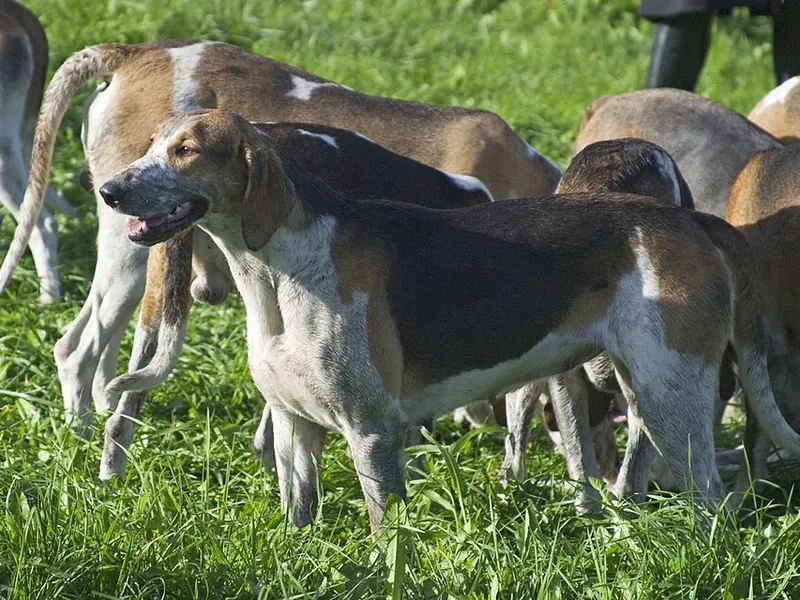
In the 19th century French huntsmen rebuilt their packs by crossing native hounds with English Foxhounds. For this breed, the French side came mainly from the Saintongeois and the Gascon hounds, which gave it the white-and-black coat and deep voice, while the Foxhound brought speed, stamina and a strong pack instinct.
It is one of three large Anglo-French breeds, distinguished by color: tricolor, white and black, and white and orange. The white-and-black variety is often described as the most powerful of the three. It is recognized by the FCI and is used in French vénerie for deer and wild boar.
Size, Coat and Colors
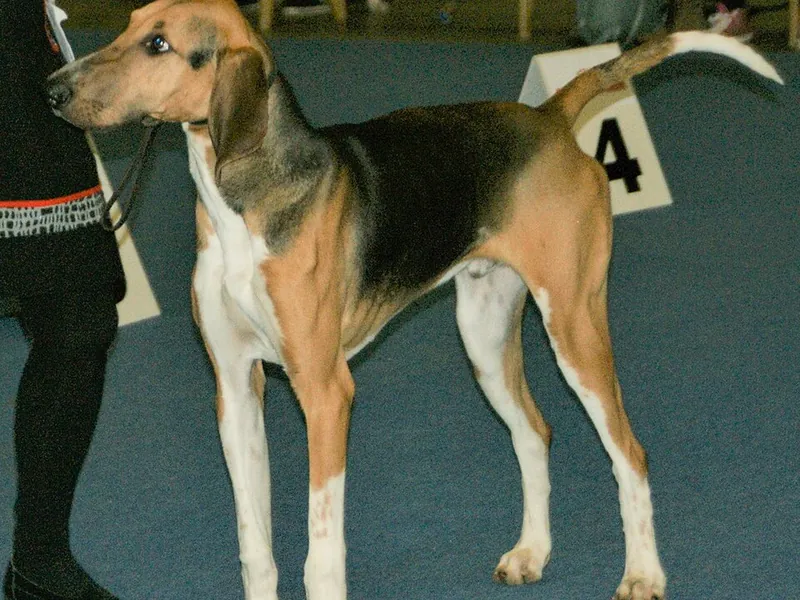
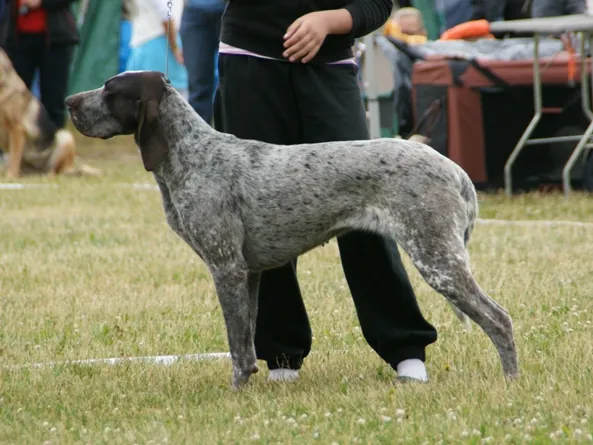
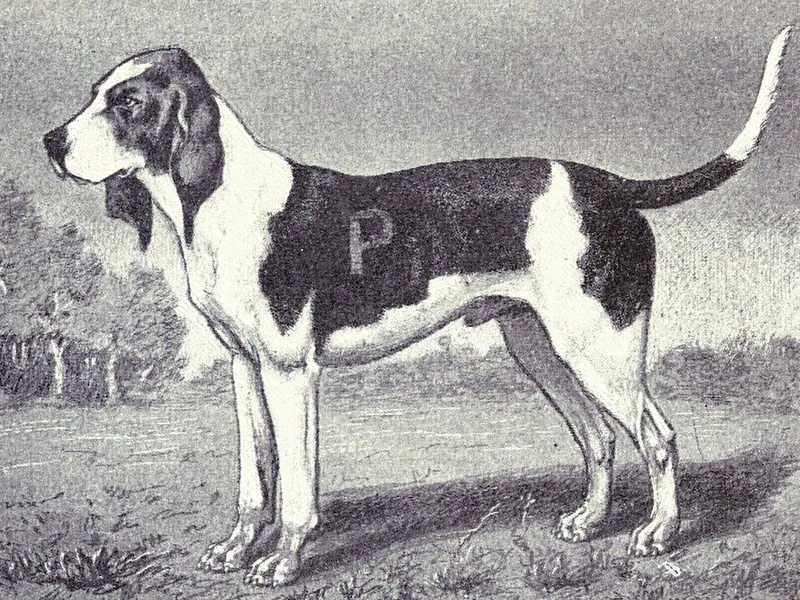
The Grand Anglo-Français Blanc et Noir is a large, powerful pack hound standing about 24 to 28 inches and weighing around 77 lb. It has a strong, muscular body, a deep chest, long legs and a broad head with long, hanging ears. The tail is long and carried high when working.
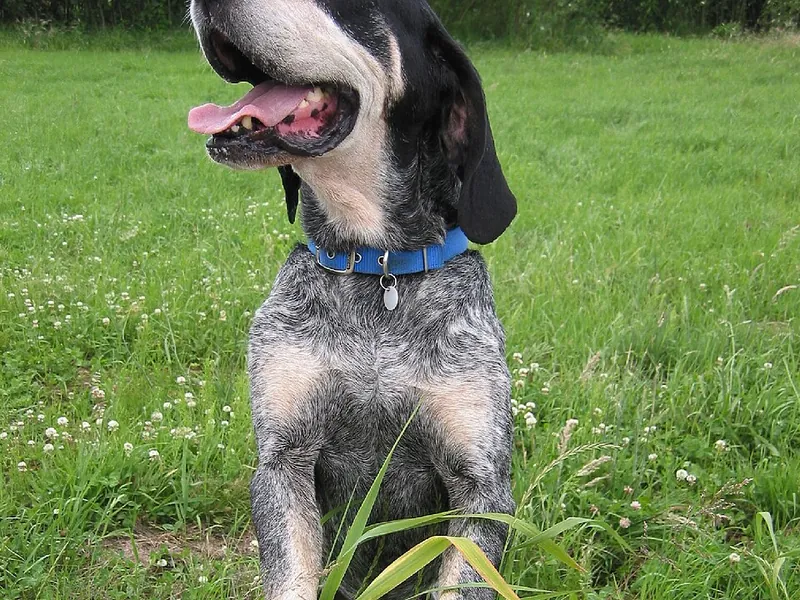
The coat is short, dense and close-lying. The color is white with a black blanket or large black patches, often with tan markings above the eyes, on the cheeks and on the legs. Some dogs show bluish mottling in the white areas.
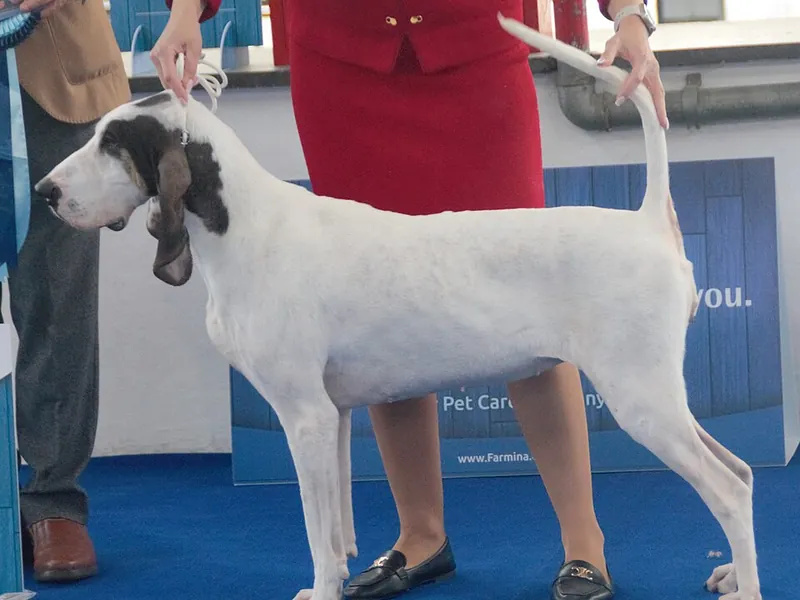
This is one of three Grand Anglo-Français breeds, differing mainly in color: the Blanc et Noir (white and black), the Tricolore and the Blanc et Orange. Males are usually larger than females. Breeding focuses on working ability in the pack rather than on show appearance.
Temperament and Personality
The breed standard describes it as friendly and people-oriented. Hounds that live in large packs must get along with each other, so it is usually very sociable with other dogs.
Prey drive is extremely high, and its whole life revolves around the hunt. Individual dogs may be affectionate with handlers, but they are not bred to be one-family companions, and their focus outdoors is entirely on scent.
Is the Grand Anglo-Français Blanc et Noir Good for First-Time Owners?
No, the Grand Anglo-Français Blanc et Noir is suited to experienced hound keepers and hunting packs.
The breed is friendly and sociable but has extremely high exercise needs, a very strong prey drive and limited interest in obedience. It is happiest living with other dogs. First-time owners will find it very challenging.
Anyone interested should first spend time with a pack and its huntsman to see the breed's daily needs. Even experienced owners of single companion dogs may find that this hound expects a lifestyle built around scent work, other dogs and large, secure outdoor spaces.
Can a Grand Anglo-Français Blanc et Noir Be Left Alone?
Not well on its own. This hound is bred to live with other dogs and dislikes being left alone without canine company.
In a pack or with another dog, it copes much better. A single dog left alone for long periods may howl or become destructive. Retired pack hounds adjusting to home life need time and patience.
Keeping at least two hounds together is the most reliable way to prevent distress. Build any alone time gradually, give a long run beforehand and provide a secure, comfortable space. A busy household with someone home most of the day suits a single hound better than a long-hours workplace routine.
Is the Grand Anglo-Français Blanc et Noir Good with Cats?
Generally no. Its prey drive is extremely high, and cats and small pets may be chased.
Retired hounds that have only known pack life may never accept cats. A dog raised with a cat may tolerate it indoors, but outdoor cats and small animals are likely to be pursued. Close supervision and secure separation are essential.
If you already have a cat, this breed is rarely the right choice. Hounds placed from packs are usually not cat-tested, and their focus on scent and movement makes training around small animals slow and uncertain. Keep the cat's areas fully separate.
Exercise and Training
Exercise needs are extremely high.
- Pack hunting is the natural outlet; otherwise long daily runs in large, securely fenced areas.
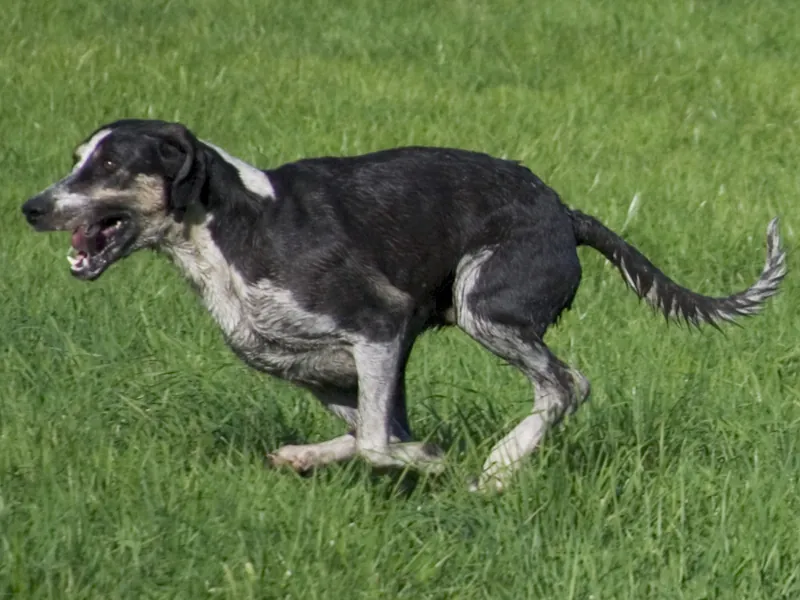
- Free running in open country is risky; it can travel miles on a trail.
- Training is based on pack routines and calm consistency rather than obedience drills.
- It is happiest living with other dogs.
Grooming and Shedding
The short, dense coat is white with a black blanket or large black patches, often with tan markings above the eyes and on the cheeks and legs. A weekly brush is enough.
Check ears, pads and skin after hunting or long runs. The ears are long and benefit from regular cleaning.
Feeding and Nutrition
Working pack hounds need substantial energy during the hunting season and less during rest periods. Feed by body condition: the ribs should be easy to feel and the waist visible. Keeping the dog lean supports endurance and joint health.
- Feed puppies a large-breed growth diet, divided into three or four meals.
- Adults usually do well on two meals a day.
- As a large, deep-chested hound, it has some bloat risk. Feed smaller meals and rest after eating.
Hounds living in packs may compete for food, so feeding separately or with supervision helps each dog get its share. Fresh water should always be available, especially after long runs. Retired pack hounds moving into a home often need portion adjustments as activity drops.
Store food securely, as most pack hounds are opportunistic eaters. Use small treats in training and count them in the daily ration.
| Adult weight | Less active | Typical adult | Very active |
|---|---|---|---|
| 77 lb | 1,410 kcal | 1,610 kcal | 2,010 kcal |
Estimates use the resting energy formula veterinarians work with (70 × body weight in kg0.75) and standard activity factors. Use the feeding guide on your food as a starting point and adjust to body condition. Puppies, seniors, pregnant animals and pets that need to lose weight have different needs, so ask your vet.
Health and Lifespan
No breed-typical diseases are reliably documented, and lifespan data are not available. Packs typically breed from sound, hard-working hounds, which tends to favor robust dogs.
General large-breed precautions apply: controlled growth in puppies, lean body weight, and care to reduce bloat risk by feeding several smaller meals and resting after eating.
Grand Anglo-Français Blanc et Noir Price and Cost of Ownership
The Grand Anglo-Français Blanc et Noir is virtually unavailable in the US, and there is no reliable puppy price. Most dogs live in French hunting packs, and acquiring one usually means importing, which adds travel costs and health certificates.
Adoption of retired pack hounds is occasionally possible in France and through hound rescues in Europe.
Breed-specific ongoing costs include food for a large, active dog, strong fencing and, ideally, another dog for company. Veterinary costs are typically moderate for a robust hound, but insurance or an emergency fund is advisable.
Ear care supplies and checks for injuries after long runs are routine expenses for a working hound.
Is the Grand Anglo-Français Blanc et Noir Right for You?
This hound is for packs and experienced hound keepers.
- Good match: hunting packs, large rural properties with other hounds.
- Poor match: apartments, typical family homes, single-dog households.
Anyone considering a retired pack hound should plan for strong fencing, another dog for company and a patient introduction to indoor life.
Grand Anglo-Français Blanc et Noir Traits at a Glance
Grand Anglo-Français Blanc et Noir FAQ
How big is the Grand Anglo-Français Blanc et Noir?
It stands about 24 to 28 inches tall and weighs roughly 77 lb.
What does the Grand Anglo-Français Blanc et Noir hunt?
Large game such as deer and wild boar, working in packs.
Is the Grand Anglo-Français Blanc et Noir a good family pet?
Generally not, because of its very high exercise needs and strong hunting drive.
Is it friendly with people and dogs?
Yes. It is usually friendly with people and very sociable with other dogs.
How many Grand Anglo-Français breeds are there?
Three, separated by color: tricolor, white and black, and white and orange.