Grand Gascon SaintongeoisElegant French pack hound with a musical voice
The Grand Gascon Saintongeois is a large, elegant French pack hound created in the 19th century from two old regional breeds. Calm and affectionate with people, with a deep, musical voice, it is a specialist for deer and boar hunting rather than everyday family life.
Why people love the Grand Gascon Saintongeois
- Calm, affectionate and gentle with people
- Sociable with other dogs from pack-hound heritage
- Deep, musical voice prized by pack hunters
- Short coat needs only weekly brushing
- Usually more trainable than many large hounds
Things to consider
- Very high exercise needs; built for long hunts
- Strong hunting drive; travels far on a scent
- Poor match for apartments and suburban life
- Prefers canine company; dislikes living as a single dog
- Extremely rare outside France
Is this breed right for you?
10 questions · live resultHistory and Origin
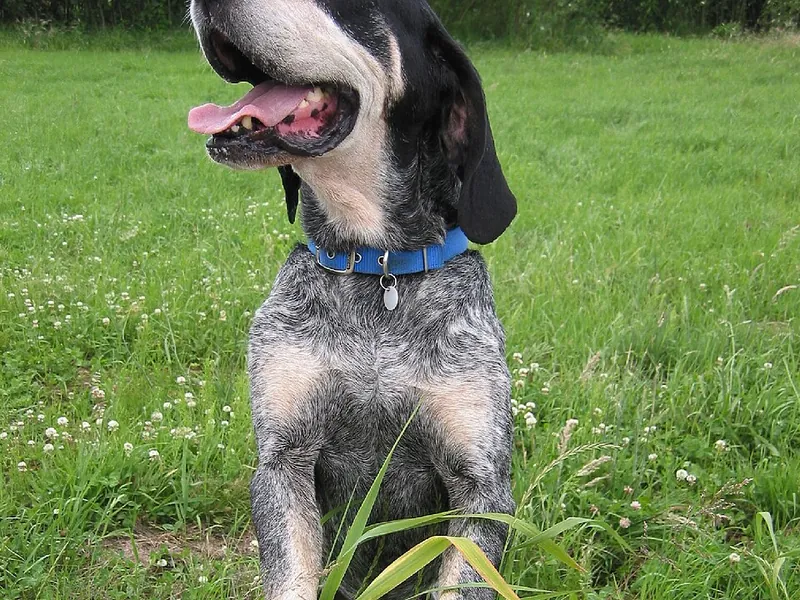
The Saintongeois, an old hound from western France, was nearly lost after the French Revolution. In the 1840s, Baron Joseph de Carayon-Latour de Virelade crossed his surviving Saintongeois hounds with the Grand Bleu de Gascogne, creating a hound sometimes called the Virelade.
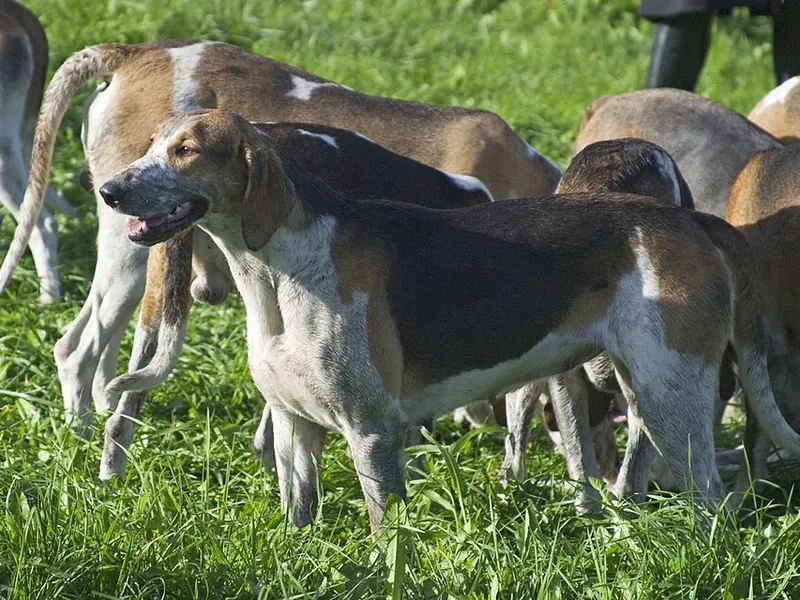
The Grand Gascon Saintongeois is used mainly for deer and boar in packs. A smaller version, the Petit Gascon Saintongeois, is used for hare. The breed is recognized by the FCI and is rare outside France.
Size, Coat and Markings
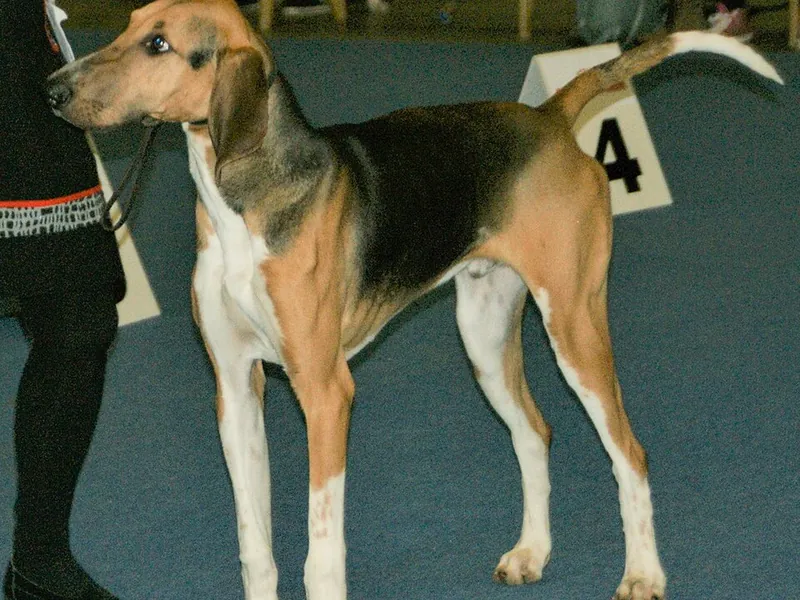
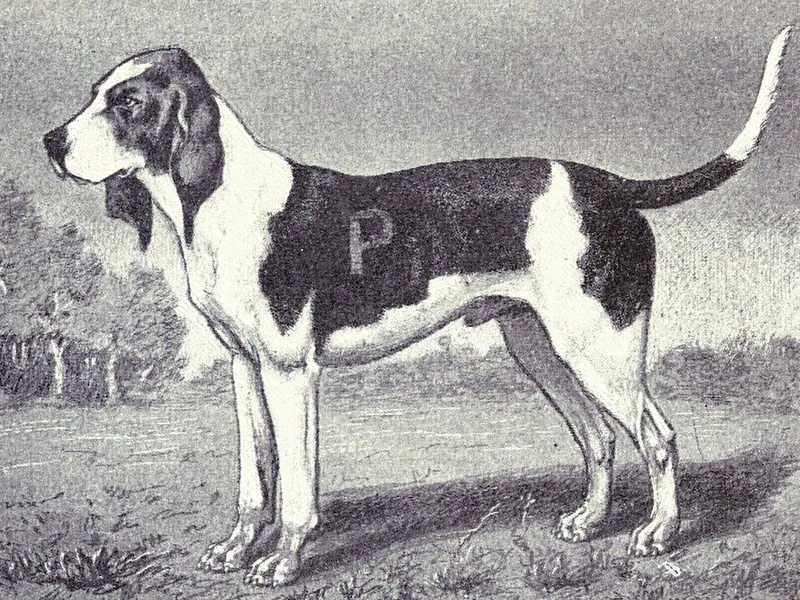
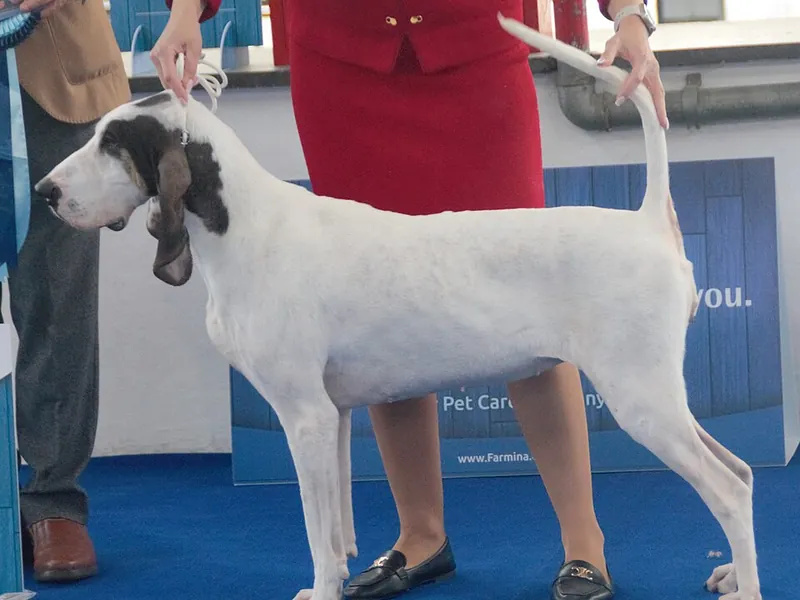
The Grand Gascon Saintongeois is a large, elegant pack hound with a long, lean head, a slightly domed skull and very long, thin, folded ears set low on the head. Its body is powerful but refined, built for endurance rather than bulk. Adults stand about 24 to 28 inches tall and weigh roughly 66 to 71 lb. Males are at the upper end of the height range, around 26 to 28 inches, while females are somewhat smaller.
The coat is short, dense and close-lying.
Colors and markings: the coat is white with black patches, often with black speckling or ticking across the white. Characteristic features include:
- black patches on the head that frame the face
- tan markings above the eyes, on the cheeks and inside the ears
- tan on the lower legs
- sometimes a small brown or tan spot on the thigh, known as the roe deer mark
The black and tan facial markings and the white body give the breed the classic look of the large French scent hounds descended from the Grand Bleu de Gascogne.
Temperament and Personality
The breed standard describes a calm, affectionate dog that follows well. It is generally gentle with people and sociable with other dogs.
It has a strong hunting drive and a sonorous voice, admired in French hunting traditions. In the home it can be quiet and relaxed if exercised.
Huntsmen value the breed for its musical cry, a deep, ringing voice that carries far and helps them follow the pack. Indoors, an individual dog is usually calm, affectionate and polite, though it may be unsure of household routines if raised in a kennel.
Can a Grand Gascon Saintongeois Live in an Apartment?
No, the Grand Gascon Saintongeois is not suited to apartment living. It is a large pack hound with very high exercise needs and a deep, carrying voice.
The breed was developed to hunt deer and boar over long distances, and it needs daily long runs or hikes in safe, fenced areas or on a long line. A dog kept in an apartment without that outlet is likely to become restless and vocal, which can cause real problems with neighbors. It also prefers the company of other dogs, which is easier to provide in a rural home. Rural properties with secure fencing are a far better fit.
Is the Grand Gascon Saintongeois Easy to Train?
The Grand Gascon Saintongeois is easier to train than many hounds, but its hunting drive means recall around scent is never fully reliable.
The breed standard describes a calm, affectionate dog that follows well, and pack hounds are used to working with a huntsman. Basic manners and house routines usually come with patience. Dogs raised in kennels may need extra time to learn indoor life, such as house training and handling household noise. Use calm, reward-based methods and short sessions. Once on a scent, however, the dog may travel far and ignore calls, so use a long line or secure fencing outside.
Is the Grand Gascon Saintongeois Good With Cats?
The Grand Gascon Saintongeois may learn to live with a household cat it is raised with, but its strong hunting drive makes cats and small pets a real risk.
Pack hounds are generally bred to work with other dogs and people rather than to chase cats, but they are still driven by scent and moving animals. Retired pack hounds rehomed from kennels have usually had little contact with cats. Introductions should be slow, supervised and with a muzzle at first if there is any doubt. Outdoor cats and small animals are likely to be chased. Homes with rabbits or other small pets are not recommended.
Exercise and Training
Exercise needs are very high.
- Long runs and hikes every day, ideally with pack hunting.
- Secure fencing is essential; on scent it will travel far.
- Training is easier than with many hounds, but patience is still needed.
- It prefers company of other dogs.
For hounds living outside a pack, long daily runs on a long line or in large fenced land, plus regular scent trails, are the minimum. Young dogs should build stamina gradually and avoid long forced runs until they are fully grown.
Grooming and Shedding
The short, dense coat is white with black patches and tan markings, sometimes with a small brown mark on the thigh called the roe deer mark. Brush weekly.
The long, thin ears need regular checks for cuts and infections.
Its coat sheds moderately all year. Bathing is rarely needed, but a damp cloth wipe after muddy walks keeps the white coat looking clean.
Feeding and Nutrition
The Grand Gascon Saintongeois is a large, lean endurance hound. Its feeding needs vary strongly with workload: a dog hunting with a pack during the season needs considerably more food than a companion hound walking daily. Adjust portions to body condition, keeping the ribs easy to feel and the hip bones slightly visible in a fit working dog.
Puppies: feed a complete diet formulated for large-breed puppies and aim for steady, controlled growth. Avoid forced exercise and excessive weight during the growth phase, which can affect developing joints.
Bloat: as a large, deep-chested hound, the breed carries a risk of gastric dilatation-volvulus. Feed two meals a day rather than one, avoid hard running for about an hour before and after eating and learn the warning signs.
Pack feeding: hounds kept together may compete over food. Feed dogs separately, supervise mealtimes and remove bowls afterward to prevent conflict.
Scavenging: like most scent hounds, these dogs are food-driven and will scavenge on walks. Store food securely and teach a reliable leave it cue.
| Adult weight | Less active | Typical adult | Very active |
|---|---|---|---|
| 66 lb | 1,250 kcal | 1,430 kcal | 1,790 kcal |
| 71 lb | 1,320 kcal | 1,510 kcal | 1,890 kcal |
Estimates use the resting energy formula veterinarians work with (70 × body weight in kg0.75) and standard activity factors. Use the feeding guide on your food as a starting point and adjust to body condition. Puppies, seniors, pregnant animals and pets that need to lose weight have different needs, so ask your vet.
Health and Lifespan
No breed-typical diseases are documented, and reliable lifespan figures are not available. As a large, deep-chested hound, general risks include joint problems and bloat.
Choose healthy, screened parents and keep the dog fit and lean.
Long-eared working hounds are prone to ear infections and to cuts on the ear tips. Weekly ear checks and prompt treatment of any redness or odor help prevent bigger problems.
Grand Gascon Saintongeois Price and Cost of Ownership
The Grand Gascon Saintongeois is extremely rare outside France, and there is no established breeder market in the United States. Most dogs belong to French hunting packs, and puppies are usually placed with hunters. Prices vary by breeder, region and lines, and anyone in the US would likely need contacts in the French hunting community and to arrange import, adding transport and paperwork costs.
Adoption is a realistic route in France, where retired pack hounds are occasionally rehomed as companions.
Ongoing cost drivers include food for a large, active hound, secure high fencing, ear care for long, thin ears prone to cuts and infections, and veterinary care for running injuries. Hunters should budget for equipment, tracking collars and pack upkeep. Because health data is limited, pet insurance can help protect against unexpected costs.
Is the Grand Gascon Saintongeois Right for You?
This breed fits pack hunters and very experienced hound people.
- Good match: hunting packs, rural properties with space and other dogs.
- Poor match: apartments, typical suburban life, homes with small pets.
Retired pack hounds are occasionally rehomed in France. They can become gentle companions, but they need strong fencing, a patient owner and often another dog for company.
Grand Gascon Saintongeois Traits at a Glance
Grand Gascon Saintongeois FAQ
How big is a Grand Gascon Saintongeois?
It stands about 24 to 28 inches tall and weighs roughly 66 to 71 lb.
What is the difference between the Grand and Petit Gascon Saintongeois?
The Grand is larger and used for deer and boar; the Petit is smaller and used mainly for hare.
Is it a good family dog?
It is calm and gentle, but its hunting drive and exercise needs make it best for hunters.
Does the Grand Gascon Saintongeois bark a lot?
It has a deep, carrying voice, mostly used when hunting.
Who created the breed?
Baron de Virelade developed it in the 1840s from Saintongeois and Grand Bleu de Gascogne hounds.