PoitevinA fast, elegant French pack hound
The Poitevin is a tall, lean French scent hound from the Poitou region, bred for speed and endurance in pack hunting. Elegant and tireless, it remains almost exclusively a working hound and is rarely kept as a pet.
Why people love the Poitevin
- Elegant, fast and tireless scent hound
- Usually sociable with other dogs
- Generally gentle with people
- Short, glossy coat needs only weekly brushing
- Strong, carrying voice valued by hunters
Things to consider
- Extremely high exercise needs
- Rarely kept as a pet, so little home-life data
- Unreliable recall because of intense hunting drive
- Not suitable for homes with small animals
- Very rare outside France
Is this breed right for you?
10 questions · live resultHistory and Origin
The breed was developed in the late 17th century in the Poitou region of western France, where the Marquis François de Larrye bred hounds for wolf hunting. In the 19th century, English Foxhound blood was introduced to restore numbers and add speed.
The Poitevin was used in packs to hunt wolf, and later deer and wild boar. It remains rare and is kept mainly by French hunting packs. The FCI recognizes it in Group 6.
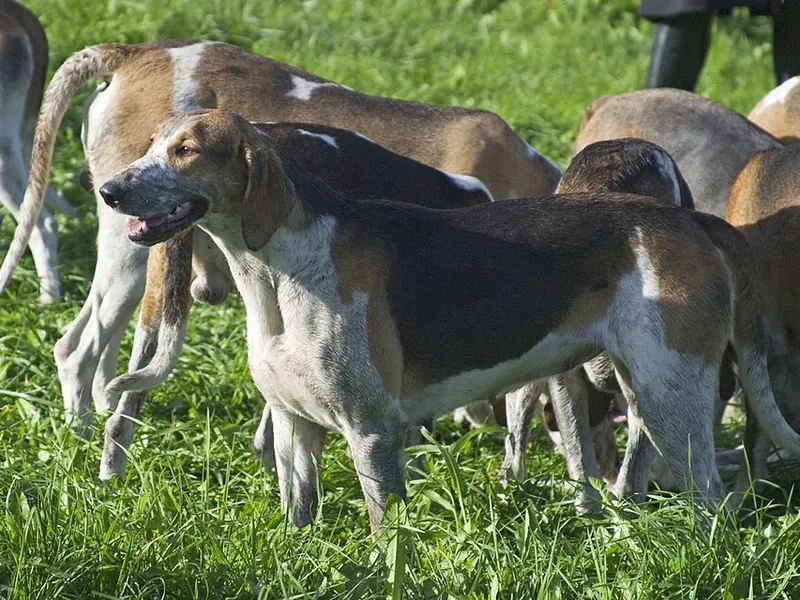
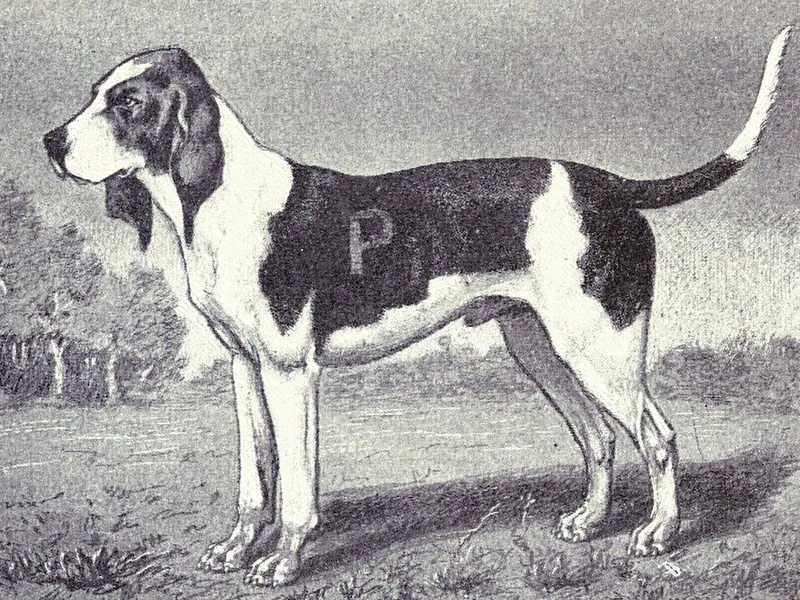
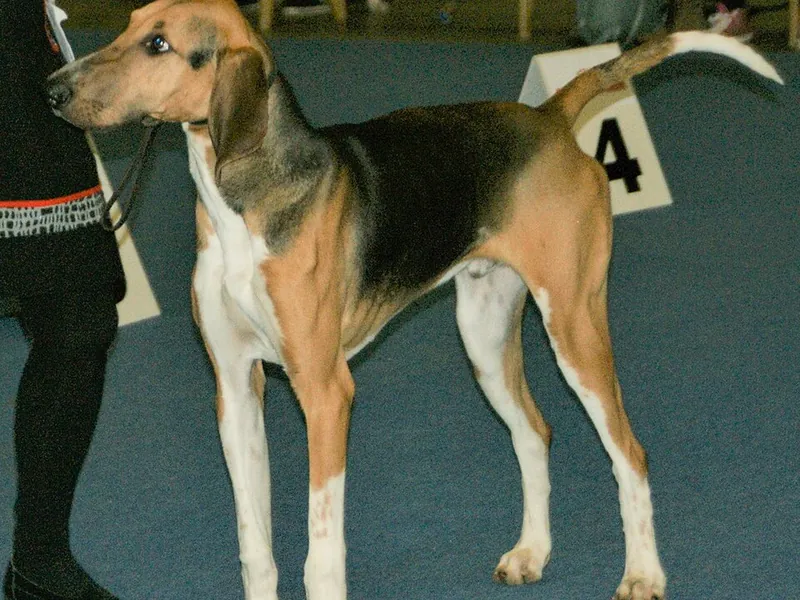
The breed's founder, the Marquis François de Larrye, created it from local Poitou hounds crossed with hounds from other regions. During the French Revolution many packs were lost, and the breed was later rebuilt, partly with English Foxhound blood, which increased its speed. Poitevins are often tricolor, with a tan head, black saddle and white body.
Size, Coat and Colors
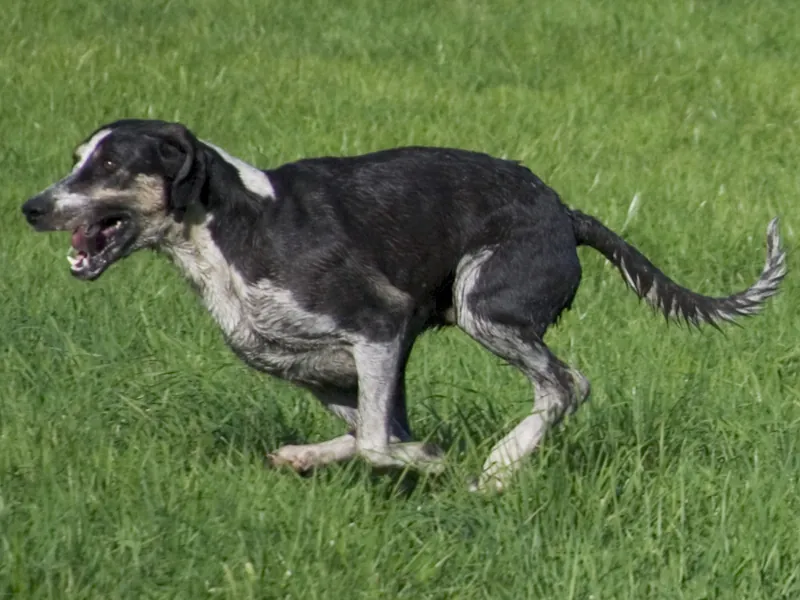
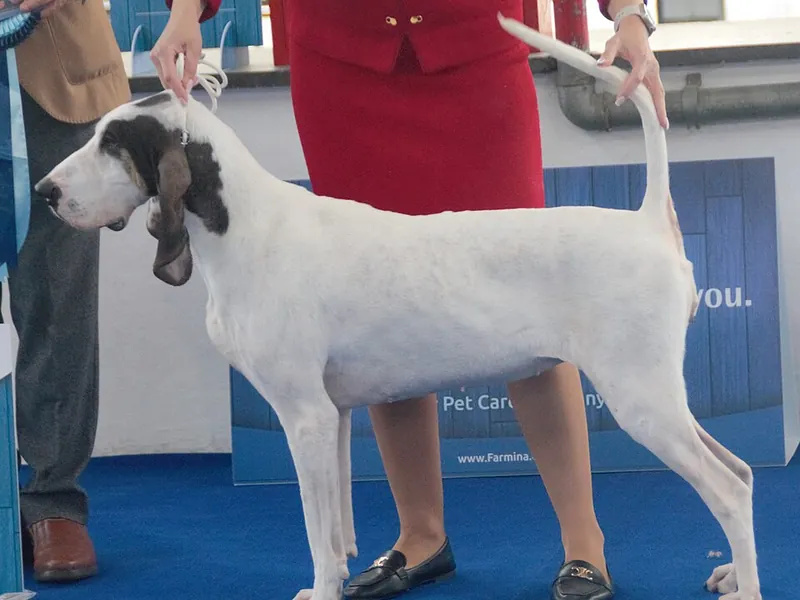
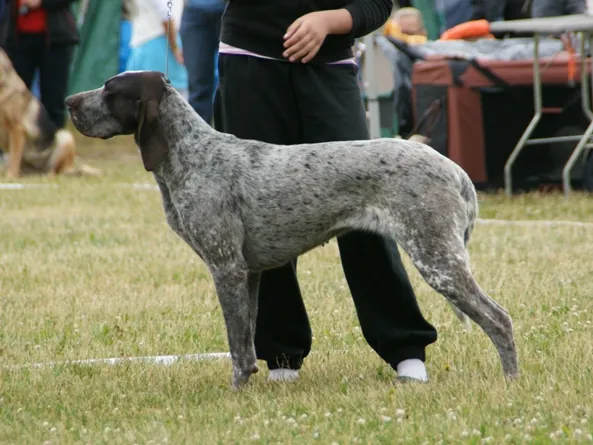
The Poitevin is a tall, lean, elegant scent hound built for speed and endurance over long distances. It has a long, narrow head with a slightly arched profile, a long muzzle, fine, medium-length ears that turn inward and a deep but not overly wide chest. The legs are long and well-muscled, and the tail is long and carried in a gentle curve. Adults stand about 24 to 28 inches and weigh roughly 45 to 67 lb. Males are slightly taller and heavier than females.
The coat is short, fine and glossy, lying close to the body and offering little insulation.
The typical color is tricolor: a white body with a black saddle or black blanket and tan on the head and legs. Tricolor dogs with black patches instead of a saddle also occur, and orange and white or tan and white coloring is accepted but less common. The overall look is that of a refined, athletic hound rather than a heavy-boned one.
Temperament and Personality
Poitevins are bred for pack work, so they are usually sociable with other dogs. They are generally gentle with people, though there is little data on family life.
Their hunting drive is intense, and they are independent and focused when following a scent.
Pack hounds are used to living in kennels with other dogs, which means individual Poitevins may be less accustomed to household life. If you adopt one from a hunting kennel, expect a period of adjustment to indoor manners, house training and family routines.
Their voice is less booming than that of some French hounds but carries well, and they bay readily when on scent.
Is the Poitevin Good for First-Time Owners?
No. The Poitevin is bred and kept almost entirely as a pack hunting hound, and it is not a suitable first dog. Its exercise needs are very high, its focus on scent overrides training once a trail is found and many dogs have little experience of household life.
Even experienced dog owners can find a working pack hound challenging indoors. A Poitevin coming from a hunting kennel may need months of patient work on house training, indoor manners and being alone. Anyone without hound experience who is drawn to this breed should consider a more common, companion-oriented scent hound or spend time with a hunting pack first.
Do Poitevins Bark a Lot?
Poitevins are vocal on the trail, as they bay readily when following a scent. Their voice is described as less booming than that of some French hounds but clear and far-carrying, which helps hunters follow the pack.
At home, a well-exercised Poitevin is not necessarily a constant barker, but boredom, loneliness and the sounds of other dogs or wildlife can set it off. Pack hounds kept alone may howl when separated from their companions. Living with another dog, plenty of exercise and gradual alone-time training help. People with close neighbors should consider whether baying could cause problems.
Can You Get a Poitevin in the US?
It is very difficult. The Poitevin is not recognized by the AKC and is extremely rare in North America. Most dogs live in French hunting packs, and the breed is managed by French hunting and breed associations.
Anyone seriously interested usually needs to contact French breed clubs or pack masters directly and arrange an import. Many pack owners do not place hounds in pet homes, so a working home with a real outlet for the dog's hunting drive is more likely to be considered. Plan for transport, vaccinations and paperwork, and be cautious about sellers using the name for mixed or unregistered hounds.
Exercise and Training
This is a high-endurance breed that needs extensive daily exercise, ideally including pack hunting or long runs.
Training should start early and focus on recall and leash manners, though their prey drive makes off-leash control unreliable.
This is one of the fastest French scent hounds, built for long runs over open country. Daily walks alone are not enough. Secure fencing is essential, and young dogs should be introduced to leash work, car travel and household routines early.
Training should use patient, reward-based methods. Like many pack hounds, Poitevins can be sensitive to harsh handling.
Grooming and Shedding
The short, glossy coat needs only weekly brushing. Shedding is moderate.
Check ears regularly and inspect paws after work.
The coat is short, fine and close-lying. Check feet and pads regularly, as the breed was built for running over rough ground.
Feeding and Nutrition
The Poitevin is an endurance athlete, and its food needs vary greatly with workload. A hound hunting several days a week burns far more energy than one walking on leash, so feed according to activity and body condition. A fit Poitevin is lean, with ribs easily felt and slightly visible and a clear tuck-up, but should never look gaunt.
As a deep-chested hound, the Poitevin is at risk of bloat. Divide the daily ration into at least two meals, avoid feeding a large meal right before or after intense exercise and let the dog cool down before eating. Many hunters give the main meal several hours after a hunt.
Puppies should grow steadily on a complete food suited to large breed puppies. Avoid long, forced runs until growth is complete.
Hounds raised in packs may eat fast and guard food. In a home with other dogs, feed them separately. Offer water often on hunting days. Store food securely, as hounds are skilled scavengers.
| Adult weight | Less active | Typical adult | Very active |
|---|---|---|---|
| 45 lb | 940 kcal | 1,080 kcal | 1,340 kcal |
| 67 lb | 1,270 kcal | 1,450 kcal | 1,810 kcal |
Estimates use the resting energy formula veterinarians work with (70 × body weight in kg0.75) and standard activity factors. Use the feeding guide on your food as a starting point and adjust to body condition. Puppies, seniors, pregnant animals and pets that need to lose weight have different needs, so ask your vet.
Health and Lifespan
No breed-specific health data is available. As a deep-chested hound, bloat is a potential risk. Ask breeders for hip screening results.
Reliable lifespan data is lacking; similar hounds commonly live around 10 to 12 years.
Feed smaller meals and avoid strenuous exercise immediately after eating to reduce the risk of bloat. Keep ears clean and dry to prevent infections.
Poitevin Price and Cost of Ownership
There is no meaningful US price range for the Poitevin. The breed is extremely rare outside France, and most hounds are bred within hunting packs rather than sold as pets. Prices, where dogs are available, vary by breeder, region and lines, and an import adds significant costs for transport, vaccinations and paperwork. Rescue Poitevins are practically unavailable in the US.
Ongoing costs are moderate for food and grooming. The short coat needs only weekly brushing.
The main breed-specific cost drivers are infrastructure and activity: secure, high fencing, a GPS tracking collar for any off-leash work and access to tracking, scent work or drag hunting to give the dog a proper outlet. Vet care for running injuries, foot pad damage and potential bloat surgery is also worth budgeting for, and insurance can help with emergencies.
Is the Poitevin Right for You?
The Poitevin is best suited to hunters with packs or very experienced hound owners in rural areas.
It is not suited to family pet life, apartments or homes with small animals.
Very few Poitevins are kept as pets outside France. If you are interested, contact French breed clubs or hunting packs, and be prepared to provide a working outlet such as tracking or drag hunting.
Poitevin Traits at a Glance
Poitevin FAQ
How big is a Poitevin?
It stands about 24 to 28 inches tall and weighs roughly 45 to 67 lb.
Is the Poitevin a good family pet?
It is primarily a working pack hound and rarely kept as a pet.
What was the Poitevin bred for?
It was originally bred to hunt wolves in packs, later deer and wild boar.
Do Poitevins shed?
Yes, moderately. Their short coat is easy to care for.
How long do Poitevins live?
Data is limited, but similar hounds commonly live around 10 to 12 years.
Are Poitevins good with other dogs?
Yes, usually. As pack hounds, they tend to be sociable with other dogs.