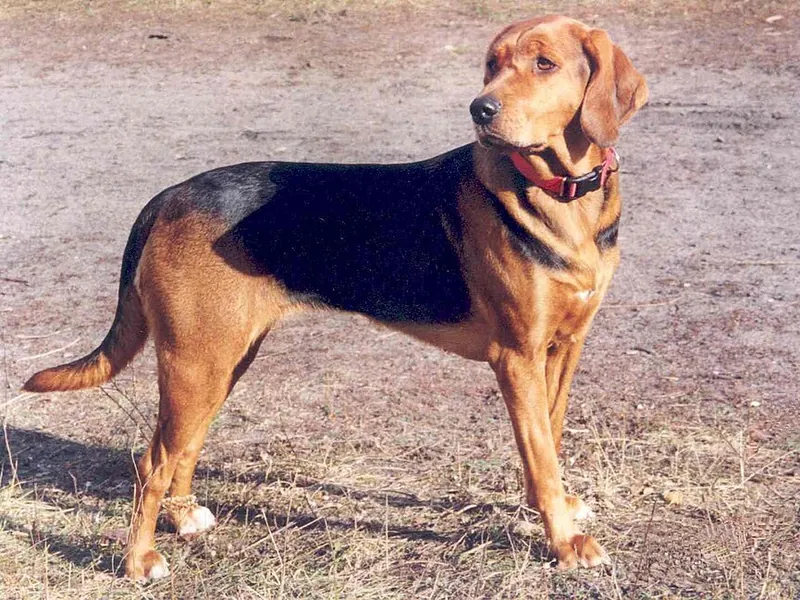
Kerry BeagleIreland's ancient black-and-tan pack hound
Despite its name, the Kerry Beagle is not a small Beagle but a tall, athletic Irish hound used for centuries in packs to hunt hare and follow drag lines. Friendly with people and dogs but driven by a strong nose, it needs a very active, rural life.
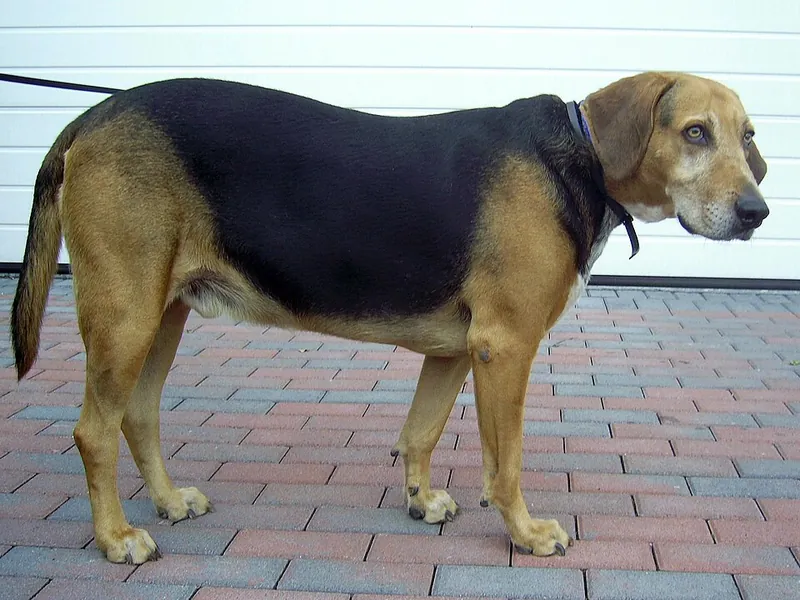
Why people love the Kerry Beagle
- Friendly with people and other dogs
- Gentle and good with children
- Short coat is low-maintenance
- Tireless partner for running and trail work
- Historic Irish breed with deep working roots
Things to consider
- Needs daily running, not just walks
- Recall unreliable once on a scent
- Loud, carrying hound voice
- Struggles as an only dog
- Almost unavailable outside Ireland
Is this breed right for you?
10 questions · live resultHistory and Origin
The Kerry Beagle is one of Ireland's oldest hound breeds, associated with County Kerry and the southwest of the country. The famous Scarteen Hunt, kept by the Ryan family, has maintained a pack of these black-and-tan hounds for generations.
Traditionally the breed hunted hare and fox, and today it is widely used in drag hunting and trail hunting, where hounds follow a laid scent. Some historians believe it contributed to American coonhound lines through dogs brought by Irish emigrants. It is recognized by the Irish Kennel Club but not by the FCI, AKC or The Kennel Club.
Size, Build and Colors
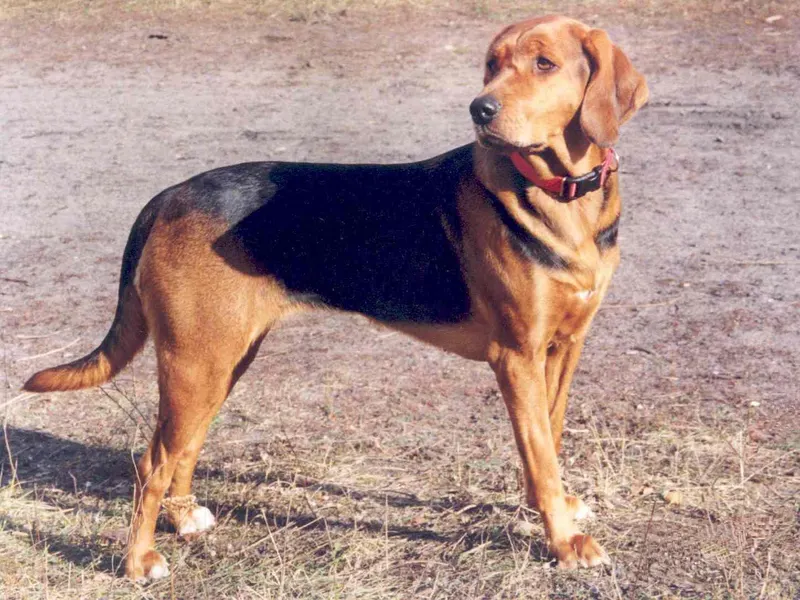
Despite its name, the Kerry Beagle is a tall, athletic hound, much larger than the familiar Beagle. Adults stand about 22 to 24 inches at the shoulder and weigh up to around 60 lb. Males are generally taller and heavier, with a broader head, while females are slightly more refined.
The body is lean and muscular, built for endurance running across rough Irish countryside. The chest is deep, the legs long and the feet strong. The head is moderately broad with long, drop ears and dark, gentle eyes.
The coat is short, dense and close-lying, offering protection in wet weather. Common colors include:
- Black and tan: the most typical pattern
- Tan
- Tricolor: black, tan and white
Some dogs show blue or mottled shades, but black and tan dominates in traditional packs. The tail is long and carried high when the dog is working, a feature that helps hunters follow the pack.
Temperament and Personality
Kerry Beagles are generally friendly and gentle, and sources describe them as good with children and other dogs, as expected from a pack hound.
They are also intensely driven by scent and stamina. Information on life as a companion dog is limited, as most still live in hunting packs or with trail-hunting enthusiasts.
Because they are raised and kept in packs, many Kerry Beagles are very sociable with other dogs and may struggle as the only dog in a home. Their voice is loud and carrying, which is valuable in the field but can be a problem for close neighbors.
Can a Kerry Beagle Live as a House Pet?
A Kerry Beagle can live as a house pet, but only with a very active, rural family that can meet its running needs.
Most Kerry Beagles live in hunting packs or with trail-hunting enthusiasts, so experience with them as companion dogs is limited. Indoors, they are generally friendly and calm, but without daily running and scent work they can become restless and vocal. Their loud voice and need for canine company make them poorly suited to suburban or urban homes. A rural setting with access to open countryside and another dog is the best fit.
Are Kerry Beagles Good with Cats?
Kerry Beagles may live with cats they are raised with, but their strong hunting drive means caution is essential.
Bred to hunt hare and fox in packs, they are naturally interested in small, fast-moving animals. A puppy raised with a household cat may learn to accept it, but adults without cat experience are likely to chase. Introductions should be slow and supervised, and the cat needs escape routes. Small pets such as rabbits and guinea pigs should always be kept separate.
Can You Get a Kerry Beagle in the US?
It is very difficult. Kerry Beagles are almost exclusively found in Ireland, mostly in working packs.
The breed is recognized by the Irish Kennel Club but not by the AKC, FCI or The Kennel Club, so there are no AKC-registered breeders in the US. Prospective owners usually need to contact Irish breeders or hunt clubs directly and arrange import. Packs rarely sell puppies to pet homes, and breeders often prefer working or hunting placements. Expect a long search and significant import costs.
Exercise and Training
This is a high-energy hound built for running long distances.
- Daily exercise should include running, not only walking.
- Trail hunting, drag hunting or tracking are ideal outlets.
- Recall is limited when on scent; use fenced areas or long lines.
- It dislikes being alone and may howl if bored.
A sensible routine includes daily running, either on a long line, beside a bicycle once fully grown, or in large fenced fields. Scent games and tracking sessions give mental exercise. Young hounds need a gradual build-up of fitness rather than long runs too early.
Grooming and Shedding
The short, dense coat is most often black and tan, sometimes tan or tricolor. Weekly brushing is enough.
Check feet and ears after runs, especially in wet, muddy countryside. Trim nails regularly.
As a working hound it is generally low-maintenance, but its drop ears benefit from regular cleaning, especially after wet runs. Trail hounds also need tick checks during the warmer months.
Feeding and Nutrition
Kerry Beagles are endurance hounds that burn large amounts of energy when working or running daily. Adjust portions to activity level: dogs that run with a pack or trail hunt several times a week need more food than less active dogs. Check body condition regularly, aiming for a lean, athletic frame with ribs easily felt.
The breed is deep-chested, so take steps to reduce bloat risk:
- Feed two meals a day rather than one large meal.
- Avoid running or vigorous exercise for about an hour before and after meals.
- Use a slow-feeder bowl for dogs that eat quickly.
Puppies should eat a complete puppy food suited to large breeds, with steady growth. Do not start long runs until growth is complete.
Like many hounds, Kerry Beagles are food-motivated, so secure bins and counters and count training treats in the daily ration.
| Adult weight | Less active | Typical adult | Very active |
|---|---|---|---|
| 60 lb | 1,170 kcal | 1,330 kcal | 1,670 kcal |
Estimates use the resting energy formula veterinarians work with (70 × body weight in kg0.75) and standard activity factors. Use the feeding guide on your food as a starting point and adjust to body condition. Puppies, seniors, pregnant animals and pets that need to lose weight have different needs, so ask your vet.
Health and Lifespan
No reliable breed-specific health information or lifespan data were found. Kerry Beagles are bred mainly for working soundness, which tends to favor athletic, moderate dogs.
Choose dogs from breeders or packs that monitor health and fitness, and keep the dog lean and well conditioned.
Kerry Beagle Price and Cost of Ownership
Kerry Beagles are very rare outside Ireland and essentially unavailable from US breeders. Most dogs live in working packs, and puppies are rarely sold to pet homes. Anyone seeking one should expect to import from Ireland, adding travel, vaccinations and paperwork costs.
Rescue placements in the US are extremely unlikely.
Breed-specific ongoing costs include:
- Import fees if buying from Ireland.
- Secure, high fencing for a strong-running hound.
- GPS collars for trail or drag hunting.
- Tick prevention and paw care for dogs running in rough terrain.
Food costs are moderate to high, depending on activity.
Vet costs are generally modest for a fit hound, but injuries from running in rough country can add up.
Is the Kerry Beagle Right for You?
Few households can meet this breed's needs.
- Good match: trail-hunting enthusiasts, very active rural families, experienced hound owners.
- Poor match: apartments, suburban homes with neighbors close by, owners wanting a small Beagle.
Outside Ireland, the breed is very hard to obtain.
Kerry Beagle Traits at a Glance
Kerry Beagle FAQ
Is the Kerry Beagle a Beagle?
No. It is a separate, much larger Irish hound breed, roughly 22 to 24 inches tall.
How big does a Kerry Beagle get?
Typically 22 to 24 inches at the shoulder and up to around 60 lb.
Are Kerry Beagles good with children?
They are generally friendly with children and other dogs, but their energy makes them better suited to active families.
What is a Kerry Beagle used for?
Traditionally for hunting hare and fox in packs, and today often for drag and trail hunting.
Is the Kerry Beagle recognized by kennel clubs?
It is recognized by the Irish Kennel Club but not by the FCI, AKC or The Kennel Club.
Are Kerry Beagles noisy?
They have a loud, musical hound voice and use it when hunting, so they suit rural homes better than close neighbors.