JämthundSweden's national moose-hunting spitz
The Jämthund is a large, wolf-gray spitz from Sweden, bred to track and hold moose at bay for hunters. Calm and affectionate with family but bold and independent outdoors, it suits active, experienced owners, ideally in rural areas.
Why people love the Jämthund
- Calm, affectionate house dog when exercised
- Courageous, enduring working dog for hunting
- Thick weatherproof coat suits cold climates
- Alert without being overly suspicious
- Generally hardy breed
Things to consider
- Often dominant with unfamiliar dogs, especially same-sex
- Strong hunting drive and wide-ranging
- Barks a lot when excited or on a trail
- Heavy seasonal shedding
- Very rare outside Sweden
Is this breed right for you?
10 questions · live resultHistory and Origin
The breed is named after Jämtland, a province in central Sweden, where hunters used large spitz dogs for moose for centuries. For a long time these dogs were grouped with the Norwegian Elkhound, but Swedish breeders argued their dogs were larger and different, and the Swedish Kennel Club recognized the Jämthund as a separate breed in 1946.
The Jämthund hunts by finding a moose, holding it in place with persistent barking, and letting the hunter approach. It has also been used as a sled dog and by the Swedish military. It is one of the most common hunting breeds in Sweden but rare elsewhere.
Size, Coat and Colors
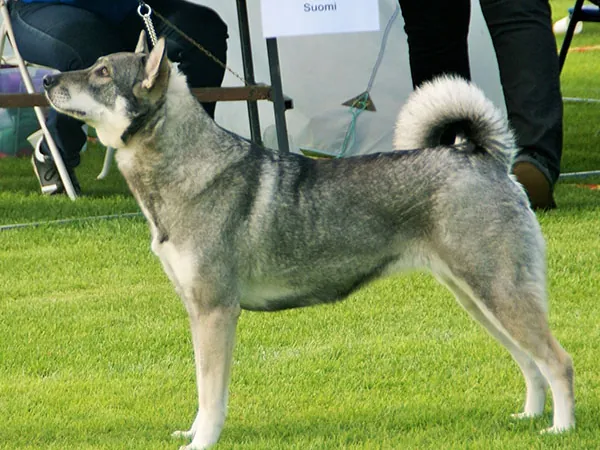
The Jämthund is a large, powerful spitz standing about 20 to 26 inches at the shoulder and weighing roughly 51 to 64 lb. The FCI standard gives males about 22.5 to 25.5 inches and females about 20.5 to 23.5 inches. It is slightly longer than tall, athletic and strong, with a long, wedge-shaped head, pointed erect ears and a tail curled over the back.
The double coat has a tight-lying, harsh outer coat and a soft, light-colored undercoat. It is short on the head and front of the legs and longer on the neck, chest, backs of the thighs and tail.
The color is light or dark gray, with characteristic light cream-gray markings known as urajiro on the muzzle, cheeks, throat, chest, belly, legs and under the tail. Males are larger, heavier and more masculine in head than females, with a fuller collar of hair around the neck.
Temperament and Personality
At home Jämthunds are generally calm, friendly and attached to their family. They are confident and courageous, as befits a dog that faces moose. Many are dominant with unfamiliar dogs, particularly of the same sex, and small animals may trigger hunting behavior.
They are independent and can be stubborn, a result of working far from the hunter. Moderate watchdog ability makes them alert without being overly suspicious.
In Sweden, Jämthunds often live with hunting families and spend the off-season as calm house dogs, which shows how well they can switch off when their need for activity is met. Children who respect the dog's space usually get along with it.
Is the Jämthund Good for First-Time Owners?
Generally no. Jämthunds are calm and affectionate at home, but their independence, hunting drive and tendency to be dominant with other dogs make them better suited to experienced owners, ideally people familiar with Nordic spitz breeds.
A first-time owner would need to provide long daily outdoor activity, keep the dog on a leash or long line in wildlife areas, manage barking and handle introductions to other dogs carefully. Training goes slowly with a dog that thinks for itself. In Sweden, most Jämthunds live with hunters and their families, and breeders outside hunting circles are rare, so novices may find it hard to find a puppy and support.
Are Jämthunds Good with Other Dogs?
Jämthunds often get along with dogs they live with, but many are dominant toward unfamiliar dogs, particularly those of the same sex. This confidence is part of a breed that was bred to face moose.
To improve the odds:
- Socialize the puppy widely with calm, well-mannered dogs.
- Keep greetings with unknown dogs short and controlled, on leash.
- Choose an opposite-sex companion if adding a second dog.
- Avoid crowded dog parks with adult males.
Small pets and cats can trigger hunting behavior, especially outdoors, though some Jämthunds raised with a resident cat live with it peacefully. Supervise until you know the individual dog.
Can Jämthunds Be Left Alone?
Jämthunds do not like long periods alone. An adult that has had a long walk or run can usually manage about four hours, but frustration or loneliness often shows as howling, barking or escape attempts.
Build alone time gradually from puppyhood, starting with short absences. Before leaving, give real exercise and a chew or food puzzle. A secure yard alone is not a solution: a bored Jämthund may bark persistently or try to dig or climb out. For people who work full days, a dog walker, a second dog chosen carefully or a family member at home helps a lot. Hunting families often find the breed settles well because it gets regular work and company.
Exercise and Training
This is an endurance breed. Long daily walks or hikes in nature, plus activities such as tracking, skijoring or hunting, keep it satisfied. A secure yard is important.
Train with consistency and rewards, starting early. Expect a dog that thinks for itself. Off-leash freedom is risky in wildlife areas, since the urge to hunt is strong. Jämthunds do not like long periods alone and may howl or bark when frustrated.
Hunting-line dogs may roam widely once they pick up a scent. A GPS collar and a long line are useful tools for owners who walk in forests. Bay-barking is a natural behavior, so expect some vocal moments when the dog is excited.
Grooming and Shedding
The dense double coat is gray with characteristic light markings on the muzzle, cheeks, throat and legs. Brush weekly, increasing to daily when the undercoat sheds seasonally. The coat handles cold very well, and the breed is more comfortable in cool climates than hot ones.
Check paws and ears after forest walks, and look for ticks during the warmer months. Nails usually wear down naturally on active dogs but should still be checked regularly.
Feeding and Nutrition
The Jämthund is an endurance dog, and food needs vary greatly with workload. A dog hunting moose for days in the autumn needs considerably more food than in summer or as a family companion. Adjust portions gradually by season and activity, and judge by body condition: under the thick coat, you should feel the ribs easily and see a waist from above.
Puppies grow into medium-large, strong adults and should be raised on a diet suitable for large-breed growth, with steady rather than rapid weight gain to protect hips and elbows.
- Feed adults two meals a day, and avoid a large meal right before a long outing.
- Dogs working outdoors in cold weather may need extra food in winter.
- Use part of the daily ration for recall training and scent games.
- Feed separately from other dogs if it is pushy about food.
- Offer water on long outings.
| Adult weight | Less active | Typical adult | Very active |
|---|---|---|---|
| 51 lb | 1,030 kcal | 1,180 kcal | 1,480 kcal |
| 64 lb | 1,230 kcal | 1,400 kcal | 1,750 kcal |
Estimates use the resting energy formula veterinarians work with (70 × body weight in kg0.75) and standard activity factors. Use the feeding guide on your food as a starting point and adjust to body condition. Puppies, seniors, pregnant animals and pets that need to lose weight have different needs, so ask your vet.
Health and Lifespan
The Jämthund is generally regarded as a hardy breed, with a typical lifespan of about 12 to 14 years. No breed-specific diseases are well documented in common sources. As with any medium-large breed, ask breeders about hip and elbow screening, and keep the dog lean and active.
Jämthund Price and Cost of Ownership
The Jämthund is not recognized by the AKC and is very rare in the US, so there is no US price range. Most puppies are bred in Sweden and other Nordic countries, and importing one adds transport, paperwork and travel costs. Prices vary by breeder, region and lines, and breeders often favor active or hunting homes.
Adoption is uncommon, though Nordic breed and spitz rescues sometimes have similar dogs.
Breed-specific cost drivers include secure fencing that stops climbing and digging, a GPS collar and long line for walks in wild areas, grooming tools or professional de-shedding during the heavy seasonal coat change, and hip and elbow screening. Food costs rise during hunting seasons or other very active periods.
Is the Jämthund Right for You?
The Jämthund suits you if you:
- Live rurally and enjoy long outdoor activity, or hunt
- Have experience with independent spitz breeds
- Can manage a dog that may be selective with other dogs
It is a poor fit for city apartments, hot climates or homes with small pets.
Jämthund Traits at a Glance
Jämthund FAQ
Is the Jämthund the same as the Norwegian Elkhound?
No. They are related spitz breeds, but the Jämthund is larger and recognized separately by the FCI.
How big does a Jämthund get?
Adults stand about 20 to 26 inches tall and weigh roughly 51 to 64 lb.
Are Jämthunds good family dogs?
They are typically calm and affectionate at home, but their hunting drive and independence suit experienced, active families best.
Do Jämthunds shed?
Yes. The thick double coat sheds moderately and heavily during seasonal coat changes.
How long do Jämthunds live?
Typically about 12 to 14 years.
Do Jämthunds bark a lot?
They can be vocal, especially when excited or on a trail. Barking to hold game at bay is part of their hunting role.