American StaghoundBig, fast sighthound of the American West
The American Staghound is a large sighthound type developed in the US by crossing Greyhounds with Scottish Deerhounds and similar breeds, originally to course coyotes and wolves. Calm and quiet indoors but explosive when it sees prey, it suits experienced sighthound owners with secure space.
Why people love the American Staghound
- Calm, quiet and gentle indoors
- Spectacular speed and stamina for lure coursing
- Affectionate with its own family
- Low-maintenance coat in most varieties
- Rarely barks
Things to consider
- Extreme chase drive; cats and small pets at risk
- Free running only in large, secure enclosures
- Not a standardized breed, so size and type vary
- Bloat and bone cancer risks
- Thin skin tears easily; feels the cold
Is this breed right for you?
10 questions · live resultHistory and Origin
Staghounds have been used in the American West since the 19th century, when ranchers and army officers needed fast dogs to chase coyotes, wolves and other game across open plains. George Armstrong Custer was among those who kept large staghound packs.
The American Staghound is a type rather than a standardized breed. Breeders select mainly for speed, stamina and hunting ability, crossing Greyhounds with Scottish Deerhounds and sometimes other sighthounds. It is not recognized by the FCI, the AKC or The Kennel Club.
Size, Coat Types and Colors
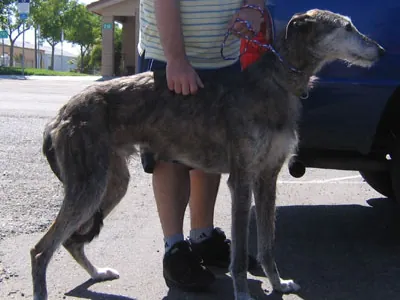
The American Staghound is a large, long-legged sighthound type bred for speed and endurance rather than a fixed look. Adults typically stand 25 to 33 inches at the shoulder and weigh roughly 64 to 99 lb. The wide range reflects different crosses, mainly Greyhound and Scottish Deerhound. Males are generally taller and heavier, with a broader chest.
The body is deep-chested and lean, with a long neck, arched loin, tucked-up belly and powerful hindquarters. Ears are usually folded back like a Greyhound's, and the tail is long.
Because no official standard exists, three coat types are common:
- Smooth, short and close like a Greyhound's
- Rough, harsh and wiry like a Deerhound's
- Broken, an in-between coat with some wire on the face and body
Any color is acceptable. Brindle, gray, fawn, black, red and white or parti-color patterns all appear, often with a darker mask.
Dogs from working kennels may look quite different from each other, even within one litter.
Temperament and Personality
At home, staghounds are usually calm, gentle and quiet, often content to sleep for much of the day. Many are affectionate with their families but reserved with strangers. They are not watchdogs.
Chase instinct is extremely strong. A running cat, rabbit or deer can trigger an instant sprint, and small pets may be seen as prey. Some can live with cats if raised with them, but supervision and management are always needed.
Many owners describe staghounds as quiet, almost cat-like dogs indoors, preferring a soft bed to constant activity. They are sensitive and can be reserved, so loud, chaotic households may stress them. With their families they are often gentle and affectionate, and they tend to get along with other large dogs of similar type.
Are American Staghounds Good Family Dogs?
They can be calm, affectionate family dogs in the right setting. At home, most are quiet and gentle and prefer lounging to rough play, which suits families with respectful older children.
The limits are size and chase drive. A large sighthound can knock over small children during a sprint, and it may chase anything that runs, including pets. Families need secure fencing, a strict leash routine and careful management if they have cats or small animals. Staghounds from working coyote-hunting kennels may be more intense than dogs bred for companionship, so ask about the parents' lifestyle and temperament.
Can an American Staghound Live in an Apartment?
It is possible but not ideal. Indoors, a Staghound is often calm and quiet, and it spends much of the day sleeping, so size is less of an issue than many expect.
The challenge is the need to run. A Staghound needs regular full-speed sprints in a large, secure area, which apartment dwellers must provide through lure coursing clubs, rented fields or fenced parks. Daily walks are essential but not enough on their own. Stairs, slippery floors and small spaces can also be awkward for a large, long-legged dog. A house with a large, tall-fenced yard is a much better fit.
Are American Staghounds Good for First-Time Owners?
Generally not. While the Staghound is gentle and quiet at home, managing its chase drive, size and health needs requires experience, ideally with sighthounds.
First-time owners often underestimate how fast a sighthound reacts to movement, how easily it can slip a regular collar and how unreliable recall becomes once it spots prey. Martingale collars, secure fencing and a lifelong leash routine are non-negotiable. Owners also need to understand sighthound-specific care, such as anesthesia sensitivity and bloat prevention. People new to dogs who love the look may find a retired racing Greyhound from an adoption group an easier introduction.
Exercise and Training
Staghounds need regular chances to run at full speed, plus daily walks.
- Free running only in securely fenced, large areas.
- Lure coursing is a good outlet for non-hunting homes.
- Training needs patience; they are independent and sensitive to harsh handling.
- Recall cannot be relied on when prey is in sight.
Outside exercise sessions, they are often relaxed and low-key at home.
Grooming and Shedding
Coats vary from smooth like a Greyhound to rough and wiry like a Deerhound. Weekly brushing is usually enough, with a comb for rough coats.
Sighthounds have thin skin that tears easily, so check for cuts after running. Provide soft bedding to protect bony joints.
Because they have little body fat and thin coats, smooth-coated staghounds can feel the cold. A dog coat in winter is practical rather than a fashion item.
Feeding and Nutrition
Sighthounds look leaner than most dogs, and a healthy Staghound shows a defined waist with the last few ribs and hip bones faintly visible. Owners used to other breeds often overfeed a dog that seems too thin. Ask your vet to assess ideal body condition for this type.
Staghounds are deep-chested, so bloat is a serious concern:
- Feed two or more smaller meals a day rather than one large one.
- Avoid running and hard play for about an hour before and after meals.
- Slow down fast eaters with a slow-feeder bowl.
- Know the warning signs and have an emergency vet plan.
Puppies grow quickly and should eat a large-breed puppy diet to support steady growth, avoiding excessive weight while bones develop. Working dogs that run game or compete in lure coursing need more food during active seasons. Provide soft bedding as well, since lean dogs with little body fat need protection for pressure points.
| Adult weight | Less active | Typical adult | Very active |
|---|---|---|---|
| 64 lb | 1,230 kcal | 1,400 kcal | 1,750 kcal |
| 99 lb | 1,700 kcal | 1,940 kcal | 2,430 kcal |
Estimates use the resting energy formula veterinarians work with (70 × body weight in kg0.75) and standard activity factors. Use the feeding guide on your food as a starting point and adjust to body condition. Puppies, seniors, pregnant animals and pets that need to lose weight have different needs, so ask your vet.
Health and Lifespan
American Staghounds typically live about 12 to 14 years. As deep-chested dogs, they are at risk of bloat (gastric dilatation-volvulus), a life-threatening emergency. Feed smaller meals and avoid hard exercise right after eating.
Bone cancer (osteosarcoma) is relatively common in large sighthounds. Watch for lameness or swelling in the legs and see a vet promptly. Many sighthounds are also sensitive to some anesthetics, so mention the breed type to your veterinarian.
American Staghound Price and Cost of Ownership
The American Staghound is a working type without a breed registry standard, so there is no reliable published price range. Puppies usually come from hunting kennels that breed for coyote or other game, and prices vary by breeder, region and lines. Sighthound rescues sometimes place Staghounds and similar crosses, which is a good option for companion homes.
Ask breeders about the parents' health, temperament and whether they have been around cats or children. Because no health testing standard exists, be especially careful when choosing a source.
Breed-specific ongoing costs include:
- Large-breed food in substantial amounts
- Tall, secure fencing
- Lure coursing or field rental fees for safe running
- Vet care for injuries from running and thin skin
- Insurance covering bloat and bone cancer, both major risks
Is the American Staghound Right for You?
This breed suits a specific type of owner.
- Good match: experienced sighthound owners, rural homes with large fenced areas, people interested in lure coursing.
- Poor match: homes with cats or small pets, owners who want off-lead walks, small apartments.
A calm adult staghound can be a peaceful companion if its running needs are met safely.
American Staghound Traits at a Glance
American Staghound FAQ
How big do American Staghounds get?
They are large, about 25 to 33 inches tall and roughly 64 to 99 lb.
Are American Staghounds good with cats?
Their chase drive is very high, so cats and small pets are at risk; some can adapt if raised together.
How long do American Staghounds live?
Typically about 12 to 14 years.
Are American Staghounds good guard dogs?
No. They are quiet and rarely bark at strangers.
Is the American Staghound a recognized breed?
No. It is a working type, not recognized by the AKC, The Kennel Club or the FCI.
What health issues affect American Staghounds?
Bloat and bone cancer are major concerns, as in other large, deep-chested sighthounds.
Do American Staghounds shed?
They shed moderately. Smooth coats shed fine hair, rough coats shed less often but need occasional combing.