Finnish HoundFinland's tireless hare and fox hound
The Finnish Hound is a medium-large tricolor scent hound bred to hunt hare and fox alone, driving game toward the hunter with a ringing voice. Calm and friendly at home but fiercely independent on a trail, it is primarily a hunter's dog.
Why people love the Finnish Hound
- Calm, friendly and gentle at home
- Usually peaceful with people, including strangers
- Short, easy-care coat
- Tireless hunting partner in snow and forest
- Distinctive tricolor coat
Things to consider
- Loud and persistent on the trail
- Strong hunting instinct; recall unreliable outdoors
- Cats and small pets at risk
- Some can be choosy with other dogs
- Rarely seen outside Nordic countries
Is this breed right for you?
10 questions · live resultHistory and Origin
The Finnish Hound was developed in the 19th century from French, German, Swiss and Scandinavian hounds crossed with local dogs. Finnish hunters wanted a hardy hound that could work alone through deep snow and dense forest, tracking hare and fox and giving voice so the hunter could follow from a distance.
The breed was standardized in the early 20th century and became one of the most common breeds in Finland, valued in hunting circles rather than show rings. The FCI recognizes it in Group 6. It is rarely seen outside the Nordic countries and is not recognized by the AKC or The Kennel Club.
Finnish Hounds hunt in a style typical of Nordic hounds: a single dog searches for a hare or fox, then follows the trail while barking, driving the game in a wide loop back toward the waiting hunter. This independent, persistent work shaped the breed's character.
Size, Coat and Colors
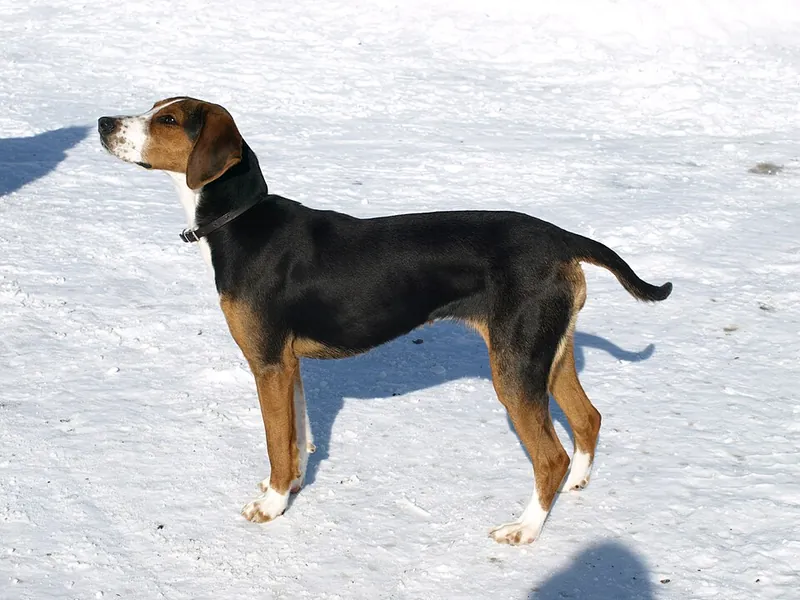
The Finnish Hound is a medium-sized, athletic scent hound with a rectangular build, strong bone and a calm, friendly expression. Adults stand about 20 to 24 inches at the shoulder and weigh roughly 44 to 55 lb. Males are taller and heavier than females, with a stronger head.
The head is long and moderately broad with a slightly arched skull, dark eyes and medium-length ears that hang close to the cheeks. The tail is fairly short, reaching the hocks, and carried low in a slight curve.
The coat is short, harsh and dense, with a close undercoat that protects the dog in Finnish winters.
The breed is always tricolor:
- A tan base, typically on the head and legs
- A black saddle across the back and sides
- White markings on the head, neck, chest, lower legs and tail tip
The balance of colors varies, but the tricolor pattern is a defining breed trait.
Temperament and Personality
At home, Finnish Hounds are typically calm, friendly and gentle. They are not natural guard dogs and usually greet strangers peacefully, so they are poor watchdogs.
Once outdoors, their hunting instinct dominates. They work independently and single-mindedly, and they are loud on the trail. Many are not reliable with cats or small pets, and some can be choosy about other dogs.
Are Finnish Hounds Good With Cats?
Many are not reliable with cats. The Finnish Hound was bred to follow hare and fox, and its chase instinct is strong, especially outdoors.
A puppy raised with a resident cat may learn to accept it, but supervision is still recommended, and the dog may treat unfamiliar cats very differently. Give the cat high escape routes and secure rooms. Rabbits, rodents and other small pets should be kept completely separated. Adult hounds coming from hunting homes may have little experience with cats, so ask about their history before adopting into a multi-pet household.
Are Finnish Hounds Good for First-Time Owners?
Not usually. While the Finnish Hound is calm and friendly at home, its independence, scent drive and loud voice make it challenging for owners without hound experience.
A first-time owner would need to commit to long daily outings, tracking or scent work, secure fencing and patience with training. Recall will never be reliable around game, so leashes and long lines are part of life. The breed's rarity outside the Nordic countries also makes finding support harder. Hunters and experienced hound owners in rural areas are the best fit.
Can Finnish Hounds Be Left Alone?
Many adults cope with moderate periods alone, as the breed is typically calm indoors when its exercise needs are met. Long hours alone without enough activity, however, can lead to howling, baying and attempts to escape.
Exercise the dog well before leaving and provide a long-lasting chew or puzzle feeder. Make sure the home and yard are secure, as a bored hound may dig or climb. A second dog can provide company, though some Finnish Hounds are choosy about canine companions. Owners with neighbors close by should be aware that hound vocalizations carry far.
Exercise and Training
This is a stamina breed that needs long daily outings, ideally including real hunting or tracking. Long hikes on a long line, scent trailing and nose games are useful substitutes.
Training can be challenging. Finnish Hounds are intelligent but independent and easily distracted by scent. Use patient, reward-based methods and build recall early, but never rely on it in open country with game around. A secure fence is essential.
Grooming and Shedding
The short, dense coat needs only weekly brushing with a hound mitt. It sheds moderately and is not hypoallergenic.
Check the drop ears weekly and after hunting in wet conditions. Inspect paws and coat for injuries, ticks and ice balls after winter work.
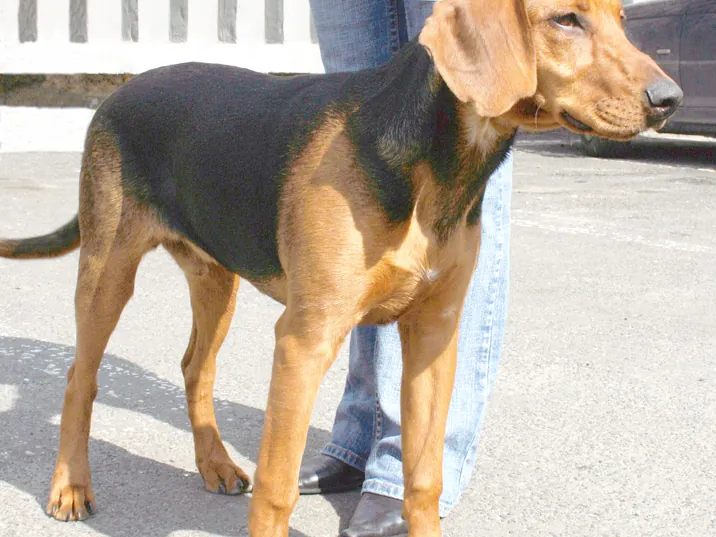
The coat is tricolor, with a tan base, a black saddle and white markings on the head, chest, legs and tail tip.
Feeding and Nutrition
Finnish Hounds work long hours in cold weather during hunting season and may need noticeably more food then. Outside the season, reduce portions to prevent weight gain. Judge by feel: ribs should be easy to find, with a visible waist.
Puppies should eat a diet suitable for medium to large breeds to support steady growth. Keeping young dogs lean helps protect joints, as hip dysplasia is among the conditions listed for the breed.
- Feed puppies three to four meals a day and adults two.
- On hunting days, give a light snack before work and the main meal after rest.
- Provide water after long outings and check for dehydration.
- Food puzzles and scatter feeding use the hound's nose at home.
The breed is listed with dilated cardiomyopathy and atopy among its concerns. If your vet diagnoses either, follow their dietary advice rather than changing food on your own.
| Adult weight | Less active | Typical adult | Very active |
|---|---|---|---|
| 44 lb | 930 kcal | 1,060 kcal | 1,320 kcal |
| 55 lb | 1,090 kcal | 1,250 kcal | 1,560 kcal |
Estimates use the resting energy formula veterinarians work with (70 × body weight in kg0.75) and standard activity factors. Use the feeding guide on your food as a starting point and adjust to body condition. Puppies, seniors, pregnant animals and pets that need to lose weight have different needs, so ask your vet.
Health and Lifespan
The Finnish Hound has several known health concerns:
- Hereditary cerebellar ataxia, a progressive neurological condition affecting coordination in young dogs. A DNA test is available, and responsible breeders use it.
- Dilated cardiomyopathy, a heart muscle disease.
- Lymphoma, a type of cancer.
- Hip dysplasia and atopy (skin allergies).
Ask breeders for the ataxia DNA status of both parents and hip results. Reliable lifespan figures are limited; medium-sized hounds commonly live around 12 years.
Finnish Hound Price and Cost of Ownership
The Finnish Hound is very rare in the US, and there is no reliable published price range. Most dogs are bred in Finland and other Nordic countries for hunters, so acquiring one usually means contacting breeders or clubs there and arranging import. Prices vary by breeder, region and lines, and import adds transport, paperwork and travel costs. Breeders may ask about your hunting plans before agreeing to a placement.
US rescue options are very unlikely.
Breed-specific ongoing costs include:
- Import and travel costs
- DNA testing for hereditary ataxia if not done by the breeder
- GPS collars for tracking and hunting
- Secure fencing
- Insurance covering heart disease, lymphoma and skin allergies
Is the Finnish Hound Right for You?
This breed is best suited to hunters and very outdoorsy owners in rural settings with secure fencing. It is calm and pleasant in the home if its hunting needs are met.
It is not a good choice for city apartments, homes with cats or small pets, or owners who want reliable off-leash control.
Finnish Hound Traits at a Glance
Finnish Hound FAQ
How big is a Finnish Hound?
It stands about 20 to 24 inches tall and weighs roughly 44 to 55 lb.
Are Finnish Hounds good family dogs?
They are usually calm and friendly at home, but they are primarily hunting dogs and need a lot of exercise.
Are Finnish Hounds good watchdogs?
Not really. They tend to be friendly with strangers and have little guarding instinct.
What is hereditary ataxia in Finnish Hounds?
It is an inherited neurological disease affecting coordination. A DNA test lets breeders avoid producing affected puppies.
How long do Finnish Hounds live?
Data is limited, but they commonly live around 12 years.
Do Finnish Hounds bark a lot?
They are loud on the trail but usually quiet at home. Expect baying when they pick up a scent.