American Pit Bull TerrierAthletic, people-loving American terrier
The American Pit Bull Terrier is a muscular, athletic dog known for its strength, determination and strong affection for people. It is eager to learn and loves its family, but it needs experienced handling, careful management around other animals and awareness of local laws.
Why people love the American Pit Bull Terrier
- Affectionate and people-oriented, often gentle with family
- Eager to please and quick to learn
- Athletic partner for weight pulling, agility and hiking
- Short coat with minimal grooming needs
- Many adults available through rescues and shelters
Things to consider
- Often selective or intolerant with other dogs
- Breed-specific legislation in some countries, states and cities
- Housing and insurance restrictions are common
- Strength requires early leash training and management
- Prone to skin allergies and itching
Is this breed right for you?
10 questions · live resultHistory and Origin
The APBT descends from bull-and-terrier dogs brought from England, Scotland and Ireland in the 1800s. In Britain they were bred for bull-baiting and later dog fighting, both now illegal. In the US, they were also used as farm dogs, catch dogs for livestock and family companions.
The United Kennel Club recognized the breed in 1898, and it remains a UKC and American Dog Breeders Association breed. The AKC does not recognize the APBT, but it recognizes the closely related American Staffordshire Terrier. The Kennel Club does not recognize it.
The term pit bull is often used loosely for several related breeds and mixes, including American Staffordshire Terriers, Staffordshire Bull Terriers and American Bullies. The APBT is the specific breed registered by the UKC and ADBA, with a leaner, more athletic build than many bully-type dogs.
Size, Build, Coat and Colors
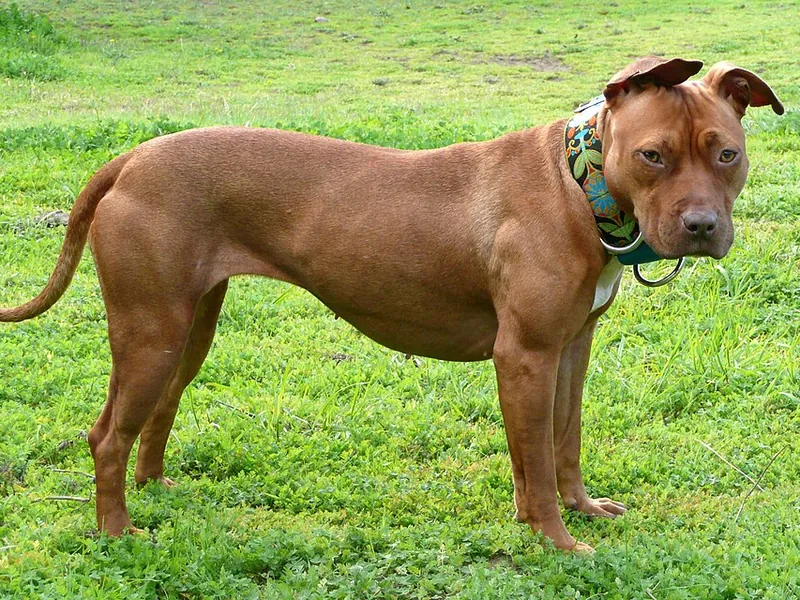
The American Pit Bull Terrier is a medium-sized, muscular dog built for agility and strength rather than bulk. Adults stand about 17 to 21 inches at the shoulder and weigh roughly 31 to 60 lb. Males are generally taller and heavier, and females are typically lighter with a slightly less pronounced head, though weight should always be proportionate to height.
The body is slightly longer than tall, with a deep chest, well-sprung ribs and a strong, flexible back. The head is broad and wedge-shaped, with a well-defined stop and strong jaws. Ears may be natural or cropped in the US, and the tail is thick at the base and tapers to a point.
The coat is short, glossy and smooth to the touch. Under the United Kennel Club standard, any color, pattern or combination is accepted except merle. Common colors include black, blue, red, fawn, brindle and white, with or without white markings. Eyes may be any color except blue.
Temperament and Personality
APBTs are typically affectionate, confident and eager to please. They are often friendly with people, including strangers, and many are gentle with children in their own family. They are not usually natural guard dogs.
Many show intolerance toward other dogs, a trait from their history, and they may chase cats and small animals. Their strength and tenacity call for supervision and careful introductions.
APBTs often show great enthusiasm for life and people, including a habit of greeting with full-body wiggles. They are usually sensitive to their owner's mood and respond best to clear, calm guidance. Their persistence is a strength in training but means they rarely give up on something they want.
Is the American Pit Bull Terrier Good for First-Time Owners?
Usually not ideal without support. The APBT is affectionate and trainable, but its strength, energy and frequent selectivity with other dogs suit experienced owners best.
A first-time owner can succeed by choosing an adult from a reputable rescue with a known temperament, attending training classes from day one and committing to daily exercise and careful management around other dogs. Legal and practical factors matter too: check local regulations, rental agreements and homeowners insurance before bringing one home. Working with a trainer experienced in bull breeds gives first-time owners a solid foundation.
Are American Pit Bull Terriers Aggressive?
Toward people, most APBTs are friendly and affectionate, and aggression toward humans is not typical of well-bred, well-socialized dogs. Behavior depends heavily on genetics, socialization, training and management.
Toward other dogs, the picture is different. Many APBTs are selective or intolerant with dogs, a trait linked to their history, and this can begin around social maturity even in dogs that played well as puppies. Responsible owners manage introductions carefully, avoid crowded dog parks and supervise interactions. Because of the breed's strength, any conflict can be serious, so early training and lifelong management are important regardless of individual temperament.
Are American Pit Bull Terriers Good With Cats?
Some are, but many have a strong prey drive, so success varies greatly between individuals.
A puppy raised with a confident cat is more likely to accept it, while still possibly chasing outdoor cats. Adults with unknown cat history need careful testing; many rescues can cat-test a dog before adoption. Introductions should be gradual and supervised, with the dog on leash, and the cat should have high escape routes. If a dog shows intense staring, stalking or lunging, keep animals separated when unsupervised and consult a trainer.
Exercise and Training
APBTs need at least an hour of vigorous exercise daily plus mental work. They excel at weight pulling, agility, obedience and flirt pole games.
- Use consistent, reward-based training; they learn quickly.
- Socialize early with people and, carefully, with dogs.
- Avoid off-leash dog parks if your dog is selective.
- Teach strong leash manners while the dog is still young.
Tug games with clear start and stop cues, structured fetch and hiking are excellent outlets. Many APBTs also do well in obedience, rally and dock diving. A tired, mentally engaged dog is far easier to manage around distractions.
Grooming and Shedding
The short coat needs weekly brushing. Shedding is moderate. Check skin for allergies or irritation, as the breed can be prone to skin issues.
Nails grow quickly on active dogs and should be trimmed regularly. Light-colored dogs may need sun protection in summer.
Feeding and Nutrition
APBTs are muscular, athletic dogs that should stay lean and well-defined. You should be able to feel the ribs easily and see a waist from above. Excess weight strains the hips and knees, both areas where problems are reported in the breed.
Feed puppies three to four meals a day, moving to two meals by about six months. A complete puppy food and steady growth support healthy joint development.
- Skin allergies are common in the breed. Itching, redness and repeated ear infections can sometimes involve food sensitivities. Work through any elimination diet trial with your vet rather than switching foods frequently.
- Adjust portions for activity. Dogs doing weight pulling or agility need more food than those with moderate walks.
- Use durable feeding puzzles for strong chewers.
APBTs are often highly food-motivated, which is useful in training. Use small treats, count them toward the daily ration and incorporate part of meals into training sessions.
| Adult weight | Less active | Typical adult | Very active |
|---|---|---|---|
| 31 lb | 710 kcal | 810 kcal | 1,020 kcal |
| 46 lb | 960 kcal | 1,090 kcal | 1,370 kcal |
| 60 lb | 1,170 kcal | 1,330 kcal | 1,670 kcal |
Estimates use the resting energy formula veterinarians work with (70 × body weight in kg0.75) and standard activity factors. Use the feeding guide on your food as a starting point and adjust to body condition. Puppies, seniors, pregnant animals and pets that need to lose weight have different needs, so ask your vet.
Health and Lifespan
APBTs typically live 12 to 14 years. Conditions include hip dysplasia, kneecap luxation, skin allergies, demodectic mange, thyroid disorders and degenerative myelopathy.
Choose breeders who hip score and screen for genetic conditions, or adopt from rescues that provide health histories.
Skin allergies often show as itching, redness or repeated ear infections. Discuss food trials and parasite control with your vet if your dog scratches a lot.
American Pit Bull Terrier Price and Cost of Ownership
Prices for APBT puppies vary widely between breeders and are not consistently published, so we do not give a typical range. Choose a breeder registered with the UKC or ADBA who health tests and selects for stable temperament. Many APBTs and pit bull type dogs wait in US shelters and rescues, and adoption is a widely recommended option, often with lower fees and known temperament.
Breed-specific cost drivers include:
- Liability or homeowners insurance, which may be higher or restricted for this breed.
- Housing limitations, as some landlords exclude pit bull type dogs.
- Training classes, particularly for leash manners and dog-to-dog management.
- Treatment for skin allergies, which can be ongoing.
- Local licensing or compliance requirements where breed-specific laws apply.
Is the American Pit Bull Terrier Right for You?
The APBT suits experienced owners who want an affectionate, athletic companion and can commit to training, exercise and management around other animals.
Some countries, states and cities restrict or ban pit bull type dogs. For example, the UK and Germany have strict rules. Always check local regulations before getting one.
Many APBTs in shelters are waiting for homes, and reputable rescues can help match an adult dog with known behavior to your household. Check rental and home insurance policies, which sometimes restrict the breed.
American Pit Bull Terrier Traits at a Glance
American Pit Bull Terrier FAQ
Are American Pit Bull Terriers good family dogs?
Many are affectionate and gentle with their family, but supervision and training are important.
How big do American Pit Bull Terriers get?
They usually stand 17 to 21 inches tall and weigh 31 to 60 lb.
Is the APBT AKC recognized?
No. It is recognized by the United Kennel Club, while the AKC recognizes the related American Staffordshire Terrier.
Are pit bulls banned anywhere?
Yes. Some countries, states and cities restrict or ban them. Check local rules.
Do American Pit Bull Terriers get along with other dogs?
Many are selective with other dogs. Careful introductions and management are important.
How long do American Pit Bull Terriers live?
Most live 12 to 14 years.