Hygen HoundHardy, friendly hare hound from Norway
The Hygen Hound is a compact, tough Norwegian scenthound bred to hunt hare and fox alone through snow and forest. Friendly, cooperative and quiet indoors, it needs plenty of outdoor work and does best with a hunter or very active rural family.
Why people love the Hygen Hound
- Friendly, cooperative and easy to train for a hound
- Calm and unobtrusive indoors
- Tough, compact build for cold and snowy terrain
- Short, harsh coat needs only weekly brushing
- Sociable with other dogs
Things to consider
- Strong, early hunting drive; ranges far on a trail
- Gives voice while hunting
- Needs a lot of daily movement and scent work
- Very small gene pool and very rare
- Off-lead running only in secure areas
Is this breed right for you?
10 questions · live resultHistory and Origin
The breed is named after Hans F. Hygen, who began developing it in Norway in the 19th century from imported hounds, including German and Swedish types. The goal was a hardy dog with great stamina that could work in cold, rough conditions.
Like other Scandinavian hounds, the Hygen Hound hunts alone rather than in packs. It finds a hare or fox, follows it while giving voice, and the game circles back toward the waiting hunter. The breed is recognized by the FCI and is rare even in Norway, with a very small population.
Size, Coat and Colors
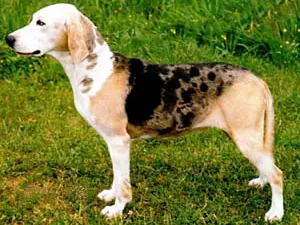
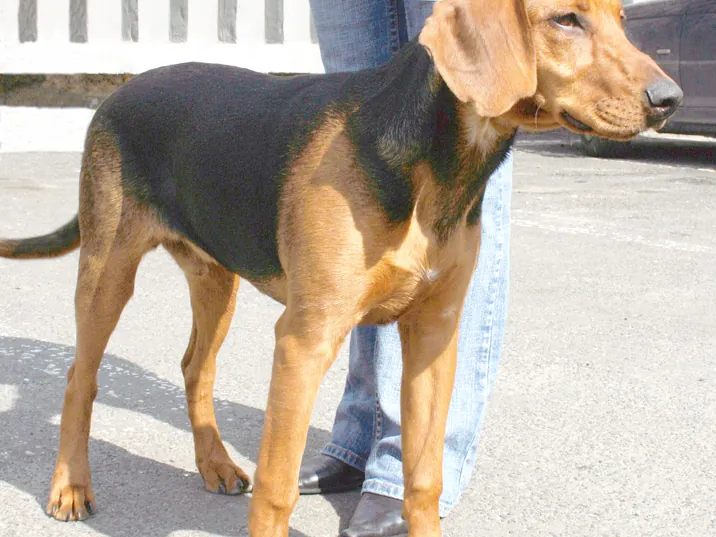
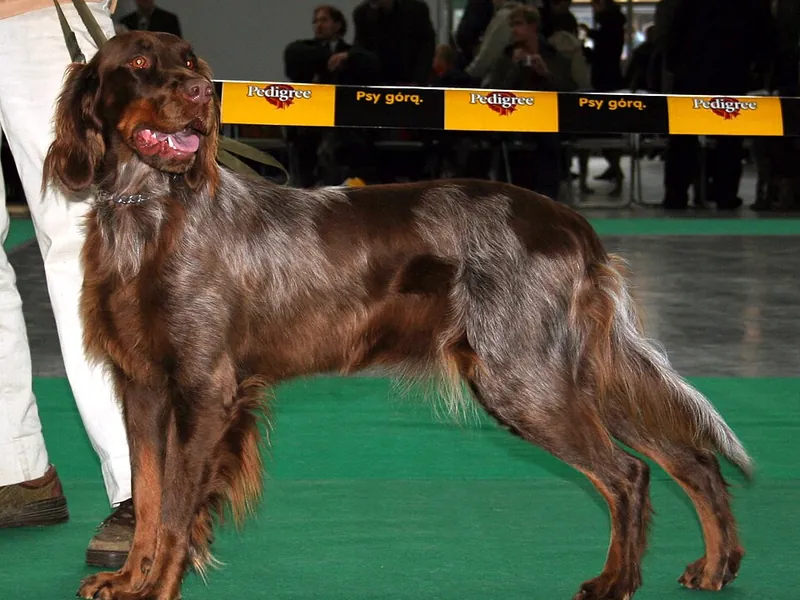
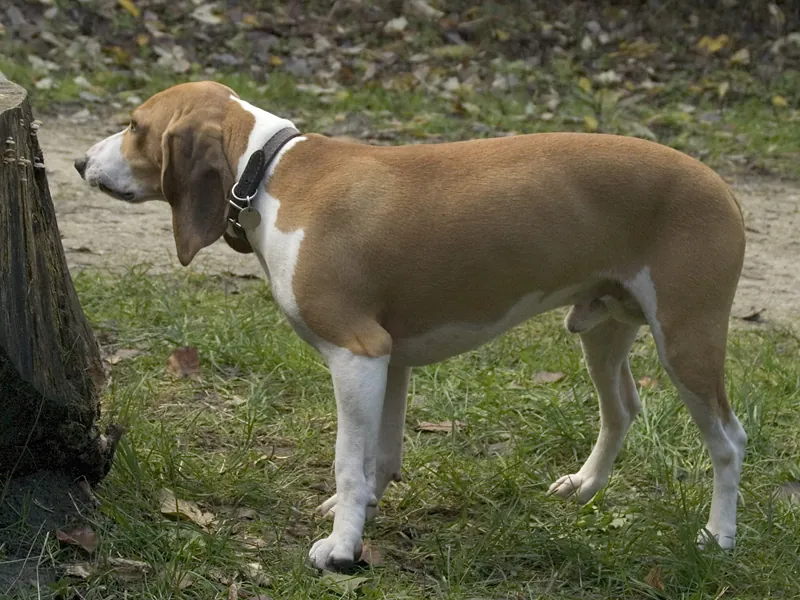
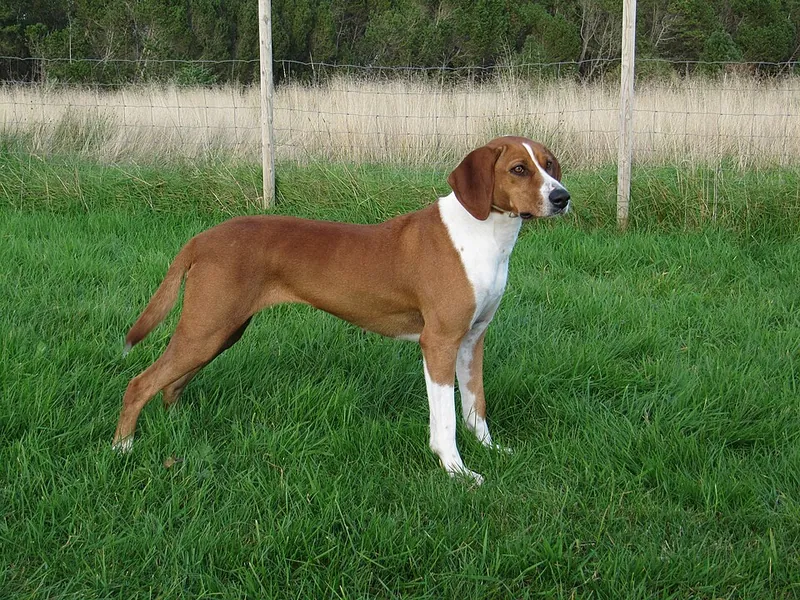
The Hygen Hound is a medium-sized, compact and strongly built scent hound, slightly longer than tall, with a sturdy frame suited to snow and rough forest. Adults stand 19 to 23 inches at the shoulder and weigh about 44 to 55 lb. Males are taller and heavier than females and typically sit at the upper end of the height range.
The coat is short, dense, harsh and close-lying, with good weather resistance. It protects the dog in cold, wet Norwegian conditions.
Accepted colors include:
- Red or yellow-red, often with black shading or a black saddle
- Black and tan
- White with red or black patches or spots
White markings on the chest, feet and tail tip are common in all colors.
The head is moderately broad with a slightly arched skull, medium-length drop ears and dark eyes. The tail is set high and carried in a curve, never tightly over the back. The overall impression is of a tough, compact hound with plenty of stamina rather than speed alone.
Temperament and Personality
Hygen Hounds are described as friendly, cooperative and easy to train by hound standards. They tend to be relaxed at home and pleasant with people.
The hunting drive appears early and is strong. Young dogs often start trailing on their own, so owners must plan for that from puppyhood.
Indoors a well-exercised Hygen Hound is calm and unobtrusive, and many enjoy lying near their people. They are usually sociable with other dogs. Because they were bred to search for game independently, they can range far when they pick up a trail, so management outdoors matters more than obedience drills.
Do Hygen Hounds Bark a Lot?
At home, usually not. Hygen Hounds are typically calm and unobtrusive indoors, especially after a good day outdoors.
On a trail, they give voice. The breed was developed to follow hare and fox while baying, so the hunter can track the chase as the game circles back. That voice is loud and carries.
Howling or barking at home is more likely when the dog is bored, alone for long periods or under-exercised. Regular hunting, tracking or long outings, plus company, are the best ways to keep the noise down. Close neighbors may find the voice challenging.
Are Hygen Hounds Good with Cats?
Caution is wise. Hygen Hounds have a strong, early hunting drive, and they are bred to pursue hare and fox, so small running animals can trigger chasing.
A puppy raised with a calm cat may learn to accept it indoors, especially with careful introductions. Outdoors, though, the same dog may chase cats it would ignore inside.
Households with cats should discuss temperament with breeders, introduce the puppy early and supervise. Small pets such as rabbits and rodents are at greater risk and should be kept separate. For many homes with cats, another breed may be a better fit.
Is the Hygen Hound Good for First-Time Owners?
It can work for experienced outdoor people, but most first-time owners find it challenging. The breed itself is friendly and cooperative, which helps.
The difficulties come from its purpose:
- A powerful drive to trail game alone, often far away
- Recall that fails once on a scent
- Daily exercise needs that go well beyond walks
- Very limited availability outside Norway
A first-time owner who hunts, skijors or hikes daily in all weather, and who is ready to use long lines and fenced areas, can succeed. Most beginners should start with a less driven breed.
Exercise and Training
This hound needs a lot of daily movement, ideally including hunting or scent work.
- Long walks, trail runs and skijoring in winter suit it well.
- Off-lead running should be limited to safe, fenced areas.
- It trains well with rewards and responds to a calm handler.
- Give it company; long periods alone are hard for it.
In Norway, the breed is often trained and tested on hare tracks in autumn and winter. For non-hunting homes, structured tracking or mantrailing captures the same instincts, and many hounds take to it quickly. Aim for exercise every day of the week, not just long weekend outings.
Grooming and Shedding
The short, dense, harsh coat is weather-resistant and easy to maintain. Brush weekly. Common colors are red or yellow-red with black, or tricolor, often with white markings.
After snowy or icy outings, check paws for ice balls and cracked pads. Look over the ears for cuts and dirt.
Feeding and Nutrition
The Hygen Hound was bred to hunt for hours in snow and cold forest, so its energy needs swing widely with the season. A dog hunting hare in autumn and winter may need much more food than in summer, when activity is lower and heat reduces appetite. Adjust portions to activity and body condition, aiming for a lean, muscular hound.
Puppies grow into compact, medium-sized dogs. A complete puppy food fed in measured portions supports steady growth.
- Feed adults two meals a day.
- On hunting or skijoring days, a small breakfast and the main meal after work is easier on digestion.
- Offer water often during long outings, even in winter.
- Dogs living or working in cold conditions may need more food to maintain weight.
No breed-specific food sensitivities are documented. Watch for weight gain in older or retired dogs, which can quickly put on pounds when activity drops but portions stay the same.
| Adult weight | Less active | Typical adult | Very active |
|---|---|---|---|
| 44 lb | 930 kcal | 1,060 kcal | 1,320 kcal |
| 55 lb | 1,090 kcal | 1,250 kcal | 1,560 kcal |
Estimates use the resting energy formula veterinarians work with (70 × body weight in kg0.75) and standard activity factors. Use the feeding guide on your food as a starting point and adjust to body condition. Puppies, seniors, pregnant animals and pets that need to lose weight have different needs, so ask your vet.
Health and Lifespan
Hygen Hounds typically live about 10 to 12 years. No breed-specific diseases are documented. The main concern noted by the Norwegian Kennel Club is the very small gene pool, which breeders occasionally address by carefully crossing in related hounds.
Choose a breeder involved in the national breeding program and ask about health screening and diversity measures.
Hygen Hound Price and Cost of Ownership
The Hygen Hound is extremely rare in the US and not recognized by the AKC. The breed has a very small population, even in Norway, so any purchase would almost certainly involve an import and coordination with the Norwegian breed club. Prices vary by breeder, region and lines, and import costs are significant.
Rescue is not a realistic option outside Scandinavia.
Breed-specific ongoing costs include:
- Import, travel and quarantine paperwork
- GPS tracking collars for hunting or open-country work
- Tracking, mantrailing or skijoring equipment and classes
- Insurance that covers hunting injuries and paw damage
- Health screening and genetic diversity testing if breeding
Is the Hygen Hound Right for You?
This breed is for hunters and outdoor people.
- Good match: hare hunters, rural families who hike in all weather, experienced hound owners.
- Poor match: apartments, people who want reliable off-lead walks, households with small pets.
Outside Norway, the breed is hard to find, and imports require planning.
Hygen Hound Traits at a Glance
Hygen Hound FAQ
How big is a Hygen Hound?
It is medium-sized, about 19 to 23 inches tall and 44 to 55 lb.
Are Hygen Hounds easy to train?
For a scenthound, yes. They are cooperative and friendly, but recall around game remains a challenge.
How long do Hygen Hounds live?
Usually about 10 to 12 years.
Do Hygen Hounds hunt in packs?
No. Like other Norwegian hounds, they are traditionally used as single hunting dogs.
Can Hygen Hounds live in apartments?
They are a poor fit for apartments because of their exercise needs and hunting drive.
What colors does the Hygen Hound come in?
Usually red or yellow-red with black shading or a black saddle, or black and tan, often with white markings.