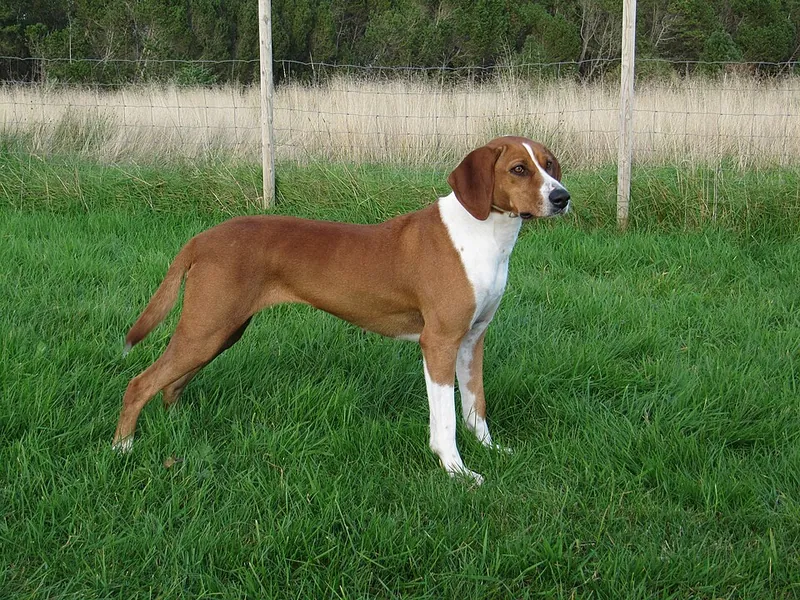
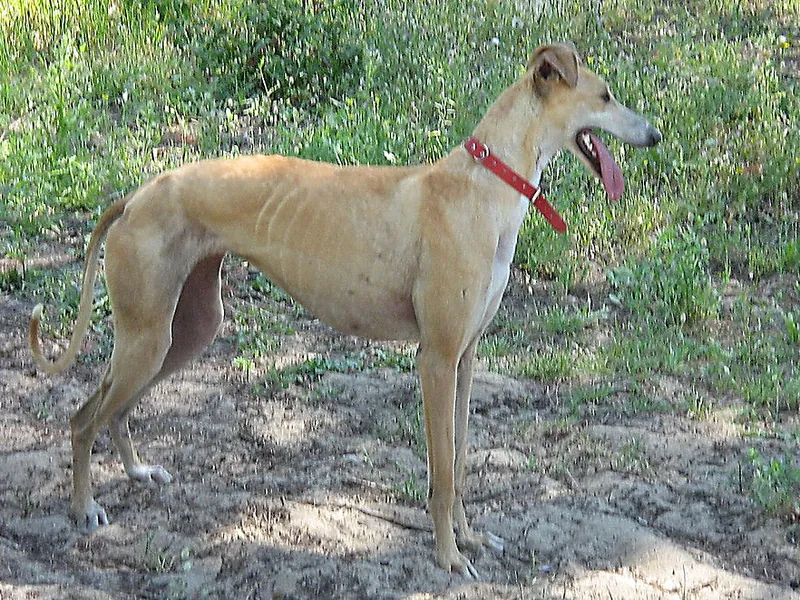
Alpine DachsbrackeAustria's sturdy, short-legged blood tracker
The Alpine Dachsbracke is a short-legged, robust scent hound from the Austrian Alps, bred to track wounded deer and other game in steep terrain. Loyal and affectionate in the family, it has an intense hunting passion and belongs with active hunters.
Why people love the Alpine Dachsbracke
- Calm, steady worker on difficult trails
- Affectionate and loyal in the family
- Easy-care short coat
- Robust, with few documented breed diseases
- Compact size handles steep terrain well
Things to consider
- Intense hunting drive needs real scent work
- Rarely placed outside hunting homes
- Virtually unavailable in the US
- Not reliable with cats or small pets
- Gives voice on a trail
Is this breed right for you?
10 questions · live resultHistory and Origin
Short-legged hounds have been used in the Alpine region for centuries to track game in mountainous terrain where long-legged hounds struggled. These dogs were valued by Austrian hunters and by the Habsburg court; Crown Prince Rudolf is said to have taken them on hunting trips abroad in the late 19th century.
The breed was formally recognized in Austria in the 20th century as a scent hound for blood tracking. The FCI lists it among leash hounds, but neither the AKC nor The Kennel Club recognizes it.
Its job has always been nachsuche, the follow-up search for wounded game after a shot. Austrian hunting associations still oversee breeding with a strong emphasis on working ability, so most puppies go to active hunters.
Size, Coat and Colors
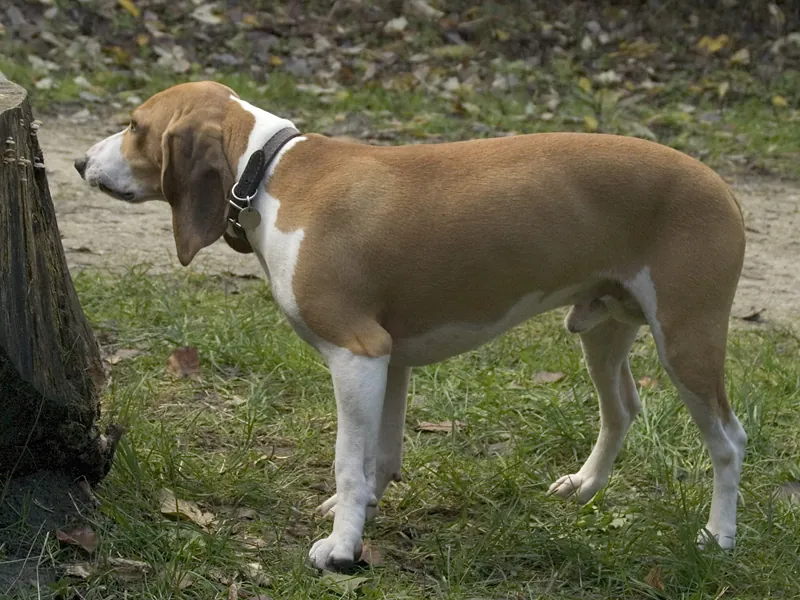
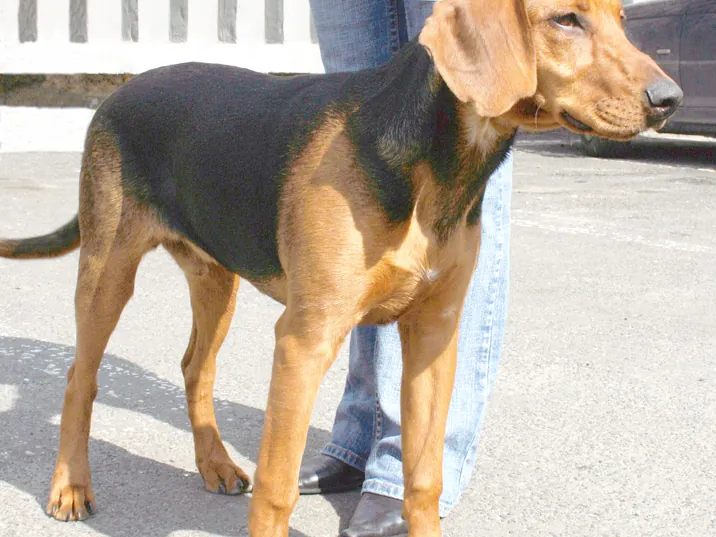
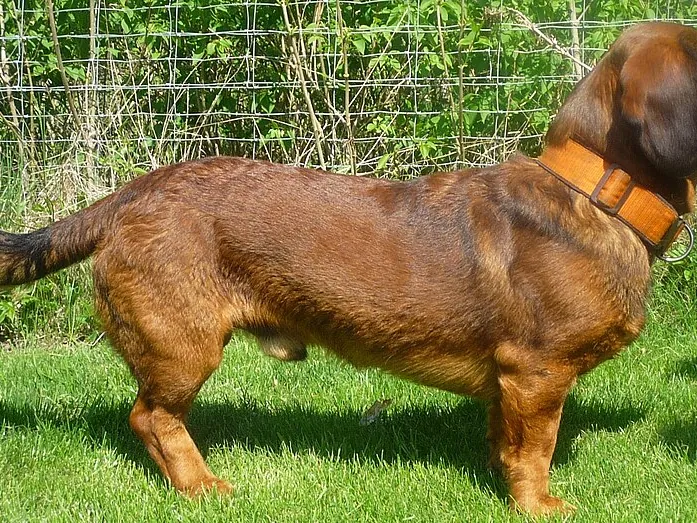
The Alpine Dachsbracke is a short-legged, robust scent hound standing about 13 to 17 inches at the shoulder and weighing around 33 to 40 lb. It is clearly longer than tall, with a deep chest, strong bone and powerful muscles, but it has longer legs and a more upright frame than a Dachshund. The head is strong with a slightly arched skull, and the ears are broad, rounded and hang flat against the cheeks.
The coat is a dense, short double coat with a thick undercoat that protects the dog in cold, wet mountain conditions.
Accepted colors are deep stag red, with or without black ticking, and black with clearly defined red-brown markings on the head, chest, legs and under the tail. A small white star on the chest is permitted. Males are typically a little taller and heavier than females, with a stronger head.
Temperament and Personality
Alpine Dachsbrackes are steady, determined and affectionate with their family. At home they can be calm and friendly, often good with children.
On a scent, they are tenacious and focused. Prey drive is very high, and they may not do well with cats or small pets. They are usually not aggressive but may be reserved with strangers.
Hunters value the breed for its calm, steady work on difficult trails. It tends to be persistent rather than frantic, and at home it is usually content to rest after a day in the field.
Is the Alpine Dachsbracke Good for First-Time Owners?
Generally no, unless the first-time owner is a hunter who will use the dog for tracking work. The breed is gentle and steady at home, but it was bred specifically to follow wounded game in the mountains, and that drive does not switch off for a pet home.
A beginner without hunting plans would need to commit to regular tracking or mantrailing, keep the dog on a leash or long line outside fenced areas and manage a strong interest in wildlife and small pets. Breed clubs in Austria and Germany usually place puppies with hunters, which also means novices outside hunting circles may find it very hard to obtain one.
Do Alpine Dachsbrackes Bark a Lot?
Alpine Dachsbrackes are not typically nuisance barkers at home. A well-exercised dog is usually calm and quiet indoors.
Outdoors is different. As a scent hound, it may give voice when following a fresh trail, and it will bark at wildlife or unfamiliar sounds. Dogs that are bored or under-exercised may become more vocal, howl or dig. Regular tracking work, long sniffing walks and scent games at home are the best way to keep barking moderate. Neighbors in rural areas are rarely bothered, but the breed is not a natural fit for apartments.
Is the Alpine Dachsbracke Easy to Train?
For tracking work, yes: the breed is known for being steady, focused and cooperative on blood trails, which is exactly what it was developed for. Hunters value its calm, methodical approach compared with faster, more excitable hounds.
Everyday obedience takes more patience. Like most scent hounds, it can be independent once its nose is engaged, and recall near game is unreliable. Training works best when you:
- Start tracking practice early with short, simple trails.
- Use calm, reward-based methods.
- Practice recall on a long line.
- Keep sessions short and purposeful.
Most dogs settle into reliable house manners once their working needs are met.
Exercise and Training
These dogs need daily exercise and, ideally, real hunting work. Long walks, scent games and tracking training are essential.
- Keep on a leash or long line outside secure areas.
- Start tracking training early.
- Use patient, consistent and reward-based training.
The breed's short legs and strong build make it well suited to steep and rough terrain. It is not a speed hound; it works methodically, following trails on a long leash. Non-hunting owners would need to find tracking or mantrailing outlets.
Grooming and Shedding
The short, dense coat is very easy to care for. Weekly brushing removes loose hair. After hunting, check for ticks, burrs and injuries.
Ears should be checked regularly, as with most hounds.
The coat is typically deer-red, sometimes with black ticking, or black with red-brown markings. It is weather-resistant and copes well with cold, wet mountain conditions.
Feeding and Nutrition
A lean body matters for the Alpine Dachsbracke. Its long back and short legs carry more strain when the dog is overweight, and a slim dog works better on steep ground. You should feel the ribs easily and see a waist from above.
Activity varies widely between a dog tracking regularly in the mountains and a family dog with daily walks, so adjust portions to the individual and to the season. Working dogs may need more food during hunting season and less afterward.
- Feed adults two meals a day, and puppies three or four smaller meals.
- Avoid feeding a large meal right before a long tracking session or hike.
- Use part of the ration for scent games, hiding food for the dog to find.
- Keep fresh water available after work, especially in cold, dry mountain air where dogs may drink less than they need.
| Adult weight | Less active | Typical adult | Very active |
|---|---|---|---|
| 33 lb | 750 kcal | 850 kcal | 1,070 kcal |
| 40 lb | 860 kcal | 980 kcal | 1,230 kcal |
Estimates use the resting energy formula veterinarians work with (70 × body weight in kg0.75) and standard activity factors. Use the feeding guide on your food as a starting point and adjust to body condition. Puppies, seniors, pregnant animals and pets that need to lose weight have different needs, so ask your vet.
Health and Lifespan
The breed is described as very robust, with no well-documented breed-specific diseases. As with other short-legged breeds, keeping a lean weight and avoiding excessive jumping protects the back and joints.
Reliable lifespan data are limited, but most medium-sized hounds live into their early teens. Choose breeders who are part of a recognized breed club.
Because the breed is small in numbers and mostly bred within hunting circles, health information is limited. Regular veterinary checks, ear care and weight management are the most practical steps for owners.
Alpine Dachsbracke Price and Cost of Ownership
The Alpine Dachsbracke is not recognized by the AKC and is extremely rare in the US, so there is no US price range. Puppies are bred mainly in Austria and Germany through breed clubs that usually require a hunting home, and importing a dog involves travel, transport and paperwork costs on top of the breeder's price. Prices vary by breeder, region and lines.
Adoption is rare outside Europe, though tracking hound mixes sometimes appear in rescue.
Ongoing cost drivers are modest for a medium-sized, robust hound: tracking gear such as a long line and harness, possibly a GPS collar, ear care and tick prevention for a dog working in the woods, and routine vet visits. Training with a tracking club is a worthwhile expense for non-hunting owners.
Is the Alpine Dachsbracke Right for You?
At 33 to 40 lb and 13 to 17 inches, the Alpine Dachsbracke suits hunters, especially in hilly or mountainous terrain. It can be a loving family companion if its work needs are met.
It is not ideal for apartment living or for non-hunting homes without serious scent work.
Because the breed is mostly placed with hunters, prospective owners outside hunting circles may find it hard to get a puppy. Breed clubs prioritize homes where the dog can work.
Alpine Dachsbracke Traits at a Glance
Alpine Dachsbracke FAQ
Is the Alpine Dachsbracke a good family dog?
It is affectionate at home, but it is primarily a hunting dog and needs tracking work.
How big does an Alpine Dachsbracke get?
It stands about 13 to 17 inches tall and weighs around 33 to 40 lb.
Is the Alpine Dachsbracke related to the Dachshund?
It shares a short-legged build and hound ancestry but is a separate breed.
How long do Alpine Dachsbrackes live?
Reliable data are limited, but they are considered robust and often live into their early teens.
Do Alpine Dachsbrackes shed?
They shed moderately. Weekly brushing is usually enough.