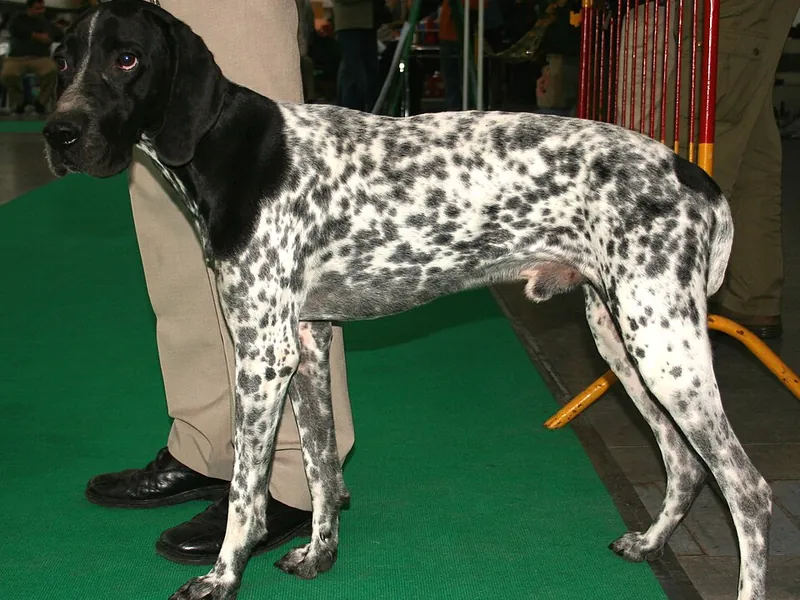
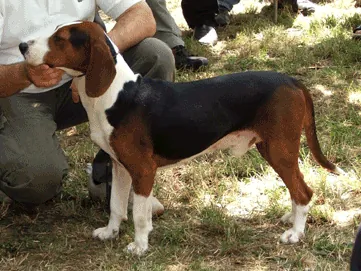
DunkerNorway's steady, marbled hare hound
The Dunker is a Norwegian scenthound bred to track hare on its own, often wearing a striking blue merle coat. It is steady, sociable and easier to train than many hounds, but its nose and stamina are built for long days in the forest. It suits active outdoor owners who can provide plenty of exercise and secure fencing.
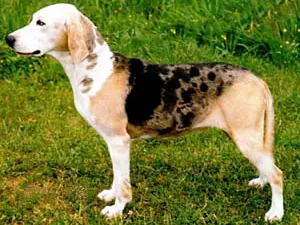
Why people love the Dunker
- Calm, sociable and friendly at home
- Easier to train than many scent hounds
- Practical short coat and moderate size
- Striking blue merle coloring
- Good with children who treat it calmly
Things to consider
- Strong prey drive toward cats and small pets
- Follows a scent far, so recall is unreliable
- Needs an hour or more of daily exercise
- Merle-related deafness and eye risks need screening
- Very rare outside the Nordic countries
Is this breed right for you?
10 questions · live resultHistory and Origin
The Dunker is named after Wilhelm Conrad Dunker, a Norwegian army officer who developed the breed in the 19th century. He crossed a Russian harlequin hound with Norwegian hounds to create a hound for hare hunting.
The breed works alone rather than in packs, following the scent and giving voice. It is recognized by the FCI but not by the AKC or The Kennel Club.
Norway has several native hound breeds, and the Dunker is closely related to the Hygen Hound and the Haldenstøver. Unlike pack hounds, these Norwegian hounds hunt singly, working out a hare's track and staying on it while the hunter waits at a likely crossing point.
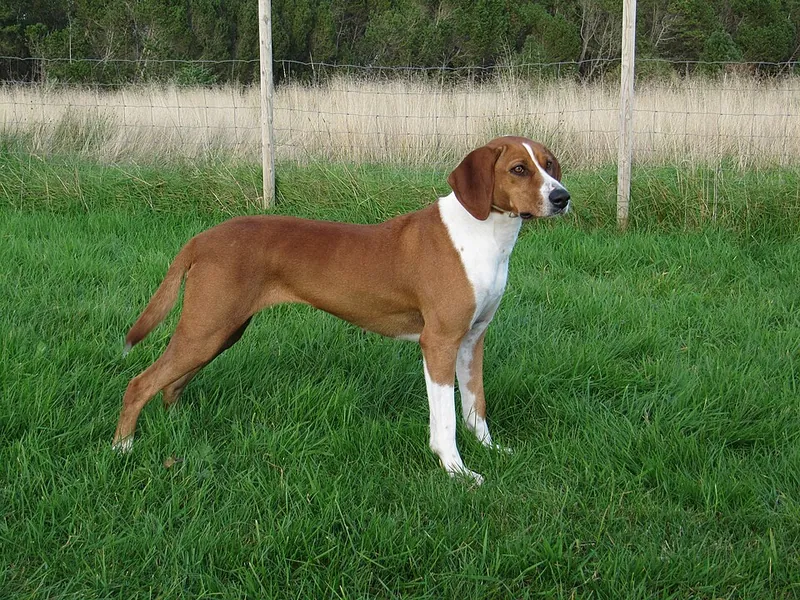
The Dunker is a solid, rectangular dog with a deep chest and a coat that is black or blue merle with fawn and white markings. Its numbers have declined in recent decades, and Norwegian breeders work to maintain a healthy population.
Size, Coat and Colors
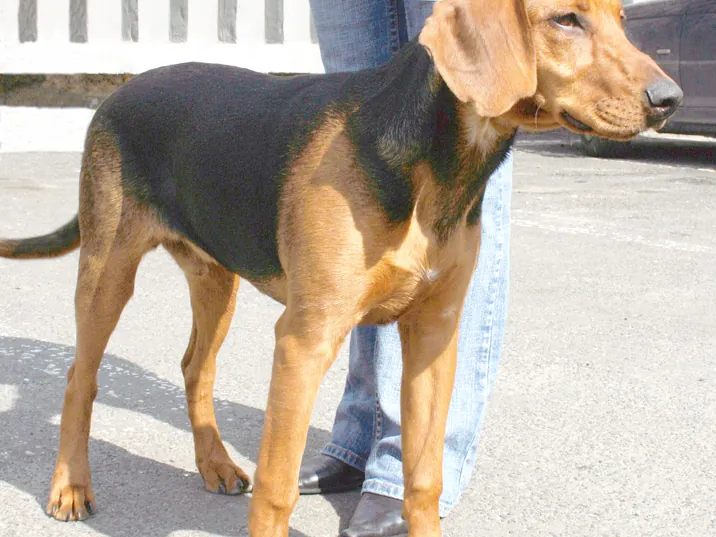
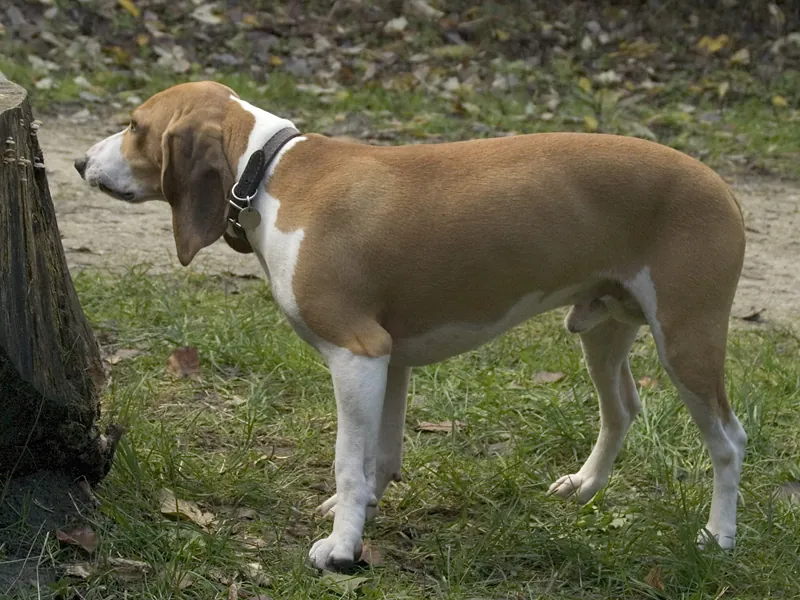
The Dunker is a medium-sized, rectangular scent hound standing about 19 to 23 inches at the shoulder and weighing around 35 to 49 lb. It is strong and well-balanced without heaviness, built to track hare for hours in Norwegian forest and mountain terrain. The head is long and clean, with soft, flat, moderately long ears and a calm expression. The tail is thick at the base and tapers to a point.
The coat is short, straight, hard and dense, lying close to the body.
Two color types are recognized: blue marbled (merle) and black, both with fawn and white markings, giving a tricolor appearance. Blue merle dogs may have blue or partly blue eyes, which the standard allows. Males are typically taller and heavier, at the upper end of the range, with a broader head. Breeders avoid mating two merles because of the risk of deafness and eye defects.
Temperament and Personality
The Dunker is calm, stable and sociable according to its breed standard, and is usually easy to train for a hound. Its prey drive is very strong.
At home, Dunkers are usually friendly, even-tempered and affectionate with their family. They are not known as guard dogs, and most greet visitors amiably after an initial bark.
On a scent, though, they become focused and persistent and will follow a trail far from their owner. Cats, rabbits and other small pets can trigger strong chase behavior, so introductions must be careful, and some individuals are never safe with small animals.
Is the Dunker Good for First-Time Owners?
A Dunker can suit an active first-time owner who loves the outdoors, because the breed is calm, sociable and relatively easy to train for a hound. It is still a working scent hound, though, and that shapes daily life.
Beginners need to plan for at least an hour of exercise a day, leash or long-line walks in open areas, secure fencing and careful management around cats and small pets. Scent work, tracking or mantrailing makes a big difference to the dog's contentment. Because the breed is rare, a first-time owner will probably work with a Nordic breeder, which can provide guidance but also adds the challenge of importing a puppy.
Are Dunkers Good with Cats?
Often not. The Dunker was bred to hunt hare, and its prey drive toward small, fast-moving animals is very strong. Cats, rabbits and rodents can trigger intense chasing.
Some Dunkers raised from puppyhood with a calm, dog-savvy cat learn to live with it peacefully indoors, but even those dogs may chase cats outdoors or in unfamiliar settings. Adults without cat experience are a bigger risk. If you have a cat:
- Choose a puppy from a breeder who knows the parents' behavior with cats.
- Use gates and leashes during introductions.
- Give the cat secure high places and a dog-free room.
Keep small caged pets well out of reach.
Can a Dunker Live in an Apartment?
A Dunker can manage apartment life only with a very committed owner, and a house with a fenced yard is a much better fit. Indoors, a well-exercised Dunker is usually calm and quiet, so the issue is not behavior in the home but the amount of exercise and outdoor time the breed needs.
Apartment owners would need to provide at least an hour of activity every day, including long walks with plenty of sniffing and regular access to safe, fenced areas for free running. Bored Dunkers may bay, which carries through walls. If you live in an apartment, look for local tracking or mantrailing groups to give the dog meaningful work.
Exercise and Training
Daily exercise of an hour or more is needed. Scent work and long walks are ideal. Keep it leashed in open areas.
- Use a long line or a large, securely fenced area for free running.
- Teach recall early with high-value rewards, but do not rely on it near wildlife.
- Tracking, mantrailing and hiking are excellent outlets.
- Rotate walking routes to give the dog new smells to explore.
- Avoid long hours alone; a bored hound may bay or dig.
Grooming and Shedding
The short, dense coat needs weekly brushing. Check ears weekly.
The short, straight, dense coat sheds moderately and needs only weekly brushing with a rubber mitt. Bathe when dirty. Keep nails short and check paws after forest walks. The hanging ears need regular checks for dirt and moisture to prevent infection.
Feeding and Nutrition
The Dunker is a lean, enduring athlete and should stay that way. A healthy Dunker shows a visible waist and slight outline of the last ribs, and extra weight slows it on long tracking days and strains its joints.
Activity can vary widely between a dog that hunts all autumn and a family hound with daily walks. Adjust portions to the season and the individual dog's work, increasing gradually in hunting season and reducing afterward.
- Feed adults two meals a day, and puppies three or four smaller meals.
- Avoid a large meal right before a long tracking session or hike.
- Use part of the daily ration for scent games and recall training, where high-value rewards matter.
- Store food securely: a scent hound finds it easily.
- Offer water during long outings, as working dogs can dehydrate even in cool weather.
| Adult weight | Less active | Typical adult | Very active |
|---|---|---|---|
| 35 lb | 780 kcal | 890 kcal | 1,110 kcal |
| 49 lb | 1,000 kcal | 1,150 kcal | 1,430 kcal |
Estimates use the resting energy formula veterinarians work with (70 × body weight in kg0.75) and standard activity factors. Use the feeding guide on your food as a starting point and adjust to body condition. Puppies, seniors, pregnant animals and pets that need to lose weight have different needs, so ask your vet.
Health and Lifespan
The merle coat pattern is typical and is linked to risk of congenital deafness and eye defects, especially when two merles are bred together. Responsible breeders avoid merle to merle matings and use BAER hearing tests. Lifespan is typically 12 to 15 years.
Apart from merle-related risks, few breed-specific problems are documented. Ask breeders for hearing test results, eye examinations and hip screening of the parents, and keep the dog lean and fit.
Dunker Price and Cost of Ownership
The Dunker is not recognized by the AKC and is very rare in the US, so there is no US price range. Most puppies come from Norway or other Nordic countries, and importing a dog adds transport, veterinary paperwork and travel costs to the breeder's price. Prices vary by breeder, region and lines.
Adoption is uncommon, although scent hound rescues occasionally have similar hounds or mixes.
Breed-specific cost drivers include BAER hearing tests and eye examinations, which responsible breeders do for merle dogs, along with hip screening. Owners should budget for tracking gear such as a long line, harness and possibly a GPS collar, secure fencing, and tick prevention and paw care for a dog that spends a lot of time in forests.
Is the Dunker Right for You?
The Dunker suits hunters and active outdoor owners with secure gardens. It is not ideal for owners who want off-leash walks or those away all day.
A Dunker can be a pleasant, easygoing family companion when its exercise needs are met. Its moderate size and short coat make it practical, but it is a working hound first. Expect to look for puppies in Norway or other Nordic countries, since the breed is rare elsewhere.
Dunker Traits at a Glance
Dunker FAQ
How big do Dunkers get?
They stand about 19 to 23 inches tall and weigh roughly 35 to 49 pounds.
Why do some Dunkers have blue eyes?
The merle gene can produce blue or partly blue eyes, which the breed standard allows.
Are Dunkers easy to train?
They are generally easier to train than many hounds, but their prey drive is strong.
How long do Dunkers live?
About 12 to 15 years.
Do Dunkers bark a lot?
They give voice when tracking and may bay when bored, but are usually quiet at home when exercised.
Are Dunkers good with children?
They are generally friendly and even-tempered, and usually do well with children who treat them calmly.