Serbian Tricolour HoundPersistent Balkan scenthound with a bold voice
The Serbian Tricolour Hound is a medium-sized scenthound from the Balkans, built to follow a trail for hours over hills and through forest. Calm and affectionate at home but relentless once it finds scent, it suits hunters and very active rural owners far better than casual pet homes.
Why people love the Serbian Tricolour Hound
- Calm, gentle and affectionate at home
- Tireless tracker with great stamina
- Short coat needs only weekly care
- Usually friendly with visitors
- Moderate build with no extreme features
Things to consider
- Needs long daily exercise and scent work
- Single-minded on a trail, recall unreliable
- Strong voice when hunting or bored
- Tolerates being alone poorly
- Rare outside the Balkans
Is this breed right for you?
10 questions · live resultHistory and Origin
Serbia has a long tradition of hunting with scenthounds, and for a long time the tricolored dogs of the region were treated as a color variety of the red-and-black Serbian Hound. Serbian hunters and breeders gradually separated the tricolor line during the 20th century, selecting for a consistent coat pattern, a strong voice and stamina on rough terrain.
The breed is now recognized by the FCI in the scenthound group. It was developed for practical work: tracking hare and fox, and in some areas wild boar, while giving voice so the hunter can follow the chase. Outside the Balkans it remains rare, and most dogs still live with hunting families.
Size, Coat and Colors
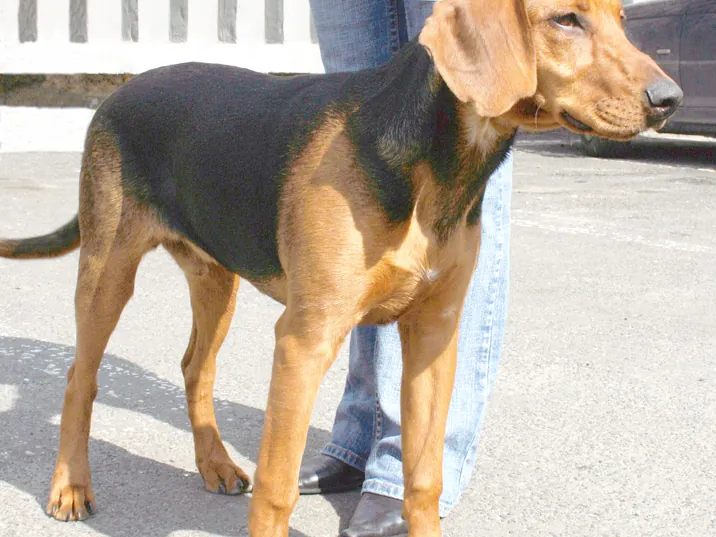
The Serbian Tricolour Hound is a medium-size, strongly built scenthound standing 17 to 22 inches and weighing 44 to 55 lb. It is slightly longer than tall, with a deep chest, straight back and well-muscled legs suited to long days over hills and through forest.
Males are larger than females, with the FCI standard placing males toward the upper end of the height range.
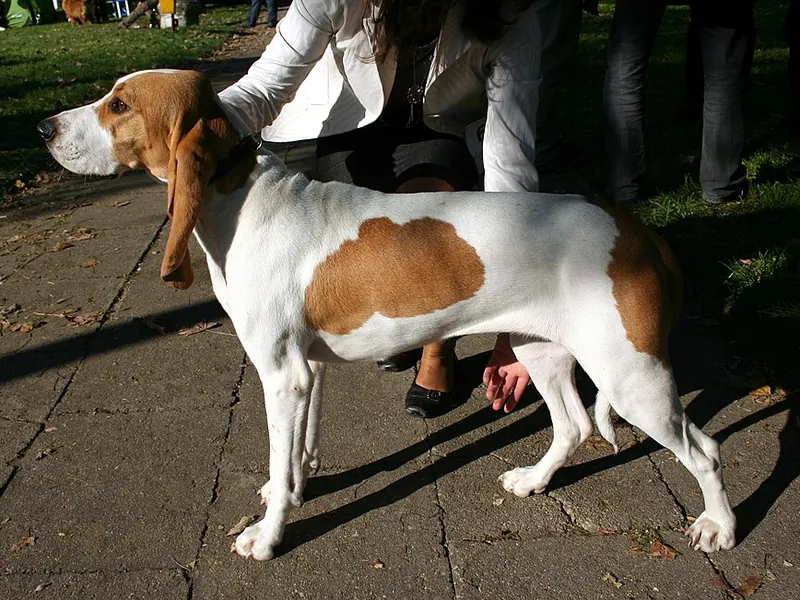
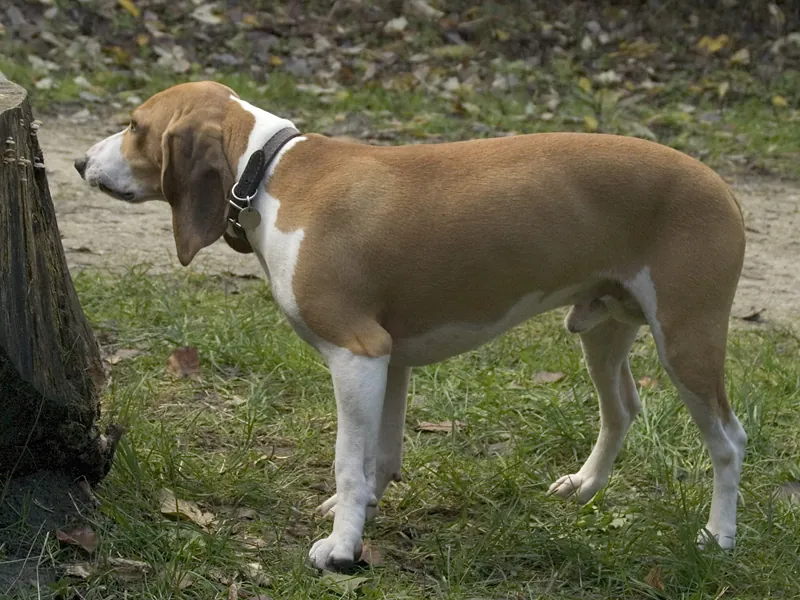
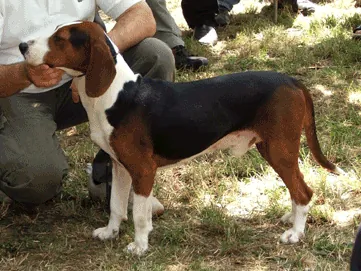
The coat is short, dense and glossy, with a modest undercoat. The color pattern defines the breed:
- A rich red or fox-red base
- A black saddle or mantle over the back
- White markings, typically a blaze on the head, white on the chest and sometimes feet and tail tip
This tricolor pattern distinguishes it from the closely related Serbian Hound, which is red and black without white. The ears hang flat and are fairly long, and the tail is carried in a slight curve.
Temperament and Personality
At home the Serbian Tricolour Hound is usually quiet, gentle and attached to its people. It is not a sharp guard dog, and many are friendly with visitors once the initial alert is over.
Outdoors it changes gear. Once a trail is found, the dog becomes single-minded and will keep working long after a less determined hound would quit. That tenacity is exactly what hunters want, but it means recall is never fully reliable around game. Expect a dog that tolerates being alone poorly; it was bred to work in close contact with a hunter and often with other hounds.
Do Serbian Tricolour Hounds Bark a Lot?
They are usually quiet indoors, but they have a strong voice and use it. On a trail, the breed gives tongue so the hunter can follow, and the sound carries a long way.
At home, barking and howling are more likely when the dog is bored, under-exercised or alone. Plenty of exercise, scent work and company keep noise down. Close neighbors may still hear the occasional bay at interesting scents or sounds, so the breed suits rural homes better than apartments or dense suburbs.
Is the Serbian Tricolour Hound Good for First-Time Owners?
Generally no. The Serbian Tricolour Hound is gentle indoors, but its working drive makes it challenging for beginners. Once on a scent, it becomes single-minded and will not come back on cue.
Owners need to be ready for:
- Long daily outings, ideally including off-road hiking
- Regular tracking, mantrailing or hunting
- A long line or secure land for free running
- Managing a strong voice
It is best suited to hunters and experienced scenthound owners with time and space to meet its needs.
Are Serbian Tricolour Hounds Easy to Train?
Serbian Tricolour Hounds learn well but are not easy to train in the obedience sense. They were bred to work independently on a trail, so focus on the handler drops when an interesting scent appears.
What works best:
- Short, reward-based sessions
- Food rewards that compete with scent
- Tracking games that use their natural talents
- Patience with recall, which is never fully reliable
They lose interest in repetitive drills. Nose work and tracking give them a sense of purpose and build cooperation with the handler.
Exercise and Training
This is a high-endurance breed. A short walk around the block will not satisfy it. Plan for long daily outings, ideally including off-road hiking, scent games or real hunting work.
- Use a long line or securely fenced land for free running; a hound on a hare trail will not come back on cue.
- Tracking and mantrailing are excellent outlets for non-hunting homes.
- Keep training short and reward-based. Scenthounds learn well but lose interest in repetitive drills.
- Introduce household cats and small pets early and supervise; prey drive is very strong.
Grooming and Shedding
The coat is short, dense and glossy, with a modest undercoat. A weekly brush with a rubber mitt removes loose hair and keeps the skin healthy. Bathing is rarely needed.
After work in forest or brush, check the feet, ears and coat for ticks, burrs and small cuts. The hanging ears should be inspected weekly and cleaned if dirty, since warm, closed ears can develop infections.
Feeding and Nutrition
The Serbian Tricolour Hound should be lean and fit, with ribs easy to feel and a clear waist. Scenthounds often love food and put on weight when exercise drops, and a hunting hound carrying extra pounds puts more strain on joints over a long working life.
Puppies grow into a medium frame. A diet suited to medium breed puppies, fed in measured meals three times a day until about six months and twice daily for adults, supports steady growth. Avoid long runs on hard ground until growth plates close.
Food needs vary with the season. A dog working several days a week in cold, hilly country may need noticeably larger portions, while the same dog in a quiet summer needs less. Adjust to body condition rather than a fixed amount.
Hounds are skilled scavengers and counter-surfers. Keep food and trash secured, and check for spoiled food or carcasses on walks. Use treats generously in recall training, deducting them from the daily ration.
| Adult weight | Less active | Typical adult | Very active |
|---|---|---|---|
| 44 lb | 930 kcal | 1,060 kcal | 1,320 kcal |
| 55 lb | 1,090 kcal | 1,250 kcal | 1,560 kcal |
Estimates use the resting energy formula veterinarians work with (70 × body weight in kg0.75) and standard activity factors. Use the feeding guide on your food as a starting point and adjust to body condition. Puppies, seniors, pregnant animals and pets that need to lose weight have different needs, so ask your vet.
Health and Lifespan
No breed-specific inherited diseases are documented in reliable sources, and the breed has a moderate, functional build with no extreme features. That does not mean it is free of problems; it mostly reflects how few dogs have been studied.
Reliable lifespan figures are not available. As a general guide, choose a breeder who screens hips, keeps working lines healthy and can tell you about the ages and causes of death in their lines. Keep the dog lean, since a hunting hound carrying extra weight puts more strain on its joints.
Serbian Tricolour Hound Price and Cost of Ownership
The Serbian Tricolour Hound is very rare in the US, with no reliable published price. Most breeders are in Serbia and neighboring Balkan countries, and many dogs live with hunting families rather than in kennels that export. Getting a puppy usually means importing one, which adds transport, health certificates and sometimes a trip to collect it. Prices vary by breeder, region and lines.
Adoption in the US is unlikely, though hound rescues place similar scenthounds.
Ongoing cost drivers:
- Hip screening and health checks on breeding stock
- Tracking classes, mantrailing or hunting gear
- Secure fencing and long lines
- Tick prevention and ear care for a dog working in forest
Grooming costs are minimal with the short coat.
Is the Serbian Tricolour Hound Right for You?
This breed fits best with hunters, trackers and rural households who spend hours outdoors every day.
- Good match: experienced hound owners, active people with fenced land, those who want a calm house dog after a hard day outside.
- Poor match: apartments, homes where the dog would be alone for long workdays, households with free-roaming cats or rabbits.
Its voice is part of the package. Neighbors close by may not appreciate a hound that announces every interesting scent.
Serbian Tricolour Hound Traits at a Glance
Serbian Tricolour Hound FAQ
How big do Serbian Tricolour Hounds get?
They are medium-sized hounds, typically 17 to 22 inches at the shoulder and around 44 to 55 lb.
Are Serbian Tricolour Hounds good family dogs?
They are gentle and affectionate indoors, but their needs come first: lots of exercise and ideally scent work. In an active rural family they can do well.
Can a Serbian Tricolour Hound live in an apartment?
It is not a good choice. The breed needs extensive daily exercise and often uses its voice, which makes close-quarters living difficult.
Do Serbian Tricolour Hounds get along with cats?
Prey drive is very strong. Some dogs raised with a cat accept it indoors, but outdoor cats and small pets are at risk.
Is the Serbian Tricolour Hound the same as the Serbian Hound?
They are closely related and were once considered one breed. Today they are separate FCI breeds, distinguished mainly by the tricolor coat.