Braque d'AuvergneThe gentle, blue-ticked pointer of Auvergne
The Braque d'Auvergne is a gentle, affectionate French pointer whose heavily black-ticked coat gives it a bluish look. It is a skilled bird dog with a superb nose and huge stamina, best for active owners who can offer daily running and a real job.
Why people love the Braque d'Auvergne
- Gentle, cuddly and close to its family at home
- Responsive and easy to train with calm methods
- Exceptional nose and natural pointing ability
- Usually good with children and other dogs
- Short coat needs only weekly brushing
Things to consider
- Needs around two hours of activity a day
- Strong prey drive around birds and small pets
- Sensitive to harsh handling
- Dislikes long periods alone
- Rare outside France, with long waits for puppies
Is this breed right for you?
10 questions · live resultHistory and Origin
The breed comes from the Cantal department in the Auvergne region of central France, an area of volcanic uplands, pastures and moorland. A popular tradition links its origin to the Knights of Malta, who are said to have brought pointing dogs to the region in the 18th or 19th century, but this story has never been proven. What is clear is that local hunters developed the breed for upland game birds in rugged, open country.
A breed club was founded in the early 20th century, and the Braque d'Auvergne is recognized by the FCI in Group 7. It remains primarily a working gundog in France and is uncommon elsewhere, although small numbers live in other European countries and North America.
Size, Coat and Color
The Braque d'Auvergne is a strong, well-balanced pointer standing about 21 to 25 inches at the shoulder and weighing roughly 44 to 60 lb. Males are typically at the upper end of the height range, with a broader head and heavier bone, while females are more refined and a little lighter.
The body is athletic, with a deep chest, a slightly arched loin and powerful hindquarters. The head is long and the skull slightly oval, with a straight or slightly arched muzzle and long, folded ears set at eye level. The eyes are dark hazel, with a gentle expression. The tail is traditionally docked in France, but many dogs elsewhere have a natural tail.
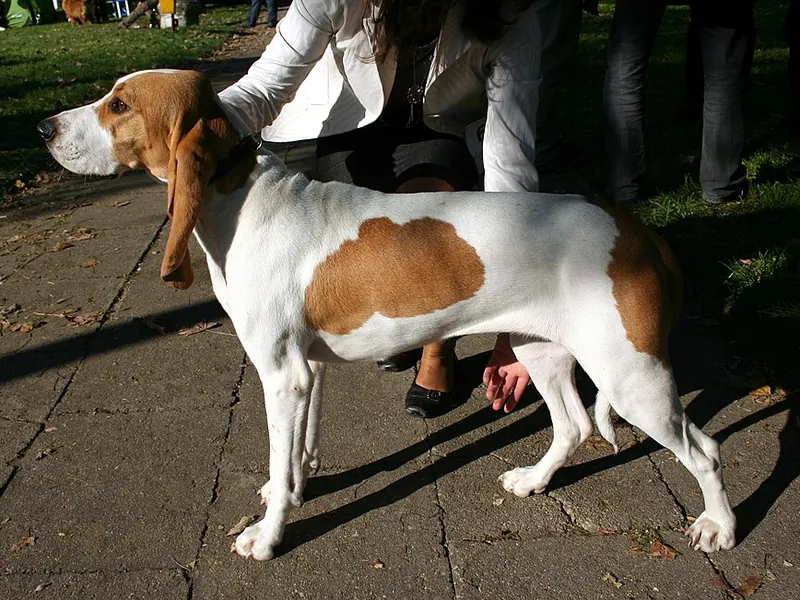
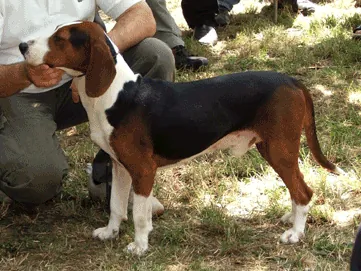
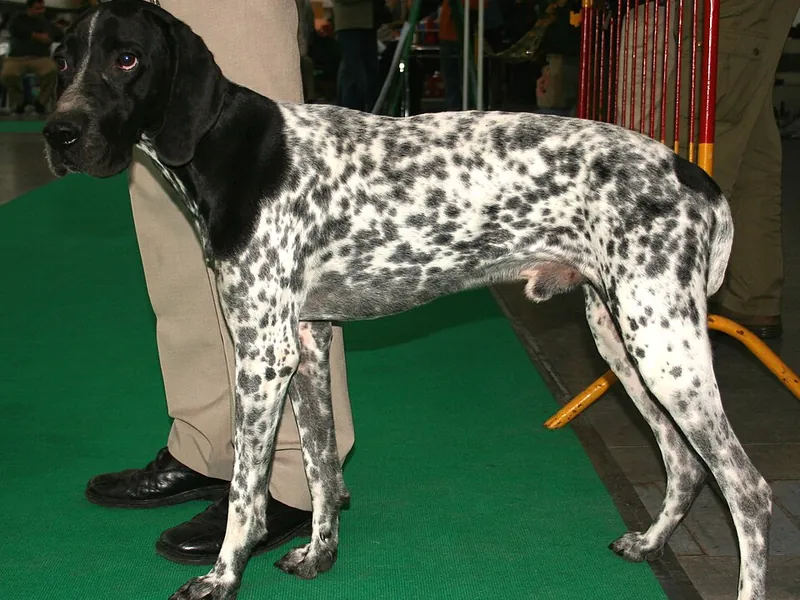
The coat is short, glossy and close-lying. The color pattern is distinctive: a white base densely ticked with black, giving a blue-gray look from a distance, and black patches. The head and ears are black, and the black should cover the eyes. The amount of ticking varies between dogs.
Temperament and Personality
At home the Braque d'Auvergne is gentle, soft-natured and often very cuddly. It bonds closely with its family and tends to be obedient and responsive to its owner. Most are good with children and friendly with other dogs.
In the field it is focused and keen, working with a methodical search and an exceptionally fine nose. Prey drive is strong, so small pets need careful introductions and supervision. The breed is sensitive, and harsh corrections can make it anxious or shut down.
Is the Braque d'Auvergne Good for First-Time Owners?
It can be, for active first-time owners. The breed is gentle, eager to please and usually easy to train, which makes it more forgiving than many working gundogs.
The bigger challenge is lifestyle. A Braque d'Auvergne needs around two hours of activity a day, ideally with off-lead running in safe areas and field work or retrieving games. It is sensitive, so harsh corrections can make it anxious. First-time owners who hike, run or hunt and can involve the dog in daily life often do well. Those with limited time will find its energy hard to match.
Can a Braque d'Auvergne Live in an Apartment?
Generally not. This is a high-energy gundog that needs space and open country, and breeders in France usually place puppies in homes with land or easy access to fields.
An apartment can work only for a very active owner who provides two hours or more of daily running, retrieving and field-style work. Even then, the dog may become restless indoors if a day is missed. A house with a securely fenced yard near open countryside is a far better match. Its gentle, calm manners at home only appear when its exercise needs are fully met.
Can a Braque d'Auvergne Be Left Alone?
Only for short periods. The Braque d'Auvergne bonds closely with its family and does best with company for most of the day.
Alone-time training should start in puppyhood, building gradually from a few minutes to a few hours. A good outing before leaving, a chew or puzzle toy and a quiet, comfortable space help. Long workdays alone often lead to whining, barking or destructive behavior. If you work away from home full time, plan for a dog walker, daycare or a second dog, or consider a less people-dependent breed.
Exercise and Training
This is a high-energy working breed. Plan for around two hours a day of activity, including off-lead running in safe areas, retrieving games and, ideally, field work. Without enough exercise or a substitute for hunting, it can become restless or frustrated.
Training is usually easy with calm, positive methods. The breed learns pointing and retrieving readily and enjoys working closely with its handler. Practice recall around birds and use a long line in unfenced areas until it is reliable. It does not like being left alone for long periods and does best with company.
Grooming and Shedding
The short, glossy coat is white with dense black ticking and black patches, especially on the head and ears. The overall effect looks blue-gray from a distance.
- Brush weekly with a rubber mitt or soft brush.
- Check and clean the drop ears regularly, especially after damp outings.
- Inspect paws and coat for seeds, burrs and ticks, and keep nails short.
Feeding and Nutrition
The Braque d'Auvergne is a lean, athletic gundog. Working dogs in hunting season may need much more food than in the off-season, so adjust portions to activity and keep the dog in hard, lean condition. Ribs should be easy to feel and the waist clearly visible.
Its deep chest raises the risk of bloat (gastric dilatation-volvulus), so:
- Feed two or more smaller meals a day.
- Avoid hard exercise for an hour before and after meals.
- Use a slow-feeder bowl if the dog gulps.
- Feed in a calm setting, away from competition with other dogs.
Puppies grow quickly; use a diet suited to large-breed growth and avoid overfeeding to protect developing joints. Many breeders recommend limiting intense running until growth is complete.
After long hunts or hikes, allow the dog to cool down and rest before feeding. Carry water on outings, especially in warm weather. Food rewards work well for this soft, responsive breed, but count them as part of the daily ration.
| Adult weight | Less active | Typical adult | Very active |
|---|---|---|---|
| 44 lb | 930 kcal | 1,060 kcal | 1,320 kcal |
| 60 lb | 1,170 kcal | 1,330 kcal | 1,670 kcal |
Estimates use the resting energy formula veterinarians work with (70 × body weight in kg0.75) and standard activity factors. Use the feeding guide on your food as a starting point and adjust to body condition. Puppies, seniors, pregnant animals and pets that need to lose weight have different needs, so ask your vet.
Health and Lifespan
The Braque d'Auvergne is generally considered healthy, with a lifespan of about 10 to 12 years. Its deep chest raises the risk of bloat (gastric dilatation-volvulus), a life-threatening emergency. Feed two or more smaller meals a day, avoid hard exercise right after eating and learn the warning signs, such as a swollen belly and unproductive retching.
Hip screening of breeding dogs is a sensible precaution, as with other sporting breeds. Ask breeders about the health of related dogs, since published data is limited.
Braque d'Auvergne Price and Cost of Ownership
The Braque d'Auvergne is rare in the US, and most breeders are in France. There is no reliable US price range. Prices vary by breeder, region and lines, and importing a puppy adds travel, paperwork and possibly a flight nanny or pet transport service. Many French breeders prefer hunting homes and may ask detailed questions about your plans.
Rescue availability in North America is very limited, though pointer rescues sometimes place similar breeds.
Breed-specific ongoing costs include:
- Hunting gear, training and field-test fees.
- Insurance that covers bloat surgery and field injuries.
- Ear cleaning supplies for the drop ears.
- Food for a high-energy working dog.
Is the Braque d'Auvergne Right for You?
This breed suits hunters and very active families who live near open countryside and can give it plenty of running and mental work. It is a calm, affectionate housemate once its needs are met.
- Good match: hunters, runners, rural families with children.
- Less ideal: apartments, owners away all day, households with small pets.
Most breeders are in France, so expect to plan well ahead.
Braque d'Auvergne Traits at a Glance
Braque d'Auvergne FAQ
How big is a Braque d'Auvergne?
It stands about 21 to 25 inches at the shoulder and weighs roughly 44 to 60 lb.
Is the Braque d'Auvergne a good family dog?
Yes, it is gentle and affectionate and usually good with children, provided it gets enough exercise.
How much exercise does a Braque d'Auvergne need?
Around two hours a day of running, walking or field work.
Is the Braque d'Auvergne easy to train?
Yes, it is responsive and eager to work with its owner, especially with gentle methods.
Why does the Braque d'Auvergne look blue?
Its white coat is heavily ticked with black, which creates a bluish-gray effect.
How long does a Braque d'Auvergne live?
Typically 10 to 12 years.