English FoxhoundBritain's classic pack hound
The English Foxhound is a powerfully built pack hound bred to run all day across the British countryside. It is friendly, sociable and remarkably tolerant, but it needs serious exercise, company and owners who do not mind a big, musical voice.
Why people love the English Foxhound
- Very sociable with people and other dogs
- Patient and gentle with children
- Short, hard coat needs minimal grooming
- Tireless partner for runners and hikers
- Generally robust health
Things to consider
- Loud, musical bay that carries far
- Follows scents and needs fenced areas off leash
- Needs well over an hour of vigorous exercise daily
- Big appetite and food-stealing tendencies
- Rare as a pet; few breeders
Is this breed right for you?
10 questions · live resultHistory and Origin
Foxhunting with packs became popular in England in the 17th and 18th centuries, and hunts bred hounds for stamina, nose, voice and the ability to work together. Hunt masters kept careful breeding records, and stud books for foxhounds go back to the early 1800s, which makes the breed's pedigrees among the most thoroughly documented of any dog.
English Foxhounds were taken to North America in colonial times and contributed to the American Foxhound and several coonhound breeds. Most English Foxhounds are still pack-bred rather than kept as pets, and the breed is uncommon in show rings on both sides of the Atlantic. The AKC recognized it in 1909, and The Kennel Club lists it in the Hound group as the Foxhound.
Size, Colors and Coat
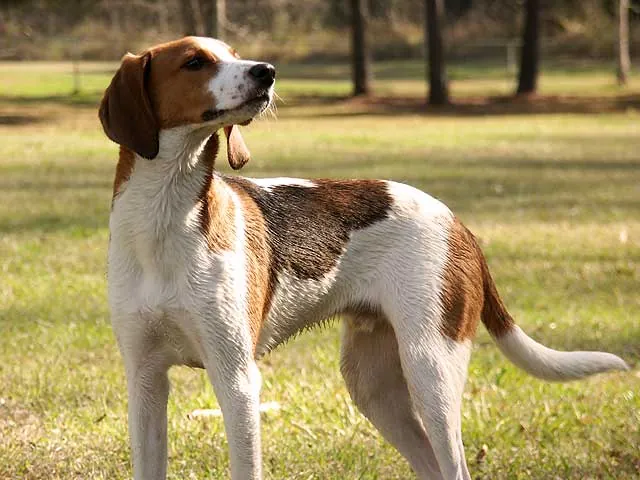
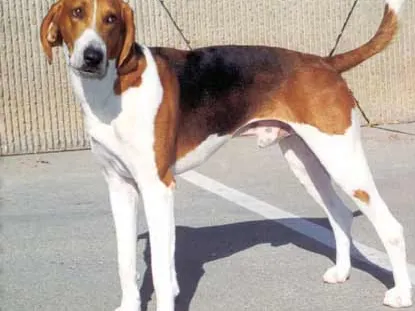
The English Foxhound is a heavily boned, powerful hound standing 23 to 25 inches at the shoulder and weighing 60 to 75 lb. Compared with the American Foxhound, it has a deeper chest, straighter legs and more substance. Males are usually larger and heavier than females.
Hunt breeders have long valued perfectly straight front legs and round, cat-like feet, which carry the hound across rough country all day. The head is broad with a long muzzle, and the tail is carried high.
The short, dense, hard coat is weatherproof. Colors follow hound traditions:
- Tricolor: black, tan and white, the most common pattern
- Bicolor: tan and white, lemon and white, or black and white
- Pied patterns, such as badger pied and hare pied, where colors are mixed
Any recognized hound color is acceptable, and many owners say that the variety within a pack is part of the breed's charm.
Temperament and Personality
Bred to live and work in large packs, the English Foxhound is typically good-natured with people and other dogs. Many are gentle and patient with children. They are not natural guard dogs, though their deep bay will announce visitors.
They are also independent and single-minded on a scent. A Foxhound that catches an interesting trail may follow it for miles. Smaller pets such as cats can be accepted if the dog is raised with them, but rabbits and rodents usually trigger the chase instinct.
Is the English Foxhound Good for First-Time Owners?
The English Foxhound is not generally recommended for first-time owners, mainly because of its exercise needs, voice and independent nature.
Its temperament is friendly and forgiving, which helps. The difficulties are practical: a strong hound that follows scent rather than commands, needs long daily runs and may bay loudly when bored. Many available dogs come from hunt packs and have never lived indoors, so house training, stairs and household noise may be new to them. A first-time owner with a rural home, plenty of time and support from a trainer experienced with hounds can succeed, but most do better starting with an easier breed.
Are English Foxhounds Good with Cats?
English Foxhounds can live with cats they are raised with, but cats outdoors and unfamiliar cats may still be chased.
Foxhounds are bred for pack work and are generally tolerant, yet their hunting instinct is strong. A puppy brought up with a calm resident cat usually learns to accept it indoors. Adult hounds coming from hunt kennels may never have seen a cat, and some will chase with determination. Introduce them gradually and on a leash, provide high escape routes for the cat and supervise until you are confident. Rabbits and rodents should be kept securely away.
Can English Foxhounds Be Left Alone?
English Foxhounds do not like being left alone, and solitary hours often lead to baying, howling and destructive behavior.
As pack animals, they are used to constant company, either people or other hounds. Many owners find that a second dog helps a great deal, ideally another hound with a similar energy level. Even then, exercise before you leave is essential. Teach alone time gradually from the start, use food puzzles and keep absences short at first. Neighbors in close housing may complain about the bay, so plan for company or a dog walker on long days.
Exercise and Training
This is one of the most energetic hounds. Plan for well over an hour of vigorous activity daily, such as long runs, hiking or canicross with an adult dog. A securely fenced yard helps, but it does not replace outings. Off-lead running should be limited to enclosed areas.
Training is achievable but slow. English Foxhounds are not stubborn out of spite; they were bred to follow the pack and the scent, not individual commands. Use food rewards, keep sessions short and practice recall with a long line. Housetraining and crate training benefit from patience, especially with dogs coming from kennel or pack backgrounds.
Grooming and Shedding
The short, hard coat is very easy to keep. A weekly brush with a rubber mitt removes loose hair, and the breed sheds moderately year round. Colors are usually tricolor or bicolor combinations of black, tan and white.
Check the ears weekly, trim nails regularly and inspect paws after runs on rough ground. Some English Foxhounds drool a little, but much less than heavy-lipped breeds.
Feeding and Nutrition
English Foxhounds have hearty appetites, and many will eat anything left within reach. Secure kitchen counters, trash cans and pantry doors, and supervise meals in multi-dog homes, since hounds from pack backgrounds are used to eating quickly alongside others. Feeding dogs in separate areas prevents squabbles and gulping.
Energy needs vary with workload. A hound that runs for hours needs considerably more food than a family pet with long walks, so adjust portions to body condition. A fit Foxhound has a defined waist and ribs that are easy to feel.
- Feed puppies three or four meals a day and adults two.
- Use a diet formulated for large-breed growth for puppies.
- Feed after exercise rather than before, and rest the dog after meals, since deep-chested dogs can develop bloat.
- Use food rewards generously in recall training, deducted from daily meals.
Weight gain is common in under-exercised hounds and adds strain to joints; watch the scale closely if activity levels drop.
| Adult weight | Less active | Typical adult | Very active |
|---|---|---|---|
| 60 lb | 1,170 kcal | 1,330 kcal | 1,670 kcal |
| 75 lb | 1,380 kcal | 1,580 kcal | 1,970 kcal |
Estimates use the resting energy formula veterinarians work with (70 × body weight in kg0.75) and standard activity factors. Use the feeding guide on your food as a starting point and adjust to body condition. Puppies, seniors, pregnant animals and pets that need to lose weight have different needs, so ask your vet.
Health and Lifespan
The English Foxhound is generally robust, with a typical lifespan of 10 to 13 years. Few breed-specific problems are documented. As with many large, athletic hounds, hip dysplasia can occur, so ask breeders whether parents have been hip scored.
Watch weight carefully, because a Foxhound's appetite is legendary and an under-exercised hound gains weight quickly. Ear checks help catch infections early.
English Foxhound Price and Cost of Ownership
English Foxhounds are rare as pets in the US. Most are bred by hunts for pack work, and only a few breeders produce litters for show or companion homes. Expect to search through the breed club and to wait. Prices vary by breeder, region and lines. In the UK, hunts and rehoming groups sometimes place retired or unsuitable pack hounds.
Breed-specific cost drivers include:
- Secure fencing tall and solid enough for a large, scent-driven hound
- Food for a large, very active dog
- A GPS collar for dogs that may slip away on a scent
- Training support for house manners in dogs from kennel backgrounds
- Pet insurance that covers joint problems
Grooming costs are minimal, since the coat needs only weekly brushing.
Is the English Foxhound Right for You?
The English Foxhound suits rural or semi-rural homes with plenty of space, tolerant neighbors and owners who are outside every day. It thrives with other dogs and does poorly when left alone for long periods.
- Good match: active families, multi-dog households, runners and hikers.
- Less ideal: apartments, quiet neighborhoods, owners who want precise obedience or a dog that is happy home alone.
English Foxhound Traits at a Glance
English Foxhound FAQ
Are English Foxhounds good family dogs?
Yes, they are typically friendly and patient with children. Their size, energy and voice mean they fit active families with space best.
How big do English Foxhounds get?
Around 23 to 25 inches at the shoulder and about 60 to 75 lb.
Do English Foxhounds bark a lot?
They bay rather than bark, and they are loud. Expect vocal reactions to scents, sounds and boredom.
How much exercise does an English Foxhound need?
More than an hour of vigorous activity every day, ideally with chances to sniff and explore.
What is the difference between English and American Foxhounds?
The English Foxhound is heavier-boned and more compact, while the American Foxhound is lighter and longer-legged.
How long do English Foxhounds live?
Usually 10 to 13 years.