Doberman PinscherSleek German protector with a big heart
The Doberman was created in 1890s Germany as a personal protection dog, and it remains alert, athletic and devoted to its people. It is highly trainable and affectionate at home but needs plenty of exercise, structure and an owner who understands its sensitive, energetic nature.
Why people love the Doberman Pinscher
- Deeply devoted and affectionate with its own family
- Learns fast and excels in obedience and protection sports
- Natural watchdog that alerts without constant barking
- Short, sleek coat takes minutes a week to maintain
- Athletic partner for running and biking once fully grown
Things to consider
- High risk of DCM requires yearly heart screening
- Needs around two hours of activity every day
- Struggles with long hours alone, can turn destructive
- Thin coat and low body fat make it cold-sensitive
- Some insurers and landlords restrict the breed
Is this breed right for you?
10 questions · live resultHistory and Origin
Karl Friedrich Louis Dobermann, a tax collector and night watchman in Apolda, Thuringia, began breeding the dogs that bear his name around 1890. He wanted a medium-large, agile protector to accompany him on his rounds. The exact mix is unknown, but old German pinscher types, the Rottweiler, the Beauceron, the Manchester Terrier and the Greyhound are often named as contributors.
Otto Göller and other breeders refined the breed after Dobermann's death, and it quickly became a police and military dog. Dobermans served with the US Marine Corps in World War II. The AKC recognized the breed in 1908 under the name Doberman Pinscher, while The Kennel Club and the FCI spell it Dobermann.
Size, Colors and Coat
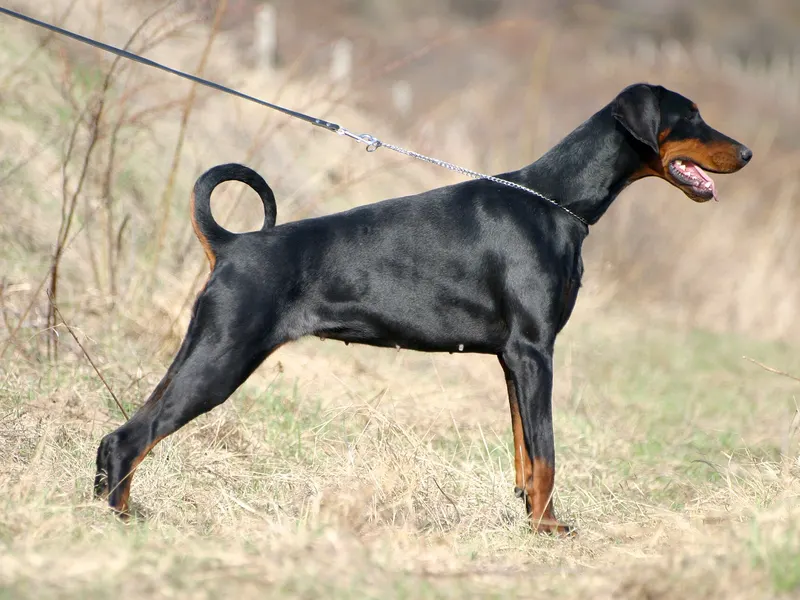
The Doberman is a large, square-built dog of about 24 to 28 inches and 60 to 100 lb, with a deep chest, tight tuck-up and a long, wedge-shaped head. The outline should look elegant and muscular at the same time, never bulky.
Males are clearly larger and heavier, usually standing at the upper end of the height range, while females are finer-boned and often several inches shorter. Under the AKC standard, males are 26 to 28 inches and females 24 to 26 inches.
The coat is short, smooth, hard and close-lying, with no undercoat to speak of. The AKC accepts four colors, all with sharply defined rust markings above the eyes, on the muzzle, chest, legs and below the tail:
- Black and rust
- Red (brown) and rust
- Blue and rust
- Fawn (Isabella) and rust
FCI and Kennel Club standards accept only black and brown. Blue and fawn dogs can develop color dilution alopecia, a thinning of the coat. US dogs may have cropped ears and docked tails, while European dogs keep both natural.
Temperament and Personality
Dobermans are people-oriented dogs that like to stay close to their family, often leaning on legs or following owners from room to room. They are typically gentle with children in their own household and playful well into adulthood. With strangers they are watchful and will alert to unusual activity, but well-bred dogs should be steady rather than nervous.
The breed is sensitive. It responds poorly to harsh handling and does best with calm, fair leadership. Dobermans dislike long hours alone and can develop separation-related problems or destructive habits. Some do not tolerate unfamiliar dogs, especially of the same sex, so early socialization matters.
Is the Doberman Good for First-Time Owners?
A Doberman can work for a first-time owner, but only one who is prepared to learn and put real time into training. The breed is eager to please, which helps, yet it is also large, strong and sensitive to inconsistent or harsh handling.
Novices do best when they:
- Choose a breeder known for stable temperaments and heart testing
- Join a puppy class in the first weeks at home
- Plan for about two hours of activity daily
- Are home for much of the day
If you cannot commit to structured training through the first two years, a less demanding breed is a safer first dog.
Are Dobermans Aggressive?
Well-bred Dobermans are not aggressive by nature; the modern standard calls for a dog that is alert and watchful but steady and friendly with its family. The breed's reputation comes largely from its history as a guard and police dog.
Like any protective breed, a Doberman will react if it senses a real threat, and poorly bred or under-socialized dogs can become fearful or reactive. Early exposure to visitors, children and other dogs, combined with calm, reward-based training, produces a confident adult. Same-sex tension with other dogs is more common than problems with people. Some cities, insurers and landlords still list the breed, so check local rules before buying.
Can Dobermans Be Left Alone?
Dobermans tolerate short absences but are not suited to being alone for full workdays. They are strongly attached to their people, and many follow owners from room to room, so long periods of isolation can lead to whining, chewing or escape attempts.
Most adults can manage about four hours alone once they are used to it. Build that up slowly from puppyhood with short departures, a crate or safe room and a long chew. A brisk run or training session before you leave helps a lot. If you work long hours, plan for a dog walker, daycare or someone at home for part of the day.
Exercise and Training
Plan for about two hours of activity daily, including running, retrieving or bike work once fully grown, plus training. Dobermans enjoy obedience, tracking, agility and protection sports under qualified instruction. Their thin coat and low body fat make them sensitive to cold, so a dog coat helps in winter.
The breed learns quickly and loves working with its handler. Reward-based training, clear routines and impulse-control exercises help channel its energy. Puppies can be mouthy and boisterous, so consistent guidance from the start is important.
Grooming and Shedding
The short, smooth coat is easy to maintain: a weekly rub with a rubber brush or grooming mitt removes loose hair and keeps the coat glossy. Dobermans shed more than their sleek look suggests. Keep nails short, clean the ears weekly and brush teeth regularly. Ear cropping and tail docking are still common in the US but banned in the UK and much of Europe, where Dobermans appear with natural ears and tails.
Feeding and Nutrition
Feed a Doberman to stay lean and athletic: you should feel the ribs easily and see a clear waist. Extra weight strains the neck and spine, which matters in a breed prone to Wobbler syndrome, and makes heart disease harder on the body.
Puppies grow fast. A diet formulated for large-breed puppies, with controlled calcium and energy, supports steady growth rather than rapid weight gain. Weigh regularly and adjust portions instead of relying on the bag guide.
Because the breed has a deep chest, bloat is a real risk:
- Split the daily ration into two or three meals
- Avoid hard exercise for an hour before and after eating
- Discourage gulping with a slow-feeder bowl
DCM has been studied in relation to some grain-free and legume-heavy diets in dogs in general. Discuss diet choice with your vet as part of heart screening. Training treats add up quickly with such a food-motivated learner, so count them in the daily ration.
| Adult weight | Less active | Typical adult | Very active |
|---|---|---|---|
| 60 lb | 1,170 kcal | 1,330 kcal | 1,670 kcal |
| 80 lb | 1,450 kcal | 1,660 kcal | 2,070 kcal |
| 100 lb | 1,710 kcal | 1,960 kcal | 2,450 kcal |
Estimates use the resting energy formula veterinarians work with (70 × body weight in kg0.75) and standard activity factors. Use the feeding guide on your food as a starting point and adjust to body condition. Puppies, seniors, pregnant animals and pets that need to lose weight have different needs, so ask your vet.
Health and Lifespan
Dilated cardiomyopathy (DCM), a disease of the heart muscle, is the most serious concern in the breed and can cause sudden death. Annual heart screening with a 24-hour ECG (Holter) and ultrasound from early adulthood is widely recommended. Other conditions include Wobbler syndrome (a disorder of the neck vertebrae), von Willebrand disease, hip dysplasia, hypothyroidism, bloat and certain cancers. Persistent hyperplastic primary vitreous (PHPV), an inherited eye condition, also occurs.
Choose a breeder who screens heart function, hips and eyes and tests for von Willebrand disease. Typical lifespan is 10 to 12 years.
Doberman Pinscher Price and Cost of Ownership
Typical breeder price in the US$1,500 to $3,500
A Doberman puppy from a reputable US breeder typically costs about $1,500 to $3,500. Prices vary by breeder, region and lines, with European-import and working or show lines at the upper end. Ask what health testing the price covers: parents should have recent Holter and echocardiogram results, hip evaluations, eye exams and a von Willebrand DNA test.
Breed rescues regularly rehome adult Dobermans, often with known temperaments.
The main ongoing cost driver is heart screening. Annual Holter monitoring and periodic echocardiograms from early adulthood add a recurring vet bill, and treatment for DCM can be expensive. Many owners take out pet insurance early, before any heart findings appear. Ear cropping, if chosen, is a one-time surgical cost. Food for a large, active dog and a warm coat for winter round out the budget.
Is the Doberman Right for You?
The Doberman suits active owners with some dog experience who want an affectionate, trainable companion and are home for much of the day. A house with a secure yard is ideal.
It is less suited to people away for long hours, those wanting a low-energy dog or homes unwilling to invest in training and regular heart checks. Check local rules and insurance policies, as some areas and landlords treat the Doberman as a restricted breed.
Doberman Pinscher Traits at a Glance
Doberman Pinscher FAQ
Are Dobermans good family dogs?
Yes, well-bred and trained Dobermans are affectionate and protective of their families and often gentle with children they know. Their size and energy mean supervision with small kids is still wise.
How big do Dobermans get?
Adults usually stand 24 to 28 inches at the shoulder and weigh about 60 to 100 lb, with males larger than females.
Do Dobermans shed?
Yes, despite the short coat they shed moderately year-round. Weekly brushing keeps loose hair under control.
How much exercise does a Doberman need?
Plan on around two hours of activity each day, combining walks, running and training. Dobermans without enough outlet can become restless and destructive.
What is DCM in Dobermans?
Dilated cardiomyopathy is a heart muscle disease that is common in the breed. Regular heart screening helps detect it early, when treatment can slow its progression.
How long do Dobermans live?
The typical lifespan is 10 to 12 years. Heart health is a key factor in how long an individual lives.