German Shepherd DogVersatile German working dog and guardian
The German Shepherd was developed in the late 1800s as an all-purpose herding and working dog, and it remains one of the most versatile breeds for police, assistance and family life. It is loyal, intelligent and protective, and it needs daily exercise, training and a committed owner.
Why people love the German Shepherd Dog
- Exceptionally trainable for obedience, tracking, herding and protection sports
- Loyal, watchful family dog that alerts reliably to visitors
- Versatile enough for service, detection and search work
- Thrives with active owners who enjoy daily training
- Widely available, with many health-testing breeders in the US
Things to consider
- Sheds heavily all year, with big seasonal undercoat blowouts
- Needs about two hours of exercise and mental work daily
- Can become vocal, anxious or destructive when underworked
- Hip and elbow dysplasia and degenerative myelopathy run in the breed
- Large, strong dog that needs firm leash manners early
Is this breed right for you?
10 questions · live resultHistory and Origin
In 1899 Captain Max von Stephanitz, a German cavalry officer, bought a dog named Horand von Grafrath at a show and registered him as the first German Shepherd. Von Stephanitz founded the breed club Verein für Deutsche Schäferhunde (SV) the same year, aiming to create a working dog based on utility and intelligence rather than looks.
The breed served widely in both world wars as messenger, guard and rescue dogs. In Britain, anti-German sentiment led to the name Alsatian, which The Kennel Club used until 1977. The AKC recognized the breed in 1908. Today German Shepherds work as police, military, guide, search-and-rescue and detection dogs.
Working lines, bred mainly in Europe for sport and service, are often more driven and compact, while show lines from Germany and North America differ in build and angulation. Knowing which type a breeder produces helps match a puppy to your lifestyle.
Size, Coat Types and Colors
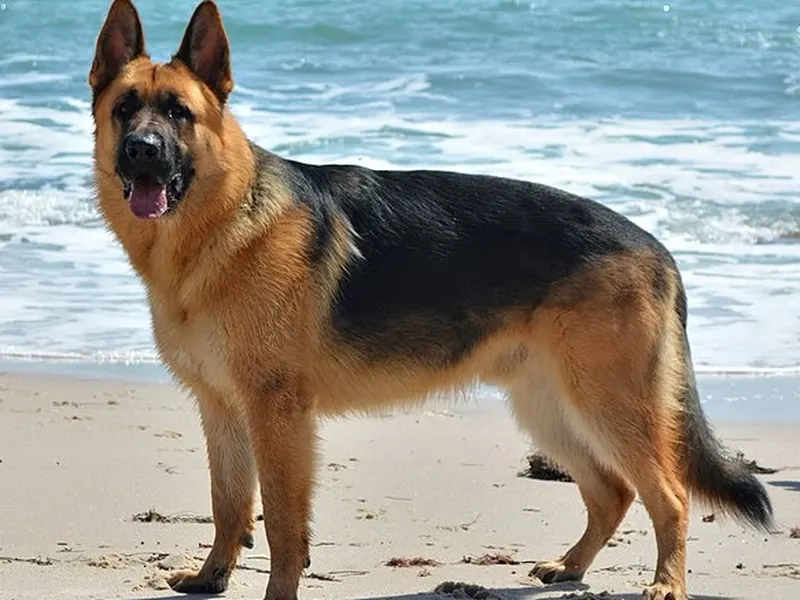
The German Shepherd is a large, muscular dog that is noticeably longer than it is tall, with a strong back, deep chest and a smooth, ground-covering trot. Adults stand 22 to 26 inches at the shoulder and weigh about 50 to 90 lb. Males sit at the upper end of the range and have a heavier head and frame; females are lighter and more refined but should never look weak.
There are two coat lengths. The standard stock coat is a dense, harsh outer coat over a thick undercoat. The long-haired coat has softer, longer hair with feathering on the ears, legs and tail. The AKC accepts both, though long coats are faulted in the show ring, while the FCI and The Kennel Club recognize both varieties.
Colors: black and tan or black and red are the classic patterns, alongside sable, solid black and bicolor. Blue and liver are disqualified or faulted in show standards, and white is a disqualification under the AKC. White dogs from this background are registered separately as the White Swiss Shepherd in some countries.
Temperament and Personality
German Shepherds are loyal, confident and closely bonded to their families. They are naturally watchful and protective, often aloof with strangers until introduced. A well-bred German Shepherd should be steady and self-assured, not nervous.
They are usually good with children in their own family, especially when raised with them, but their size and energy need management around small kids. Without enough activity or training, they can become anxious, vocal or destructive. Some are reactive toward other dogs, so early socialization is important.
Many German Shepherds develop a strong attachment to one person while remaining loyal to the whole family. They tend to follow their owners from room to room and prefer being included in daily activities to being left in the yard.
Are German Shepherds Good for First-Time Owners?
They can be, but only for first-time owners willing to invest heavily in training and socialization. German Shepherds learn fast, which means they also learn bad habits fast if nobody guides them.
Plan on puppy classes from about 10 weeks, a structured obedience course in the first year and a qualified trainer if you see reactivity toward dogs or people. Choose a breeder who produces show or companion lines with a stable temperament rather than high-drive working lines, which are bred for police and sport handlers. A first-time owner who works from home and enjoys training often does well; one who is out all day usually struggles.
Are German Shepherds Aggressive?
German Shepherds are not aggressive by nature, but they are protective and naturally reserved with strangers, so their behavior depends heavily on breeding, socialization and training.
A well-bred dog should be confident and steady. Problems usually come from poor genetics, nervous temperaments, too little exposure to people and dogs during puppyhood or a lack of exercise and structure. Because of their size and strength, any guarding or reactivity matters more than in a small breed. Some landlords and insurers list the breed on restricted lists, so check your lease and homeowner policy before you bring one home.
Can German Shepherds Live in an Apartment?
A German Shepherd can live in an apartment, but only if the owner provides a lot of daily exercise and training outside it. The breed is large, sheds heavily and tends to bark at hallway noises.
Apartment success depends on two or more long outings per day, regular training sessions and a calm routine at home. Teach a settle cue on a mat and practice quiet behavior near the door early. Elevators, stairs and neighbors' dogs are part of daily life, so socialization matters even more. Check building rules first, because many complexes set weight limits or exclude the breed.
Exercise and Training
German Shepherds need about two hours of exercise each day, combining walks, running and play with mental work. Obedience, tracking, agility, herding and protection sports under qualified instruction are excellent outlets. Without mental challenge, they invent their own jobs.
They are highly trainable and enjoy working with their handler. Use positive, consistent methods and start socialization early. Teaching calm behavior at home is as important as teaching active skills. Puppies should avoid excessive jumping and long runs until their joints mature.
Grooming and Shedding
The double coat comes in medium and long-haired versions. Both shed heavily, year-round and especially during spring and fall, when the undercoat comes out in clumps. Brush several times a week, and daily during heavy shedding, using an undercoat rake. Bathe only occasionally. Check ears and nails regularly.
Feeding and Nutrition
German Shepherd puppies grow fast, and a controlled growth rate is one of the best things you can do for their hips and elbows. Feed a complete diet formulated for large-breed puppies, with appropriate calcium levels, and do not add calcium supplements. Keep the puppy lean, with ribs easy to feel, rather than pushing for size.
Bloat: as a deep-chested breed, the German Shepherd has an increased risk of gastric dilatation-volvulus. Split the daily amount into two or three meals, avoid strenuous exercise for an hour before and after eating and discourage gulping with a slow-feeder bowl. Ask your vet about a preventive gastropexy, often done during spay or neuter.
Sensitive stomachs: the breed is reported to have a higher rate of digestive upsets and food-responsive diarrhea than average. Make diet changes gradually over a week and talk to your vet if soft stools persist.
Training treats add up quickly for a dog in daily training. Use part of the regular food as rewards and keep treats to about 10 percent of daily intake. Adults usually do well on two meals a day.
| Adult weight | Less active | Typical adult | Very active |
|---|---|---|---|
| 50 lb | 1,020 kcal | 1,160 kcal | 1,450 kcal |
| 70 lb | 1,310 kcal | 1,500 kcal | 1,870 kcal |
| 90 lb | 1,580 kcal | 1,810 kcal | 2,260 kcal |
Estimates use the resting energy formula veterinarians work with (70 × body weight in kg0.75) and standard activity factors. Use the feeding guide on your food as a starting point and adjust to body condition. Puppies, seniors, pregnant animals and pets that need to lose weight have different needs, so ask your vet.
Health and Lifespan
Hip and elbow dysplasia are the best-known problems in the breed. Degenerative myelopathy, a progressive spinal disease, can be screened for with a DNA test. Other conditions include anal furunculosis (painful sores around the anus), epilepsy, hereditary eye disease, pituitary dwarfism and hemophilia. Bloat is a risk in this deep-chested breed.
The sharply sloping back seen in some show lines has been criticized by veterinary and welfare bodies. Look for breeders who score hips and elbows, use relevant DNA tests and breed for a level, functional topline. German Shepherds typically live 12 to 14 years.
German Shepherd Dog Price and Cost of Ownership
Typical breeder price in the US$1,500 to $3,500
A German Shepherd puppy from a reputable US breeder typically costs around $1,500 to $3,500. Prices vary by breeder, region and lines: imported European working lines and dogs from titled parents often cost more. Expect a good breeder to provide hip and elbow scores for both parents and a degenerative myelopathy DNA result.
Adoption is a realistic option. Many shelters and breed-specific rescues place German Shepherds and mixes, often adults with a known temperament.
The main ongoing cost drivers are food for a large, active dog, professional training classes and possible treatment for joint disease, digestive issues or bloat. Pet insurance is worth pricing early, because hip dysplasia and bloat surgery are expensive and pre-existing conditions are usually excluded. Some homeowner and renter insurance policies charge more for the breed or exclude it.
Is the German Shepherd Right for You?
The German Shepherd suits active owners, families with time for training and people who want a loyal, protective companion. A home with a secure yard is ideal.
It is less suited to people who are away all day, those who dislike dog hair or anyone wanting a low-energy pet. First-time owners can succeed with the breed if they commit to professional training and socialization.
Budget for a large dog: quality food, training classes, regular veterinary checks and possible joint care later in life. German Shepherds kept lean and active tend to stay mobile longer.
German Shepherd Dog Traits at a Glance
German Shepherd Dog FAQ
Are German Shepherds good family dogs?
Yes, they are loyal and protective and often very good with children they know. Training and socialization are essential.
How big do German Shepherds get?
Adults stand 22 to 26 inches at the shoulder and weigh about 50 to 90 lb, with males larger than females.
Do German Shepherds shed a lot?
Yes, they shed heavily year-round and especially in spring and fall. Frequent brushing helps.
How much exercise does a German Shepherd need?
Around two hours a day, combining physical exercise with training or mental tasks.
Why are German Shepherds called Alsatians?
During and after World War I, British breeders renamed the breed Alsatian to avoid anti-German feeling. The Kennel Club returned to German Shepherd Dog in 1977.
How long do German Shepherds live?
German Shepherds typically live 12 to 14 years.