BeauceronFrance's capable all-round shepherd
The Beauceron is a large, athletic French shepherd that herds and guards with the same calm confidence. Loyal and protective, it needs an experienced owner, daily work and consistent, fair training.
Why people love the Beauceron
- Loyal, protective family dog with a calm adult temperament
- Versatile athlete for herding, tracking and dog sports
- Short, weather-resistant coat needs only weekly brushing
- Intelligent and highly trainable for experienced handlers
- Natural watchdog without constant nuisance barking
Things to consider
- Needs one to two hours of activity every day
- Slow to mature and can stay adolescent until about three
- May herd children, pets and visitors
- Strong-willed and needs consistent, experienced leadership
- Bloat and hip dysplasia are concerns in the breed
Is this breed right for you?
10 questions · live resultHistory and Origin
The Beauceron comes from the plains of northern France around Paris, including the region of La Beauce. For centuries farmers used these dogs to move large flocks of sheep and to protect them from thieves and predators. In 1809, a French agricultural writer described the short-coated sheepdogs of the plains as distinct from the long-coated Briard.
The first breed club was founded in 1922. Beaucerons served the French army in both world wars as messenger and mine-detection dogs. The breed remained relatively unknown abroad until recent decades; the AKC recognized it in 2007.
Size, Coat and Colors
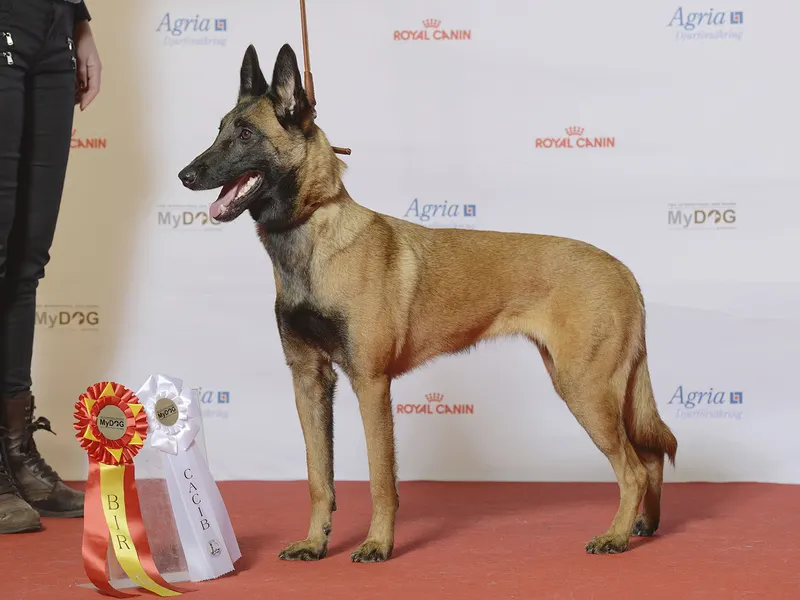
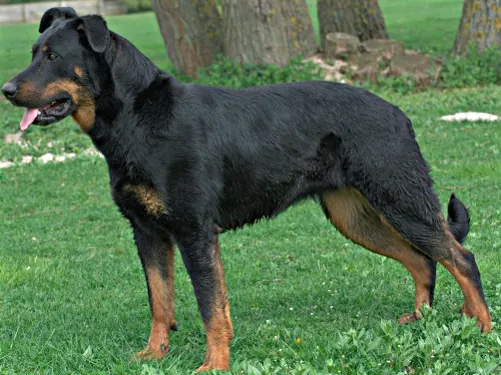
The Beauceron is a large, powerful but elegant herding dog with a long head, a flat skull, a strong neck and a level topline. It is solid and muscular without heaviness, built to trot for hours beside a flock.
Adults stand about 24 to 28 inches and weigh roughly 71 to 110 lb. The AKC standard calls for males of about 25.5 to 27.5 inches and females of about 24 to 26.5 inches. Males look more massive, while females are slightly lighter and more refined but just as athletic.
The coat is short and coarse on the body, with a dense undercoat and slight fringing on the tail and the back of the thighs. Two color patterns are accepted:
- black and tan, with squirrel-red markings on the face, chest and legs
- harlequin, gray and black patches with tan markings
The tan stockings on the lower legs earned the nickname bas rouge. Double dewclaws on each hind leg are required by the standard. In the US, ears may be cropped or left natural, and natural ears are standard in much of Europe.
Temperament and Personality
Beaucerons are calm, courageous and deeply attached to their family. They are reserved with strangers and naturally protective of home and people, which makes them strong watchdogs. With good socialization they are confident rather than suspicious.
They are intelligent and decisive and will take charge if leadership is unclear. Some try to herd children or other pets. They mature slowly and may stay adolescent until about three years old.
When well socialized and exercised, adult Beaucerons are often surprisingly calm indoors and happy to lie at their owner's feet.
Can Beaucerons Live in Apartments?
Generally no. A Beauceron is a large, active herding dog that needs one to two hours of exercise a day and benefits from space to move between outings. Apartment life can make it restless and frustrated.
Guarding instincts add another layer: hallway noise, neighbors and deliveries can trigger alert barking or protective behavior that is harder to manage in shared buildings. A few experienced owners make apartments work with intensive daily exercise, dog sports and excellent training, but a house with a secure yard in a suburban or rural setting is the better long-term fit.
Are Beaucerons Easy to Train?
Beaucerons learn quickly but are not easy for inexperienced handlers. They are intelligent and capable of complex work, yet they are also decisive and will take charge if rules are unclear.
They respond best to calm, consistent and fair training based on rewards and clear boundaries. Harshness damages trust, while inconsistency invites the dog to make its own decisions. Socialization must continue through a long adolescence that can last until around age three. Owners who enjoy structured training, such as obedience, tracking or herding, usually find the breed rewarding. Those wanting an easygoing pet that trains itself usually do not.
Are Beaucerons Good With Other Pets?
Many Beaucerons live well with other pets when raised with them, but supervision and training are important. Their herding instinct may lead them to circle, bump or nip at cats and other dogs, and some are bossy with dogs of the same sex.
A Beauceron puppy raised with a calm cat usually accepts it as part of the family, though outdoor or unfamiliar cats may be chased. Introduce new animals gradually, teach a solid leave it and settle, and give cats high escape routes. In multi-dog homes, pairing a Beauceron with a dog of the opposite sex often goes more smoothly.
Exercise and Training
This breed needs at least one to two hours of activity a day, combining long walks or runs with mental challenges. Herding, tracking, obedience, protection sports and agility all suit the Beauceron.
- Start socialization and training early and keep it consistent throughout adolescence.
- Use firm but fair, reward-based methods. Harshness damages trust with this sensitive breed.
- Teach polite greetings and calm behavior around guests to channel guarding instincts.
Herding instinct tests, offered by many breed and herding clubs, are a good way to discover whether your Beauceron enjoys working sheep.
Grooming and Shedding
The short, dense double coat comes in black and tan or harlequin (gray, black and tan). Weekly brushing is enough most of the year; during seasonal sheds the undercoat comes out heavily and daily brushing helps.
A breed hallmark is the double dewclaw on each hind leg. Trim these nails regularly, as they do not wear down naturally and can catch or split.
Beaucerons also have a distinctive tan marking pattern on the legs, which gave rise to the French nickname bas rouge, meaning red stockings.
Feeding and Nutrition
Beaucerons are large and slow to mature, so feeding should support steady, controlled growth. Use a puppy food suited to large breeds and keep the puppy lean, since excess weight and rapid growth put extra stress on developing hips.
- Feed puppies three or four meals daily and adults at least two meals.
- Bloat is a known risk in this deep-chested breed. Avoid one large meal a day, slow down fast eaters and keep hard exercise away from mealtimes.
- Adjust portions to activity. A Beauceron in herding or sport training may need noticeably more food than a pet walked twice a day.
- Check body condition every few weeks. You should feel the ribs easily and see a defined waist.
Dilated cardiomyopathy has been reported in the breed. If your dog has any heart diagnosis, work with your veterinarian on diet choices. Use small, healthy treats for training sessions, which with this breed can be frequent.
| Adult weight | Less active | Typical adult | Very active |
|---|---|---|---|
| 71 lb | 1,320 kcal | 1,510 kcal | 1,890 kcal |
| 110 lb | 1,840 kcal | 2,100 kcal | 2,630 kcal |
Estimates use the resting energy formula veterinarians work with (70 × body weight in kg0.75) and standard activity factors. Use the feeding guide on your food as a starting point and adjust to body condition. Puppies, seniors, pregnant animals and pets that need to lose weight have different needs, so ask your vet.
Health and Lifespan
Beaucerons typically live 10 to 12 years. Hip dysplasia and gastric dilatation-volvulus (bloat), common in large deep-chested breeds, are the main concerns. Dilated cardiomyopathy has also been reported.
The harlequin color is caused by the merle gene, so responsible breeders never mate two harlequins, which risks deafness and eye defects in puppies. Ask for hip scores and cardiac screening, and learn the signs of bloat.
Because the breed is large and slow to mature, keep puppies lean and avoid forced running or repetitive jumping until growth plates close.
Beauceron Price and Cost of Ownership
Typical breeder price in the US$1,500 to $2,500
A Beauceron puppy from a reputable US breeder typically costs about $1,500 to $2,500. Prices vary by breeder, region and lines, and breeders are relatively few, so waiting lists are common. Some puppies are imported from France, which adds transport costs. Breed club rescue networks occasionally place adults.
Breed-specific cost drivers include:
- Training classes and dog sports, which this working breed needs
- Hip and cardiac screening, and insurance covering bloat surgery
- Regular nail care for the double hind dewclaws
- Large crates, beds and food volumes for a dog of 71 to 110 lb
- Ear cropping, if chosen, which is an additional surgical cost
Professional grooming is rarely necessary.
Is the Beauceron Right for You?
The Beauceron suits experienced, active owners with space and time for daily training, such as rural households, dog sport enthusiasts or people wanting a working companion with natural guarding instincts.
It is not a first dog, nor a match for apartments or for owners who are out all day. Families with young children can succeed with an adult dog from good lines, but should expect herding behavior and supervise closely.
Beauceron Traits at a Glance
Beauceron FAQ
Are Beaucerons good family dogs?
They are loyal and protective with their family. They suit experienced owners and families with older children best.
How big do Beaucerons get?
They stand about 24 to 28 inches tall and weigh roughly 71 to 110 lb.
Why do Beaucerons have double dewclaws?
Double dewclaws on the hind legs are required by the breed standard and are a traditional feature of the breed.
Do Beaucerons shed?
Yes. They shed moderately year-round and heavily during seasonal coat changes.
Are Beaucerons good for first-time owners?
Usually not. Their size, intelligence and protective nature need an experienced, consistent handler.
How long do Beaucerons live?
Typically 10 to 12 years.