Belgian MalinoisIntense Belgian working dog for experts
The Belgian Malinois is a lean, fast herding dog that has become a first choice for police and military units worldwide. Its drive, speed and intelligence are extraordinary, which is exactly why it suits experienced handlers with time for daily training rather than casual pet homes.
Why people love the Belgian Malinois
- Exceptionally trainable for sport, detection and obedience
- Deeply devoted to its handler
- Short coat is easy to keep clean
- Robust breed with a long lifespan for its size
- Excellent partner for running and outdoor work
Things to consider
- Needs two or more hours of physical and mental work daily
- Strong prey and chase drive
- Can become destructive or frantic when under-stimulated
- Intensity magnifies handler mistakes
- Rarely suits first-time or casual owners
Is this breed right for you?
10 questions · live resultHistory and Origin
The Malinois takes its name from the city of Mechelen (Malines in French) in Belgium, where the short-haired type was concentrated. In 1891 the newly formed Belgian Shepherd Dog Club, with Professor Adolphe Reul of the veterinary school in Cureghem, began sorting the country's shepherd dogs by coat. Four varieties emerged: the long-haired Groenendael and Tervuren, the rough-coated Laekenois and the short-coated Malinois.
Belgian breeders selected the Malinois mainly for working ability, and it soon proved useful in police work and, later, in Belgian ring sport. Today it serves with police, military, detection and search-and-rescue teams on several continents. The AKC treats the Malinois as a separate breed in the Herding Group, while The Kennel Club and the FCI recognize it as one variety of the Belgian Shepherd Dog.
Size, Build and Colors
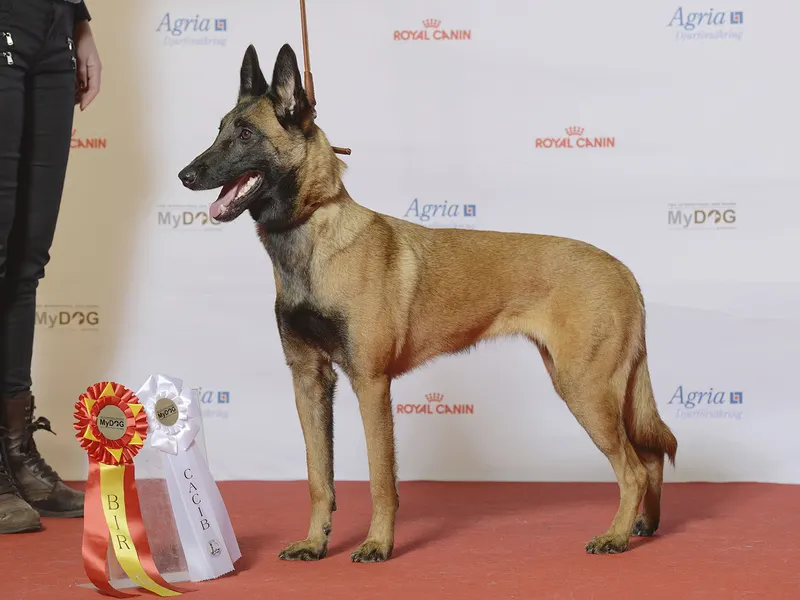
The Malinois is a square, athletic dog built for speed and agility rather than bulk. Adults stand 22 to 26 inches at the shoulder, with males usually 24 to 26 inches and females 22 to 24 inches. Weight runs from about 40 to 80 lb, with working-line females at the light end and big males at the top. Compared with a German Shepherd it is lighter, leggier and has a level rather than sloping topline.
The coat is short, straight and dense, with a woolly undercoat that thickens in cold weather. It is slightly longer around the neck and on the back of the thighs. Color ranges from rich fawn to mahogany, with black-tipped hairs (overlay) and a black mask and ears. A small white patch on the chest or toes is acceptable.
The head is long and chiseled, with triangular, high-set erect ears. Males look more substantial, especially through the head and chest.
Temperament and Personality
A well-bred Malinois is alert, confident and deeply devoted to its handler. It can be reserved or watchful with strangers and will alert to anything unusual, which is why it works so well in protection roles. The breed reacts quickly and intensely, both to people and to movement.
Prey drive is strong. Many Malinois chase cats, bikes or joggers if not trained, and some do not tolerate other dogs of the same sex. Life with children can work in experienced homes, but running, squealing kids may trigger chasing or herding, so supervision is essential. A bored Malinois tends to create its own work, often destructively.
Are Belgian Malinois Aggressive?
A well-bred, well-raised Malinois is not aggressive without cause, but it is a protective, intensely reactive breed. It was selected for police and protection work, so it responds quickly to perceived threats and to fast movement.
Problems usually come from poor breeding, lack of socialization or too little work. A Malinois that is under-exercised, isolated or handled harshly can develop fear-based or frustration behaviors, including biting. Owners should socialize puppies widely, teach impulse control and an off switch, and work with trainers experienced in the breed. Bite sports should only be done under qualified instructors.
Are Belgian Malinois Good for First-Time Owners?
Generally no. The AKC and most breed rescues describe the Malinois as a dog for experienced handlers. Its speed, drive and sensitivity mean small training mistakes quickly turn into habits.
A first-time owner can succeed only with unusual commitment: daily structured training, a dog sport or working discipline, and regular guidance from an experienced trainer. Many Malinois in rescue come from owners who wanted a well-behaved, impressive dog without realizing it is a full-time hobby. A first-time owner drawn to the breed should spend time with adult Malinois at a sport club before deciding.
Can a Belgian Malinois Live in an Apartment?
It is possible but difficult, and most experienced owners advise against it. The issue is not size but energy, noise sensitivity and the constant stimulation of hallways, elevators and neighbors.
An apartment Malinois needs a committed owner who provides two or more hours of real work outside the home every day, plus training sessions and enrichment indoors. Crate training and teaching the dog to settle are essential. Without these, the dog may pace, spin, bark at noises or chew. A house with a securely fenced yard in a quieter area makes life considerably easier for both dog and owner.
Exercise and Training
This breed needs a great deal: two hours or more of activity a day, including structured mental work. Running beside a bike, retrieving, tracking, obedience, scent detection and bite sports under qualified instructors are typical outlets. A long walk on its own will not satisfy a young Malinois.
Training is rewarding because the dog is quick and highly motivated by toys and food, but its speed and intensity magnify handler mistakes. Consistent, reward-based training from puppyhood, impulse-control exercises and teaching the dog to switch off at home are vital. The AKC describes the breed as unsuitable for first-time owners.
Grooming and Shedding
The short, dense double coat is easy to care for. A weekly brush removes loose hair, increasing to several times a week during the twice-yearly shedding seasons. Baths are rarely needed. Check paws and nails regularly in dogs that work on hard surfaces, and inspect the body after outdoor training for small cuts and ticks.
Feeding and Nutrition
A working Malinois burns a lot of energy, but needs vary hugely between a dog that does detection or ring sport and one that walks and trains for an hour. Feed for the dog in front of you: keep it lean and muscular, with ribs easy to feel and a clear tuck at the waist.
Puppies grow quickly but this is not a giant breed. Feed a diet formulated for large-breed growth if adult weight will exceed about 50 lb, and avoid pushing growth with extra food. Lean puppies have healthier joints.
- Feed two meals a day for adults, three or four for puppies.
- Wait at least an hour after meals before intense work or sport, and do not feed right after hard exercise. Deep-chested working dogs can bloat.
- Adjust portions with workload, rather than feeding the same amount all year.
Food is a powerful training tool for this breed. Many handlers feed part of the daily ration in training sessions, which also helps manage weight. Fresh water should always be available, especially during hot-weather work.
| Adult weight | Less active | Typical adult | Very active |
|---|---|---|---|
| 40 lb | 860 kcal | 980 kcal | 1,230 kcal |
| 60 lb | 1,170 kcal | 1,330 kcal | 1,670 kcal |
| 80 lb | 1,450 kcal | 1,660 kcal | 2,070 kcal |
Estimates use the resting energy formula veterinarians work with (70 × body weight in kg0.75) and standard activity factors. Use the feeding guide on your food as a starting point and adjust to body condition. Puppies, seniors, pregnant animals and pets that need to lose weight have different needs, so ask your vet.
Health and Lifespan
The Malinois is generally a robust breed. The Kennel Club places the Belgian Shepherd Dog in Breed Watch Category 1, meaning no points of concern linked to its appearance have been identified. Like most medium to large working breeds it can develop hip and elbow dysplasia, so screening of breeding dogs is recommended. Eye conditions and epilepsy have also been reported in Belgian shepherds.
Injuries from high-impact work and sport are common in very active dogs, so build fitness gradually, warm up before intense sessions and allow proper rest. With good care, Malinois often live 14 to 16 years.
Belgian Malinois Price and Cost of Ownership
Typical breeder price in the US$1,500 to $4,000
A Malinois puppy from a reputable US breeder typically costs about $1,500 to $4,000. Prices vary by breeder, region and lines, and puppies from proven working or sport lines are often at the upper end. Ask for hip and elbow scores, eye exams and information about the parents' temperament and work.
Adoption is a realistic option: Malinois rescues and shelters take in many young adults from homes that could not meet their needs. Some are ideal for experienced sport homes.
Breed-specific ongoing costs include:
- Professional training and sport club fees, which most owners need long term.
- Durable crates, toys and equipment that stand up to a strong dog.
- Vet care for sport-related soft tissue injuries.
- Food costs that rise with workload.
Is the Belgian Malinois Right for You?
The Malinois suits experienced handlers who train regularly in a sport or working discipline, have secure outdoor space and can involve the dog in daily life. Rural or suburban homes with room to move work best.
It is not a good fit for first-time owners, apartment dwellers, busy families with little spare time or anyone looking for a calm companion. Breed rescues regularly take in Malinois from owners who underestimated how much work the dog needs.
Belgian Malinois Traits at a Glance
Belgian Malinois FAQ
Are Belgian Malinois good family dogs?
They can be loyal family members in experienced, very active homes. Their intensity, prey drive and herding instincts make them a challenging choice for families with young children.
What is the difference between a Malinois and a German Shepherd?
The Malinois is lighter, faster and usually more intense, with a short fawn coat and black mask. German Shepherds are heavier, often calmer at home and come in more coat types.
How much exercise does a Belgian Malinois need?
Plan for two or more hours of physical and mental work every day. Training games, tracking or a dog sport keep a Malinois balanced.
How big do Belgian Malinois get?
Adults typically stand 22 to 26 inches at the shoulder and weigh around 40 to 80 lb.
Do Belgian Malinois shed?
They shed moderately year-round and heavily twice a year. Weekly brushing is usually enough outside the shedding seasons.
How long do Belgian Malinois live?
Malinois often live 14 to 16 years, which is long for a dog of their size.