BorzoiRussia's elegant aristocratic sighthound
The Borzoi is a tall, silky-coated sighthound bred in Russia to course wolves, fox and hare. At home it is quiet, gentle and catlike; outdoors it can reach top speed in seconds. It suits calm households with space, a secure fence and an owner who accepts an independent mind.
Why people love the Borzoi
- Quiet indoors and rarely barks
- Calm, elegant and affectionate on its own terms
- Moderately easy coat for its length
- Gentle and dignified with its family
- Spectacular athlete when allowed to run
Things to consider
- Extremely strong chase drive; cats and small dogs at risk
- Cannot be trusted off leash in open areas
- Needs a high, secure fence and space to gallop
- Deep chest brings bloat risk
- Large size needs a big car and sofa
Is this breed right for you?
10 questions · live resultHistory and Origin
Long-legged coursing hounds were kept by Russian nobility for centuries, and the breed type was shaped largely between the 17th and 19th centuries on large estates. Hunts were huge affairs: mounted hunters released pairs or trios of matched Borzoi to run down and hold a wolf until the hunters arrived.
Gifts of Borzoi to European royalty brought the breed west in the late 19th century, and it arrived in the United States around 1890. The AKC registered it as the Russian Wolfhound and changed the name to Borzoi in 1936. After the 1917 revolution the estate kennels were broken up, and Western breeding stock helped keep the show type going.
Size, Coat and Colors
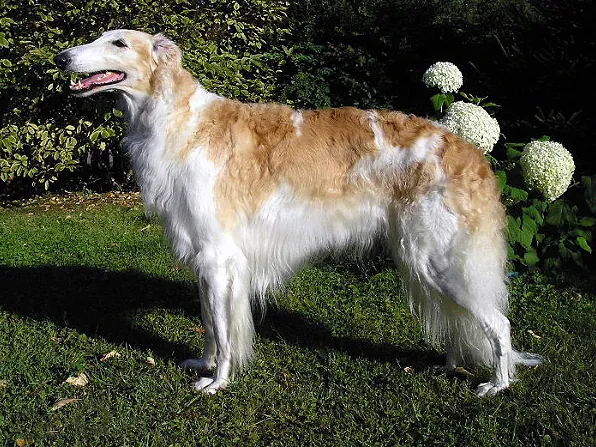
The Borzoi is a large, elegant sighthound standing 27 to 33 inches at the shoulder and weighing about 60 to 106 lb. It is built for speed with a long, narrow head, a slightly Roman nose, a deep but narrow chest and a gracefully arched back. Males are noticeably taller and heavier than females and often carry a more abundant coat, especially on the frill around the neck.
The coat is long and silky and may be flat, wavy or rather curly. It is shorter and smooth on the head, ears and front of the legs, with longer feathering on the hindquarters, the back of the forelegs, the chest and the long, low-carried tail.
The AKC standard accepts any color or combination of colors. White with colored markings is common, often in shades of gold, red, cream, gray, brindle or black, and many Borzoi show black masking or sabling. Because color is not judged, breeders select on structure, soundness and movement rather than on coat color.
Temperament and Personality
Borzoi are dignified, gentle and often reserved. Indoors they spend much of the day draped across a sofa and rarely bark. They are affectionate with their people but not clingy, and many dislike rough handling.
The defining trait is an extremely strong chase drive. Anything small that runs, including cats and small dogs, can trigger a pursuit. Their independence comes from a job done far from the handler, so they think for themselves rather than wait for commands. They tolerate respectful older children better than noisy toddlers.
Are Borzois Good Family Dogs?
Borzois can be good family dogs in calm households with older, respectful children and no small pets they have not been raised with.
They are affectionate and gentle with their own people but do not enjoy rough play, loud chaos or being climbed on. Toddlers and a large dog with long legs and a sensitive nature are not an ideal mix, so supervise closely. The bigger family question is usually the chase drive. Children must learn never to let the dog out of an open door or gate, since a Borzoi can be gone in seconds. In a home that respects its quiet nature, a Borzoi is a loving, low-key companion.
Can Borzois Live in an Apartment?
A Borzoi can live in a large apartment if it gets daily walks and regular chances to sprint in a securely fenced area, but a house with a high fence is easier.
Indoors the breed is quiet and spends much of the day resting, so it does not need constant space. The challenges are physical: a long, tall dog needs room to stretch out, a large bed and an owner willing to drive to a fenced field or lure coursing club several times a week. Stairs and slippery floors can be hard on a young dog's long legs. Without regular full-speed running, a Borzoi can become restless.
Are Borzois Easy to Train?
Borzois learn quickly but are not easy to train in the obedience sense. They are independent sighthounds that see little point in repetition.
Teach house manners, leash walking and a solid response to their name with short, upbeat sessions and high-value food rewards. Keep repetitions low and end sessions early. Harsh corrections tend to make a sensitive Borzoi shut down. A reliable recall around running animals is unrealistic for most dogs of the breed, so training should focus on safety: waiting at doors, calm leash walking and coming to you in an enclosed space. Many Borzois enjoy lure coursing and fast CAT events far more than formal obedience.
Exercise and Training
A Borzoi needs daily walks plus regular opportunities to gallop flat out in a securely fenced area. Lure coursing is an excellent outlet that matches the breed's instincts. Off-leash running in open country is risky: a Borzoi that spots a deer or hare may be out of sight within seconds and unable to hear you.
Train with patience, short sessions and food rewards. Borzoi learn quickly but see little point in endless repetition. Use a wide, padded collar or harness and avoid leash jerks; the long neck and narrow head are sensitive.
Grooming and Shedding
The long, silky coat can be flat, wavy or curly. Brush thoroughly once or twice a week, paying attention to the feathering behind the legs, the chest and the tail where tangles form. Shedding is moderate most of the year and heavier in seasonal coat changes, when males in particular may drop a lot of undercoat. Trim the hair between the pads for traction on smooth floors.
Feeding and Nutrition
Borzois are naturally lean, and a healthy adult shows a hint of the last ribs and the hip bones. New owners often worry their dog is too thin, but extra weight puts strain on joints and does not suit a sighthound's build. Judge condition by feel and by your vet's assessment rather than by comparison with other breeds.
- Feed puppies a large-breed growth diet and keep them slim; rapid growth and excess weight can stress developing joints.
- Split daily food into at least two meals for adults to lower bloat risk, and avoid hard running for about an hour before and after eating.
- Many sighthounds are picky eaters; a regular schedule and removing uneaten food after 20 minutes helps.
The long, narrow jaw can be prone to dental problems, so regular tooth brushing and appropriate chews are worth building into the routine. Use small treats during training and count them into the daily ration. Older Borzois sometimes lose muscle; ask your vet how to adjust the diet to protect muscle mass in senior years rather than simply feeding more.
| Adult weight | Less active | Typical adult | Very active |
|---|---|---|---|
| 60 lb | 1,170 kcal | 1,330 kcal | 1,670 kcal |
| 83 lb | 1,490 kcal | 1,700 kcal | 2,130 kcal |
| 106 lb | 1,790 kcal | 2,050 kcal | 2,560 kcal |
Estimates use the resting energy formula veterinarians work with (70 × body weight in kg0.75) and standard activity factors. Use the feeding guide on your food as a starting point and adjust to body condition. Puppies, seniors, pregnant animals and pets that need to lose weight have different needs, so ask your vet.
Health and Lifespan
Borzoi usually live 9 to 14 years. As a large, deep-chested breed they are at risk of gastric dilatation-volvulus (bloat), an emergency in which the stomach twists. Feeding several smaller meals and avoiding vigorous exercise right after eating are commonly advised; ask your vet about preventive gastropexy.
Other conditions seen in the breed include degenerative myelopathy, heart disease and dental problems linked to the long, narrow jaw. Like many sighthounds, Borzoi have little body fat and can be sensitive to some anesthetics, so tell your vet the breed before any procedure. Look for breeders who screen hearts and eyes and can discuss longevity in their lines.
Borzoi Price and Cost of Ownership
Typical breeder price in the US$2,000 to $4,000
A Borzoi puppy from a reputable US breeder typically costs about $2,000 to $4,000. Prices vary by breeder, region and lines. Litters are relatively few, so you may need to join a waiting list.
Adoption is possible through sighthound and Borzoi rescue groups, which occasionally place adults and retired show dogs.
Breed-specific ongoing costs include secure fencing high enough for a sighthound, a vehicle large enough for a tall dog and regular access to a fenced field or lure coursing club. Food costs reflect a large dog. Veterinary costs to plan for include bloat surgery and a possible preventive gastropexy, heart screening and dental care for the long jaw. Make sure your vet is familiar with sighthound anesthesia protocols. Insurance that covers bloat and heart conditions is worth comparing while the dog is young.
Is the Borzoi Right for You?
A Borzoi suits you if you want a quiet, elegant companion, have a house with a high, secure fence and enjoy giving a dog time to run. It is a poor match for small apartments, homes with cats or small dogs that have not been raised together, or owners who expect reliable off-leash obedience.
Owners who appreciate a self-contained dog that is affectionate on its own terms often find the Borzoi deeply rewarding.
Borzoi Traits at a Glance
Borzoi FAQ
How big do Borzois get?
Borzoi stand about 27 to 33 inches at the shoulder and usually weigh 60 to 106 lb, with males clearly larger than females.
Are Borzois good with cats?
Their chase drive is very strong, so many cannot live safely with cats; some raised with a specific cat accept it indoors but may still chase outside.
Can a Borzoi be off leash?
Only in securely fenced areas; in open ground a Borzoi that sees prey can outrun recall within seconds.
Do Borzois bark a lot?
No, they are generally quiet dogs that bark rarely.
How long do Borzois live?
Most live 9 to 14 years.
Do Borzois shed?
Yes, moderately, with heavier seasonal shedding; brushing once or twice a week keeps the coat tidy.