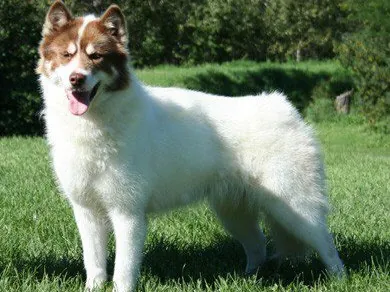
Alaskan MalamuteArctic freight hauler with a big heart
The Alaskan Malamute is a heavy-boned Arctic sled dog built for hauling loads over long distances, not for racing. Friendly with people but independent, strong and prey-driven, it suits experienced, active owners in cooler climates.
Why people love the Alaskan Malamute
- Friendly and affectionate with people, including visitors
- Superb partner for hiking, sledding and skijoring
- Clean coat with little dog odor
- Thrives in cold climates and snow
- Talks and woos rather than barking constantly
Things to consider
- Very heavy seasonal shedding
- Strong prey drive toward cats and small animals
- Digs, roams and escapes when bored
- Rarely reliable off leash
- Same-sex dog tension is common
Is this breed right for you?
10 questions · live resultHistory and Origin
The breed takes its name from the Mahlemut, an Inupiaq people of the Norton Sound region in northwest Alaska. They relied on large, powerful dogs to pull sleds of supplies, help hunt seals and keep polar bears at a distance.
During the Klondike Gold Rush of the late 1890s, demand for sled dogs led to much crossbreeding, and fanciers in the 1920s worked to preserve the original type. Malamutes served on Admiral Byrd's Antarctic expeditions and in World War II. The AKC recognized the breed in 1935, and it became Alaska's official state dog in 2010.
Size, Coat and Colors
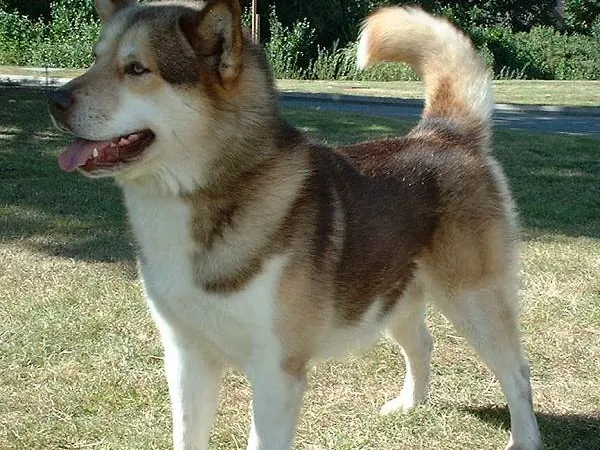
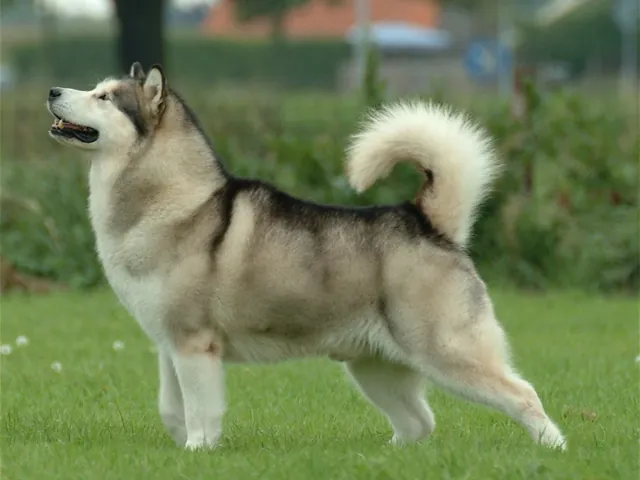
The Alaskan Malamute is a powerful, heavy-boned freighting dog standing about 23 to 25 inches at the shoulder and weighing around 75 to 84 lb. The AKC gives a desirable freighting size of about 25 inches and 85 lb for males and 23 inches and 75 lb for females, though many pet Malamutes are larger. It has a broad head, triangular erect ears, almond-shaped brown eyes and a plumed tail carried over the back.
The double coat is coarse on the outside with a dense, oily, woolly undercoat. The coat is shorter in summer and fuller in winter.
Colors range from light gray through black, as well as sable and shades of red, always with white on the underbody, legs, feet and part of the face. Solid white is the only solid color allowed. The face shows a cap over the head and either a mask or bar markings. Blue eyes are a disqualification in the show ring. Males are larger and more massive than females.
Temperament and Personality
Malamutes are affectionate and friendly toward people, including strangers, which makes them poor guard dogs. They are pack-minded and want to be with their family, and they often greet with "woo-woo" talking or howling rather than barking.
They are also independent thinkers with a strong will. Many show same-sex dog tension and a very high prey drive toward cats, small pets and wildlife. Their size and strength mean boisterous play can knock over small children, so interactions should be supervised.
Is the Alaskan Malamute Good for First-Time Owners?
The Alaskan Malamute is usually not recommended for first-time owners. Its friendly nature is appealing, but its strength, independence and prey drive are demanding even for experienced dog people.
A beginner would need to handle a dog that can pull an adult off their feet, ignores recall when it sees wildlife, digs under fences and may not tolerate dogs of the same sex. Training needs creativity because Malamutes lose interest in repetitive drills. Novice owners who are set on the breed do best with an adult from a breed rescue whose temperament is known, a securely fenced property, regular sledding or hiking plans and support from a local Malamute club or trainer experienced with Nordic breeds.
Are Alaskan Malamutes Good with Cats?
Often not. Malamutes have a very high prey drive, and many see cats, rabbits and other small animals as something to chase. Some live peacefully with a cat they grew up with indoors, but even those dogs may chase cats outside or unfamiliar cats.
If you have a cat and want a Malamute, the safest approach is:
- Choose a puppy raised with cats, or an adult rescue already tested with cats.
- Keep the dog leashed or separated during introductions and when unsupervised.
- Give the cat high shelves and dog-free rooms.
Small caged pets such as rabbits, guinea pigs and birds should always be kept out of the dog's reach.
Do Alaskan Malamutes Bark or Howl a Lot?
Malamutes bark less than many breeds, but they are vocal in other ways. Owners describe a range of woo-woo talking, grumbles and long howls, often used to greet people, ask for something or respond to sirens and other dogs.
Most talking is friendly communication, but howling can become a nuisance when the dog is bored, under-exercised or left alone for long hours. Neighbors in close housing may notice it. Daily vigorous exercise, chew items, food puzzles and gradual alone-time training reduce howling. Because Malamutes rarely bark at strangers, they are not reliable watchdogs.
Exercise and Training
A Malamute needs at least one to two hours of vigorous activity daily. Hiking, sledding, carting, skijoring and weight pulling are excellent outlets that match the breed's purpose.
Training takes patience and creativity:
- Keep sessions short, varied and food-motivated; repetition bores them.
- Most Malamutes cannot be trusted off leash because of their prey drive and urge to roam.
- Secure fencing matters: they dig and can climb, and they become escape artists when bored.
- Avoid hard exercise in warm weather, since they overheat easily.
Grooming and Shedding
The double coat is coarse and thick with an oily, woolly undercoat that can be 1 to 2 inches deep. Brush a few times a week year-round. Once or twice a year the undercoat blows, and you will need daily raking for several weeks.
Do not shave a Malamute; the coat regulates temperature and protects the skin. The coat stays fairly clean and odor-free, so baths are needed only occasionally.
Feeding and Nutrition
Malamutes are known as efficient eaters, bred to work hard on limited food in the Arctic. Many gain weight easily as pets, and most are strongly food-motivated. Feed by body condition rather than by the size of the dog, and adjust portions between busy sledding winters and quieter summers.
Puppies should grow steadily, not fast, on a diet formulated for large-breed growth. Keeping them lean supports their hips while they develop.
- Feed adults two meals a day, and avoid hard exercise around mealtimes because bloat is reported in the breed.
- Some Malamutes guard food, so feed them separately from other dogs and teach calm mealtimes.
- Zinc-responsive dermatosis, a skin condition linked to how some Malamutes absorb zinc, is reported in the breed. Crusty skin around the eyes or mouth needs a vet check, not home supplements.
- Use part of the daily ration as training rewards for this food-driven dog.
| Adult weight | Less active | Typical adult | Very active |
|---|---|---|---|
| 75 lb | 1,380 kcal | 1,580 kcal | 1,970 kcal |
| 84 lb | 1,500 kcal | 1,720 kcal | 2,150 kcal |
Estimates use the resting energy formula veterinarians work with (70 × body weight in kg0.75) and standard activity factors. Use the feeding guide on your food as a starting point and adjust to body condition. Puppies, seniors, pregnant animals and pets that need to lose weight have different needs, so ask your vet.
Health and Lifespan
Malamutes typically live 10 to 14 years. Hip dysplasia is the most common orthopedic issue. Breed-specific inherited conditions include chondrodysplasia (a form of dwarfism) and Alaskan Malamute polyneuropathy, both of which have tests available.
Hypothyroidism, inherited eye disease and gastric dilatation-volvulus (bloat) are also reported. Choose a breeder who screens hips and eyes and tests for polyneuropathy, and keep your dog lean, since the breed is food-driven.
Alaskan Malamute Price and Cost of Ownership
Typical breeder price in the US$1,200 to $3,000
A Malamute puppy from a reputable US breeder usually costs about $1,200 to $3,000. Prices vary by breeder, region and lines. Breeders should show hip and eye results and DNA tests for polyneuropathy and chondrodysplasia for both parents. Be wary of giant or wolf-type Malamutes sold at premium prices.
Many Malamutes end up in rescue when owners underestimate their needs, so adoption of an adult with a known temperament is a strong option.
Ongoing costs are shaped by the breed's escape skills and coat: tall, dig-proof fencing, sturdy harnesses and sledding or carting gear, and grooming tools or professional de-shedding during coat blows. Air conditioning in warm regions is a real expense. Insurance can help with hip dysplasia, eye disease and hypothyroidism costs.
Is the Alaskan Malamute Right for You?
The Malamute is a great match for experienced owners who enjoy outdoor sports, live in a cool climate and have a securely fenced property. It thrives with a job and plenty of companionship.
It is not a good choice for first-time owners, apartment living, homes with cats or small pets, or anyone wanting a dog that is reliable off leash. Prepare for large amounts of hair and some creative destruction if the dog is under-exercised.
If a Malamute fits your life, consider joining a local sled or carting club, which gives the dog a purpose and you a support network.
Alaskan Malamute Traits at a Glance
Alaskan Malamute FAQ
What is the difference between an Alaskan Malamute and a Siberian Husky?
The Malamute is larger and heavier, built for hauling freight. The Husky is lighter and faster, bred for speed over distance. Malamutes usually have brown eyes, while Huskies can have blue.
How big do Alaskan Malamutes get?
They stand about 23 to 25 inches tall and weigh around 75 to 84 lb.
Are Alaskan Malamutes good with kids?
They are friendly but very strong and boisterous, so they suit families with older children and need supervision around young kids.
Do Alaskan Malamutes shed a lot?
Yes. They shed year-round and blow their undercoat heavily once or twice a year.
Can Alaskan Malamutes live in hot climates?
They tolerate heat poorly. In warm areas they need air conditioning, shade and exercise only in cool hours.
How long do Alaskan Malamutes live?
Typically 10 to 14 years.