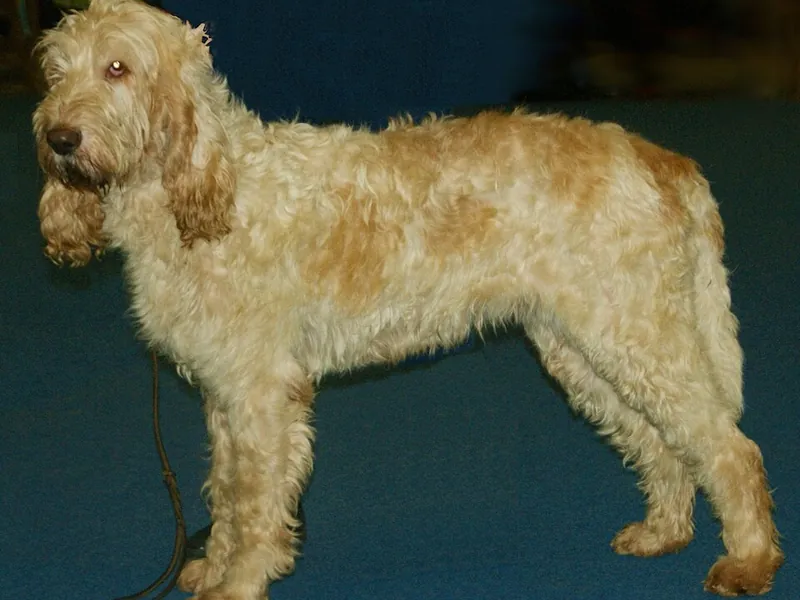
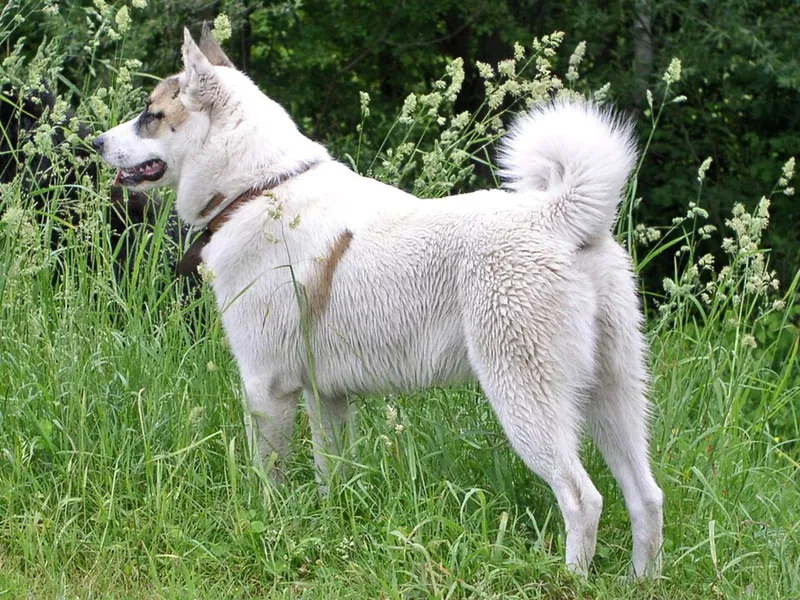
Greenland DogThe Arctic sled dog of Greenland
The Greenland Dog is a powerful, primitive Arctic sled dog built for hauling heavy loads across ice and snow. Friendly with people but strong-willed, energetic and driven by pack instincts, it belongs with very experienced owners in cold climates who can give it real work.
Why people love the Greenland Dog
- Friendly toward people and rarely suspicious
- Exceptional strength and endurance for sledding
- Coat is self-cleaning and rarely needs baths
- Generally hardy with few documented inherited diseases
- Ideal partner for mushing and cold-weather sports
Things to consider
- Very strong prey drive toward cats and livestock
- Needs hard exercise; walks alone are not enough
- Struggles in warm climates
- Digs, climbs and roams; recall is unreliable
- Can clash with other dogs over rank
Is this breed right for you?
10 questions · live resultHistory and Origin
Greenland Dogs descend from sled dogs that came to the Arctic with the ancestors of today's Inuit, and they have been used in Greenland for centuries for hauling sleds and hunting seals and polar bears. Polar expeditions, including those of Roald Amundsen and Fridtjof Nansen, relied on them for their strength and endurance.
In parts of Greenland, regulations restrict other dog breeds to protect the purity of the sled dog population. Denmark holds the FCI patronage. The Kennel Club recognizes the breed in the Working Group; the AKC does not.
Size, Coat and Colors
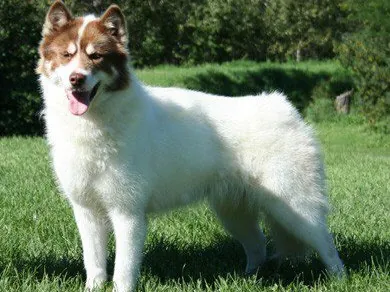
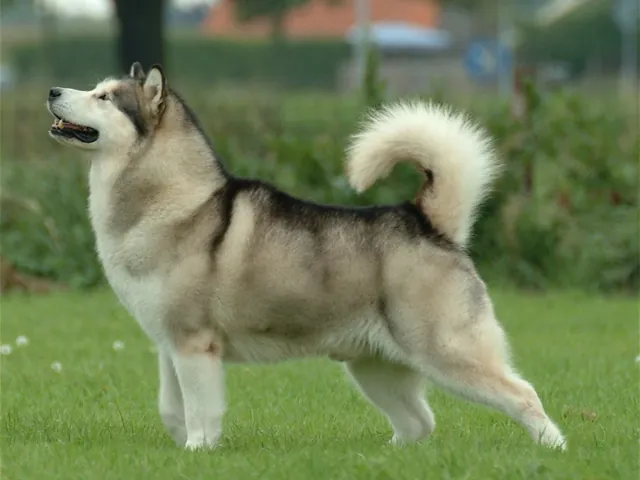
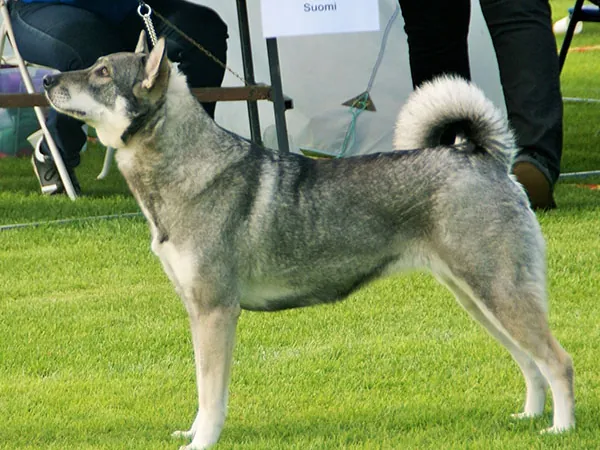
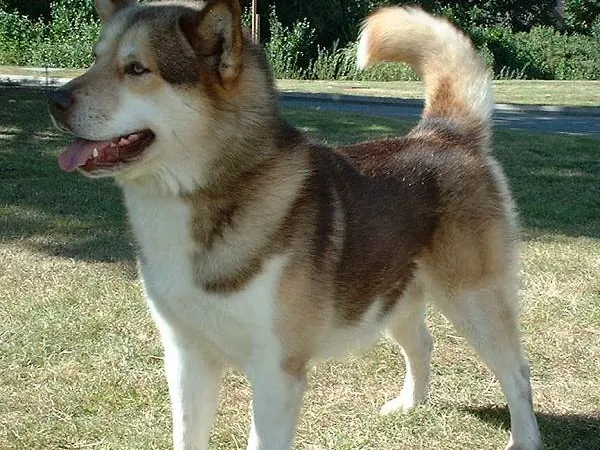
The Greenland Dog is a powerful, heavily built Arctic sled dog with a broad, wedge-shaped head, small triangular ears, slightly oblique eyes and a thick, bushy tail curled over the back. Its body is slightly longer than tall, with strong legs and well-padded feet built for snow and ice.
Adults stand about 22 to 27 inches and weigh roughly 60 to 106 lb. Males are clearly larger and heavier, with a broader head and more pronounced ruff, while females are somewhat smaller but still sturdy and muscular.
The double coat has a dense, woolly undercoat and coarse, straight outer hair. The coat is shorter on the head and legs and longer on the body, with a thick ruff and a heavily furnished tail.
All colors are permitted, and you will see:
- solid colors, from white to black
- wolf gray and sable
- red and cream
- parti-colored and piebald patterns
Albino dogs are not accepted. Function, not color, matters to working teams in Greenland.
Temperament and Personality
Greenland Dogs are friendly toward people and generally not good guard dogs. They are independent, strong-willed and often more interested in pack dynamics than human direction. Conflicts with other dogs over rank can occur, especially between same-sex dogs.
Their prey drive is very strong, and small animals, including cats and livestock, are usually unsafe around them. They howl rather than bark much.
In Greenland, the dogs traditionally live and work in teams, and they have a pack-oriented social structure. In family life, this can mean a dog that is affectionate but expects clear routines and consistent leadership.
Are Greenland Dogs Good for First-Time Owners?
No. Greenland Dogs are friendly toward people, but their independence, pack-oriented behavior, prey drive and exercise needs make them one of the most demanding breeds for a beginner.
They need hard daily work such as sledding, carting or canicross, secure fencing that prevents digging and climbing, and an owner who understands Nordic and primitive breeds. Conflicts with other dogs over rank can occur, and small animals are usually unsafe. First-time owners attracted to the breed should start by joining a mushing club, learning from experienced owners and considering a less extreme Nordic breed first.
Can a Greenland Dog Live in an Apartment?
No. A Greenland Dog is a large, powerful sled dog bred to pull loads across ice for hours, and confinement in an apartment leaves it frustrated. Howling, chewing and escape attempts are likely.
The breed needs a home with space, a secure yard with dig-proof fencing and access to trails or mushing activities. A cool climate is equally important, since the dense coat makes overheating a real risk. Even with a yard, the dog needs hard daily exercise and company, ideally from another dog or a team, to be content.
Are Greenland Dogs Good With Cats?
Usually not. The Greenland Dog has a very strong prey drive, and cats, poultry, sheep and other small animals are generally unsafe around it, even with training.
A puppy raised with a particular cat may tolerate that individual, but many owners find the risk too high, and the dog's attitude can change if the cat runs. Outdoor cats and neighbors' pets are especially at risk, so secure fencing is essential. Homes with cats, rabbits or backyard chickens should choose another breed. If you already live with a Greenland Dog, keep all small animals securely separated.
Exercise and Training
This breed needs a lot of hard exercise: sledding, carting, bikejoring, canicross or long hikes in cool weather. Walks alone are not enough. In warm weather, exercise only at cool times of day, since the dense coat makes them prone to overheating.
Training requires patience, consistency and experience. Off-leash recall is unreliable. Secure fencing is essential: they dig, climb and roam. They are not suited to being alone for long and may become destructive or howl.
Consider joining a sled dog or mushing club. They provide training advice, equipment knowledge and opportunities for the dog to work in a team, which is how the breed is happiest.
Grooming and Shedding
The thick double coat has a dense, woolly undercoat and coarse outer hair. It sheds heavily, especially once or twice a year when the undercoat blows out. Brush weekly, and daily during shedding. The coat is self-cleaning, so baths are rarely needed. All colors are permitted.
Do not shave the coat in summer. The undercoat helps insulate against heat as well as cold, and shaving can disrupt regrowth and expose the skin to sunburn.
Feeding and Nutrition
A Greenland Dog's food needs depend heavily on workload and climate. Working sled dogs in winter burn enormous amounts of energy, while a dog that only walks and lives in a mild climate needs much less.
- Feed puppies a food suited to large breeds and keep them lean to support healthy joint development.
- Give puppies three or four meals a day, and adults at least two meals.
- For working dogs, increase portions in the training and sledding season and reduce them in summer.
- Avoid hard exercise right after meals; feed working dogs after they have cooled down.
Fresh water is essential, especially for dogs pulling on dry trails or in warm weather. Check body condition regularly with your hands, since the thick coat hides changes. In multi-dog households, feed dogs separately to prevent conflicts over food, which are common in this pack-oriented breed. Mushing clubs can offer practical advice on feeding working teams through the season.
| Adult weight | Less active | Typical adult | Very active |
|---|---|---|---|
| 60 lb | 1,170 kcal | 1,330 kcal | 1,670 kcal |
| 83 lb | 1,490 kcal | 1,700 kcal | 2,130 kcal |
| 106 lb | 1,790 kcal | 2,050 kcal | 2,560 kcal |
Estimates use the resting energy formula veterinarians work with (70 × body weight in kg0.75) and standard activity factors. Use the feeding guide on your food as a starting point and adjust to body condition. Puppies, seniors, pregnant animals and pets that need to lose weight have different needs, so ask your vet.
Health and Lifespan
The Greenland Dog typically lives 10 to 14 years. The Kennel Club lists no breed-specific health schemes for it, and it is generally considered hardy. As a large, active breed, hip screening and an appropriate diet for working dogs are sensible. Heat stress is a real risk in warm climates.
Greenland Dog Price and Cost of Ownership
The Greenland Dog is not recognized by the AKC and is very rare in the US, so there is no reliable typical US price. Most dogs come from breeders in Scandinavia, Canada or Europe, adding import and transport costs. Prices vary by breeder, region and working lines. Rescue options in the US are very limited.
Breed-specific cost drivers include:
- Sledding, carting or canicross equipment such as harnesses, lines and booties
- Secure, dig-proof fencing
- Mushing club memberships and events
- Cooling equipment and climate control in warmer regions
- Food for a large, very active working dog
Grooming costs are low apart from good brushes and a strong vacuum for the heavy seasonal shed.
Is the Greenland Dog Right for You?
A Greenland Dog suits you if you:
- Live in a cold climate and enjoy sled sports or long hikes
- Have experience with Nordic or primitive breeds
- Have no small pets and secure fencing
It is not suitable for city life, warm climates or first-time owners.
Greenland Dog Traits at a Glance
Greenland Dog FAQ
Is a Greenland Dog the same as a Husky?
No. Both are Arctic sled breeds, but the Greenland Dog is larger, heavier and more primitive than the Siberian Husky.
How big do Greenland Dogs get?
They stand about 22 to 27 inches tall and weigh roughly 60 to 106 lb.
Are Greenland Dogs good family dogs?
They are friendly to people but very independent and energetic, with strong prey drive. They suit experienced, active owners rather than typical families.
Do Greenland Dogs shed?
Yes, heavily, especially during seasonal coat changes.
How long do Greenland Dogs live?
Typically 10 to 14 years.
Can Greenland Dogs live in warm climates?
They are built for Arctic cold. In warm climates, they need shade, cool resting areas and exercise only at the coolest times of day, and many struggle with heat.