Canadian Eskimo DogThe Inuit's powerful Arctic working dog
The Canadian Eskimo Dog, or Qimmiq, is one of the oldest and rarest working dogs in North America, bred by the Inuit to haul sleds and help hunt in the high Arctic. Strong, driven and pack-minded, it belongs with experienced owners in cold climates rather than in a typical suburban household.
Why people love the Canadian Eskimo Dog
- Powerful, tireless sled and hauling dog
- Affectionate with its own people
- Weatherproof coat suited to extreme cold
- Alert and announces visitors
- Historic Inuit breed with a unique heritage
Things to consider
- Extremely high exercise and work needs
- High risk of heat stroke outside cold climates
- Very high prey drive; cats and livestock at risk
- Intense interactions with other dogs
- Heavy seasonal shedding
Is this breed right for you?
10 questions · live resultHistory and Origin
For centuries Inuit communities in Arctic Canada depended on these dogs for transport and survival. Teams pulled heavy sleds across sea ice and tundra, located seal breathing holes and helped hold polar bears at bay during hunts. The dogs were selected for strength, endurance and the ability to live on very little in extreme cold.
In the mid-20th century the population collapsed. Snowmobiles replaced dog teams, settlements changed traditional life, and many dogs were killed. By the 1970s only a few hundred purebred animals were believed to remain. A breeding project gathered dogs from remote Inuit camps to rebuild the population, and the breed was later adopted as the official animal of Nunavut. It is still uncommon, and The Kennel Club in the UK treats it as a small, vulnerable population. In the US it is recorded in the AKC Foundation Stock Service.
Size, Coat and Colors
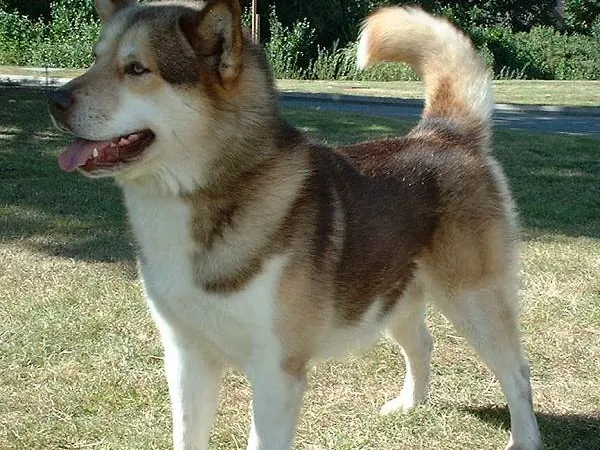
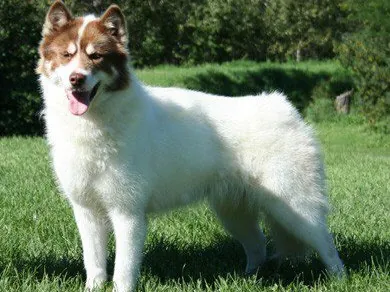
The Canadian Eskimo Dog is a powerful, heavy-boned spitz-type dog standing about 20 to 28 inches and weighing roughly 40 to 88 lb. Males are much larger than females: males often stand about 23 to 28 inches and weigh 66 to 88 lb, while females are about 20 to 24 inches and 40 to 66 lb. The build is strong and well muscled, made for hauling heavy loads over long distances.
The head is broad and wedge-shaped, with small, thick, erect ears and slightly oblique eyes. The bushy tail is carried curled over the back.
The double coat is dense and weatherproof, with a thick undercoat and a harsh outer coat that is often 3 to 6 inches long. Males usually carry a pronounced mane. Coat color has never been a selection priority, so almost any color is accepted: solid white, white with patches of color, solid black, red, gray, sable, or any combination. A mask or spectacle markings may appear. The overall impression is of a sturdy working animal rather than a refined show dog.
Temperament and Personality
This is a working pack animal first. Canadian Eskimo Dogs are energetic, intelligent and often very affectionate with their own people, but they keep a strong sense of pack structure. Interactions with other dogs can be intense, and squabbles over food or status happen in poorly managed groups.
Breed descriptions often present the dog as better suited to adults than to young children, mainly because of its size, power and boisterous play. Prey drive is very high, so cats, poultry and livestock need serious protection. They are alert and will announce visitors, but they are not typically protective guard dogs.
Are Canadian Eskimo Dogs Good for First-Time Owners?
No. The Canadian Eskimo Dog is one of the most demanding breeds and is best suited to experienced owners with sled dogs or northern breeds.
It needs hours of real work daily, ideally pulling, and it has a strong pack mentality, high prey drive and intense interactions with other dogs. It also needs a cold climate, since it is highly prone to heat stroke. First-time owners rarely have the experience, lifestyle or setting to meet these needs. If you love the look, a less extreme northern breed may be a better fit.
Are Canadian Eskimo Dogs Good with Other Dogs?
They can live with other dogs, but interactions are often intense. Canadian Eskimo Dogs were bred to live and work in teams, and they keep a strong sense of pack structure.
In poorly managed groups, squabbles over food or status happen. Owners need to supervise dogs carefully, feed them separately and understand pack dynamics. Same-sex dogs may clash. Dog parks are generally not ideal. Experienced mushers who manage multiple dogs are often best equipped for this breed's social style. Neutering decisions and the sex mix of the group also influence how peaceful a household stays.
Are Canadian Eskimo Dogs Easy to Train?
They learn quickly but are not easy to train in the usual sense. Canadian Eskimo Dogs are intelligent and independent, bred to make decisions on the trail.
Clear, consistent rules and rewards work best, with calm, confident leadership rather than harshness. Training for harness work comes naturally to many, but obedience in distracting environments can be challenging. Recall is unreliable around prey. Socialization from puppyhood helps them cope with people, dogs and new places. Owners who work with sled dogs often find the breed responsive to structured routines.
Exercise and Training
Few breeds need more work. A Canadian Eskimo Dog was made to pull loads for hours, and without a job it can become destructive or noisy.
- Sledding, skijoring, bikejoring and backpacking are ideal outlets.
- Exercise only in cool conditions. Avoid strenuous activity on warm days.
- Fencing must be high and secure; many are diggers and escape artists.
- Training responds to clear, consistent rules and rewards. They learn quickly but can be independent, and leadership must be calm and confident rather than harsh.
Grooming and Shedding
The double coat is dense and weatherproof, with a thick undercoat and a mane that is especially pronounced in males. Brush once or twice a week through most of the year.
Expect heavy seasonal shedding, when the undercoat comes out in clumps over a few weeks. During that period daily brushing with an undercoat rake makes a large difference. The breed is not hypoallergenic, and there will be hair on floors and clothing.
Feeding and Nutrition
Canadian Eskimo Dogs evolved to work hard on little food, and many are efficient eaters. Food needs vary dramatically with workload and climate. A dog pulling in winter may need far more food than the same dog resting in summer. Feed a complete diet and adjust portions often based on body condition.
Working dogs often benefit from a diet with higher fat and protein, but discuss changes with your vet. In warmer months, reduce portions to prevent weight gain, which worsens heat sensitivity.
Food can trigger squabbles in multi-dog homes, so feed dogs separately. Puppies should grow steadily on a diet suited to large-breed growth, with lean body condition to protect developing joints.
Fresh water must always be available, especially during work and warm weather. Use small treats in training and count them toward the daily ration.
| Adult weight | Less active | Typical adult | Very active |
|---|---|---|---|
| 40 lb | 860 kcal | 980 kcal | 1,230 kcal |
| 64 lb | 1,230 kcal | 1,400 kcal | 1,750 kcal |
| 88 lb | 1,560 kcal | 1,780 kcal | 2,220 kcal |
Estimates use the resting energy formula veterinarians work with (70 × body weight in kg0.75) and standard activity factors. Use the feeding guide on your food as a starting point and adjust to body condition. Puppies, seniors, pregnant animals and pets that need to lose weight have different needs, so ask your vet.
Health and Lifespan
The most important health consideration is heat. This breed is built to conserve warmth, and outside cold climates it is at real risk of heat stroke. Shade, water, cool resting places and avoiding exertion in warm weather are essential.
Because the population is small, genetic diversity is a concern for breeders. Reliable lifespan data are limited. Look for breeders who health-screen hips and eyes and who manage their lines carefully, and keep the dog lean and well conditioned.
Canadian Eskimo Dog Price and Cost of Ownership
Canadian Eskimo Dogs are very rare in the US, with only a few breeders, mostly in Canada and northern regions. There is no reliable typical price range. Prices vary by breeder, region and lines, and importing from Canada adds transport costs. Ask breeders about hip and eye screening and how they manage genetic diversity in a small population.
Rescue dogs of this breed are very rare.
Ongoing costs are driven by work and climate. Sledding or skijoring equipment, harnesses and secure, high fencing are common expenses. In warmer regions, air conditioning or cooling setups may be necessary. Grooming is mostly do-it-yourself, but many owners pay for de-shedding during coat blows. Pet insurance is worth considering for injuries in working dogs.
Is the Canadian Eskimo Dog Right for You?
This breed is for a narrow group of owners.
- Good match: experienced northern-breed or sled-dog owners in a cold climate who run or mush regularly and can manage a strong-willed, pack-oriented dog.
- Poor match: apartments, warm regions, first-time owners, homes with small pets, families with very young children.
If you love the look but not the lifestyle, a less extreme northern breed may be kinder to both of you.
Canadian Eskimo Dog Traits at a Glance
Canadian Eskimo Dog FAQ
How big do Canadian Eskimo Dogs get?
They range from about 20 to 28 inches tall and roughly 40 to 88 lb, with males noticeably larger and heavier than females.
Do Canadian Eskimo Dogs shed a lot?
Yes. They shed steadily and blow their undercoat heavily once or twice a year, so frequent brushing is needed.
Can Canadian Eskimo Dogs live in warm climates?
It is risky. The breed is highly prone to overheating and is best kept in consistently cool regions.
Are Canadian Eskimo Dogs good with children?
They can be affectionate, but their size, energy and strong pack instincts make them a better fit for adult households or homes with older, dog-savvy children.
Is the Canadian Eskimo Dog the same as a Husky?
No. It is a distinct Inuit breed, generally larger and heavier-boned than the Siberian Husky and bred mainly for hauling heavy loads.
Is the Canadian Eskimo Dog recognized by the AKC?
It is part of the AKC Foundation Stock Service, a record-keeping program for breeds that are not yet fully recognized.