PudelpointerGermany's Poodle-Pointer versatile hunter
The Pudelpointer is a German versatile hunting dog created by crossing hunting Poodles with English Pointers. It points, retrieves and tracks on land and in water, and is known for being calm and easy to train. It suits hunters and very active owners who will give it real work.
Why people love the Pudelpointer
- Versatile hunting dog for upland and water work
- Calm and easygoing in the house when exercised
- Biddable and quick to learn
- Weather-resistant wire coat
- Robust breed with a long lifespan
Things to consider
- Needs two or more hours of activity a day
- Strong prey drive around cats and small pets
- Dislikes being left alone for long periods
- Coat quality varies and some need stripping
- Many breeders prefer hunting homes
Is this breed right for you?
10 questions · live resultHistory and Origin
In 1881 German breeder Baron von Zedlitz, writing under the name Hegewald, began crossing the hunting Poodle, valued for intelligence, water work and retrieving, with the English Pointer, valued for nose, speed and pointing. The goal was an all-round hunting dog that combined both strengths.
The breed was developed with many more Pointers than Poodles in its foundation. In the late 1970s Bodo Winterhelt brought Pudelpointers to North America, where they became popular with upland and waterfowl hunters. The breed is in the AKC Foundation Stock Service and is not recognized by The Kennel Club.
Size, Coat and Colors
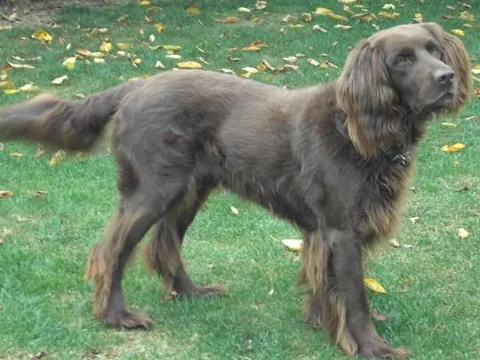
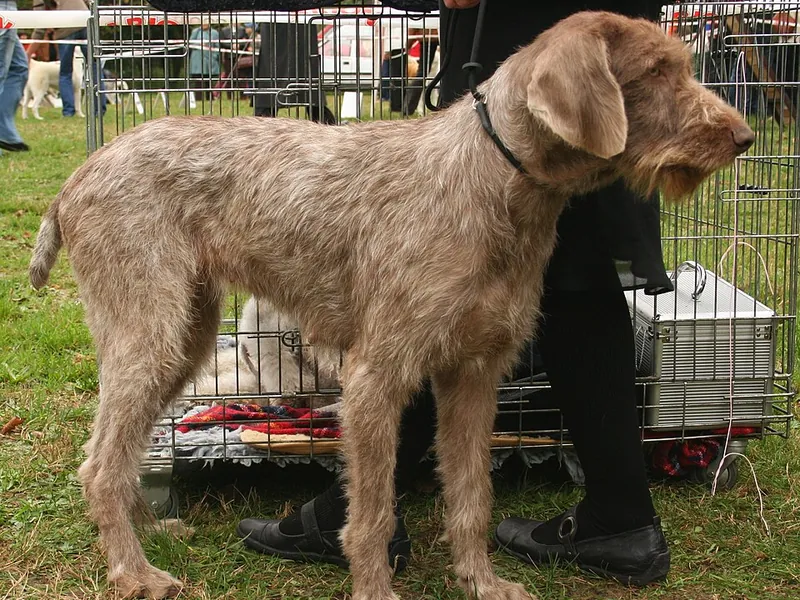
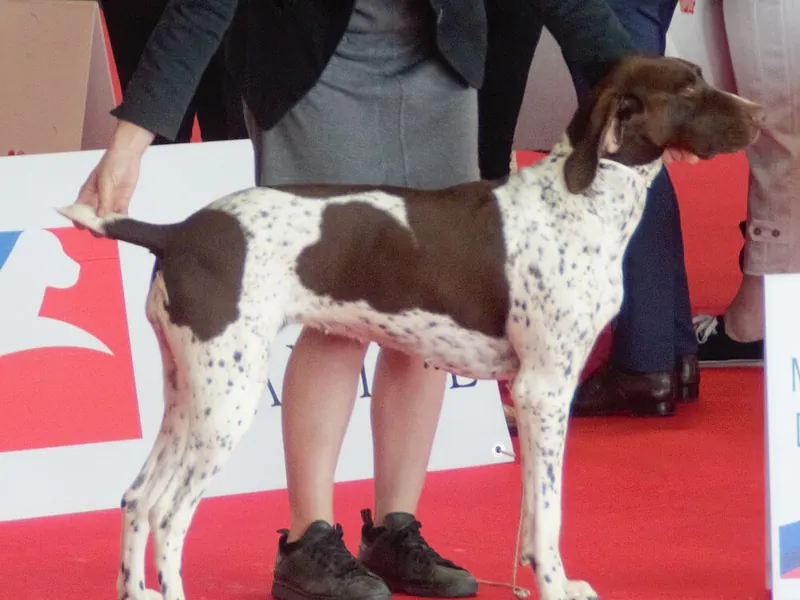
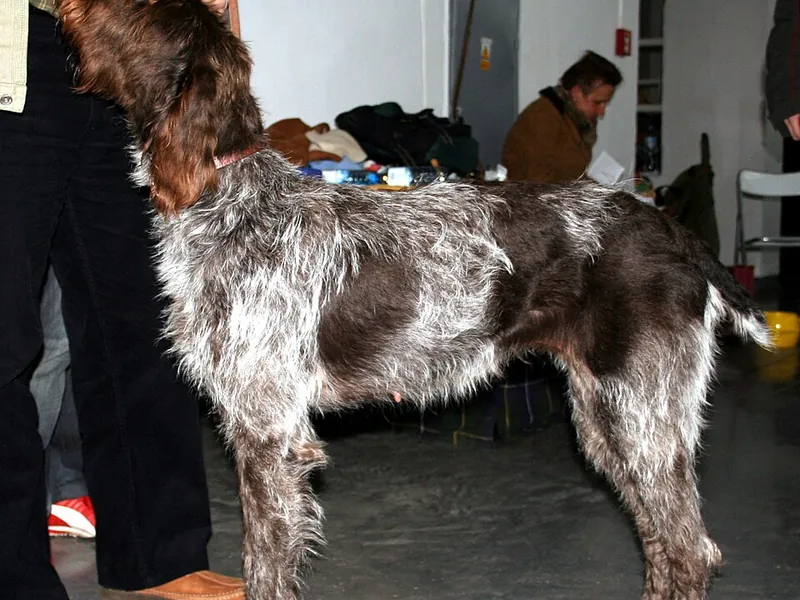
The Pudelpointer is a medium to large versatile gundog standing about 22 to 27 inches at the shoulder and weighing roughly 44 to 71 lb. Males are typically at the upper end of both ranges, with a stronger head and heavier bone, while females are lighter and more refined.
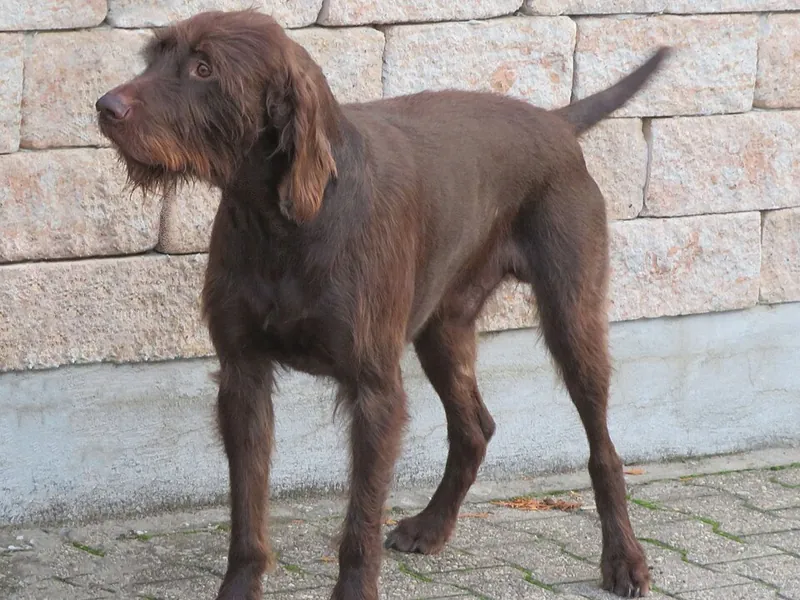
The body is athletic and balanced, with a deep chest, a strong back and powerful hindquarters. The head is long with a pronounced beard and eyebrows, and the ears are medium-sized and hang close to the head.
The ideal coat is harsh, wiry and dense, with a weather-resistant undercoat. It is medium length on the body, with a beard and eyebrows on the face. Some dogs have a softer or longer coat, while others have a short, tight coat. Coat type varies more than in many breeds because of the Poodle and Pointer ancestry.
Colors include liver (brown), dark brown, dead-leaf (a faded brown) and black. Small white markings on the chest or toes are tolerated in some registries.
Temperament and Personality
Pudelpointers are described as calm, balanced and cooperative. They are affectionate with their family and usually friendly toward people. In the field they show strong hunting passion and endurance.
The strong prey drive means cats and small pets need careful management. These dogs bond closely with their owners and dislike being left alone for long stretches. Without enough activity they can become restless.
Many owners describe the Pudelpointer as having an off switch: intense and focused in the field, quiet and easygoing in the house. That balance only appears in dogs whose daily need for activity is met.
Are Pudelpointers Good for First-Time Owners?
They can be, for active first-time owners, especially those who hunt. Pudelpointers are biddable, cooperative and easier to train than many gundogs.
The challenge is their activity level. They need two or more hours of exercise daily, ideally with hunting, retrieving or swimming. Without enough work, they can become restless. Many breeders prefer to place puppies with hunters, and some require participation in hunting tests. First-time owners who are committed to outdoor activities and willing to train regularly can do very well with this breed.
Are Pudelpointers Easy to Train?
Yes, Pudelpointers are known for being biddable and quick to learn. They were bred to work closely with hunters, and most enjoy training.
Positive, consistent methods work best. Start early with:
- Recall and steadiness, especially around birds.
- Retrieving games, which most love naturally.
- Calm behavior at home, since they need to learn to settle.
Breed clubs in North America and Germany run hunting tests that evaluate natural ability and training, and these provide useful structure for owners. Even non-hunters can enjoy tracking, dock diving or field-style games.
Are Pudelpointers Good With Cats?
Some are, if raised with cats from puppyhood, but the breed has a strong prey drive. Pudelpointers were bred to find, point and retrieve game, and a running cat can trigger that instinct.
A puppy raised with a confident indoor cat may accept it, though supervision is wise. Introductions should be slow, with high escape routes and dog-free spaces for the cat. Outdoor and unfamiliar cats remain at risk. Small pets such as rabbits, birds and rodents should be kept securely separated. Adult hunting dogs without cat experience are generally not suitable for cat homes.
Exercise and Training
This is a working breed that needs two hours or more of activity a day. Hunting is the ideal outlet, but retrieving, swimming, tracking, hiking and running with the owner also help.
Pudelpointers are known for being biddable and quick to learn. Breed clubs in Germany and North America run hunting tests that evaluate natural ability and training. Begin recall and steadiness work early and use positive methods. Despite its calm manners indoors, it is not suited to a small apartment without regular outdoor work.
Grooming and Shedding
The ideal coat is wiry, dense and weather-resistant, with a beard and eyebrows, usually in liver, brown or black. Coat quality varies, and some dogs carry a softer or longer coat. Brush weekly and check for burrs after fieldwork. Shedding is moderate. Keep ears clean and dry after swimming, and expect a wet beard after drinking.
Puppies with a softer, open coat may need occasional hand-stripping of long hairs to keep a tidy outline, while dogs with the ideal harsh coat need almost no extra work.
Feeding and Nutrition
The Pudelpointer is an athletic hunting dog, and its food needs vary greatly between hunting season and quieter months. Adjust portions to activity, keeping the dog lean and muscular. The wiry coat can hide extra weight, so check by touch: ribs should be easy to feel.
- Feed adults two meals a day; puppies three or four.
- Avoid hard exercise for an hour before and after eating, a sensible precaution for deep-chested sporting dogs.
- Increase portions gradually before hunting season.
Puppies grow quickly; a diet suited to large-breed growth and measured portions support healthy joints. Avoid pushing growth with extra food, especially since hip dysplasia screening is a focus of breeding programs.
Working dogs need plenty of fresh water, especially during retrieving and in warm weather. After long days in the field, allow the dog to cool down and rest before feeding. The beard collects food and water, so wipe it after meals to prevent odor. Food rewards are effective in training but should be counted in the daily ration.
| Adult weight | Less active | Typical adult | Very active |
|---|---|---|---|
| 44 lb | 930 kcal | 1,060 kcal | 1,320 kcal |
| 58 lb | 1,140 kcal | 1,300 kcal | 1,630 kcal |
| 71 lb | 1,320 kcal | 1,510 kcal | 1,890 kcal |
Estimates use the resting energy formula veterinarians work with (70 × body weight in kg0.75) and standard activity factors. Use the feeding guide on your food as a starting point and adjust to body condition. Puppies, seniors, pregnant animals and pets that need to lose weight have different needs, so ask your vet.
Health and Lifespan
The Pudelpointer is regarded as a robust breed, with a typical lifespan of around 14 years. Breeding programs focus especially on screening for hip dysplasia and on epilepsy, and many clubs require health and performance testing before breeding.
Buy from breeders who belong to a breed club with documented hip scores and working tests. Routine care for an active field dog includes checking paws, ears and coat for injuries, ticks and grass seeds.
Pudelpointer Price and Cost of Ownership
Typical breeder price in the US$1,500 to $2,500
A Pudelpointer puppy from a reputable North American breeder typically costs about $1,500 to $2,500. Prices vary by breeder, region and lines. Many breeders belong to breed clubs that require hip scores, health testing and hunting tests before breeding, and some prioritize hunting homes. Expect waiting lists.
Rescue availability is limited, though versatile hunting dog rescues sometimes place Pudelpointers and similar breeds.
Some breeders ask buyers to commit to hunting tests or field training, which adds entry fees and travel to the first two years of ownership.
Breed-specific ongoing costs include:
- Hunting equipment, training and hunting test fees.
- Food for a high-energy working dog.
- Vet care for field injuries such as cuts and grass seeds.
- Occasional hand-stripping for softer coats.
Is the Pudelpointer Right for You?
A Pudelpointer is an excellent choice for hunters who want a cooperative, versatile dog that also lives well in the home. Very active non-hunting owners can manage with plenty of fieldwork-style activities.
It is not a good match for city apartments, long workdays alone or homes with cats and small animals. Many breeders prefer to place puppies with hunting homes.
Pudelpointer Traits at a Glance
Pudelpointer FAQ
Is the Pudelpointer a poodle mix?
It began as a cross of hunting Poodles and English Pointers in 1880s Germany but has been bred as a distinct breed for well over a century.
How big do Pudelpointers get?
They stand about 22 to 27 inches tall and weigh roughly 44 to 71 lb.
Are Pudelpointers hypoallergenic?
No, despite the Poodle ancestry they shed moderately and are not considered allergy-friendly.
Are Pudelpointers good family dogs?
They are calm and affectionate at home if their high exercise needs are met.
How long do Pudelpointers live?
Around 14 years is typical for this robust breed.
How much exercise does a Pudelpointer need?
About two hours or more a day, ideally including hunting or retrieving work.