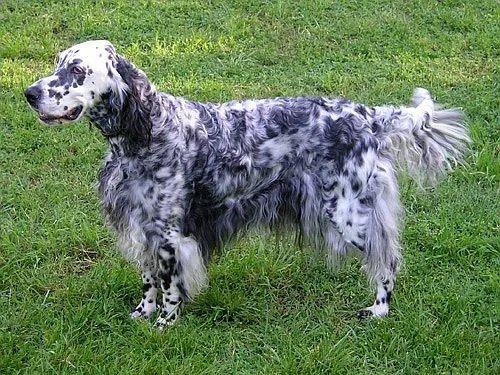
Large MunsterlanderGermany's black and white versatile gundog
The Large Munsterlander is a long-coated German gundog that points, retrieves and tracks, recognizable by its black and white coat. It is lively, gentle and very trainable. It suits hunters and active families who can provide plenty of exercise and something useful to do.
Why people love the Large Munsterlander
- Versatile hunting partner for field, forest and water
- Friendly with people and usually good with children
- Among the more cooperative, trainable gundogs
- Moderately easy coat with natural shine
- Healthy for its size, typically 12 to 14 years
Things to consider
- Needs two hours or more of exercise daily
- Strong interest in birds and wildlife
- Unhappy with long periods alone
- Feathering collects burrs and seeds
- Rare in the US, with few breeders
Is this breed right for you?
10 questions · live resultHistory and Origin
Long-haired German bird dogs were the ancestors of both the German Longhaired Pointer and the Large Munsterlander. When the German Longhaired Pointer club began accepting only brown and brown-and-white dogs in the late 19th century, black and white puppies were excluded from its breeding program.
Hunters in the Münster region of Westphalia, who valued these dogs for their ability, kept breeding them. A dedicated club was founded in 1919, establishing the Large Munsterlander as a separate breed. The Kennel Club recognizes it in the Gundog group, and the AKC lists it in the Foundation Stock Service.
Size, Coat and Colors
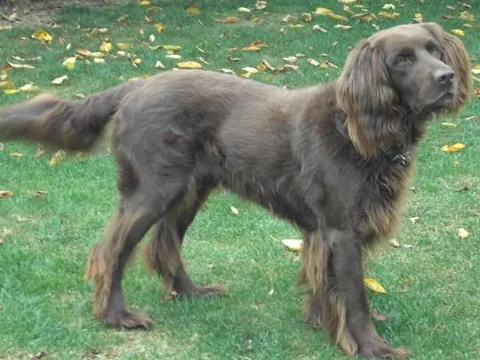
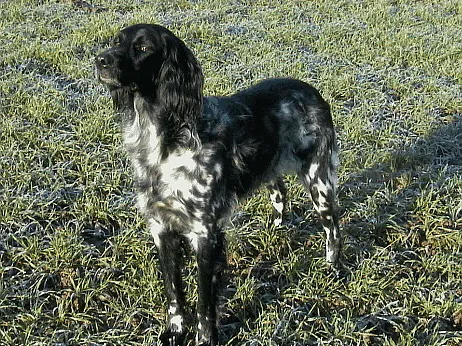
The Large Munsterlander is a strong, athletic pointing dog with an elegant outline, a long head and well-feathered coat. Adults stand about 23 to 26 inches at the shoulder and weigh roughly 51 to 71 lb. Males are larger and more muscular, while females are slightly shorter and finer.
The head is long and lean with a slightly convex muzzle, intelligent dark eyes and broad, high-set ears that hang close to the head. The tail is carried horizontally or slightly raised and is well feathered.
The coat is long and dense, lying smooth to the body. It is longer on the ears, backs of the legs and tail, forming feathering, and fine and short on the head. It should not be curly or woolly.
Color is always white with black, which is what separated the breed from the German Longhaired Pointer. The head is solid black, sometimes with a white blaze or snip. The body is white with black patches, flecks, ticking or roan, in varying proportions.
The coat protects the dog in brambles and cold water, so it is never clipped short.
Temperament and Personality
Large Munsterlanders are described as lively without being nervous, friendly and closely bonded with their people. They are typically good with children and sociable with visitors.
They are passionate hunters, so wildlife and birds will grab their attention. They need company and activity; long periods alone can lead to frustration and unwanted behavior.
Large Munsterlanders mature at a moderate pace and many keep a playful streak well into adulthood. They usually get along with other dogs, and many can live with cats they were raised with, though outdoor wildlife will always interest them.
Are Large Munsterlanders Good for First-Time Owners?
They can be, but only for very active first-time owners. The Large Munsterlander is friendly, cooperative and generally easier to train than many hunting breeds, which helps beginners.
The challenge is lifestyle. This dog needs two hours or more of exercise daily, ideally with hunting, retrieving or tracking work. Without that, it becomes restless and frustrated. First-time owners should be ready to join training groups or hunting clubs, invest time in recall around wildlife and provide a home with a garden and access to open countryside. People who hunt or spend their free time hiking and outdoors are the best match.
Are Large Munsterlanders Good With Cats?
Many live peacefully with cats they have been raised with. Large Munsterlanders are bird dogs at heart rather than intense chasers of cats, and they are generally sociable.
Introductions should still be gradual. A young, enthusiastic Munsterlander can overwhelm a cat, so give the cat high places and a dog-free room, and reward the dog for staying calm. Neighborhood cats, rabbits and birds outdoors will always be interesting, and many dogs will try to point or chase them. Pet birds and small caged animals should be kept safely out of reach.
Can Large Munsterlanders Be Left Alone?
Only for short to moderate periods. Large Munsterlanders are people-focused working dogs that were bred to spend the day with their handlers, and they usually struggle with long hours alone.
A well-exercised adult can typically manage three to four hours. Longer absences can lead to barking, howling, chewing or digging. Plan a good walk or run before you leave, provide a long-lasting chew or food puzzle and consider a dog walker or another dog for company. Households where someone works from home, or hunting families who take the dog along, suit the breed best.
Exercise and Training
This versatile hunting breed needs a lot of daily exercise, typically two hours or more. Hunting, retrieving, tracking, swimming, field trials and long hikes are ideal. A walk on the leash alone will not satisfy it.
Large Munsterlanders are eager to learn and among the easier gundogs to train when methods are consistent and positive. Build recall and steadiness around game early. They do best in homes with a garden and access to open countryside.
Puppies benefit from early introduction to water, retrieving games and short tracking exercises. These activities build confidence and channel the hunting drive into cooperation.
Grooming and Shedding
The medium-long, dense coat with feathering on the ears, legs and tail is relatively easy to maintain. Brush weekly, plus after fieldwork to remove burrs and seeds. Shedding is moderate, increasing in spring and fall. Check and clean the hanging ears regularly, especially after swimming.
The coat has a natural shine and should not be clipped short, as it protects the dog in brambles and cold water.
Feeding and Nutrition
A Large Munsterlander's energy needs depend heavily on its workload. Dogs that hunt regularly or run for hours need considerably more food than family companions with long walks. Adjust portions seasonally, increasing during hunting season and reducing in quieter months, and keep the dog lean, with ribs easy to feel under the feathering.
Puppies should eat a diet formulated for large breeds to support slow, steady growth. Hip dysplasia is the breed's main health concern, and keeping a puppy lean during growth supports joint development.
- Feed puppies three to four meals a day and adults two.
- As a deep-chested breed, avoid hard exercise around mealtimes.
- On hunting days, offer a light snack before work and the main meal after the dog has rested.
- Use part of the daily ration as training rewards for steadiness and retrieving.
Bring fresh water on long outings and watch for dehydration during warm-weather work.
| Adult weight | Less active | Typical adult | Very active |
|---|---|---|---|
| 51 lb | 1,030 kcal | 1,180 kcal | 1,480 kcal |
| 71 lb | 1,320 kcal | 1,510 kcal | 1,890 kcal |
Estimates use the resting energy formula veterinarians work with (70 × body weight in kg0.75) and standard activity factors. Use the feeding guide on your food as a starting point and adjust to body condition. Puppies, seniors, pregnant animals and pets that need to lose weight have different needs, so ask your vet.
Health and Lifespan
The Large Munsterlander is generally healthy, with a typical lifespan of 12 to 14 years. Hip dysplasia is the main breed concern, and breed clubs commonly require hip X-rays before breeding. Ear infections and minor injuries from fieldwork are the most frequent everyday issues.
Choose breeders who follow club health and working test requirements, and feed to keep your dog lean, which supports joint health over a long, active life.
Large Munsterlander Price and Cost of Ownership
The Large Munsterlander is rare in the US, and there is no well-established published price range. Most North American puppies come from a small number of breeders linked to breed clubs, which often prefer homes that hunt or do serious field work. Prices vary by breeder, region and lines, and some puppies are imported from Germany or elsewhere in Europe.
Rescue dogs are uncommon, but breed club networks occasionally rehome adult dogs.
Breed-specific ongoing costs include:
- Higher food volume for working dogs
- Hunting tests, field training and club membership
- Hip screening if the breeder or club requires it
- Ear care and treatment after swimming
- Insurance that covers hip dysplasia and field injuries
Is the Large Munsterlander Right for You?
A Large Munsterlander suits hunters and very active families with a house, garden and time to spend outdoors. Its friendly nature makes it a good companion for children when exercise needs are met.
It is not suited to apartment living, sedentary households or long workdays alone. In Germany, puppies from club breeders are often placed primarily with hunters.
Ask breed clubs about hunting tests and training groups, which are a good way to meet experienced owners.
Large Munsterlander Traits at a Glance
Large Munsterlander FAQ
How big do Large Munsterlanders get?
They stand about 23 to 26 inches tall and weigh roughly 51 to 71 lb.
Are Large Munsterlanders good family dogs?
Yes, they are friendly and good with children, as long as they get enough exercise and work.
How much exercise does a Large Munsterlander need?
Typically two hours or more a day, ideally including hunting or retrieving work.
Is the Large Munsterlander related to the Small Munsterlander?
Despite the name, they are separate breeds with different histories, not large and small versions of the same dog.
Do Large Munsterlanders shed?
Yes, moderately; weekly brushing keeps the coat in good condition.
How long do Large Munsterlanders live?
Typically 12 to 14 years.