HamiltonstövareSweden's handsome tricolor scenthound
The Hamiltonstövare is an elegant, tricolor Swedish hound named after the founder of the Swedish Kennel Club. It is friendly, steady and great with children, but it needs plenty of exercise and an outlet for its excellent nose.
Why people love the Hamiltonstövare
- Friendly, steady and gentle with children
- Long-lived for its size, often 14 to 17 years
- Easy-care short coat
- More cooperative than many scenthounds
- Calm indoors when well exercised
Things to consider
- Needs one to two hours of daily exercise
- Strong hunting drive; recall unreliable on a fresh trail
- Small pets may trigger chasing
- Vocal when bored or on a scent
- Very rare in the US, few breeders
Is this breed right for you?
10 questions · live resultHistory and Origin
The breed was developed in Sweden in the 1880s by Count Adolf Patrick Hamilton, who also founded the Swedish Kennel Club. He combined English Foxhounds with German scenthounds such as the Holsteiner and Hanoverian hounds to create a handsome, hardy hound for Scandinavian conditions.
Unlike pack hounds, the Hamiltonstövare was bred to hunt hare and fox alone, giving voice so the hunter can follow and wait in position. It was first shown in 1886 and called the Swedish Foxhound, and it was renamed in Hamilton's honor in 1921. It is recognized by the FCI in Group 6 and by The Kennel Club in the Hound group, and it is part of the AKC Foundation Stock Service.
Size, Coat and Tricolor Pattern
The Hamiltonstövare is a well-proportioned, athletic scenthound built for endurance. Adults stand about 19 to 24 inches at the shoulder and weigh roughly 40 to 75 lb. Males are generally at the upper end of both ranges, while females are somewhat shorter and lighter.
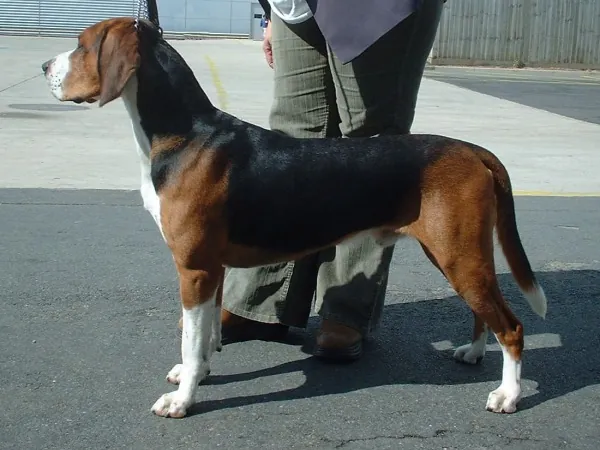
The body is rectangular, with a deep chest, strong back and long, drooping ears. The head is long with a straight profile and a kind expression. The tail is set in line with the back and carried straight or slightly curved.
The coat is short, dense and close-lying, with a thick undercoat that develops in winter. The color pattern is distinctive and tricolor:
- A black mantle over the back and upper sides.
- Brown on the head, legs and sides.
- White markings on the face, neck, chest, lower legs and tail tip.
The clear division between the black mantle, brown and white is a hallmark of the breed and one of the easiest ways to tell it apart from similar foxhound-type dogs.
Temperament and Personality
Hamiltonstövares are friendly, balanced and affectionate. They are typically wonderful with children and calm indoors when their exercise needs are met. Most are sociable with other dogs and polite with visitors.
Outdoors they become focused hunters with a strong nose and clear voice. They will alert to visitors but are not guard dogs. Small pets may trigger chasing unless the dog was raised with them, and wildlife on walks is a real distraction.
Owners often describe the breed as easygoing and adaptable, the kind of hound that is lively outdoors but content to doze on a dog bed after a long walk. It tends to form close bonds with every member of the household.
Is the Hamiltonstövare Good for First-Time Owners?
It can be, for active first-time owners who are prepared for a hunting hound. The breed is friendly and cooperative, which makes it easier than many scenthounds.
First-time owners should plan for daily exercise, scent work and strong management of recall. A Hamiltonstövare on a fresh trail may ignore commands, so long lines and fenced areas are essential. Small pets may trigger chasing. The breed is rare in the US, and importing a puppy adds complexity. A first-time owner who prepares for these points and connects with breed clubs can find the Hamiltonstövare a wonderful family companion.
Do Hamiltonstövares Bark a Lot?
They can be vocal, especially when bored or on a scent. Hamiltonstövares were bred to give voice while tracking game, so baying is part of their nature.
Indoors, a well-exercised Hamiltonstövare is usually calm and quiet. Barking increases when the dog lacks activity, is left alone too long or picks up interesting scents outside. Teaching a quiet cue and providing scent work and long walks help manage vocalization. In apartments or close neighborhoods, barking may be noticeable, so consider the breed's voice before committing.
Can Hamiltonstövares Be Left Alone?
For moderate periods, yes, if well exercised beforehand. Many adults settle calmly, but under-exercised or lonely dogs may become vocal or restless.
Build up alone time gradually from puppyhood, using a crate or quiet room. Provide a long walk or scent session before leaving and offer chews or puzzle toys. Hamiltonstövares are sociable and often do well with a second dog, which can help during absences. Long workdays without a midday break are not ideal. Before each absence, a sniffing walk often tires a scenthound more effectively than a run.
Exercise and Training
Plan for one to two hours a day of activity: long walks, runs with an adult dog, and regular scent work such as tracking or mantrailing. Without enough exercise the breed can become restless and vocal.
Training is usually fairly smooth. The Hamiltonstövare is more responsive and cooperative than many scenthounds, but a fresh trail can still override commands. Use reward-based training, practice recall on a long line and keep off-lead time to enclosed areas. It does not like long hours alone and thrives with company.
Grooming and Shedding
The short, dense double coat is tricolor: a black mantle over the back, brown head and legs, and white markings on the face, chest, feet and tail tip. The undercoat thickens in winter.
- Brush weekly, more often during spring and fall shedding.
- Check the drop ears weekly and keep them clean.
- Inspect for ticks after time in woods and fields, and trim nails regularly.
Feeding and Nutrition
The Hamiltonstövare is a lean, athletic hound, and its food needs depend on activity and season. Hunting dogs in the field or dogs running long distances need more food, while family companions need less. Keep the dog lean, with ribs easy to feel and a defined waist.
Feed puppies three to four meals a day at first, moving to two meals by about six months. Steady growth supports healthy joints, and hip screening of breeding dogs is recommended.
- Avoid vigorous exercise right after eating, as with other deep-chested hounds.
- Many scenthounds are enthusiastic eaters and scavengers, so keep food and garbage out of reach and use measured portions.
- The thicker winter coat and outdoor work in cold weather may increase food needs seasonally.
Use part of the daily ration for scent games or tracking practice. Training treats should be small and counted toward the daily total. The breed's long lifespan makes maintaining a healthy weight into old age especially important.
| Adult weight | Less active | Typical adult | Very active |
|---|---|---|---|
| 40 lb | 860 kcal | 980 kcal | 1,230 kcal |
| 58 lb | 1,140 kcal | 1,300 kcal | 1,630 kcal |
| 75 lb | 1,380 kcal | 1,580 kcal | 1,970 kcal |
Estimates use the resting energy formula veterinarians work with (70 × body weight in kg0.75) and standard activity factors. Use the feeding guide on your food as a starting point and adjust to body condition. Puppies, seniors, pregnant animals and pets that need to lose weight have different needs, so ask your vet.
Health and Lifespan
The Hamiltonstövare is considered a healthy and long-lived breed, with an expected lifespan of about 14 to 17 years. Major kennel club sources do not highlight specific inherited diseases.
Sensible checks include hip screening of breeding dogs, routine ear care and good weight management. Ask breeders about the health and age at death of older relatives.
Hamiltonstövare Price and Cost of Ownership
The Hamiltonstövare is very rare in the US, listed in the AKC Foundation Stock Service, and prices are not widely published. Most puppies come from Scandinavian or UK breeders, so importing adds travel, shipping and paperwork costs. Prices vary by breeder, region and lines. Rescue dogs are rare.
Breed-specific cost drivers include:
- Import costs, including transport and veterinary paperwork.
- Hip screening of breeding dogs.
- Secure fencing and long lines for a scent-driven hound.
- Tick prevention and ear care for a dog that spends time in woods and fields.
- Tracking or scent work classes to give the dog an outlet.
Expect to talk with breeders about your plans for the dog in some detail before you are offered a puppy.
Is the Hamiltonstövare Right for You?
This breed suits active families, hunters and outdoor enthusiasts who want a friendly, low-maintenance hound with a long life expectancy. It is gentle at home and rewarding to train compared with many hounds.
- Good match: active families with children, hikers, scent sport fans, homes with a fenced yard.
- Less ideal: apartments, homes with small pets, owners away all day.
Because it is rare outside Scandinavia and the UK, expect to wait for a puppy and to research breeders carefully.
Hamiltonstövare Traits at a Glance
Hamiltonstövare FAQ
How big do Hamiltonstövares get?
They stand about 19 to 24 inches at the shoulder and weigh roughly 40 to 75 lb.
Are Hamiltonstövares good family dogs?
Yes, they are known for being friendly, steady and gentle with children.
How much exercise does a Hamiltonstövare need?
Around one to two hours a day of walks, runs and scent games.
Do Hamiltonstövares shed?
They shed moderately, more during seasonal coat changes.
Are Hamiltonstövares good with cats?
Some live peacefully with cats they were raised with, but their hunting instinct makes outdoor cats and small pets a risk.
How long do Hamiltonstövares live?
Often 14 to 17 years, which is long for a dog of this size.