Old Danish PointerDenmark's calm, close-working pointer
The Old Danish Pointer is a sturdy, liver-and-white pointing dog developed in Denmark in the early 18th century. Calm, friendly and easy to handle, it works close to the hunter and makes a relaxed family companion when its exercise needs are met.
Why people love the Old Danish Pointer
- Calm, balanced and friendly temperament
- Usually excellent with children and other pets
- Biddable and responsive to positive training
- Works close to the hunter, easier to manage off leash
- Short coat with easy care
Things to consider
- Needs at least an hour of daily exercise and scent work
- Does not like long hours alone
- Loose skin can mean some drooling
- Very rare outside Denmark
- Moderate shedding year-round
Is this breed right for you?
10 questions · live resultHistory and Origin
The breed traces back to around 1710, when Morten Bak, a hunter in northern Jutland, began breeding local farm dogs with gypsy dogs believed to have been of old Spanish pointer type. Over generations he produced a steady, close-working bird dog, known in Denmark as Bakhunde.
The breed was nearly lost by the mid 20th century, but Danish enthusiasts revived it after World War II and the Danish Kennel Club recognized it. The FCI lists it in Group 7, and the AKC records it in its Foundation Stock Service.
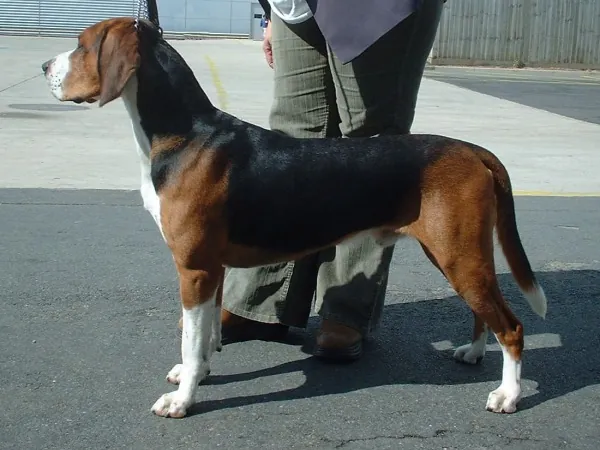
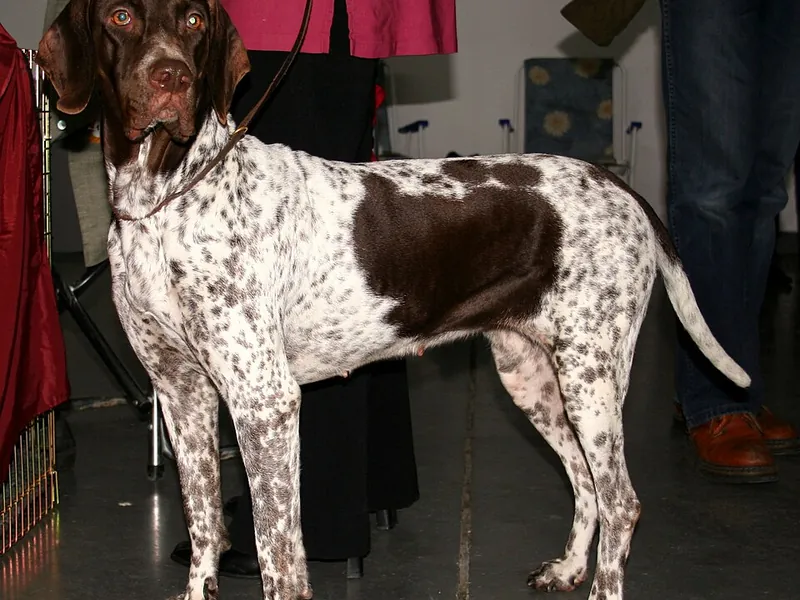
The breed's distinctive look, with a broad head, pronounced dewlap and white coat with liver markings, has changed little since the early Bakhunde. Its calm, methodical style made it popular with Danish farmers who hunted on foot.
Size, Coat and Colors
The Old Danish Pointer is a strong, rectangular gundog with substantial bone and a calm expression. Adults stand about 20 to 24 inches at the shoulder and weigh roughly 57 to 77 lb. Males are generally taller and heavier, while females are slightly smaller and lighter.
The body is noticeably longer than tall, with a deep chest, broad back and strong hindquarters. The head is broad with a slightly arched skull, drooping ears and some loose skin around the throat. The tail is thick at the base and tapers to a point.
The coat is short, dense and close-lying. The color is white with liver-colored patches, ticking or both. The head is typically liver-colored, often with a white blaze. The distinctive liver and white pattern makes the dog easy to see in the field.
Temperament and Personality
Old Danish Pointers are calm, balanced and friendly, with a gentle attitude toward people. They are usually excellent with children and get along well with other dogs and pets.
In the field they are methodical and work close to the hunter, rather than ranging far. At home, they are typically relaxed and affectionate, though they do not like long hours alone.
Its steady, unexcitable nature is one of its defining traits. Many owners describe it as a dog that is easy to live with indoors yet keen and focused in the field.
Is the Old Danish Pointer Good for First-Time Owners?
Yes, for active first-time owners. The Old Danish Pointer is calm, biddable and friendly, making it one of the more forgiving pointing breeds.
First-time owners should plan for daily exercise and scent work. Without enough activity, the breed may become restless. Its steady nature and close-working style make training more straightforward than with wide-ranging pointers. The main practical challenge is finding a puppy, since the breed is rare outside Denmark. Connecting with breed clubs early helps. Puppy classes and early socialization help build a calm, confident adult.
Do Old Danish Pointers Bark a Lot?
No. Old Danish Pointers are generally quiet dogs that bark mainly to announce visitors or unusual events.
Their calm, unexcitable temperament means nuisance barking is uncommon. Barking may increase if the dog is bored, under-exercised or left alone too long. Providing daily exercise, scent work and companionship keeps most Old Danish Pointers quiet and content. Teaching a quiet cue early and rewarding calm behavior at the door make it easy to keep barking low. Many owners note that the breed tends to watch rather than react, which makes it a relaxed housemate in shared buildings or close neighborhoods.
Can Old Danish Pointers Be Left Alone?
For moderate periods, yes, but they do not like long hours alone. The breed is people-oriented and prefers company.
Build up alone time gradually from puppyhood, using a crate or quiet room. Exercise the dog before leaving and offer chews or puzzle toys. Owners who work long hours should plan for a dog walker or midday break. Old Danish Pointers often get along well with other pets, and a companion animal may help during absences. Signs of stress include whining, chewing and restlessness.
Exercise and Training
Plan on at least an hour of exercise daily, with some running and scent work. Hunting, tracking, nose games and field trials all suit the breed.
Training is usually straightforward: they are biddable and responsive to positive reinforcement. Mental work is important, as their scenting ability is a big part of what they enjoy.
Because it works close to the hunter, the Old Danish Pointer is often easier to manage off leash than wide-ranging pointers, though recall still needs practice around game. Young dogs benefit from short, varied sessions and plenty of socialization.
Grooming and Shedding
The short, dense coat is easy to care for with weekly brushing. Shedding is moderate. Check the ears weekly, since drop ears can trap moisture.
The breed has loose skin around the throat, so drooling is possible but usually modest. Inspect paws and coat for burrs and ticks after field work.
Feeding and Nutrition
The Old Danish Pointer is a sturdy, muscular gundog, and its food needs depend on activity. Hunting dogs in season need more food than family companions. Keep the dog lean, with ribs easy to feel and a defined waist.
Feed puppies three to four meals a day at first, moving to two meals by about six months. A complete puppy food and steady growth support healthy hips, which are screened in the breed.
- Avoid vigorous exercise right after eating, as with other deep-chested gundogs.
- Wipe the lips and throat after meals if the dog drools.
- Use part of the daily ration for scent games or retrieving practice.
Training treats should be small and counted toward the daily total. The breed's calm nature means it can gain weight if exercise drops, so adjust portions as activity changes.
| Adult weight | Less active | Typical adult | Very active |
|---|---|---|---|
| 57 lb | 1,120 kcal | 1,280 kcal | 1,610 kcal |
| 77 lb | 1,410 kcal | 1,610 kcal | 2,010 kcal |
Estimates use the resting energy formula veterinarians work with (70 × body weight in kg0.75) and standard activity factors. Use the feeding guide on your food as a starting point and adjust to body condition. Puppies, seniors, pregnant animals and pets that need to lose weight have different needs, so ask your vet.
Health and Lifespan
The Old Danish Pointer is considered robust. Known issues include hip dysplasia and progressive retinal atrophy (PRA), and breeding dogs are commonly examined for both. Ask breeders for hip results and eye exams.
Typical lifespan is about 10 to 13 years.
Old Danish Pointer Price and Cost of Ownership
The Old Danish Pointer is very rare in the US, listed in the AKC Foundation Stock Service, and prices are not published. Most puppies come from Danish breeders, so importing adds travel, shipping and paperwork costs. Prices vary by breeder, region and lines. Rescue dogs are rare.
Breed-specific cost drivers include:
- Import costs, including transport and veterinary paperwork.
- Hip and eye exams in breeding dogs.
- Hunting or scent work gear and training.
- Ear care for drop ears that can trap moisture.
Danish breeders often prefer to place puppies with hunting homes, so describe your plans for field work or scent activities honestly when you make contact.
Is the Old Danish Pointer Right for You?
This breed is ideal for hunters who want a steady, close-working pointer, and for active families seeking a friendly, easygoing dog. It does well with children and other pets.
It is less suited to apartment living without daily exercise, or to owners who are away most of the day.
Its gentle temperament makes it one of the more family-friendly pointing breeds, but it is still a working dog. Without regular exercise and scent work, it may become restless or vocal.
Old Danish Pointer Traits at a Glance
Old Danish Pointer FAQ
How big do Old Danish Pointers get?
They stand about 20 to 24 inches tall and weigh roughly 57 to 77 lb.
Are Old Danish Pointers good family dogs?
Yes. They are calm, friendly and usually excellent with children and other pets.
Are Old Danish Pointers easy to train?
Generally yes. They are cooperative and respond well to reward-based training.
Do Old Danish Pointers shed?
Yes, moderately. Their short coat is easy to groom.
How long do Old Danish Pointers live?
Typically about 10 to 13 years.
How much exercise does an Old Danish Pointer need?
At least an hour of activity a day, including running and scent work such as tracking or retrieving.