Flat-Coated RetrieverThe Peter Pan of retrievers
The Flat-Coated Retriever is a glossy black or liver gundog famous for staying puppyish well into adulthood. It is friendly with almost everyone and easy to train, but it needs a lot of exercise and company, and owners should know about the breed's high cancer risk.
Why people love the Flat-Coated Retriever
- Cheerful, friendly nature with people and dogs
- Excellent with children when well exercised
- Eager to please and quick to learn
- Versatile in field work, dock diving and agility
- Coat is manageable with weekly brushing
Things to consider
- High cancer rate shortens average lifespan to 8 to 10 years
- Needs one to two hours of activity daily
- Matures slowly and stays boisterous for years
- Does not cope well with long hours alone
- Rare in the US, so waiting lists are common
Is this breed right for you?
10 questions · live resultHistory and Origin
The Flat-Coat was developed in England in the mid-1800s, when gamekeepers wanted a retriever that could fetch shot birds from land and water. Its ancestors include the St. John's water dogs brought from Newfoundland, crossed with setter types and other retrievers.
Sewallis Shirley, who founded The Kennel Club in 1873, is credited with consolidating the breed. By the late 1800s the Flat-Coat was the gamekeeper's retriever of choice in Britain. After World War I it lost ground to the Labrador and Golden Retriever and became scarce, but dedicated breeders kept it going. The AKC recognized it in 1915.
Size, Coat and Colors
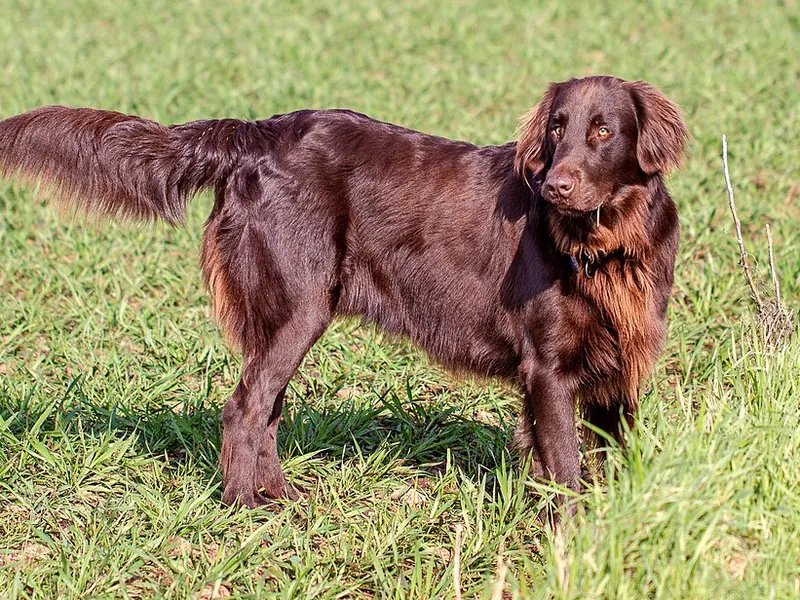
The Flat-Coated Retriever is a large, elegant gundog with a racier outline than the Labrador or Golden Retriever. Adults stand about 22 to 24 inches at the shoulder and weigh roughly 55 to 79 lb. Males are taller and heavier, and females are typically at the lower end of the range with a more refined look.
The defining feature is the long, one-piece head with little stop, often described as molded. The body is strong but not cobby, with a deep chest, a level topline and a tail carried happily but not high over the back.
The coat is thick, fine to medium in texture, and lies as flat as possible. Feathering on the ears, chest, back of the legs and tail gives a finished look. Only two colors are accepted: solid black and solid liver. Yellow occurs occasionally but is a disqualification under the AKC standard, so yellow puppies are typically placed as pets.
Temperament and Personality
Flat-Coats are optimistic, sociable and often comical. They tend to greet strangers as friends, mix well with other dogs and are usually tolerant and fun with children. Their tail rarely stops moving.
The breed matures slowly, both mentally and physically, and many behave like adolescents until three or four years old. They are strongly people-oriented and do not cope well with long periods alone. A bored Flat-Coat may dig, chew or invent its own games. Despite their size they are poor guard dogs, though they will bark to announce visitors.
Is a Flat-Coated Retriever Good for First-Time Owners?
Yes, for active first-time owners. Flat-Coats are friendly, forgiving and keen to learn, which makes them easier than many working breeds.
The challenges are energy and maturity. A young Flat-Coat can be bouncy, mouthy and easily distracted for several years. Owners need time for daily exercise, ideally including swimming and retrieving, and patience with an adolescent that may jump on guests or steal socks. Joining a basic obedience class and then a sport or field group gives the dog an outlet and the owner support. First-time owners should also be prepared for the breed's cancer risk and research breeders carefully.
Are Flat-Coated Retrievers Easy to Train?
Generally yes. Flat-Coats are intelligent and eager to please, and they respond well to positive, reward-based training.
Their main obstacles are enthusiasm and short attention spans. Repetitive drills bore them quickly, so keep sessions short, varied and playful. They are sensitive and do not respond well to harsh corrections. Strong recall and impulse control around birds and water need special attention, as do polite greetings. Many Flat-Coats excel at obedience, rally, agility and hunt tests once they mature, but expect training to be a fun, ongoing project rather than a quick process.
Are Flat-Coated Retrievers Good With Cats?
Usually yes. Most Flat-Coats have low aggression toward other animals and can live happily with cats, particularly when raised with them.
The more common issue is exuberance. A young Flat-Coat may chase a running cat in play or try to retrieve it. Introduce the dog on leash, reward calm behavior and make sure the cat has high places and dog-free rooms. Over time, most Flat-Coats settle into polite coexistence. Outdoor cats and wildlife can still trigger chasing because of the breed's bird-dog instincts, so maintain good recall on walks.
Exercise and Training
This is a high-energy working breed. Expect to give at least one to two hours of activity a day, including off-leash running, swimming and retrieving. Flat-Coats excel at field work, dock diving, obedience and agility.
They are eager to please and quick to learn with positive methods. Keep training varied, because repetition bores them. Useful focus points:
- Polite greetings, since their enthusiasm can bowl over small children.
- A solid recall and a steady "wait" before retrieves.
- Settling calmly indoors, which this slow-maturing breed must be taught.
Grooming and Shedding
The coat is dense, fine and lies flat, with feathering on the ears, chest, legs and tail. A thorough brushing once or twice a week removes loose hair and prevents tangles in the feathering. Shedding is moderate, with heavier seasonal sheds.
Trim the hair around the feet and ears occasionally for neatness. After swimming, dry the ears well. The breed is naturally clean and does not need frequent bathing.
Feeding and Nutrition
Flat-Coats are lean, athletic retrievers and should look it. Keep them slim, with a defined waist and ribs easy to feel under the coat. Excess weight increases strain on joints and may affect overall health in a breed already shortened by cancer.
Puppies grow quickly and need a complete food for large breed puppies, fed three to four times a day until about six months and then twice daily. Steady growth supports healthy hips, which are screened in the breed.
- Avoid hard exercise or swimming right after meals; as a deep-chested breed, the Flat-Coat has some bloat risk.
- Adjust portions for activity levels: a working gundog in season needs much more food than a family pet.
- Flat-Coats are notorious scavengers, so keep food and garbage out of reach.
Use small treats in training, and consider part of the daily kibble for retrieving or scent games. There is no evidence that any specific diet prevents cancer, so focus on balanced nutrition and a lean body condition.
| Adult weight | Less active | Typical adult | Very active |
|---|---|---|---|
| 55 lb | 1,090 kcal | 1,250 kcal | 1,560 kcal |
| 79 lb | 1,440 kcal | 1,640 kcal | 2,050 kcal |
Estimates use the resting energy formula veterinarians work with (70 × body weight in kg0.75) and standard activity factors. Use the feeding guide on your food as a starting point and adjust to body condition. Puppies, seniors, pregnant animals and pets that need to lose weight have different needs, so ask your vet.
Health and Lifespan
The Flat-Coat's lifespan is shorter than many retrievers, at around 8 to 10 years. The main reason is cancer: UK research has found cancer to be the leading cause of death in the breed, and histiocytic sarcoma, an aggressive cancer, is a particular concern.
Other conditions to screen for include hip dysplasia, patellar luxation and glaucoma. Choose a breeder who scores hips, tests eyes (including gonioscopy for glaucoma) and is open about cancer in their lines. Report any new lump, limp or loss of energy to your vet promptly.
Flat-Coated Retriever Price and Cost of Ownership
Typical breeder price in the US$1,500 to $3,000
A Flat-Coated Retriever puppy from a reputable US breeder typically costs about $1,500 to $3,000, and prices vary by breeder, region and lines. Litters are relatively few, so waiting lists are common. Breed rescue occasionally places adults.
Breed-specific cost drivers include:
- Cancer diagnosis and treatment, which can be costly; consider insurance early.
- Health screening: hip scores, eye exams and gonioscopy for glaucoma in breeding dogs.
- Field training, hunt test entries or dock diving club fees for active owners.
- Ear care after frequent swimming.
- Food for an active large breed.
Ask breeders about the longevity and causes of death in related dogs; open breeders track this carefully, and it is one of the most useful questions you can ask.
Is the Flat-Coated Retriever Right for You?
A Flat-Coat is a joyful choice for active families, hikers and people who want to try gundog work or dog sports. It suits a house with a garden or yard and owners who are home a good part of the day.
Think twice if you want a calm dog quickly, live in a small apartment or are out at work all day. Prospective owners should also be prepared, emotionally and financially, for a breed with a relatively short average lifespan.
Flat-Coated Retriever Traits at a Glance
Flat-Coated Retriever FAQ
Are Flat-Coated Retrievers good family dogs?
Yes. They are friendly, playful and patient with children, although their bouncy enthusiasm means young kids need supervision.
How big do Flat-Coated Retrievers get?
They stand about 22 to 24 inches tall and weigh roughly 55 to 79 lb, with females at the lower end.
How long do Flat-Coated Retrievers live?
Typically 8 to 10 years. Cancer is the most common cause of death in the breed.
What is the difference between a Flat-Coated Retriever and a Golden Retriever?
Flat-Coats are leaner with a longer head and come only in solid black or liver. They also tend to stay playful and puppyish for longer.
Do Flat-Coated Retrievers shed?
Moderately, with heavier seasonal sheds. Weekly brushing handles most of it.
Can Flat-Coated Retrievers be left alone?
Not for long. They are very people-focused and may become destructive if left alone for many hours.