Golden RetrieverGentle Scottish gundog built to retrieve
The Golden Retriever was developed in the Scottish Highlands to bring back shot game from water and rough ground, and it still loves to carry, swim and work with people. It is famously friendly and easy to train, but it needs real daily exercise and brings a lot of shedding.

Why people love the Golden Retriever
- Friendly with nearly everyone, including children and visitors
- Highly trainable and food-motivated, great for beginners
- Usually sociable with other dogs and cats
- Versatile partner for hiking, swimming and dog sports
- Rarely a nuisance barker when exercised
Things to consider
- Heavy year-round shedding with big seasonal molts
- Needs one to two hours of activity daily
- High cancer rate shortens many lives
- Prone to weight gain and food stealing
- Stays boisterous and mouthy until two or three
Is this breed right for you?
10 questions · live resultHistory and Origin
The breed traces back to Dudley Marjoribanks, later Lord Tweedmouth, who kept detailed breeding records at his Guisachan estate near Inverness. In 1868 he bred a yellow wavy-coated retriever named Nous to a Tweed Water Spaniel called Belle, and later added Irish Setter, Bloodhound and other retriever lines. The goal was a soft-mouthed dog that could retrieve waterfowl and upland game in the wet Highland climate.
The Kennel Club recognized the breed in the early 1900s, and the AKC followed in 1925. Goldens became valued not only as gundogs but as guide, assistance and search dogs, and they rank among the most popular breeds in both the US and the UK. Field lines tend to be lighter in build and darker in color, while show lines are heavier with fuller coats.
Size, Coat and Shades of Gold
The Golden Retriever is a powerful, well-balanced gundog with a broad head, kind dark eyes and a straight, level back. Adults stand 22 to 24 inches at the shoulder and weigh 55 to 75 lb. Males are noticeably larger and heavier boned, typically at the top of both ranges, while females are more refined and sit near the lower end.
The double coat combines a dense, water-repellent undercoat with a firm outer coat that lies flat or slightly wavy. Feathering grows on the back of the legs, the underside of the tail, the chest and the neck, forming a soft ruff.
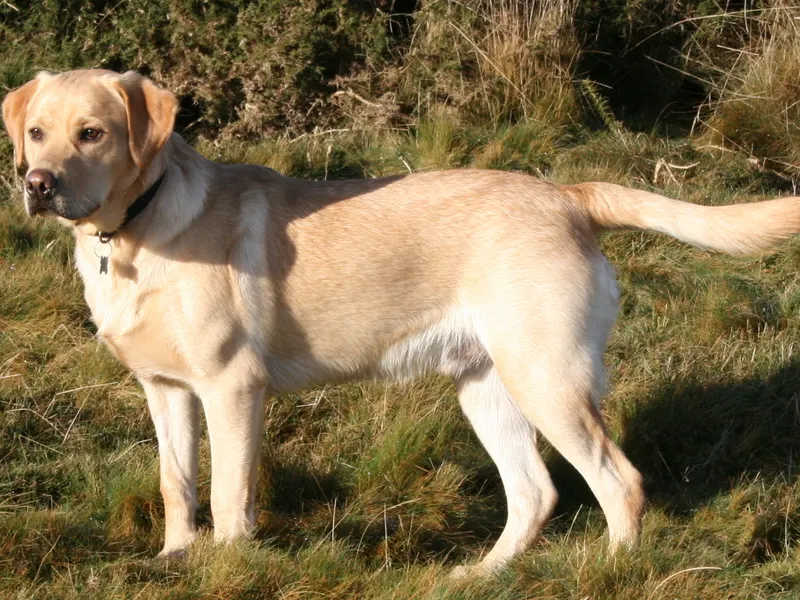
Every Golden is some shade of gold. The AKC standard asks for a rich, lustrous gold and penalizes colors that are extremely pale or extremely dark. The Kennel Club also accepts cream, which is why many UK and European Goldens look lighter than American ones. A few white hairs on the chest are allowed, but a white patch is not. Field-bred dogs are usually leaner, darker red-gold and lighter coated than show lines.
Temperament and Personality
Goldens are friendly with nearly everyone, which makes them poor guard dogs but excellent companions. They are patient with children, usually sociable with other dogs and cats, and keen to please. Many carry toys around the house and greet visitors with a shoe or sock in their mouth.
They mature slowly and often stay puppyish and boisterous until two or three years old. Their strong attachment to people means they dislike being left alone for long periods; bored Goldens may chew, dig or bark. Otherwise they are rarely noisy.
Is the Golden Retriever Good for First-Time Owners?
Yes, the Golden is one of the most forgiving breeds for a first dog. It wants to cooperate, responds quickly to treats and praise, and rarely holds a grudge after a training mistake.
Beginners should still plan for the hard parts. A Golden puppy is mouthy, bouncy and strong by six months, so a puppy class and daily practice of loose-leash walking and calm greetings make a big difference. Budget time for one to two hours of activity a day and regular brushing. If you can commit to that routine, a Golden usually rewards a novice owner with a reliable, easygoing adult.
Can Golden Retrievers Be Left Alone?
Adult Goldens can usually handle three to four hours alone, but they are not suited to full workdays on their own. The breed was developed to work closely with people, and many Goldens become anxious or bored when isolated for long periods.
Typical signs are chewing, digging, barking and destroying shoes or cushions. To build independence, practice short absences from puppyhood, leave a stuffed food toy and make sure the dog has been exercised before you go. If you work long hours, a dog walker, doggy daycare or a midday visit from a family member is the realistic solution.
Can a Golden Retriever Live in an Apartment?
Yes, a Golden can live happily in an apartment if it gets enough exercise outside. Goldens are usually quiet indoors and adaptable, so the size of the home matters less than the daily routine.
Plan for at least two outings a day, including one long walk, a run or a game of fetch in a park, plus some training or sniffing games. Elevators and stairs are fine for adults, but carry young puppies when possible to protect developing joints. Expect hair on floors and furniture, and keep a towel by the door for wet walks. A ground-floor unit or easy park access helps a lot.
Exercise and Training
An adult Golden needs one to two hours of activity daily. Swimming, retrieving games, hiking and structured work such as gundog dummy training or scent work suit the breed well. Puppies should have shorter, free-play sessions while their joints develop.
Training is straightforward with reward-based methods, and Goldens excel in obedience, agility and assistance work. Teach a solid recall and loose-leash walking early, because an enthusiastic adult can be strong on the leash. Food motivation is high, so measure meals and count treats.
Grooming and Shedding
The dense, water-repellent double coat sheds year-round and heavily during the seasonal molts. Brush two or three times a week, and daily during heavy shedding, using an undercoat rake and slicker brush. Trim the feathering around the feet and ears to keep it tidy. Dry the coat and ears thoroughly after swimming to reduce the risk of hot spots and ear infections.
Feeding and Nutrition
Weight control is the biggest feeding priority for a Golden. The breed is famously food-motivated, and the Kennel Club's Breed Watch flags excess weight as a concern. Extra pounds put strain on hips and elbows that may already carry a dysplasia risk, and lean Goldens tend to stay active longer in old age.
- Measure every meal and adjust portions to body condition: you should feel the ribs easily under a thin layer of fat and see a waist from above.
- Feed puppies a diet formulated for large-breed growth, in three to four meals until about six months, then two meals. Steady, moderate growth protects developing joints.
- Adults do well on two meals a day. Splitting the ration also reduces the chance of gulping, which matters in a deep-chested retriever.
- Count training treats as part of the daily ration, or use pieces of the regular food as rewards.
Goldens love to carry things and may scavenge socks, toys or garbage, so keep food and small objects out of reach. Ask your vet about adjusting food as activity drops after neutering or in senior years.
| Adult weight | Less active | Typical adult | Very active |
|---|---|---|---|
| 55 lb | 1,090 kcal | 1,250 kcal | 1,560 kcal |
| 75 lb | 1,380 kcal | 1,580 kcal | 1,970 kcal |
Estimates use the resting energy formula veterinarians work with (70 × body weight in kg0.75) and standard activity factors. Use the feeding guide on your food as a starting point and adjust to body condition. Puppies, seniors, pregnant animals and pets that need to lose weight have different needs, so ask your vet.
Health and Lifespan
Common inherited problems include hip and elbow dysplasia and several eye conditions, including cataracts, progressive retinal atrophy (PRA) and glaucoma. Ichthyosis, a condition that causes flaky skin, can be identified with a DNA test. Cancer, notably hemangiosarcoma and lymphoma, is a significant cause of death in the breed.
The Kennel Club's Breed Watch places the Golden in Category 2, which flags points of concern such as a tendency toward excess weight. Keep your dog lean and choose a puppy from parents with hip and elbow scores, current eye certificates and relevant DNA tests. Typical lifespan is 10 to 12 years.
Golden Retriever Price and Cost of Ownership
Typical breeder price in the US$1,500 to $3,500
A Golden Retriever puppy from a reputable US breeder typically costs about $1,500 to $3,500. Prices vary by breeder, region and lines, and puppies from parents with full health clearances (hips, elbows, eyes, heart) and titled field or show lines sit at the upper end. Very cheap puppies often come without these clearances.
Adoption is a good option: Golden Retriever rescue groups across the US regularly place adult dogs and seniors.
Breed-specific ongoing costs to plan for:
- Food for a large, active dog, plus extra for training treats.
- Grooming tools and occasional professional grooming during heavy molts.
- Pet insurance or savings, since cancer, joint disease and ear infections are common in the breed.
- Regular veterinary checks in the senior years.
Is the Golden Retriever Right for You?
The Golden Retriever is a strong choice for active families, first-time owners willing to invest in training and people who want a dog that joins in everything. A house with a yard is ideal, but an apartment can work with long daily outings.
It is less suited to people who are out all day, who want a home free of dog hair, or who need a protective guard dog. Plan for the costs of a large dog, including more veterinary care in older age.
Golden Retriever Traits at a Glance
Golden Retriever FAQ
Are Golden Retrievers good family dogs?
Yes, they are one of the most family-friendly breeds, patient with children and sociable with other pets. Their size and exuberance mean toddlers should be supervised.
How big do Golden Retrievers get?
Adults usually stand 21.5 to 24 inches at the shoulder and weigh about 55 to 75 lb, with males larger than females.
Do Golden Retrievers shed a lot?
Yes. They shed year-round and heavily twice a year, so regular brushing and frequent vacuuming are part of life with a Golden.
How much exercise does a Golden Retriever need?
Plan on one to two hours a day, combining walks with retrieving, swimming or training games. Underexercised Goldens often become restless and destructive.
Are Golden Retrievers easy to train?
Very. They are food-motivated and eager to cooperate, which is why they are so common as guide and assistance dogs.
How long do Golden Retrievers live?
Most live 10 to 12 years. Cancer is a leading cause of death, so routine vet checks become important as they age.