BoxerPlayful, loyal German family guardian
The Boxer is a muscular, medium-to-large working dog from Germany with a bouncy, clownish personality and deep loyalty to its family. It is great with children and highly trainable, but it needs lots of exercise and company, and its health requires attention.
Why people love the Boxer
- Playful, patient and affectionate with children
- Natural watchdog that alerts without being overly vocal
- Short coat needs minimal grooming
- Clever and responsive to reward-based training
- Stays playful and fun well into adulthood
Things to consider
- Heart disease and cancer are significant breed concerns
- Short muzzle makes heat and hard exercise risky
- Rowdy, jumpy and slow to mature
- Does poorly when left alone for long hours
- Drools and snores more than many breeds
Is this breed right for you?
10 questions · live resultHistory and Origin
The Boxer descends from the Bullenbeisser, a German mastiff-type dog used to catch and hold large game such as boar and bear. In the late 1800s, breeders in Munich, notably Friedrich Robert, Elard König and R. Höpner, crossed these dogs with English Bulldogs and established the Boxer. The first Boxer club was founded in Munich in 1895.
Boxers served as messenger and guard dogs in World War I and later as police dogs. The AKC recognized the breed in 1904, and it has long ranked among the most popular breeds in the US. Both the AKC and The Kennel Club place it in the Working group.
Size, Colors and Coat
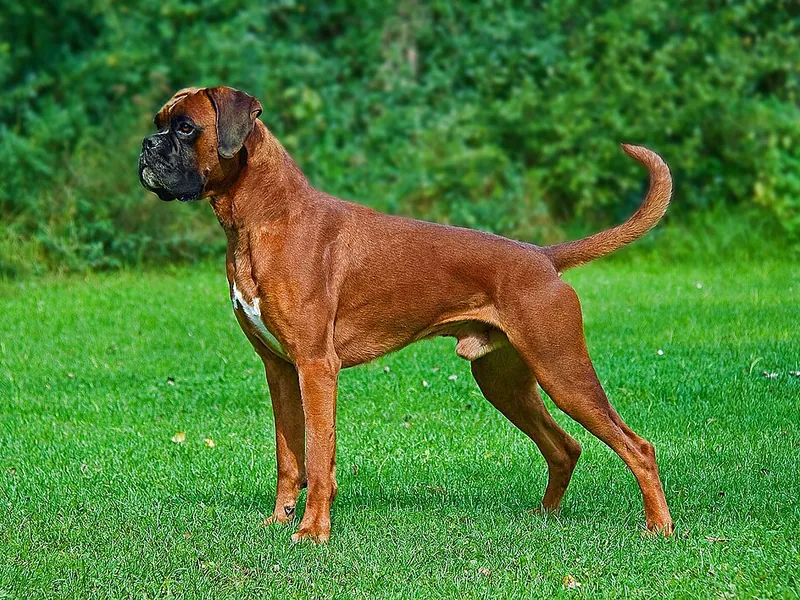
The Boxer is a square, muscular dog standing 21 to 25 inches at the shoulder and weighing 55 to 79 lb. Males are taller and more heavily muscled, with broader heads; females are noticeably lighter and finer, often 15 lb or more below a large male.
The head is the breed's signature: a short, broad muzzle, an undershot bite and a dark mask. Standards accept two colors:
- Fawn, from light tan to deep red
- Brindle, from sparse black stripes on fawn to heavily striped dogs that look almost black (often called reverse brindle)
Either color may be plain or flashy, meaning with white on the chest, feet and face. White should not exceed about a third of the coat for showing. There is no true black Boxer.
In the US, ears are often cropped and tails docked, though natural ears are increasingly common. Cropping and docking are banned in the UK and much of Europe, so Boxers there have natural ears and tails.
Temperament and Personality
Boxers are energetic, playful and affectionate, known for their wiggling greeting, often called the kidney bean dance. They are typically excellent with children and loyal to their family, and they are watchful with strangers, making good watchdogs.
Boxers mature slowly and stay exuberant for years, and they can be rowdy and jump up. Some show same-sex tension with other dogs. They are very people-oriented and do poorly when left alone for long periods, which can result in separation-related behavior.
Boxers use their front paws a lot in play, a habit thought to have inspired the breed's name. Teach a solid off cue early so that greetings stay polite.
Is the Boxer Good for First-Time Owners?
A Boxer can work for a first-time owner who is active, patient and ready for training, but it is not the easiest beginner dog.
Boxers are friendly and eager, yet they are also strong, bouncy and slow to mature, often acting like puppies until two or three years old. Beginners struggle most with jumping up, leash pulling and mouthing during play. A structured puppy class, short daily training sessions and plenty of exercise make a big difference. Novices should also budget time for health checks, since the breed's heart and cancer risks call for regular vet visits as the dog ages.
Are Boxers Aggressive?
Boxers are not generally aggressive toward people; well-bred, socialized Boxers are friendly, playful and gentle with their families.
They are watchful and may bark or stand their ground with strangers who approach the home, which is the guarding instinct described in the breed standard. Tension can occur between two adult dogs of the same sex, especially intact males, so introductions and supervision matter in multi-dog homes. Rough, boisterous play is sometimes mistaken for aggression. Early socialization with people and dogs, plus training a reliable off and settle, keeps that energy manageable.
Are Boxers Good with Cats?
Many Boxers live peacefully with cats, especially when they are raised with them from puppyhood.
The Boxer's prey drive is moderate, but its play style is physical and bouncy, which most cats dislike. An adult Boxer that has never lived with cats may chase them, at least at first. Introduce the two gradually, with the dog on a leash and the cat able to retreat to high shelves or a dog-free room. Reward the Boxer for calm behavior around the cat. Outdoor cats and unfamiliar cats are more likely to trigger chasing than the family cat.
Exercise and Training
Boxers need at least an hour or two of daily exercise, mixing walks, play and activities like agility, obedience or fetch. Mental stimulation helps prevent boredom.
- Train early and consistently with rewards; Boxers are clever but can be stubborn.
- Teach calm greetings and a reliable sit; adult Boxers are strong and enthusiastic.
- Avoid intense exercise in heat; their short muzzle makes them prone to overheating.
- Gradually build alone-time tolerance from puppyhood.
Grooming and Shedding
The short, tight coat is easy to maintain with weekly brushing, and shedding is light to moderate. Clean facial wrinkles to prevent irritation, and wipe away drool as needed.
Boxers are sensitive to both cold and heat. Provide a coat in winter and shade and water in summer. White Boxers are prone to sunburn and deafness.
Coat colors are fawn and brindle, with or without white markings. In many lines a share of puppies are mostly white, which kennel clubs do not accept for showing but which make fine pets with good sun protection.
Feeding and Nutrition
Boxers are deep-chested, which puts them at increased risk of bloat (gastric dilatation-volvulus). Feed two or three smaller meals rather than one large one, avoid vigorous exercise for an hour before and after eating, and learn the warning signs: a swollen belly, unproductive retching and restlessness are an emergency.
Puppies should eat a diet designed for large-breed growth and stay lean while their joints develop. Boxers grow quickly in height but fill out slowly, and an adolescent that looks lanky is usually normal.
Some Boxers have sensitive digestion, with gas or soft stools, and the breed is predisposed to a form of colitis. Persistent digestive problems deserve a vet workup rather than repeated food changes. Given the breed's heart risks, discuss your choice of diet with your vet, particularly before switching to unconventional formulas.
The short muzzle can make some Boxers gulp air while eating; a slow feeder helps. Keep treats small, since lively Boxers in training can collect a lot of extra food.
| Adult weight | Less active | Typical adult | Very active |
|---|---|---|---|
| 55 lb | 1,090 kcal | 1,250 kcal | 1,560 kcal |
| 79 lb | 1,440 kcal | 1,640 kcal | 2,050 kcal |
Estimates use the resting energy formula veterinarians work with (70 × body weight in kg0.75) and standard activity factors. Use the feeding guide on your food as a starting point and adjust to body condition. Puppies, seniors, pregnant animals and pets that need to lose weight have different needs, so ask your vet.
Health and Lifespan
Boxers typically live 10 to 12 years. Heart disease is a major concern, including aortic stenosis and arrhythmogenic right ventricular cardiomyopathy (ARVC, often called Boxer cardiomyopathy). Cancer rates are high in the breed. Other issues include hip dysplasia, epilepsy and skin fold inflammation.
Boxers are moderately brachycephalic, and dogs with shorter faces can develop BOAS. Choose a breeder who screens hearts (including Holter monitoring), hips and favors moderate muzzles.
Some lines carry a gene variant linked to ARVC, and a DNA test exists, though it does not predict every case. Annual heart checks are worth discussing with your vet from middle age onward.
Boxer Price and Cost of Ownership
Typical breeder price in the US$1,200 to $2,500
A Boxer puppy from a reputable US breeder typically costs about $1,200 to $2,500. Prices vary by breeder, region and lines, and puppies from champion parents with full heart screening can cost more. Boxer-specific rescues and shelters regularly have adults and mixes available.
Breed-specific cost drivers to plan for:
- Heart monitoring, including Holter tests and cardiology visits from middle age
- Pet insurance, ideally bought young, given the breed's high rates of heart disease and cancer
- Cooling aids and air conditioning in hot climates
- Food and training for a large, energetic dog
- Sunscreen and extra vet checks for white or flashy dogs
Grooming costs are low, but chew toys get destroyed quickly and need regular replacing.
Is the Boxer Right for You?
A Boxer suits active families who want a playful, protective companion and can commit to daily exercise, training and companionship.
It is less suited to people away all day, apartments without exercise access, or hot climates without air conditioning.
Boxer Traits at a Glance
Boxer FAQ
Are Boxers good family dogs?
Yes. Boxers are typically loving, playful and protective with children, though their energy calls for supervision with toddlers.
How big do Boxers get?
Boxers stand about 21 to 25 inches tall and weigh roughly 55 to 79 lb.
Do Boxers shed?
Lightly to moderately. Their short coat is easy to care for.
Are Boxers good guard dogs?
They are alert and protective, making good watchdogs, while usually staying friendly once they accept visitors.
How much exercise does a Boxer need?
At least one to two hours a day of activity and mental stimulation.
How long do Boxers live?
Most Boxers live 10 to 12 years.