Saarloos WolfdogA wolf-like dog for experts only
The Saarloos Wolfdog looks and moves like a wolf and keeps much of a wolf's caution. Reserved, sensitive and pack oriented, it needs very experienced owners with plenty of space, time and patience for lifelong socialization.
Why people love the Saarloos Wolfdog
- Deeply devoted to its own family
- Quiet; tends to howl rather than bark
- Low-maintenance coat outside shedding seasons
- Clean and generally low in odor
- Striking wolf-like appearance and movement
Things to consider
- Strong flight reflex and wariness of strangers
- Needs lifelong socialization
- Poor fit for busy homes with young children
- Escape-prone; requires high, secure fencing
- Copes badly with being left alone
Is this breed right for you?
10 questions · live resultHistory and Origin
Dutch breeder Leendert Saarloos began the breed in the 1930s by crossing a German Shepherd male with a female European wolf. His goal was to create a hardier working dog with better health and natural instincts than the shepherds of his day.
The resulting dogs proved too cautious for most working roles, although a few were trained as guide dogs. After Saarloos died in 1969, the Dutch Kennel Club recognized the breed in 1975 and named it after him. The FCI followed in 1981. The breed remains rare worldwide.
Size, Coat and Colors
The Saarloos Wolfdog is a large, lean dog with a wolf-like build and movement. Adults stand about 24 to 30 inches at the shoulder and weigh roughly 66 to 99 lb. Males are noticeably taller and heavier than females, with a broader head and stronger bone.
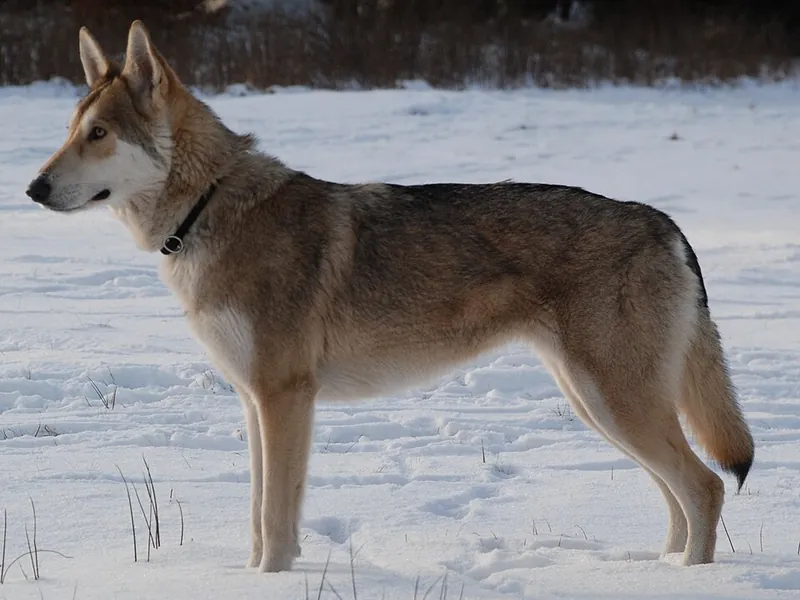
The body is slightly longer than tall, with long legs and a deep chest. The head is wedge-shaped with medium-size, erect ears and almond-shaped yellow to amber eyes. The tail is long and bushy, usually carried low.
The coat is medium length with a dense undercoat that thickens considerably in winter. Accepted colors include:
- Wolf-gray: from light to dark shades
- Forest brown: a reddish brown
- Cream to white
A lighter mask and paler underside are common. The breed moves with a light, ground-covering trot that resembles a wolf's gait.
Temperament and Personality
The Saarloos is devoted to its own family but reserved, often shy, with strangers. Its strongest trait is a pronounced flight reflex: when something new or frightening happens, its first instinct is to retreat or flee rather than confront. Unfamiliar places, crowds and sudden noise can be stressful.
It thinks like a pack animal. It wants company, ideally both people and another compatible dog, and may howl rather than bark. It is not a natural guard dog and is generally unsuited to busy family life with small children, where its need for calm and predictability is hard to meet.
Is the Saarloos Wolfdog Good for First-Time Owners?
No, the Saarloos Wolfdog is not suitable for first-time owners.
Its pronounced flight reflex, wariness of strangers and need for lifelong socialization make it one of the most demanding breeds to raise. Owners need experience reading subtle canine body language, managing fearful behavior and providing very gradual exposure to new situations. Secure fencing and careful leash handling are essential, as a startled Saarloos can bolt. Even experienced dog owners should talk with breed specialists and meet adult dogs before committing.
Is the Saarloos Wolfdog Easy to Train?
No, the Saarloos Wolfdog is not easy to train in the traditional sense.
It is intelligent but not eager to obey for its own sake, and it does not respond to harsh methods. Training works best through patience, rewards and a strong bond. Building confidence matters more than teaching tricks: gradual exposure to new places, people and sounds is the core of training. Basic manners, leash skills and recall are achievable, but owners should expect slower progress than with most breeds. Professional help from trainers experienced with sensitive or fearful dogs is valuable.
Is It Legal to Own a Saarloos Wolfdog?
In most places, yes, as the Saarloos Wolfdog is a recognized dog breed bred dog to dog for many generations.
However, some US states, counties and cities regulate wolf-dog hybrids, and local authorities or insurers may not always distinguish between recognized wolfdog breeds and recent wolf crosses. Before buying, check state and local regulations, homeowners or renters insurance terms and any landlord rules. Keep registration and pedigree documents that show the dog's breed status. Rules differ between countries as well, so research carefully if importing.
Exercise and Training
This is an enduring trotter that needs long daily walks and room to move, ideally in quiet rural surroundings. Off-leash freedom is risky because a startled Saarloos can bolt and is hard to recall. Fencing should be high and secure, as many are capable escape artists.
Training is demanding. The breed does not respond to harsh methods and is not eager to obey for its own sake. Patient, reward-based work, a strong bond and very gradual exposure to new situations from early puppyhood are essential. Socialization is a lifelong project, not a puppy phase.
Grooming and Shedding
The coat is medium length with a dense undercoat that thickens in winter. Weekly brushing is usually enough most of the year, but during seasonal shedding the undercoat comes out in large amounts and daily brushing helps. Otherwise the breed is low maintenance, with no trimming needed.
Saarloos Wolfdogs usually have little odor and keep themselves clean.
Feeding and Nutrition
Saarloos Wolfdogs are lean, enduring trotters and should stay slim. Check body condition by feeling for the ribs under the thick winter coat, which can hide weight gain. Adjust portions to activity and season.
Puppies should eat a complete food formulated for large-breed puppies, with balanced calcium and phosphorus, to support steady growth. Avoid rapid growth and extra supplements.
- Feed two meals a day for adults, three or four for young puppies.
- The breed is deep-chested, so avoid strenuous exercise right before and after meals.
- Feed in a calm, quiet place; sensitive dogs may refuse food when stressed.
- Use part of the daily ration as rewards during confidence-building training.
Sudden changes in appetite can signal stress, so watch for patterns linked to new environments or routines.
Introduce new foods slowly, mixing them with the old food over about a week, to avoid upset stomachs in sensitive dogs.
| Adult weight | Less active | Typical adult | Very active |
|---|---|---|---|
| 66 lb | 1,250 kcal | 1,430 kcal | 1,790 kcal |
| 99 lb | 1,700 kcal | 1,940 kcal | 2,430 kcal |
Estimates use the resting energy formula veterinarians work with (70 × body weight in kg0.75) and standard activity factors. Use the feeding guide on your food as a starting point and adjust to body condition. Puppies, seniors, pregnant animals and pets that need to lose weight have different needs, so ask your vet.
Health and Lifespan
Saarloos Wolfdogs usually live 11 to 13 years. Reported concerns include hip and elbow dysplasia and inherited eye disease, so screening of breeding dogs matters.
The breed descends from a very small number of founders, and its gene pool is narrow. Researchers and breed organizations have discussed outcrossing programs to improve genetic diversity. Buyers should ask breeders about health testing and inbreeding levels.
Saarloos Wolfdog Price and Cost of Ownership
Saarloos Wolfdogs are rare in the US, and most puppies come from breeders in Europe. Prices vary by breeder, region and lines, and import costs add significantly. Look for breeders who screen for hip dysplasia and eye conditions and who socialize puppies extensively.
Rescue placements are rare, but wolfdog rescues may sometimes have Saarloos or similar dogs.
Breed-specific ongoing costs include:
- Tall, secure fencing to prevent escapes.
- Professional training for fearful or sensitive dogs.
- Pet insurance for hip dysplasia and inherited conditions.
- Homeowners insurance adjustments, as some policies exclude wolfdogs.
- Permits or registration where local rules regulate wolfdogs.
Boarding can also be costly, as many kennels are not suitable for a shy wolfdog.
Is the Saarloos Wolfdog Right for You?
For most households the honest answer is no. This breed suits experienced owners who understand wolfdog-type behavior, live somewhere quiet with secure fencing and can rarely leave the dog alone.
- Good match: rural homes, experienced handlers, people with another calm dog and a predictable routine.
- Think twice: city living, apartments, busy homes with frequent visitors, first-time owners.
Some jurisdictions regulate wolfdogs or wolf-type dogs, so check local rules before buying.
Saarloos Wolfdog Traits at a Glance
Saarloos Wolfdog FAQ
Is the Saarloos Wolfdog part wolf?
It descends from 1930s crosses between a German Shepherd and a European wolf, but today it is a recognized dog breed bred dog to dog for many generations.
Are Saarloos Wolfdogs good with kids?
They are generally not recommended for families with young children because they are sensitive to noise and chaos and may withdraw or flee when stressed.
How big do Saarloos Wolfdogs get?
They are large dogs, standing about 24 to 30 inches tall and weighing roughly 66 to 99 lb.
Can a Saarloos Wolfdog live in an apartment?
It is a poor apartment dog. It needs space, quiet surroundings and secure outdoor room.
Do Saarloos Wolfdogs bark?
They tend to be quiet and are more likely to howl than bark.
Can a Saarloos Wolfdog be left alone?
Not well. As a pack-oriented dog it copes badly with being alone and does best with company, often another dog.