Maremma SheepdogItaly's white livestock guardian
The Maremma Sheepdog is a large, white flock guardian that has protected sheep from wolves in central Italy for centuries. Independent, watchful and devoted to its charges, it thrives on land with a real job and needs an owner who understands livestock guardian dogs.
Why people love the Maremma Sheepdog
- Proven, independent guardian of livestock against predators
- Gentle and protective with animals it has bonded to
- Calm, dignified temperament without clinginess
- Weatherproof white coat sheds dirt well
- Hardy breed, often living 10 years or more
Things to consider
- Barks at night to warn off intruders
- Needs a large, securely fenced property
- Independent nature makes obedience and recall difficult
- Heavy seasonal shedding
- Not suited to suburban lots or frequent visitors
Is this breed right for you?
10 questions · live resultHistory and Origin
The breed developed in central Italy, in the Maremma coastal plains of Tuscany and Lazio and the mountains of Abruzzo. Shepherds moved flocks seasonally between the two regions, and the dogs went with them. Two local types were eventually combined into a single breed, reflected in the Italian name Pastore Maremmano-Abruzzese.
The dogs were never herders; their job was to live with the sheep and drive off wolves, bears and thieves. Their white coat helped shepherds tell dog from predator at night. Today Maremmas still work in Italy and abroad, and in Australia they have been used to protect penguin colonies from foxes. The Kennel Club recognizes the breed in its Pastoral Group.
Size, Coat and Color
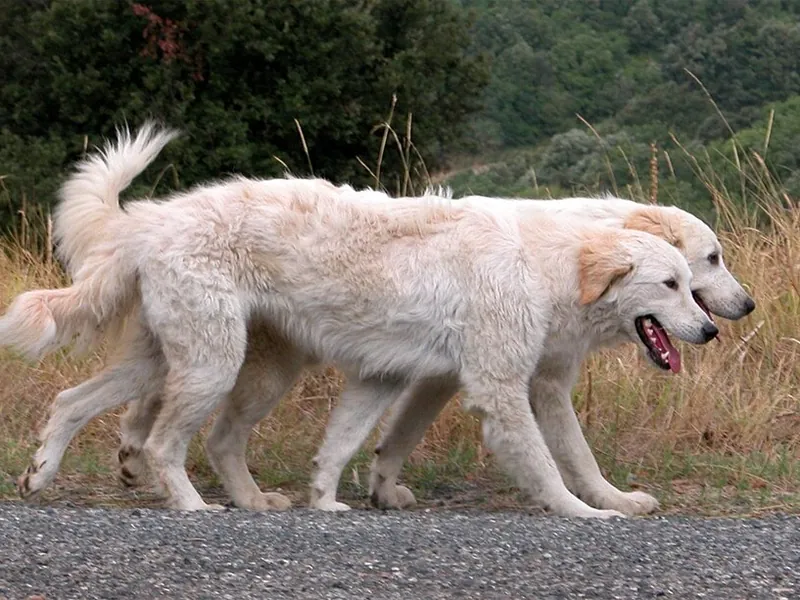
The Maremma Sheepdog is a large, majestic white guardian with a broad, bear-like head, a conical skull, almond-shaped eyes and small V-shaped ears that hang flat. The body is slightly longer than tall, and the thick tail hangs low at rest.
Adults stand about 24 to 29 inches and weigh roughly 66 to 99 lb. Under the FCI standard, males are taller, about 25.5 to 28.5 inches, and females somewhat smaller, about 23.5 to 27 inches. Males are larger and more massive, with a broader head and heavier mane.
The coat is long, abundant and harsh, lying fairly flat, with a dense undercoat that thickens in winter. Slight waviness is allowed, but curls are not. A thick ruff forms around the neck, and the backs of the legs carry feathering.
The breed is white, with slight shades of ivory, pale orange or lemon tolerated. The skin and pads are dark, and the nose and eye rims are black. The white coat helps shepherds distinguish the dog from wolves at night.
Temperament and Personality
Maremmas are calm, dignified and highly independent. They were bred to make decisions without human direction, so they assess situations themselves rather than wait for commands. They are affectionate with their family but rarely clingy, and they are wary of strangers.
Guarding is their core instinct. They patrol their territory, bark to warn off intruders, especially at night, and will confront perceived threats. With animals they have bonded to, including livestock and household pets, they are often gentle and protective.
Are Maremma Sheepdogs Good for First-Time Owners?
Generally no. Maremmas are calm and affectionate with their own families, but they are working livestock guardians that think independently, guard seriously and need space to patrol.
First-time owners often underestimate the nighttime barking, the difficulty of recall and the need for tall, secure fencing. Maremmas also need ongoing socialization to people and situations, and they do not respond well to harsh training. If you are new to guardian dogs and have livestock, find an experienced mentor or breeder who places working dogs and can guide you through puppyhood. Pet homes without land or livestock rarely suit the breed.
Are Maremma Sheepdogs Good With Other Pets?
Often yes, with animals they have bonded to. Maremmas were bred to live with sheep and goats and protect them, and they tend to treat household pets, poultry and livestock as part of their charge.
Bonding takes time and supervision. Young Maremmas can play too roughly with lambs, chickens or cats, so experienced guidance and gradual introductions are important. Unfamiliar animals entering their territory, including other dogs, may be treated as intruders. Many Maremmas are fine with resident dogs but less welcoming to visiting dogs. With correct raising, they are often remarkably gentle with small animals in their care.
Are Maremma Sheepdogs Easy to Train?
Not in the usual sense. Maremmas are intelligent but were bred to make decisions on their own while guarding flocks, so they often weigh whether a command is worth following.
Training focuses on trust, management and basic manners rather than polished obedience. Teach leash walking, calm handling, vet care and boundaries early, using rewards and clear rules. Recall is often unreliable, especially when the dog is guarding. Harsh methods tend to damage the relationship. Owners who appreciate a self-reliant guardian and set realistic goals usually find Maremmas cooperative and steady.
Exercise and Training
Maremmas are not high-speed athletes, but they need room to roam and patrol. A large, securely fenced property suits them far better than walks around a city block. They can be active for long periods while guarding, and they become frustrated when confined.
Training is about building trust and managing behavior rather than polished obedience. Start socialization early and keep it going, use reward-based methods and set clear house rules. Recall is often unreliable, since a guardian may stay with its flock or follow its own judgment. They do poorly when left alone indoors for long periods.
If you are raising a Maremma for livestock work, puppies are usually placed with the animals early so they bond to them, while still getting regular handling from people. Experienced guardian-dog mentors can help you avoid common mistakes such as rough play with lambs.
Grooming and Shedding
The thick, harsh white coat with a dense undercoat is designed to shed dirt and weather. Weekly brushing removes loose hair, but expect heavy seasonal shedding when the undercoat drops, when daily brushing is helpful. Do not shave the coat; it protects against both cold and heat. Check for mats behind the ears and on the thighs.
Feeding and Nutrition
Maremmas are large guardians that are often surprisingly economical eaters for their size. They are not high-speed athletes, and many spend long periods watching rather than running, so portions should match actual activity.
- Feed puppies a large-breed puppy food and aim for slow, steady growth. Keeping puppies lean helps protect hips in a breed where hip dysplasia is the main concern.
- Puppies do well on three or four meals a day, adults on two meals.
- Bloat is a risk in large, deep-chested dogs. Avoid one large daily meal and keep heavy exercise away from mealtimes.
- Working dogs living outdoors in winter may need more food than indoor companions.
Feed working Maremmas where livestock cannot steal their food, and feed separately from other dogs. Check weight with your hands regularly, since the heavy coat can hide both weight gain and loss. Provide fresh water and shade during hot weather, as the thick coat makes overheating possible.
| Adult weight | Less active | Typical adult | Very active |
|---|---|---|---|
| 66 lb | 1,250 kcal | 1,430 kcal | 1,790 kcal |
| 99 lb | 1,700 kcal | 1,940 kcal | 2,430 kcal |
Estimates use the resting energy formula veterinarians work with (70 × body weight in kg0.75) and standard activity factors. Use the feeding guide on your food as a starting point and adjust to body condition. Puppies, seniors, pregnant animals and pets that need to lose weight have different needs, so ask your vet.
Health and Lifespan
Maremmas are generally hardy and often live 10 years or more. As a large breed, hip dysplasia is the main concern, so choose a breeder who X-rays and scores breeding dogs. Large, deep-chested dogs are also at some risk of bloat (gastric dilatation-volvulus), so learn the warning signs and avoid heavy exercise right after meals.
Maremma Sheepdog Price and Cost of Ownership
Maremma Sheepdogs are available in the US mainly through livestock guardian breeders, and prices vary widely by breeder, region and whether puppies are raised with livestock. There is no single well-established typical price, so compare breeders who place working dogs and ask about the parents' work and health. Livestock guardian rescues also place adult Maremmas and mixes.
Breed-specific cost drivers include:
- Tall, secure fencing around a large property
- Hip screening of breeding dogs, which affects puppy prices
- Insurance or savings for bloat surgery and joint disease
- Food for a large dog that may live and work outdoors
- Mentoring or training for raising a working guardian with livestock
Grooming costs are usually low, though heavy shedding requires good brushes and rakes.
Is the Maremma Sheepdog Right for You?
A Maremma is a strong match if you:
- Keep livestock or have a large, fenced rural property
- Understand guardian breeds and accept nighttime barking
- Want an independent protector rather than an obedience partner
It is not suited to apartments, suburban lots with close neighbors, first-time owners or households with frequent unfamiliar visitors.
Maremma Sheepdog Traits at a Glance
Maremma Sheepdog FAQ
Are Maremma Sheepdogs good family dogs?
They can be gentle and protective with their own family, but they are working guardians first. They do best on rural properties with experienced owners.
How big do Maremma Sheepdogs get?
They stand about 24 to 29 inches tall and weigh roughly 66 to 99 lb, with males larger than females.
Do Maremmas bark a lot?
They bark to warn off potential threats, especially at night. This is part of their guarding job and can bother close neighbors.
Do Maremma Sheepdogs shed?
Yes, heavily at times. The dense double coat sheds year-round and blows out seasonally.
Can a Maremma live in an apartment?
Generally no. The breed needs space to patrol and a purpose, and it struggles in small, confined homes.