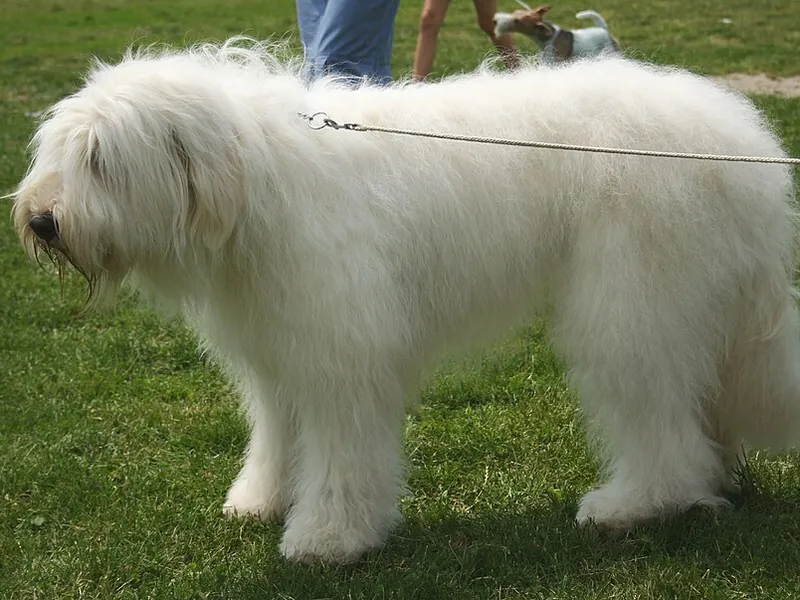
SarplaninacThe Balkan mountain flock guardian
The Sarplaninac is a powerful livestock guardian dog from the Šar Mountains of the Balkans, bred to protect sheep from wolves and bears with little human direction. It is loyal, independent and highly territorial. It suits experienced owners with land, ideally with livestock to guard.
Why people love the Sarplaninac
- Devoted, calm guardian of family and livestock
- Works independently against wolves and bears
- Generally hardy, living 11 to 13 years
- Gentle with its own household's children and animals
- Thick coat handles harsh weather well
Things to consider
- Deeply suspicious of strangers and unfamiliar dogs
- Not naturally obedient; makes its own decisions
- Needs a large, securely fenced property
- Heavy seasonal shedding
- May be restricted by insurers or local rules
Is this breed right for you?
10 questions · live resultHistory and Origin
Large flock guardians have worked in the Šar Mountains, on today's border between Kosovo, North Macedonia and Albania, for centuries. Shepherds kept them with sheep in high summer pastures, where the dogs had to deter wolves and bears on their own.
The FCI recognized the breed in 1939 under the name Illyrian Shepherd Dog. In 1957 it was renamed the Yugoslavian Shepherd Dog Sarplaninac, after its home mountains. After the breakup of Yugoslavia, Serbia became the patron country, while the breed remains closely tied to North Macedonia as well. It is still used for its original work in the region and has found a role on farms in other countries.
Size, Coat and Colors
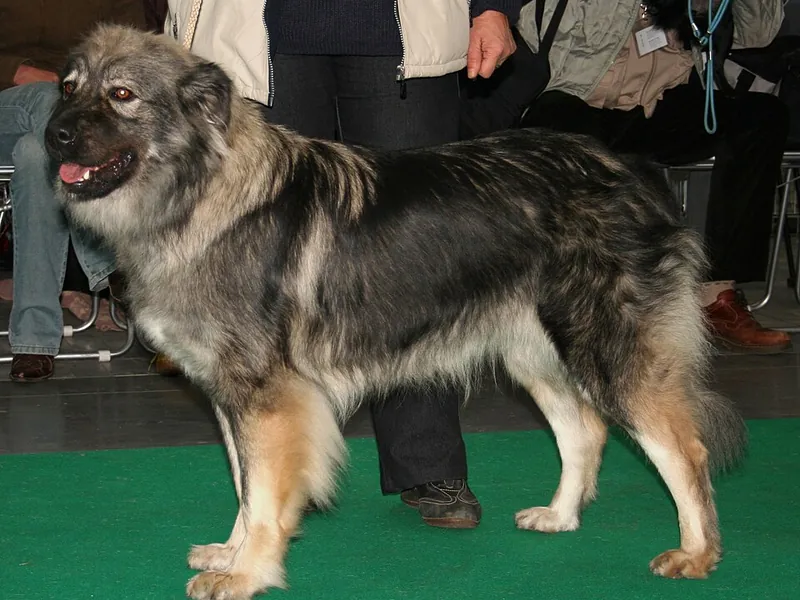
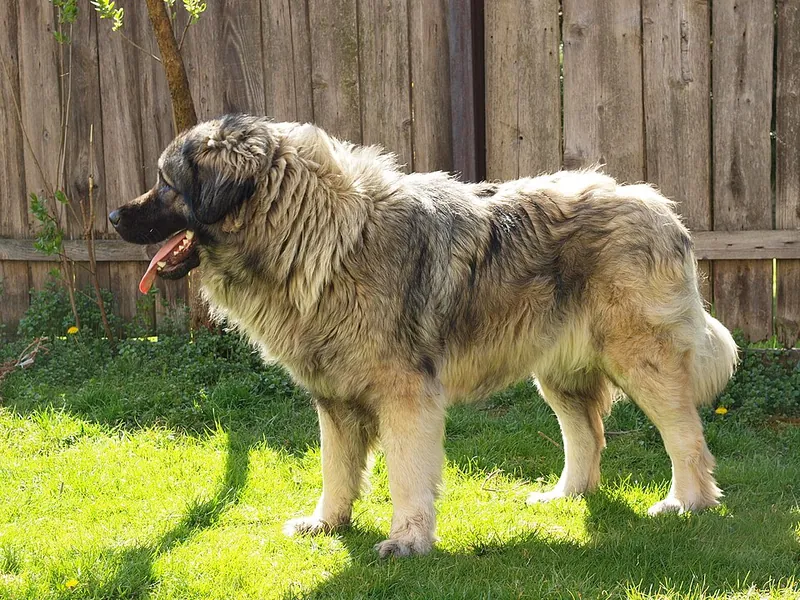
The Sarplaninac is a large, powerful livestock guardian standing about 21 to 24 inches and weighing roughly 66 to 99 lb. Males are larger, heavier and broader in the head than females. The heavy coat makes the dog look bigger than its measurements suggest. The body is slightly longer than tall, with strong bone, a deep chest and a level back.
The head is broad and in proportion to the body, with dark or chestnut almond-shaped eyes and V-shaped drop ears. The tail is long, well feathered and carried low in a saber shape at rest, rising when the dog is alert.
The double coat is dense and medium-long, about 4 inches on the body, with a thick undercoat. Hair is short on the head, ears and front of the legs and longer on the neck, forming a mane, and on the tail and back of the legs. The standard calls for a solid color, from white to dark brown nearly black, with iron gray and sable most typical. White markings are undesirable. Darker shading on the back often fades to lighter tones on the legs.
Temperament and Personality
A Sarplaninac is calm and steady with its own family and animals but deeply suspicious of strangers and unfamiliar dogs. Its guarding instinct is strong and largely self-directed: it decides for itself what counts as a threat, as livestock guardians are bred to do.
These dogs are typically quiet observers that patrol their territory, especially at night, and react firmly to intruders. They can be affectionate and gentle with children of their household, but visiting children and guests require careful management. This is not a dog for dog parks or busy social outings.
Are Sarplaninacs Aggressive?
Sarplaninacs are not typically aggressive with their own families, but they are serious livestock guardians with strong, self-directed protective instincts. They are deeply suspicious of strangers and unfamiliar dogs and will react firmly to perceived threats.
That instinct is what makes them effective against wolves and bears, and it must be understood and managed. Early, thorough socialization, secure fencing and careful control around visitors are essential. Professional guidance from someone experienced with guardian breeds is strongly recommended. Some insurers and municipalities restrict large guarding breeds, so check local rules before bringing one home.
Is the Sarplaninac Good for First-Time Owners?
No. The Sarplaninac is one of the most demanding guardian breeds and is best suited to experienced owners with livestock or large rural properties.
Its independence, protective instinct and suspicion of strangers require confident, calm handling and careful management. First-time owners rarely have the experience or setting to meet these needs. If you are drawn to the breed, spend time with experienced Sarplaninac owners, consider whether you can provide a large, fenced property and a real guarding job, and seek professional guidance from the start.
Do Sarplaninacs Bark a Lot?
Sarplaninacs are typically quiet observers during the day but can bark a lot at night, which is when livestock guardians are most active. Barking is their first line of defense against predators and intruders.
In rural settings with livestock, this is part of the job. In suburban settings, night barking can upset neighbors. Owners should expect barking at unfamiliar sights and sounds, especially after dark. Training can moderate barking somewhat, but it is a core trait of the breed. A large property away from close neighbors suits the Sarplaninac best.
Exercise and Training
The breed does not need high-speed exercise, but it does need space to patrol and a purpose. A large, securely fenced property is essential; long walks on leash supplement that. A bored, under-occupied Sarplaninac may become destructive or overly reactive.
Training must start early and be calm, consistent and respectful. These dogs are intelligent but were bred to make independent decisions, so they are not naturally obedient. Socialization in the first months is critical so the dog learns what is normal, such as visitors, vets and traffic. Professional guidance from someone experienced with livestock guardians is strongly recommended.
Grooming and Shedding
The thick, medium-long double coat, usually iron gray or sable, protects against harsh mountain weather. Brush weekly, with extra sessions during the heavy seasonal sheds when the undercoat comes out in quantity. The coat sheds dirt reasonably well, so baths are needed only occasionally. In hot climates, provide shade and avoid exertion at midday.
Feeding and Nutrition
Sarplaninacs are efficient eaters for their size, reflecting their history as working guardians in mountain pastures. Many need less food than the bag's guide suggests. Feed a complete diet in two meals a day and keep the dog lean and well muscled.
Puppies should grow slowly and steadily on a diet formulated for large or giant-breed growth. Controlled growth supports hip and elbow health, both concerns in the breed. Do not add calcium supplements.
Bloat is a risk shared by large, deep-chested breeds. Feed several smaller meals a day rather than one large one, avoid exercise for about an hour before and after eating and keep mealtimes calm.
Some Sarplaninacs guard food. Feed them in a quiet spot away from other pets and children. Use small treats in training and count them toward the daily ration. Fresh water should always be available, especially in hot weather, when the thick coat makes overheating a risk.
| Adult weight | Less active | Typical adult | Very active |
|---|---|---|---|
| 66 lb | 1,250 kcal | 1,430 kcal | 1,790 kcal |
| 99 lb | 1,700 kcal | 1,940 kcal | 2,430 kcal |
Estimates use the resting energy formula veterinarians work with (70 × body weight in kg0.75) and standard activity factors. Use the feeding guide on your food as a starting point and adjust to body condition. Puppies, seniors, pregnant animals and pets that need to lose weight have different needs, so ask your vet.
Health and Lifespan
The Sarplaninac is generally regarded as a hardy breed, typically living 11 to 13 years. Health problems reported include:
- Hip dysplasia: hip X-rays of breeding dogs are recommended.
- Bloat (gastric dilatation-volvulus): a risk shared by large, deep-chested breeds. Feed several smaller meals and avoid exercise right after eating.
Slow, controlled growth in puppyhood supports joint health. As with any large breed, look for breeders who X-ray hips and elbows and can show the parents' temperaments.
Sarplaninac Price and Cost of Ownership
Sarplaninacs are rare in the US and not recognized by the AKC. A few breeders exist, often focused on working livestock guardian lines, and some dogs are imported from Serbia or North Macedonia. There is no reliable typical US price range. Prices vary by breeder, region and lines. Ask for hip and elbow X-rays and meet the parents to assess temperament.
Livestock guardian rescues sometimes have Sarplaninacs or mixes.
Ongoing costs are driven by size and setting. Secure, high fencing for a large property is essential. Food and veterinary costs scale with weight. Some homeowner and renter insurance policies restrict large guarding breeds. Pet insurance is worth considering for hip problems and bloat surgery.
Is the Sarplaninac Right for You?
A Sarplaninac makes sense if you:
- Keep livestock or own a large, fenced rural property
- Have previous experience with guardian or large independent breeds
- Can manage visitors and other dogs carefully
It is not suitable for apartments, suburban homes with frequent visitors, first-time owners or anyone looking for an obedient sport dog. Check local rules on large guarding breeds before bringing one home.
Sarplaninac Traits at a Glance
Sarplaninac FAQ
How big do Sarplaninacs get?
They usually stand about 21 to 24 inches tall and weigh roughly 66 to 99 lb, with a heavy coat that makes them look bigger.
Are Sarplaninacs good family dogs?
They can be devoted to their own family, but their strong guarding instinct makes them best for experienced owners with space and controlled visitors.
Is the Sarplaninac recognized by the AKC?
No, it is recognized by the FCI but not by the AKC or The Kennel Club.
Do Sarplaninacs shed?
Yes, the thick double coat sheds moderately to heavily, especially during seasonal coat changes.
How long do Sarplaninacs live?
Typically 11 to 13 years.
Are Sarplaninacs good with other dogs?
They tend to be wary of unfamiliar dogs; they usually accept dogs they are raised with.