KarakachanBulgaria's nomadic livestock guardian
The Karakachan is a large, bear-like livestock guardian from Bulgaria, named after the nomadic shepherds who kept it. Territorial, independent and highly protective, it is a superb working guardian for livestock but demands experienced owners and secure land.
Why people love the Karakachan
- Outstanding livestock guardian, still used against wolves and bears
- Calm and gentle with its own animals and people
- Hardy, with few reported hereditary diseases
- Weatherproof coat rarely needs bathing
- Typically lives 12 to 14 years, long for its size
Things to consider
- Territorial and distrustful of strangers
- Independent and difficult to train for inexperienced owners
- Needs tall, secure fencing and a large territory
- Heavy seasonal shedding
- Barks to warn, especially at night
Is this breed right for you?
10 questions · live resultHistory and Origin
The Karakachan is named after the Karakachans, a nomadic pastoral people of the Balkans who moved their flocks between summer mountain pastures and winter lowlands. Their dogs traveled with the sheep and protected them from wolves and bears. When collectivization in the mid-20th century broke up nomadic herding, the dogs declined sharply.
From the 1990s onward, Bulgarian enthusiasts and conservation projects worked to preserve the breed, and Karakachans have since been placed with livestock farmers, including in programs that reduce conflict between herders and wolves. The breed is recognized in Bulgaria but not by the FCI, AKC or The Kennel Club. Adults stand about 24 to 30 inches tall and weigh roughly 66 to 121 lb.
Size, Coat and Colors
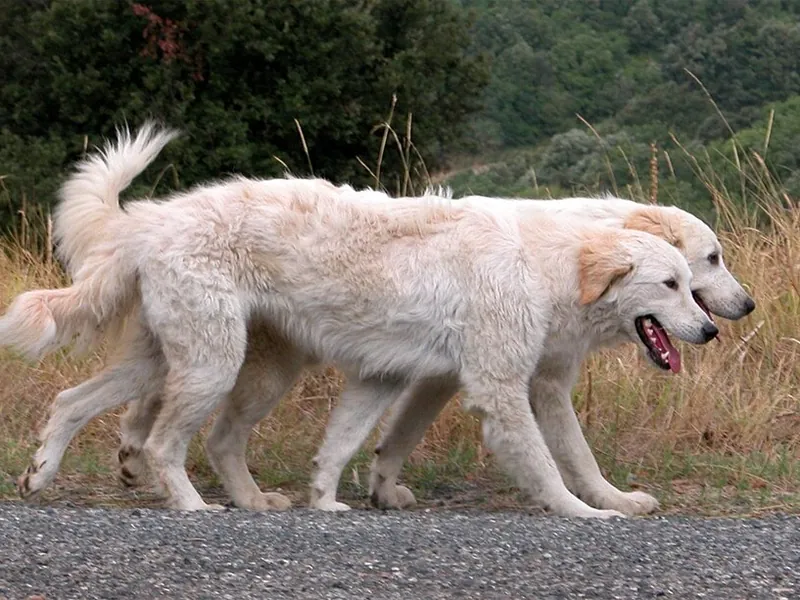
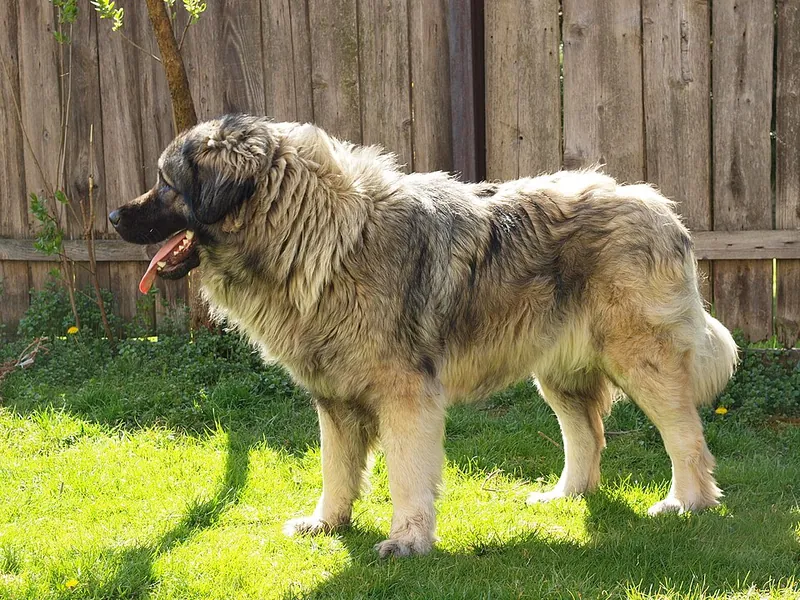
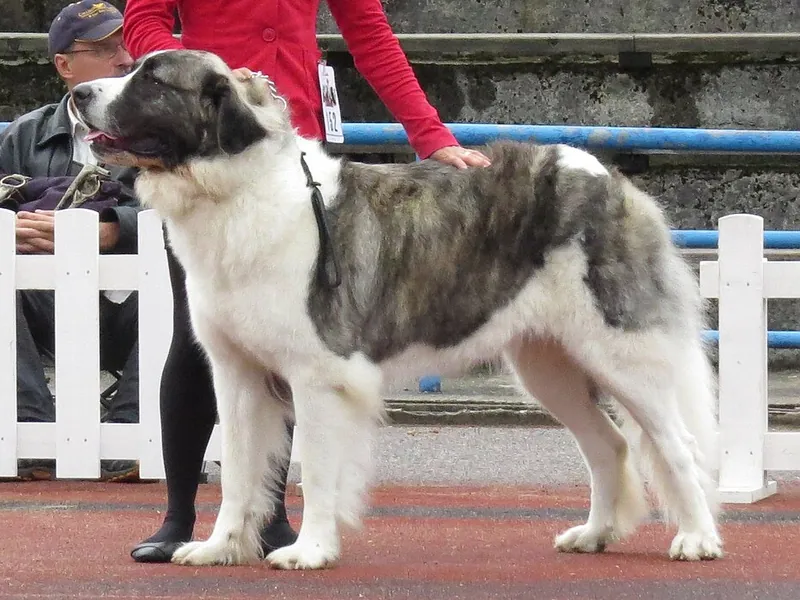
The Karakachan is a large, strongly built, slightly rectangular livestock guardian with a massive head, a broad, powerful muzzle and a bear-like overall impression. It is muscular and heavy-boned but agile enough to work in mountain terrain. Adults stand about 24 to 30 inches and weigh roughly 66 to 121 lb. Males are considerably larger, broader and heavier than females, with a fuller ruff.
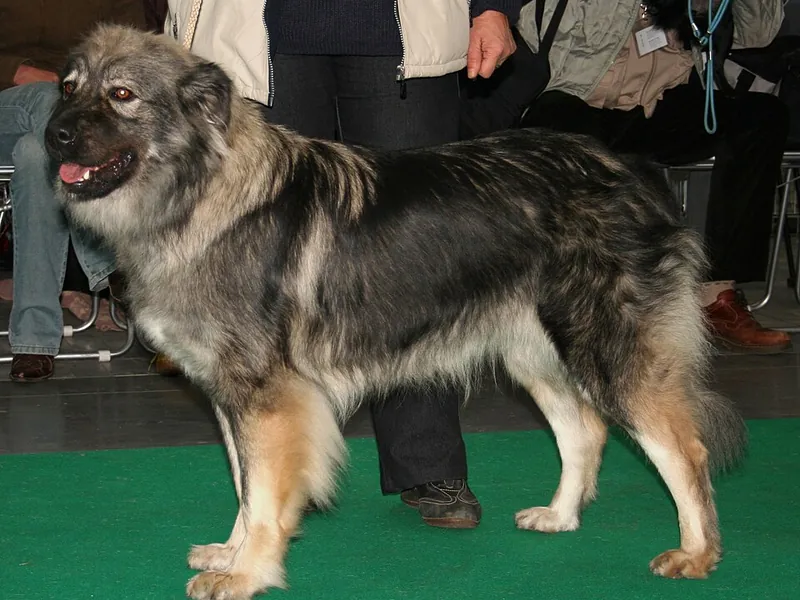
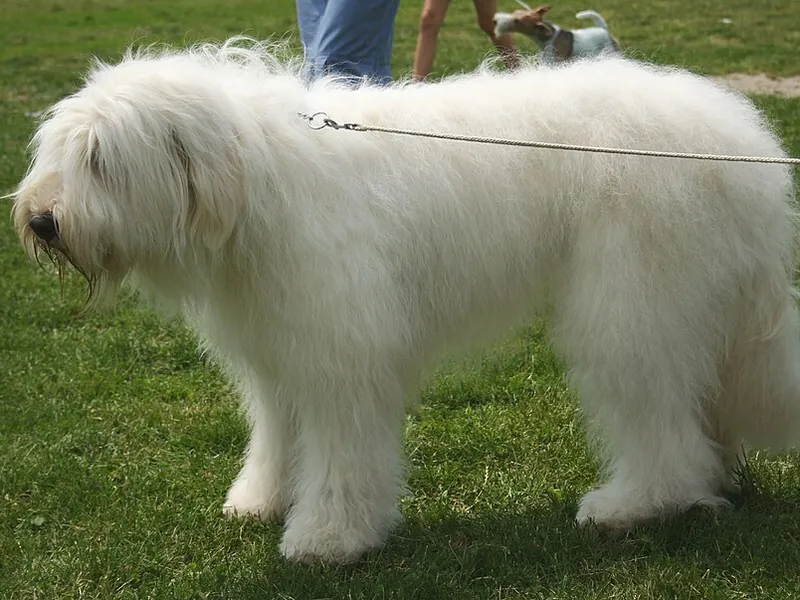
Most Karakachans have a long, dense double coat with a thick undercoat and a straight, coarse outer coat that forms a mane on the neck, feathering on the legs and a bushy tail. Some dogs have a shorter coat, but the long-coated type is most common.
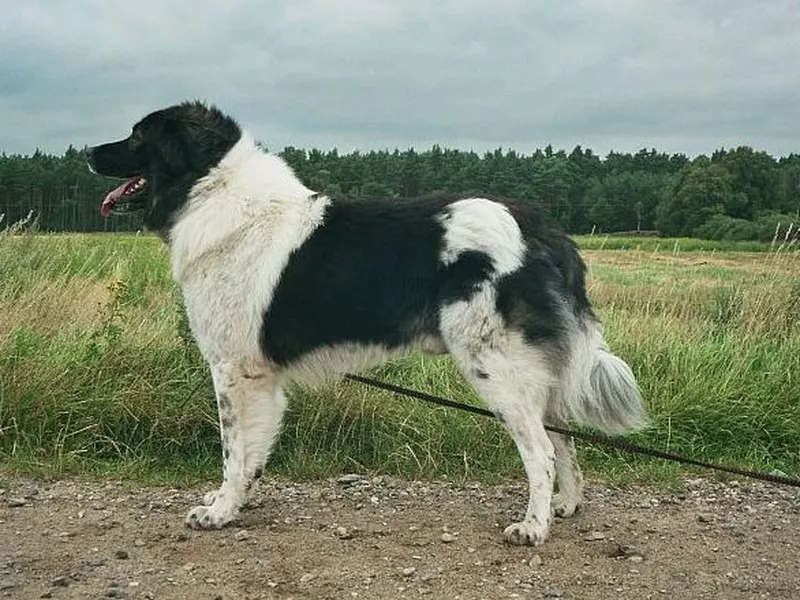
The typical colors are bicolor: white with black or dark gray patches, or dark with white markings on the chest, legs and face. Patched dogs often have a dark head with a white blaze. Some lines also produce tricolor dogs with tan points. Ears are small and hanging, and the tail is carried low or in a saber shape.
Temperament and Personality
Karakachans are calm and gentle with the animals and people they consider their own, and serious about protecting them. They are distrustful of strangers and territorial about their space. A Karakachan will bark to warn and will confront a perceived threat if warning does not work.
This is a thinking, independent dog. It was bred to work out of sight of its shepherd, so it judges situations itself and is not inclined to follow commands blindly.
Is the Karakachan Good for First-Time Owners?
No. The Karakachan is a working livestock guardian with a strong territorial instinct and an independent mind, and it is best suited to experienced owners with land and a real job for it.
First-time owners often expect a large, fluffy companion and are surprised by a dog that guards decisively, questions commands and needs extensive fencing. Managing visitors, other dogs and the dog's tendency to expand its territory requires knowledge of guardian breeds. Livestock owners new to guardian dogs can succeed with mentoring from experienced Karakachan breeders, ideally by taking an adult or a puppy raised with stock.
Do Karakachans Bark a Lot?
Yes, Karakachans bark as part of their guarding work. They use their deep voice as a first warning to predators, strangers and unfamiliar dogs, and they are especially active at night, when wolves and other predators are most likely to approach.
A Karakachan usually barks more when it senses something unusual near its territory, and less when everything is calm. Training can reduce barking at minor triggers, but you cannot remove the instinct. In rural areas with livestock, this is welcome; near close neighbors it can cause conflict. Keeping the dog indoors or in an enclosed area at night may help in more populated places.
Is the Karakachan Recognized by the AKC?
No. The Karakachan is not recognized by the AKC, The Kennel Club or the FCI. It is recognized nationally in Bulgaria, where breeders and conservation programs have worked to preserve it since the 1990s.
In the US the breed is known mainly among livestock farmers, who value it as a working guardian. A small number of breeders keep their own registries or work with breed associations, so pedigree standards and health records vary. When looking for a Karakachan, ask about working background, the parents' temperament around livestock and people, and hip and elbow evaluations rather than relying on registration alone.
Exercise and Training
Karakachans need regular activity and, above all, territory. A large, secure property to patrol, ideally with livestock, gives them both exercise and purpose. Daily walks add variety, but they are not jogging or agility dogs.
- Training is difficult for inexperienced owners. Short, consistent sessions with clear rules work best.
- Socialize puppies widely, while respecting that adults will remain reserved with strangers.
- Secure, tall fencing is essential; these dogs tend to expand their territory.
- They tolerate being left alone only moderately well, especially without a job to do.
Grooming and Shedding
The coat is long, dense and double, with a thick undercoat that sheds heavily once or twice a year. Weekly brushing is enough most of the year; during the seasonal shed, brush daily with an undercoat rake. The coat is weatherproof and naturally sheds dirt, so baths are rarely needed.
Coat colors are typically white with black or dark patches, or dark with white markings.
Feeding and Nutrition
Karakachans are large, slow-maturing guardians, and their food needs depend heavily on climate and workload. A dog patrolling a mountain pasture in winter needs far more than one living in a mild climate with little to do. Adjust portions to body condition, feeling for the ribs under the long coat.
One documented tendency in the breed is weight gain in older dogs. As your Karakachan slows down, reduce portions and monitor weight regularly, since extra pounds strain the joints of a heavy dog.
Puppies should grow steadily, not quickly. A complete diet formulated for large breed puppies, with no extra calcium, supports healthy bone development. Avoid letting puppies get round.
As a large, deep-chested dog, the Karakachan has some bloat risk. Feed two measured meals a day rather than one big one and avoid strenuous activity right after eating. Working dogs should be fed apart from livestock and from other dogs to prevent conflict over food, and always need fresh water.
| Adult weight | Less active | Typical adult | Very active |
|---|---|---|---|
| 66 lb | 1,250 kcal | 1,430 kcal | 1,790 kcal |
| 94 lb | 1,640 kcal | 1,870 kcal | 2,340 kcal |
| 121 lb | 1,980 kcal | 2,260 kcal | 2,820 kcal |
Estimates use the resting energy formula veterinarians work with (70 × body weight in kg0.75) and standard activity factors. Use the feeding guide on your food as a starting point and adjust to body condition. Puppies, seniors, pregnant animals and pets that need to lose weight have different needs, so ask your vet.
Health and Lifespan
No specific hereditary diseases are commonly reported for the Karakachan, and it is considered a hardy breed. Its typical lifespan is about 12 to 14 years. One documented tendency is weight gain in older dogs, so watch food portions as activity declines.
As a large breed, it is also exposed to general risks such as hip and elbow dysplasia and bloat. Look for breeders who evaluate their dogs' hips and elbows.
Karakachan Price and Cost of Ownership
Karakachans are rare in the US, and there is no consistent published price range. Prices vary by breeder, region and lines, and dogs from proven working parents raised with livestock can cost more. Some US breeders specialize in working guardians for farms, and imports from Bulgaria are possible but add transport and paperwork costs. Rescue Karakachans are rare, though livestock guardian rescues sometimes have them or similar breeds.
Ongoing costs are those of a large breed, including substantial amounts of food and higher costs for weight-based medications.
The biggest breed-specific costs are often infrastructure: tall, strong fencing for a large territory, secure gates and shelter for a dog living with livestock. Insurance and liability coverage can be important for a protective guardian. Hip and elbow screening, joint care in older age and treatment of injuries from predators are additional cost drivers.
Is the Karakachan Right for You?
The Karakachan is ideal for livestock owners and for experienced guardian-breed people with large, fenced rural properties. It is not suitable for city life, first-time owners or households with frequent unfamiliar visitors.
- Good fit: farms with sheep or goats, rural homesteads, experienced handlers.
- Poor fit: apartments, suburbs, owners seeking a biddable companion.
Karakachan Traits at a Glance
Karakachan FAQ
How big do Karakachan dogs get?
Adults stand about 24 to 30 inches and weigh roughly 66 to 121 lb, with males considerably larger than females.
Are Karakachans good family dogs?
They can be loyal and gentle with their own family, but they are primarily working guardians and need experienced owners and space.
Do Karakachans shed?
Yes. They shed heavily during seasonal coat changes and moderately the rest of the year.
How long do Karakachans live?
Typically about 12 to 14 years.
Are Karakachans good with livestock?
Yes. Protecting sheep and goats is what they were bred for, and they are still used for that today.