Akita InuJapan's dignified and loyal spitz
The Akita Inu, also called the Japanese Akita, is a large, dignified spitz from northern Japan, celebrated for its loyalty to family. It is independent, reserved with strangers and often intolerant of other dogs, so it suits experienced owners who want a devoted but strong-minded companion.
Why people love the Akita Inu
- Deeply loyal and devoted to its own family
- Quiet indoors; rarely barks without a reason
- Clean, with little dog odor
- Calm, dignified presence once mature
- Enjoys cold weather and long walks
Things to consider
- Often intolerant of other dogs, especially same-sex dogs
- Strong prey drive; small pets are at risk
- Independent; not suited to first-time owners
- Heavy twice-yearly shedding
- Prone to autoimmune conditions
Is this breed right for you?
10 questions · live resultHistory and Origin
The breed comes from Akita Prefecture in northern Honshu, where large spitz-type dogs hunted bear, boar and deer. In the 19th and early 20th centuries some were crossed with larger breeds for dog fighting, and Japanese breeders later worked to restore the original type. Japan declared the Akita a Natural Monument in 1931.
The breed gained worldwide fame through Hachikō, who waited at Shibuya Station for his owner every day for years after the man's death in 1925. After World War II, American servicemen took larger Akitas home, which developed into the American Akita. The AKC's Akita is the American type, and it records the Japanese type as the Japanese Akitainu in its Foundation Stock Service. The Kennel Club lists the Japanese Akita Inu in the Utility group.
Size, Coat and Colors
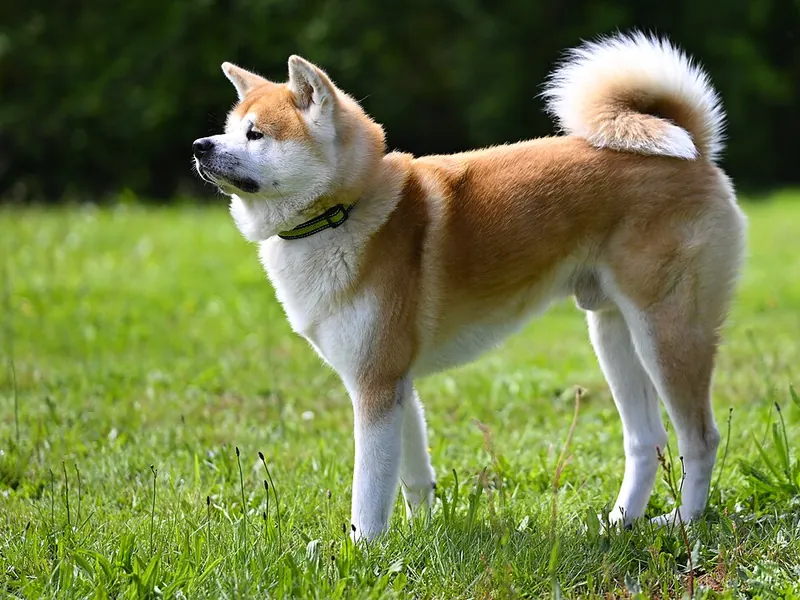
The Akita Inu is a large, well-balanced spitz-type dog standing about 23 to 28 inches and weighing roughly 55 to 75 lb. Males are clearly larger, with heavier bone and a broader head; females are more refined but still sturdy. Compared with the American Akita, the Japanese type is lighter in build, with a fox-like head, smaller triangular eyes and a narrower muzzle.
Small, thick, triangular ears tilt forward, and the large tail is curled over the back. The double coat has a harsh, straight outer coat and a soft, dense undercoat, with longer hair on the withers and tail.
Under the FCI and Kennel Club standards, accepted colors are red fawn, sesame (red fawn with black-tipped hairs), brindle and white. All colors except white should show urajiro: whitish markings on the sides of the muzzle, cheeks, underside of the jaw, neck, chest, body and tail and on the inside of the legs. Black masks and pinto patterns, which appear in the American Akita, are not accepted in the Japanese type.
Temperament and Personality
Akita Inus are calm, dignified and deeply loyal to their family, often bonding most closely with one person. They are aloof with strangers and naturally protective of home and family.
They are often intolerant of other dogs, especially of the same sex, and have a strong prey drive. Small pets are at risk. They usually do best with adults or older children, and supervision with visiting children is wise.
Indoors, Akita Inus are usually quiet and clean, and many groom themselves like cats. They rarely bark without a reason, so a bark from an Akita often deserves attention. Some can be possessive about food and resources, which early handling and trading games help prevent.
Is the Akita Inu Good for First-Time Owners?
Generally no. The Akita Inu is better suited to owners with experience of independent, strong-willed breeds. It is not difficult in daily life once mature, but it needs confident, calm handling and careful management.
First-time owners often underestimate three things: the breed's intolerance of other dogs, its strong prey drive and its tendency to make its own decisions rather than follow cues. Socialization must be thorough and continue through adolescence. If you are new to dogs but set on the breed, work with a trainer from the start, choose a breeder known for stable temperaments and consider an adult dog whose personality is already clear.
Are Akita Inus Aggressive?
Akita Inus are not typically aggressive toward their own families, but they are naturally reserved, protective and often intolerant of other dogs. Those traits come from their history as guarding and hunting dogs, and they need to be understood and managed.
With strangers, a well-socialized Akita is usually aloof rather than reactive. With other dogs, especially of the same sex, conflicts can occur, so leash walks and careful introductions are the norm. Some Akitas guard food or toys, which early trading games help prevent. Responsible ownership means secure fencing, leash control in public and checking local rules or insurance terms, as some landlords and insurers restrict Akitas.
Can an Akita Inu Live with Cats?
Sometimes, but it is not a safe assumption. Akita Inus have a strong prey drive, and many will chase or harm cats, especially unfamiliar ones outdoors.
The best chances come when an Akita puppy is raised with a confident adult cat and the household manages the relationship for life: separate feeding, escape routes and high perches for the cat and supervision until trust is clear. Bringing an adult Akita into a home with cats, or a new cat into an Akita's home, is riskier. A breeder or rescue that knows the individual dog's history with cats is your best guide.
Exercise and Training
Plan for an hour or more of exercise daily, including long walks and jogging once grown. Akitas enjoy cold weather and snow. Keep them leashed or in secure enclosures because of their prey drive.
Training requires patience and respect. Akita Inus are intelligent but independent and do not obey simply to please. Short, calm, reward-based sessions work best. Socialize puppies extensively with people, places and calm dogs.
Grooming and Shedding
The dense double coat has a straight, harsh outer coat and thick undercoat. Akitas are generally clean and have little odor, but they shed heavily, especially when they blow their coat twice a year and the undercoat comes out in clumps. Brush weekly, and daily with an undercoat rake during sheds.
Feeding and Nutrition
Akita Inus are often moderate eaters for their size, and many self-regulate better than food-obsessed breeds. Feed a complete diet in two measured meals and keep the dog lean, with a visible waist and easily felt ribs.
Puppies should eat a diet formulated for large-breed growth. Slow, steady growth supports hip development, and keeping puppies slim is one of the simplest ways to reduce joint stress.
The breed is deep-chested and at risk of bloat. Split food into at least two meals, avoid vigorous exercise around mealtimes and use a slow feeder if your dog gulps.
Akitas can be possessive about food. Feed them in a quiet spot away from other pets and children, and practice trading games so the dog is comfortable with people near its bowl. Some Akitas are sensitive to diet changes, so switch gradually over a week or more. Hypothyroidism, seen in the breed, can cause weight gain; if your Akita gains weight without eating more, ask your vet about thyroid testing.
| Adult weight | Less active | Typical adult | Very active |
|---|---|---|---|
| 55 lb | 1,090 kcal | 1,250 kcal | 1,560 kcal |
| 75 lb | 1,380 kcal | 1,580 kcal | 1,970 kcal |
Estimates use the resting energy formula veterinarians work with (70 × body weight in kg0.75) and standard activity factors. Use the feeding guide on your food as a starting point and adjust to body condition. Puppies, seniors, pregnant animals and pets that need to lose weight have different needs, so ask your vet.
Health and Lifespan
Akita Inus typically live 10 to 12 years. Health concerns include:
- Autoimmune conditions, including sebaceous adenitis, a VKH-like syndrome affecting eyes and skin, and hypothyroidism
- Hip dysplasia
- Bloat (gastric dilatation-volvulus)
- Eye conditions such as progressive retinal atrophy and entropion
Ask breeders for hip scores and eye and thyroid tests on the parents.
Akita Inu Price and Cost of Ownership
Typical breeder price in the US$2,500 to $5,000
Japanese-type Akita Inu puppies are uncommon in the US, where most Akitas are the American type. Expect roughly $2,500 to $5,000 from a reputable breeder, and more for imported dogs or puppies from prominent Japanese lines. Prices vary by breeder, region and lines, and waiting lists are common. Ask for hip scores and eye and thyroid tests on both parents.
Akitas of both types appear in breed rescues. Adults with known temperament can be a good choice for experienced owners.
Ongoing cost drivers include secure, high fencing, a sturdy crate and possibly professional training support. Grooming is mostly do-it-yourself, but many owners pay for de-shedding baths during coat blows. Pet insurance is worth considering because autoimmune conditions such as sebaceous adenitis and VKH-like syndrome can require long-term treatment. Some homeowner and renter insurance policies charge more or exclude Akitas, so check before you buy.
Is the Akita Inu Right for You?
An Akita Inu suits experienced owners who value loyalty and a calm presence, have a secure yard and are happy to keep it as the only dog or with a carefully matched companion. It is not suited to first-time owners, homes with small animals, or people who want an outgoing dog that loves everyone.
Plan to keep an Akita Inu on leash in public and to choose walking routes that avoid crowded dog parks. Choose a breeder who places emphasis on stable temperament and early socialization, and ask to meet the parents.
Akita Inu Traits at a Glance
Akita Inu FAQ
What is the difference between an Akita Inu and an American Akita?
The Akita Inu is the Japanese type: lighter, fox-like, in limited colors. The American Akita is larger and heavier with a broader head and more colors. They are separate breeds in most kennel clubs.
How big do Akita Inus get?
They stand about 23 to 28 inches tall and weigh roughly 55 to 75 lb.
Are Akita Inus good with children?
They can bond with children in their own family but usually do best with older, respectful kids. Supervise all interactions, especially with visiting children.
Are Akita Inus good with other dogs?
Many are not, particularly with same-sex dogs. Careful socialization and management are needed.
Do Akita Inus shed?
Yes, heavily, especially during the twice-yearly coat blow.
How long do Akita Inus live?
Typically 10 to 12 years.