DalmatianSpotted endurance runner with a watchful streak
The Dalmatian is much more than its spots. Bred to trot for miles beside horse-drawn carriages, it is an endurance athlete with a protective streak. It thrives with active owners who run, cycle or hike, and who do not mind white hairs on everything.
Why people love the Dalmatian
- Excellent running, cycling and hiking partner once grown
- Loyal, playful and devoted to its family
- Alert watchdog with a natural guarding streak
- Short coat that needs no trimming
- Iconic spotted look with a long history alongside horses
Things to consider
- Sheds constantly, and the stiff hairs weave into fabric
- Needs one to two hours of vigorous exercise daily
- Urate stone risk requires attention to water and diet
- Congenital deafness occurs in a significant share of dogs
- Can be too boisterous for toddlers
Is this breed right for you?
10 questions · live resultHistory and Origin
The breed's name points to Dalmatia, the coastal region of present-day Croatia, which the FCI recognizes as its homeland, though spotted dogs appear in records across Europe. The Dalmatian made its name in England in the 18th and 19th centuries as a carriage dog, running alongside coaches to clear the way and guarding horses and vehicles at rest.
In the United States, Dalmatians ran with horse-drawn fire engines, which is why they remain the mascot of many firehouses. The 1956 novel and later Disney films brought huge popularity, followed by many impulse purchases and rescue intakes.
Spots, Size and Coat
The Dalmatian is a large, athletic, well-muscled dog built for endurance, with a deep chest and an easy, efficient trot. Adults stand 21 to 24 inches tall and weigh about 53 to 71 lb. Males are generally taller and heavier than females, with a more substantial head and frame.
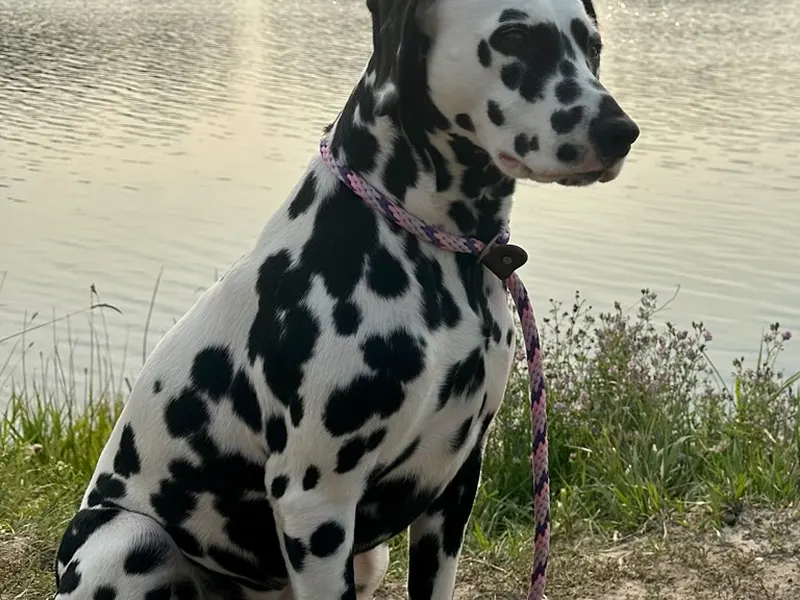
The coat is short, dense, fine and glossy. The ground color is pure white, with spots that should be round, well defined and distributed over the body. Two spot colors are standard:
- Black, with black nose and eye rims
- Liver (brown), with brown nose and eye rims
Other colors, such as lemon, orange, blue, brindle or tricolor, appear occasionally but are disqualified in the show ring. A patch, meaning a solid, sharply defined area of color present at birth, is also a disqualification in the AKC standard, though it does not affect a pet's health.
Puppies are born white, and spots begin appearing within the first couple of weeks, continuing to fill in for months. Eyes are brown or blue in black-spotted dogs and amber or light brown in liver dogs.
Temperament and Personality
Dalmatians are energetic, loyal and playful with their family, and often reserved with strangers. Their guarding history makes them good watchdogs. They are sensitive dogs that can become stubborn or anxious with harsh handling.
With children they are affectionate but can be too boisterous for toddlers. They generally get along with other dogs when socialized, and many enjoy the company of horses.
Dalmatians tend to remember both good and bad experiences for a long time, so early, positive socialization pays off. Many form strong bonds with one or two people and like to stay close to them around the house.
Is the Dalmatian Good for First-Time Owners?
It can be, but only for active, well-prepared beginners. The breed's popularity after films led many first-time owners to buy Dalmatians without understanding their energy, and many ended up in rescue.
A first-time owner should be ready for:
- Daily vigorous exercise, ideally running or cycling once the dog is mature
- Constant shedding despite the short coat
- Patient, positive training, as Dalmatians remember harsh treatment
- Managing urinary health and, possibly, a deaf dog
If that sounds like your lifestyle, the Dalmatian can be a loyal, rewarding first dog.
Are Dalmatians Easy to Train?
They are intelligent and learn quickly, but they are not always easy. Dalmatians can be independent and stubborn, especially if training is repetitive or heavy-handed.
What works best:
- Short, varied sessions with food or play rewards
- Early impulse control, such as waiting at doors and calm greetings
- Consistent rules from every family member
Deaf Dalmatians train well with hand signals and a vibration collar used as a cue, not a correction. Many owners find the breed shines in agility, rally and road trials once it understands the game.
Are Dalmatians Aggressive?
Dalmatians are not typically aggressive, but they are protective and often reserved with strangers, a trait that comes from guarding horses and carriages. Like any breed, individual temperament depends heavily on genetics, socialization and handling.
Behavior problems in Dalmatians are often linked to too little exercise, harsh training or, in deaf dogs, being startled awake. Teaching a deaf Dalmatian to accept gentle touch when sleeping and waking it calmly helps prevent startle reactions.
Choose a breeder who values stable temperament, socialize the puppy widely and keep training positive. A well-raised Dalmatian is usually a friendly, loyal family dog.
Exercise and Training
This breed needs at least an hour or two of vigorous exercise daily. Adult Dalmatians make excellent running, cycling and hiking partners once fully grown. Without enough exercise they become restless and destructive.
They are intelligent and learn quickly with positive reinforcement and variety. Practice impulse control and recall early. Sports like agility, canicross and road trials, which test a dog's ability to trot alongside a rider, suit them well.
Grooming and Shedding
The short, dense coat looks low maintenance, but Dalmatians shed constantly throughout the year. Brushing several times a week with a rubber mitt or bristle brush reduces the hair. Baths are rarely needed since the coat sheds dirt fairly well.
The short hairs are stiff and tend to weave into fabric, upholstery and car seats, so washable covers and a good lint roller are worth having. Nails grow fast in active dogs that run mainly on grass and need regular trimming.
Feeding and Nutrition
Nutrition matters more for Dalmatians than for most breeds because of hyperuricosuria, the inherited trait that raises uric acid in the urine. This can lead to urate bladder stones, which are especially serious in males because they can block the urethra.
Your vet can help you plan a diet that supports urinary health. Common guidance includes:
- Plenty of fresh water at all times, and encouraging drinking, for example by adding water to meals
- Moderate amounts of purine-rich ingredients such as organ meats, game and some fish
- Frequent opportunities to urinate, so urine does not sit in the bladder
- Regular urine checks at vet visits
Low uric acid (LUA) Dalmatians carry a normal gene version and have far lower stone risk, so ask whether your dog is LUA.
Beyond that, feed two measured meals a day and keep the dog lean, adjusting for activity. Active adults burn a lot, but quiet seniors gain weight easily. Skin allergies in some Dalmatians can be linked to food; work with your vet if itching persists.
| Adult weight | Less active | Typical adult | Very active |
|---|---|---|---|
| 53 lb | 1,060 kcal | 1,220 kcal | 1,520 kcal |
| 71 lb | 1,320 kcal | 1,510 kcal | 1,890 kcal |
Estimates use the resting energy formula veterinarians work with (70 × body weight in kg0.75) and standard activity factors. Use the feeding guide on your food as a starting point and adjust to body condition. Puppies, seniors, pregnant animals and pets that need to lose weight have different needs, so ask your vet.
Health and Lifespan
Dalmatians typically live 11 to 13 years. Two breed-specific issues stand out:
- Hyperuricosuria: nearly all Dalmatians carry a genetic trait that raises uric acid in the urine and can cause urate bladder stones. Plenty of fresh water and a diet planned with your vet help. Low uric acid (LUA) Dalmatians, from a backcross program with a Pointer, are now available from some breeders.
- Congenital deafness, linked to the white coat. A significant share of Dalmatians are deaf in one or both ears, and BAER hearing tests identify affected puppies.
Skin allergies and epilepsy also occur. Choose breeders who BAER test litters and can discuss urinary health.
Dalmatian Price and Cost of Ownership
Typical breeder price in the US$1,000 to $2,500
A Dalmatian puppy from a reputable US breeder typically costs about $1,000 to $2,500. Prices vary by breeder, region and lines, and LUA Dalmatians may cost more due to limited availability. Every puppy should come with BAER hearing test results.
Dalmatians regularly appear in breed rescues, including deaf dogs that make wonderful companions for prepared owners, so adoption is worth considering.
Breed-specific ongoing costs include:
- Regular urine tests and possible treatment of urate stones
- Insurance covering urinary disease, deafness-related care and allergies
- Special diets if your vet recommends them
- Lint rollers, washable covers and a good vacuum
- Training support for deaf dogs
Is the Dalmatian Right for You?
Dalmatians suit active people with time for daily runs or long hikes and a home with a yard. They are not ideal for apartments, very busy households or owners looking for a low-shedding dog. Deaf Dalmatians can live full lives but need owners willing to learn hand signals and careful management.
Dalmatian Traits at a Glance
Dalmatian FAQ
Do Dalmatians shed a lot?
Yes. Dalmatians shed heavily throughout the year despite their short coat.
How big do Dalmatians get?
Adults typically stand 21 to 24 inches tall and weigh about 53 to 71 lb.
Are Dalmatians good family dogs?
They are loyal and affectionate but energetic and can be too much for small children. They fit best with active families.
Why are many Dalmatians deaf?
Deafness is linked to the genes responsible for their white coat. Responsible breeders BAER test every puppy.
How much exercise does a Dalmatian need?
At least one to two hours of vigorous activity per day once grown.
How long do Dalmatians live?
Usually 11 to 13 years.