Lapponian HerderFinland's tireless reindeer herder
The Lapponian Herder is a medium-sized, spitz-type herding dog from Finnish Lapland, bred to work reindeer in harsh Arctic conditions. Energetic, vocal and eager to work, it suits active owners who want a hardy partner for outdoor life and dog sports.
Why people love the Lapponian Herder
- Friendly with family, children and other dogs
- Thrives in cold weather and snow
- Responsive to positive training
- Weatherproof coat that sheds dirt well
- Tireless partner for hiking and dog sports
Things to consider
- Vocal; barking is part of its herding style
- Needs one to two hours of activity daily
- Struggles in hot climates
- Heavy seasonal shedding
- Very rare in the US
Is this breed right for you?
10 questions · live resultHistory and Origin
The Sámi people of northern Scandinavia used spitz-type dogs to herd and guard reindeer for centuries. When snowmobiles began to replace dogs in the mid 20th century, Finnish breeders worked to preserve the herding type, separating it from the Finnish Lapphund.
The Lapponian Herder was recognized in Finland and later by the FCI in Group 5. It uses its voice and movement to work reindeer, rather than the crouching style of Border Collies. The AKC records it in its Foundation Stock Service.
Herding reindeer differs from herding sheep: reindeer are semi-wild and scatter widely, so the dogs must work at a distance, often using their voices to move the herd. The Lapponian Herder's stamina, agility and readiness to bark all reflect this job.
Size, Coat and Colors
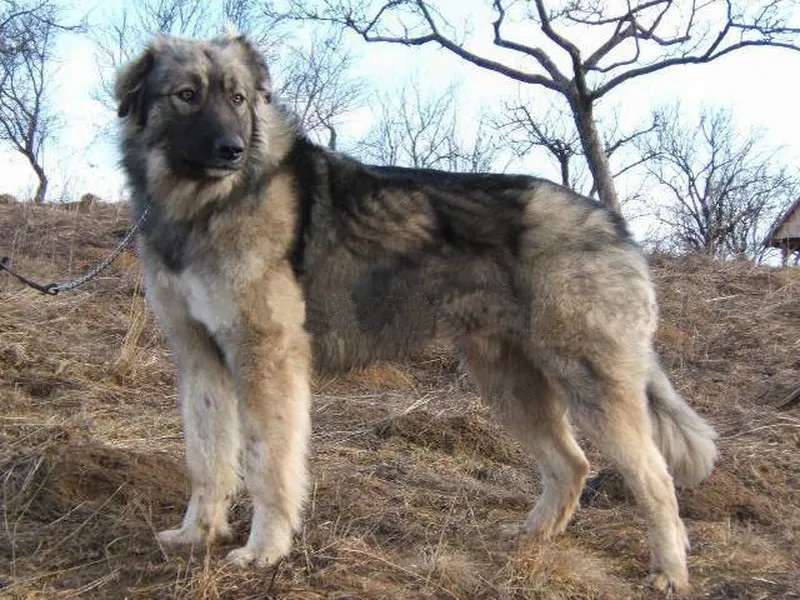
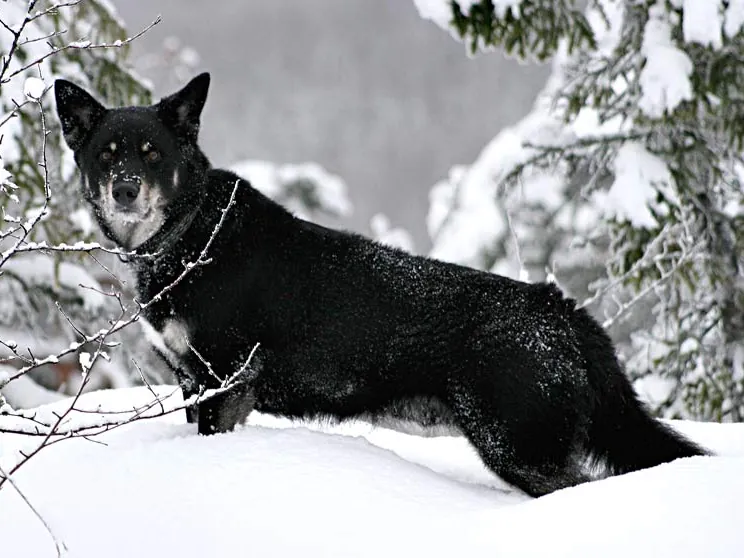
The Lapponian Herder is a medium-sized Finnish reindeer herding dog standing about 17 to 21 inches at the shoulder. It is slightly longer than tall, with a strong but lean, athletic body built for speed and quick turns rather than bulk. The head is fairly broad with a moderately long muzzle, and the ears are erect or semi-erect. The tail is medium-long and usually hangs low, curving upward when the dog is moving or alert.
The double coat combines a coarse, straight outer layer of medium length with a dense, soft undercoat. It is longer around the neck, on the back of the thighs and on the tail, and protects the dog against Arctic cold, snow and wind.
The main color is black or dark gray, often with lighter shading in gray or brown on the head, chest, legs and under the tail. Small white markings on the chest and feet are allowed. Males are usually taller and more powerful than females, with a broader head and more pronounced coat around the neck.
Temperament and Personality
Lapponian Herders are energetic, friendly and keen to work. They are usually calm with their family, and many are good with children and other dogs when well socialized.
They are vocal, as barking is part of their herding style, and they make alert watchdogs. They are independent thinkers and can be reserved with strangers.
They are typically friendly with other dogs, a trait from herding in groups. Without enough activity, they may become restless and vocal.
Are Lapponian Herders Good for First-Time Owners?
Lapponian Herders can suit active first-time owners who are ready for a vocal, energetic herding dog, but they are best for people with some dog experience.
The breed is friendly, generally calm with family and responsive to positive training, which helps beginners. The challenges are its barking, its need for one to two hours of daily exercise and mental work, and its independent streak. A first-time owner who enjoys hiking, dog sports or outdoor work, lives in a cooler climate and teaches a quiet cue early can do well. Joining a training club and staying in touch with the breeder are good ways to get support.
Can Lapponian Herders Live in Hot Climates?
They can, but warm climates are a real challenge for this Arctic breed, and owners need to plan carefully.
The thick double coat is built for subzero temperatures. In hot, humid regions, exercise must move to early mornings and evenings, and the dog needs shade, plenty of water and a cool, air-conditioned home in summer. Never shave the coat, since it also insulates against heat and sun. Regular removal of loose undercoat during shedding helps air circulate. Watch closely for heavy panting, lethargy or reluctance to move, which can signal overheating. Most Lapponian Herders are happiest in cooler regions.
Are Lapponian Herders Good with Cats?
Many Lapponian Herders live well with cats, especially when raised with them, but their herding instinct needs guidance.
The breed was developed to move reindeer by barking and circling, so a running cat may be chased or herded rather than hunted. Introduce a puppy to a calm, dog-savvy cat with high perches and escape routes, and reward the dog for calm behavior. Teaching a solid leave-it and a settle cue helps. Adult dogs without cat experience need slower, supervised introductions. Their generally friendly nature makes peaceful coexistence realistic in most homes.
Exercise and Training
This is an active breed that needs at least an hour or two of daily exercise and mental work. Herding, agility, obedience, rally and long hikes are good outlets.
They are intelligent and responsive to positive training but can be independent. Keep sessions varied and engaging. Teach a quiet cue early to manage barking.
The breed thrives in cold weather and loves snow. In warm climates, exercise during cooler hours and provide shade and water.
Grooming and Shedding
The double coat has a dense, weatherproof outer layer and a soft undercoat. Brush weekly, and more during seasonal shedding.
The coat sheds dirt fairly well and rarely needs bathing. Check paws and nails regularly.
The coat is usually black or dark gray, often with lighter markings on the head, chest and legs. It is weatherproof and protects against Arctic cold.
Feeding and Nutrition
Lapponian Herders are active dogs whose food needs change with workload and season. A dog herding or hiking for hours in winter needs considerably more energy than the same dog on quiet summer days. Feed by body condition rather than the bag: the ribs should be easy to feel under the coat and the waist visible from above. Check by hand, since the thick coat hides weight gain.
- Feed puppies a growth diet suited to their expected adult size, divided into three or four meals.
- Adults usually do well on two meals a day. Avoid hard exercise right before and after eating.
- Use part of the daily ration as training rewards, especially when working on quiet cues and recall.
Reduce portions in warm months if activity drops, and increase them during cold, active periods. Fresh water should always be available, and in winter make sure outdoor water does not freeze. Keeping the dog lean supports its hips and elbows, which are worth screening in herding breeds. No breed-specific dietary problems are documented, so work with your vet if digestive or skin issues appear.
| Adult weight | Less active | Typical adult | Very active |
|---|---|---|---|
| 55 lb | 1,090 kcal | 1,250 kcal | 1,560 kcal |
| 71 lb | 1,320 kcal | 1,510 kcal | 1,890 kcal |
Estimates use the resting energy formula veterinarians work with (70 × body weight in kg0.75) and standard activity factors. Use the feeding guide on your food as a starting point and adjust to body condition. Puppies, seniors, pregnant animals and pets that need to lose weight have different needs, so ask your vet.
Health and Lifespan
No breed-specific diseases are documented in the sources we checked. As with similar herding breeds, screening for hip and elbow dysplasia and eye conditions is advisable. Ask breeders for health results on both parents.
Typical lifespan is about 10 to 14 years.
Lapponian Herder Price and Cost of Ownership
The Lapponian Herder is very rare in the US, and there is no well-established typical puppy price. Prices vary by breeder, region and lines, and many dogs are imported from Finland or other Nordic countries, which adds travel costs, health certificates and a waiting period. Contact breed clubs early.
Adoption is rarely possible for this breed in the US, though Nordic breed clubs sometimes help rehome adult dogs.
Breed-specific ongoing costs are moderate. The double coat does not need professional grooming, but a good undercoat rake and a high-velocity dryer make the seasonal shed easier. In warm regions, budget for air conditioning. Dog sports such as herding, agility and rally add class and entry fees. Health screening of hips, elbows and eyes is worth asking about, and insurance or an emergency fund is advisable for an active dog.
Is the Lapponian Herder Right for You?
This breed is ideal for active owners in cooler climates who enjoy dog sports or have herding work. It makes a friendly, loyal companion.
It is not suited to apartment living, owners who are away all day or those bothered by barking.
Expect a vocal, energetic dog that needs daily exercise and training. If you enjoy hiking, dog sports or outdoor work, this breed can be a loyal, tireless companion.
Lapponian Herder Traits at a Glance
Lapponian Herder FAQ
How big do Lapponian Herders get?
They stand about 17 to 21 inches tall and weigh roughly 55 to 71 lb in our data.
Are Lapponian Herders good family dogs?
Yes, they can be, if they get enough exercise and training.
Do Lapponian Herders bark a lot?
Yes. Barking is part of their herding style.
Do Lapponian Herders shed?
Yes, moderately, with heavier seasonal shedding.
How long do Lapponian Herders live?
Typically about 10 to 14 years.
How much exercise does a Lapponian Herder need?
At least an hour or two a day, combining physical activity with mental challenges such as herding or agility.