Bouvier des FlandresBelgium's bearded farm and cattle dog
The Bouvier des Flandres is a big, rugged, bearded dog built for hard farm work in the cattle country of Flanders. Steady, loyal and naturally watchful, it suits active owners who want a capable working partner and do not mind regular coat care.
Why people love the Bouvier des Flandres
- Calm, steady temperament indoors once well exercised
- Loyal family dog and effective watchdog with a deep bark
- Versatile worker for herding, carting, obedience and tracking
- Weather-resistant coat handles cold and wet conditions
- Cooperative and trainable with consistent, fair handling
Things to consider
- Coat needs weekly brushing and trimming every few months
- Wet, food-catching beard leaves drips around the house
- Large size and herding instincts need supervision with small children
- Bloat and several inherited conditions require health-screened parents
- Not suited to long days alone or small apartments
Is this breed right for you?
10 questions · live resultHistory and Origin
The breed comes from Flanders, the low, wet farmland that straddles Belgium and northern France. Farmers and cattle dealers needed one dog that could do everything: drive cattle to market, guard the farmyard and even pull carts. The name simply means cow herder of Flanders.
World War I devastated the region and nearly wiped out the breed. Bouviers served as messenger and ambulance dogs, and only a small number survived. A dog named Nic de Sottegem is regarded as a key foundation sire of the modern breed. A joint Franco-Belgian standard followed in the 1930s, and the AKC recognized the Bouvier in 1929. Today it works in herding trials, carting, obedience and as a police and service dog.
Size, Coat and Colors
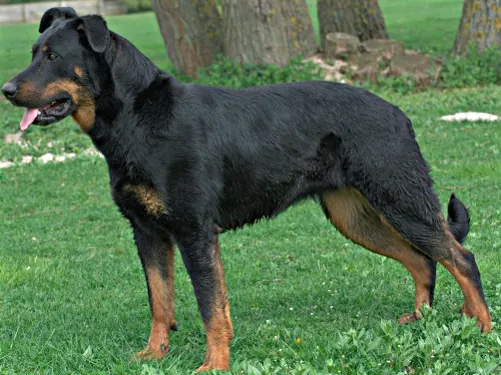
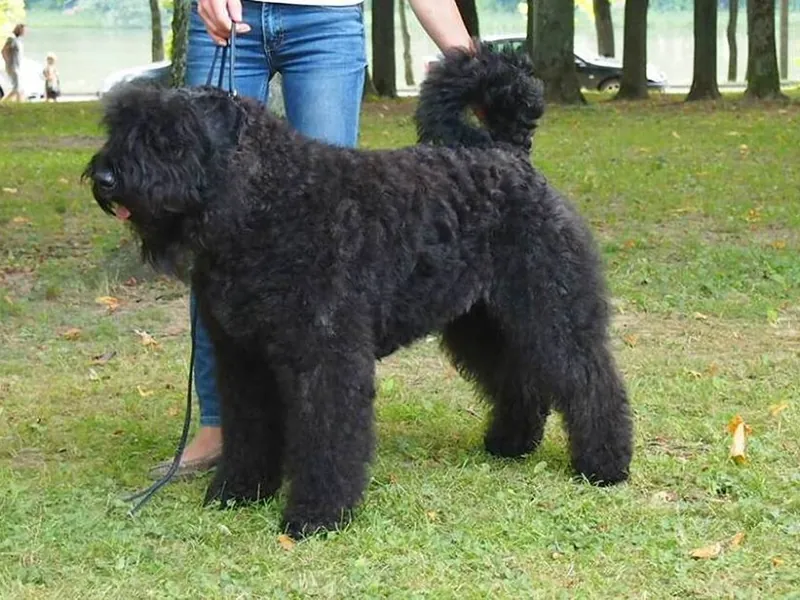
The Bouvier des Flandres is a big, compact, short-coupled dog with a rugged look: a massive head made larger by the beard, mustache and eyebrows, a strong neck and a deep, broad chest. It should appear powerful without heaviness and capable of hard farm work.
Adults stand about 23 to 27 inches and weigh roughly 60 to 88 lb. The AKC standard calls for males of about 24.5 to 27.5 inches and females of about 23.5 to 26.5 inches. Males are larger with a more imposing head, while females are a little lighter but equally sturdy.
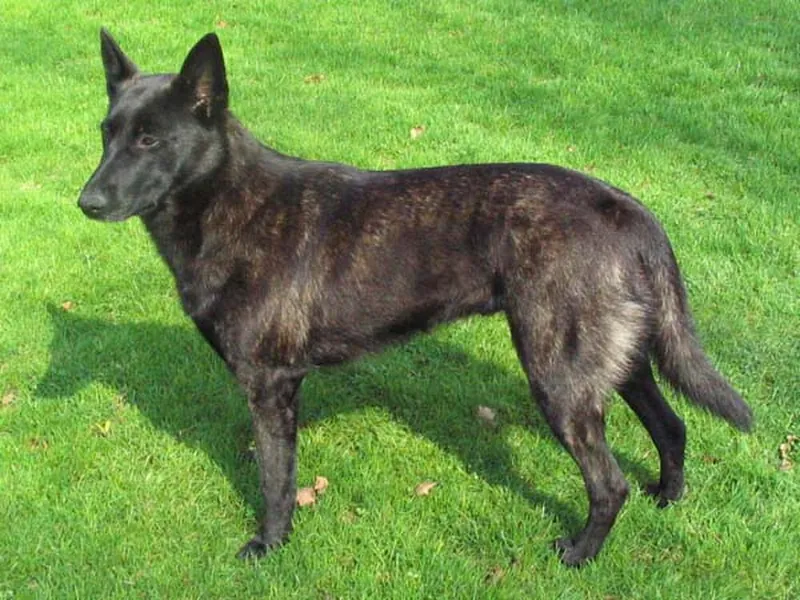
The double coat combines a harsh, dry, slightly tousled outer coat with a fine, dense undercoat. Colors range from fawn to black, including:
- salt and pepper
- gray
- brindle
- black
A small white star on the chest is allowed. Chocolate brown, white and spotted patterns are faults. In the US, ears are often cropped and tails docked, but natural ears and tails are increasingly seen and are standard in many European countries.
Temperament and Personality
A good Bouvier is calm, self-assured and deeply attached to its family. It is not a frantic dog: indoors it tends to settle near its people and keep an eye on the household. With strangers it is reserved and observant rather than overly friendly, and its deep bark makes it an effective watchdog.
Bouviers are generally cooperative and like having a job. They are usually patient with children they are raised with, but their size and herding instincts (some will bump or herd running kids) mean supervision matters. Most get along with other pets if introduced early, though some can be bossy with dogs of the same sex.
Are Bouviers Good for First-Time Owners?
Bouviers can work for committed first-time owners, but they are not the easiest choice. Their temperament is usually steady and cooperative, which helps, yet their size, strength and natural watchfulness need consistent training from day one.
Beginners should plan for a puppy class, ongoing socialization and an activity such as obedience or herding. Coat care is the other surprise: weekly brushing, a trim every few months and a wet beard after every drink. A first-time owner who enjoys training, has a house with a yard and is home much of the day can do well, especially with a mentor from the breed club.
Are Bouviers Easy to Train?
Yes, for the most part. Bouviers are intelligent and like having a job, and they generally learn quickly with consistent, fair training. Many work successfully as police, service and herding dogs.
They are also confident and self-assured, so they respond poorly to harsh corrections and may test rules that are inconsistently applied. Start early with socialization so their watchfulness stays balanced, and build impulse control and leash manners while the puppy is still small. Because Bouviers mature slowly, expect a long adolescence. Structured activities such as obedience, rally, tracking or carting give them the purpose they enjoy.
Can Bouviers Live in Apartments?
It is possible but not ideal. A calm adult Bouvier can be surprisingly quiet indoors, yet it is a large working dog that needs at least an hour of activity a day and benefits from a yard.
Apartment Bouviers need long daily walks, training games and a committed owner who can handle stairs or elevators with a 60 to 88 lb dog. The coat and beard bring in mud and water, which is more noticeable in a small space. Their deep bark may also bother neighbors. A house with a secure yard in a suburban or rural area suits the breed much better.
Exercise and Training
Plan on at least an hour of activity a day: long walks, hiking, jogging once the dog is fully grown, and structured work such as herding, tracking, obedience or carting. A Bouvier with nothing to do may become restless or invent its own jobs.
The breed learns readily and responds best to consistent, fair training with clear rules. Start socialization early so the natural watchfulness does not turn into suspicion. Because Bouviers mature slowly, avoid heavy jumping and forced running until growth plates close, typically around 18 months.
Grooming and Shedding
The rough, tousled double coat is weather resistant but needs real care. Brush thoroughly at least weekly to prevent mats, especially behind the ears, in the armpits and on the legs. The beard collects water and food, so expect a damp trail from the water bowl and wipe the face daily.
The coat needs trimming every few months to keep its shape, either by a groomer or by an owner who learns the technique. Shedding is moderate. Check ears and trim nails regularly, and keep hair between the pads short to avoid packed mud and ice.
Feeding and Nutrition
Bouviers are large, slow-maturing dogs, so the main feeding goals are steady growth in puppyhood and lean body condition in adulthood.
- Feed a puppy food designed for large breeds and keep the puppy lean. Avoid extra calcium unless your veterinarian advises it, and do not push for fast growth.
- Puppies do well on three or four meals a day, and adults on two meals.
- Bloat is a risk in this deep-chested breed. Avoid one large meal, slow down fast eaters and keep vigorous exercise away from mealtimes.
- Check weight with your hands, since the thick coat can hide both extra pounds and weight loss.
The beard soaks up water and food, so a raised or narrow bowl and a quick face wipe after meals keep the dog cleaner and reduce skin irritation around the mouth. Adjust portions for working dogs during heavy training or herding seasons, and reduce them for older dogs that slow down. Use small rewards for training, which this cooperative breed usually enjoys.
| Adult weight | Less active | Typical adult | Very active |
|---|---|---|---|
| 60 lb | 1,170 kcal | 1,330 kcal | 1,670 kcal |
| 88 lb | 1,560 kcal | 1,780 kcal | 2,220 kcal |
Estimates use the resting energy formula veterinarians work with (70 × body weight in kg0.75) and standard activity factors. Use the feeding guide on your food as a starting point and adjust to body condition. Puppies, seniors, pregnant animals and pets that need to lose weight have different needs, so ask your vet.
Health and Lifespan
Bouviers typically live 10 to 12 years. Responsible breeders screen for hip and elbow dysplasia, eye conditions such as cataracts and glaucoma, the heart condition subaortic stenosis and laryngeal paralysis. A breed-associated muscle disease (myopathy) has also been described.
As a large, deep-chested dog, the Bouvier can develop bloat (gastric dilatation-volvulus), an emergency in which the stomach twists. Feeding smaller meals and avoiding hard exercise right after eating are common precautions. Ask breeders for health test results on both parents.
Bouvier des Flandres Price and Cost of Ownership
Typical breeder price in the US$1,500 to $3,000
A Bouvier des Flandres puppy from a reputable US breeder typically costs about $1,500 to $3,000. Prices vary by breeder, region and lines, and breeders are not numerous, so waiting lists are common. Breed club rescue programs occasionally place adults.
The biggest breed-specific cost driver is grooming. Many owners book a professional trim every six to eight weeks, and a large, coated dog takes time. Learning to groom at home requires clippers, scissors and good brushes.
Other costs to plan for:
- Health screening and insurance for hips, elbows, eyes, heart and bloat
- Large crates, beds and food volumes
- Training classes and working activities
- Ear cropping and tail docking, if chosen, which add surgical costs
Is the Bouvier des Flandres Right for You?
A Bouvier suits you if you have space, ideally a house with a secure yard, and you enjoy daily outdoor activity and training. It is a strong choice for experienced owners who want a loyal, protective dog with a stable temperament.
- Good match: active homes, people interested in dog sports or working activities, rural or suburban settings.
- Think twice: small apartments, long daily absences, owners who dislike grooming or a wet beard.
Bouvier des Flandres Traits at a Glance
Bouvier des Flandres FAQ
Are Bouviers des Flandres good family dogs?
Yes, for active families. They bond closely with their people and are usually patient with children they grow up with, but their size means young kids should be supervised.
How big do Bouviers get?
Adults stand about 23 to 27 inches at the shoulder and weigh roughly 60 to 88 lb, with males larger than females.
Do Bouviers shed?
They shed moderately. The bigger job is brushing at least weekly and trimming the coat every few months to prevent mats.
Are Bouviers hypoallergenic?
No dog is truly hypoallergenic, and the Bouvier is not considered allergy friendly. It still sheds and carries dander in its heavy coat.
How long do Bouviers live?
Most live around 10 to 12 years.
Can a Bouvier be left alone during the day?
Not for long stretches. Bouviers want to be with their family and can become bored or destructive if left alone all day.