Bergamasco SheepdogThe thinking herder with a flocked coat
The Bergamasco Sheepdog is a sturdy Italian herding dog famous for its coat of flat, felted mats called flocks. Calm, intelligent and devoted, it thinks for itself and suits owners who want a thoughtful working partner and are willing to learn its unusual coat care.
Why people love the Bergamasco Sheepdog
- Calm, thoughtful and patient
- Barks little and sheds very little
- Robust breed with no well-known hereditary diseases
- Good with children it knows
- Unique flocked coat with minimal adult maintenance
Things to consider
- Flock formation takes time and effort in early years
- Coat dries slowly after getting wet
- Independent; may question commands
- Dislikes being left alone for long
- Very rare; few breeders
Is this breed right for you?
10 questions · live resultHistory and Origin
The Bergamasco developed in the Italian Alps around Bergamo, where shepherds moved large flocks between mountain pastures and lowland plains. The dogs worked independently, often far from the shepherd, making decisions about how to move and protect the sheep.
After World War II, as sheep farming declined, the breed came close to extinction. Italian breeder Maria Andreoli is credited with preserving it. The AKC recognized the Bergamasco in the Herding Group in 2015.
Some historians link the Bergamasco to ancient herding dogs brought to Europe from the Middle East, but there is no firm documentation. What is clear is that the breed was shaped by centuries of work in the Alpine pasture system.
Size, Flocks and Colors
The Bergamasco Sheepdog is a medium-large herding dog standing 21 to 24 inches and weighing about 57 to 84 lb. Under the coat is a strong, muscular, slightly rectangular body with a large head, a strong muzzle and soft ears that hang down. The tail is thick at the base and tapers toward the tip.
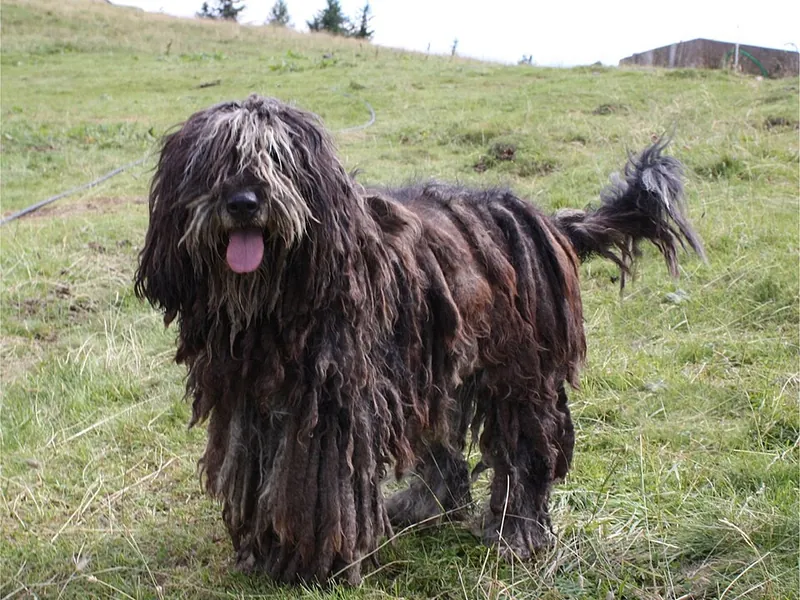
The coat is the breed's signature. It consists of three types of hair: a fine undercoat, a harsh outer coat and longer woolly hair. Over the first years of life, these combine into flat, felt-like mats called flocks, which cover the body and legs. The hair on the head is long and falls over the eyes.
The coat is gray in any shade, from light to dark, including merle patterns, and may be solid black. White markings are allowed if they cover no more than one fifth of the body. Males are usually larger and more massive than females, though the coat hides much of the difference.
Temperament and Personality
Bergamascos are calm, patient and intelligent. They are watchful and protective of their family, wary of strangers but not usually overreactive. They bark little and tend to observe before acting.
They are known for analyzing situations and sometimes questioning commands. They bond closely with their family and are typically good with children they know.
Breeders often describe the Bergamasco as cooperative rather than obedient. It wants to understand the purpose of a task, and once it does, it tends to work with real focus. Many are gentle with other pets they know.
Are Bergamascos Good for First-Time Owners?
Bergamascos can suit first-time owners who are patient and willing to learn coat care, but they are not the simplest beginner's dog.
The breed's calm, thoughtful nature is a plus, and it barks little. The challenges are the coat during flock formation, which requires regular separation of mats by hand, and the breed's independence. Bergamascos want to understand the purpose of a task and do not respond to demanding, repetitive training. A first-time owner who stays in close contact with an experienced breeder and is ready for daily exercise and companionship can do well.
Can Bergamascos Be Left Alone?
Bergamascos can stay alone for a few hours, but they bond closely with their family and do not like long periods of isolation.
Start alone-time training in puppyhood with short absences and build up gradually. Exercise and mental stimulation before leaving help the dog settle. Long workdays alone are not ideal, and a dog walker, daycare or a family member at home for part of the day is helpful. Bergamascos raised with another dog often cope better with alone time.
Can a Bergamasco Live in an Apartment?
A Bergamasco can live in a large apartment if it gets enough exercise, but a house with a yard suits the breed better.
Bergamascos are calm indoors and bark little, which helps in apartment life. However, they are medium-large dogs that need about an hour of daily exercise and mental work. The flocked coat also dries slowly after rain or swimming, and a wet Bergamasco in a small apartment can be a challenge. Easy access to green space and a place to dry the dog are important.
Exercise and Training
Bergamascos need daily exercise, around an hour, plus mental stimulation. Long walks, herding, tracking and problem-solving games suit them.
Train with patience and respect. Explain through consistent, reward-based methods rather than demanding blind obedience. Early socialization is important. They do not like to be left alone for long periods.
Herding instinct tests, tracking and nose work suit the breed well. Long walks in nature with time to explore and sniff are a good daily base.
Grooming and Shedding
The coat is the breed's signature. It is made of three types of hair that gradually form flat mats, or flocks, over the first few years. Puppies have a soft coat; flocks begin forming around a year old.
- During flock formation, separate the mats by hand to keep them from forming one solid pad
- After that, maintenance is minimal; baths are rare
- Do not brush the adult coat
The breed sheds very little. Many owners seek advice from experienced breeders.
Feeding and Nutrition
Bergamascos are generally robust eaters, but their heavy coat makes it hard to see weight changes. Check body condition by feel, pushing your hands through the flocks to feel the ribs and waist. Keep the dog lean to protect its joints, especially since hip screening is part of responsible breeding.
- Feed puppies a growth diet suited to a medium-large breed, divided into three or four meals.
- Adults usually do well on two meals a day. Avoid vigorous exercise right after eating.
- Use small treats or part of the daily ration as training rewards.
The hair on the face can collect food, so wipe the muzzle after meals to prevent odor and skin irritation. In hot weather, offer water frequently and feed in the cooler parts of the day, as the dense coat can make the dog prone to overheating. If you notice skin problems under the flocks, ask your vet whether diet may play a role.
| Adult weight | Less active | Typical adult | Very active |
|---|---|---|---|
| 57 lb | 1,120 kcal | 1,280 kcal | 1,610 kcal |
| 84 lb | 1,500 kcal | 1,720 kcal | 2,150 kcal |
Estimates use the resting energy formula veterinarians work with (70 × body weight in kg0.75) and standard activity factors. Use the feeding guide on your food as a starting point and adjust to body condition. Puppies, seniors, pregnant animals and pets that need to lose weight have different needs, so ask your vet.
Health and Lifespan
Bergamascos are generally robust, with no well-documented breed-typical hereditary diseases, and they typically live 13 to 15 years. The population is small, so responsible breeders manage genetic diversity and screen hips. Ensure the coat dries thoroughly after getting wet to prevent skin problems.
Because the flocks are dense, check the skin regularly for parasites and irritation, and make sure the dog does not overheat in hot weather. A shaded, cool resting place helps in summer.
Bergamasco Sheepdog Price and Cost of Ownership
Bergamascos are very rare in the US, and there is no well-established typical puppy price. Prices vary by breeder, region and lines, and some owners import from Italy or Europe. Expect to contact the breed club and wait for a litter.
Adoption is rarely possible for this breed, though breed clubs sometimes help rehome adult dogs.
Breed-specific ongoing costs are lower than you might expect. The adult coat needs no brushing and rarely needs bathing, so professional grooming is usually unnecessary once flocks are formed. During flock formation, owners may need guidance from experienced breeders. Food costs are moderate for a dog of this size. Health screening for hips in breeding dogs is reflected in the puppy price. Insurance is still worth considering for unexpected injuries.
Is the Bergamasco Right for You?
A Bergamasco suits you if you:
- Want a calm, thoughtful dog that bonds closely
- Are ready to learn flock care during the first years
- Prefer a dog that barks little and sheds little
It is less ideal for owners wanting instant obedience or with little time for daily activity.
Note that the flocked coat can take up to several years to fully form, and the dog's appearance changes considerably during that time.
Bergamasco Sheepdog Traits at a Glance
Bergamasco Sheepdog FAQ
Do Bergamasco Sheepdogs shed?
Very little. The flocked coat traps loose hair.
Are Bergamascos hypoallergenic?
No dog is fully allergen-free, but low shedding may suit some people with mild allergies.
How big do Bergamascos get?
They stand about 21 to 24 inches tall and weigh roughly 57 to 84 lb.
Are Bergamascos good family dogs?
Yes. They are calm, patient and protective of their family, especially children they know.
How long do Bergamascos live?
Typically 13 to 15 years.