Airedale TerrierThe versatile King of Terriers
The Airedale Terrier is the largest of the terriers, a bold and versatile dog from Yorkshire. It is intelligent, playful and protective, but needs lots of exercise, consistent training and regular grooming.
Why people love the Airedale Terrier
- Versatile, athletic dog for hiking, swimming and dog sports
- Low-shedding wiry coat
- Playful and clownish well into adulthood
- Alert watchdog that is protective of family
- Robust terrier with a 10 to 14 year lifespan
Things to consider
- Coat needs hand-stripping or clipping every few months
- Strong prey drive toward cats and small animals
- Can be stubborn and bored by repetitive training
- Digs and explores; fences must be secure
- Rowdy adolescents can knock over small children
Is this breed right for you?
10 questions · live resultHistory and Origin
The Airedale developed in the mid-1800s in the Aire Valley of Yorkshire, England. Working men crossed Otterhounds with old English Black and Tan Terriers to create a dog that could hunt otters and rats along the river.
Airedales later served as messenger and guard dogs in World War I and as police dogs. The AKC recognized the breed in 1888, and the Kennel Club lists it in the Terrier group.
The breed's size and courage made it unusually versatile. During World War I, Airedales carried messages and located wounded soldiers on the front lines, and they were among the first breeds used for police work in Britain and Germany. US President Warren G. Harding kept an Airedale named Laddie Boy at the White House.
Size, Wire Coat and Saddle Colors
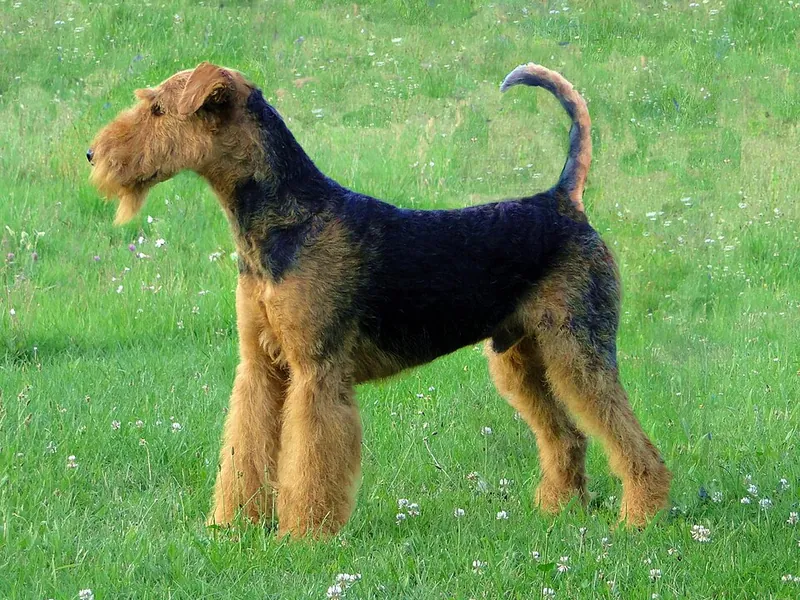
The Airedale is the tallest of the terriers, a square, well-balanced dog with a long, flat head, small V-shaped ears and a tail traditionally carried upright. Adults stand about 22 to 24 inches tall and weigh roughly 51 to 71 lb. Males are at the top of the height range and are more substantial; females are a little smaller and lighter.
The coat is double: a hard, dense, wiry outer coat over a short, softer undercoat. The hair lies straight and close, with slight waves allowed. The breed's characteristic beard and leg furnishings are part of the standard.
Colors: the head and ears are tan, the ears often a darker shade, and the legs and underside are tan as well. The body has a black or dark grizzle saddle. Some red is acceptable in the black, and a small white blaze on the chest is permitted. Airedale puppies are born mostly black, and the tan areas expand as they grow.
A hand-stripped show coat keeps colors crisp and vivid; a clipped pet coat often looks softer and lighter.
Temperament and Personality
Airedales are confident, playful and intelligent. They are protective of their family and wary of strangers, making good watchdogs.
They have a strong prey drive and may chase small animals. They can be independent and stubborn. Without enough exercise, they can be destructive.
Airedales are often clownish and playful well into adulthood, and many enjoy toys and games of tug. They tend to be patient with children they know, but rowdy adolescents can knock over toddlers. Same-sex tension with other dogs is possible, so careful introductions help.
Airedales usually tolerate cats they grow up with, but outdoor cats and small animals are often fair game.
Are Airedale Terriers Good for First-Time Owners?
Airedales can work for committed first-time owners, but they are not the easiest choice. They are smart, energetic and independent, and they test boundaries.
A novice owner will need patience with training, a willingness to make sessions varied and fun and a plan for at least an hour of vigorous exercise every day. The coat requires regular professional grooming or learning to strip it yourself. Joining a puppy class and an active dog sport such as agility, rally or barn hunt gives both owner and dog structure. People who prefer a quiet, biddable dog may find an Airedale overwhelming.
Are Airedales Good With Cats?
Airedales can live with cats they grow up with, but the breed's hunting instinct means outdoor cats and small animals are often seen as prey.
A puppy raised with a calm adult cat usually learns to respect it, especially when introductions are supervised and the cat has high escape routes. Adult Airedales with no cat experience are a bigger risk. Even a dog that is polite indoors may chase the same cat outside. Rabbits, guinea pigs and ferrets should be kept separate. Ask rescues to cat-test an adult dog before adoption.
Do Airedale Terriers Bark a Lot?
Airedales are moderate barkers. They bark to announce visitors and unusual sounds, but they are usually less noisy than many smaller terriers.
Most barking happens for a reason: someone at the door, wildlife in the yard or boredom. An under-exercised Airedale can become vocal and destructive, so daily physical and mental exercise is the best barking control. Teach a quiet cue early and reward the dog for settling after an alert. Some Airedales are also talkers, making grumbling or groaning noises during play.
Exercise and Training
Airedales need at least an hour of vigorous exercise daily, plus mental stimulation. They excel at agility, obedience and tracking.
- Use consistent, reward-based training.
- Socialize early to manage protectiveness.
- Keep on leash in areas with wildlife.
- Provide puzzle toys for mental work.
Swimming, hiking and retrieving games all suit this athletic breed, and many Airedales take to scent work and barn hunt. Training works best when it feels like a game: Airedales get bored with repetition and may simply stop cooperating.
Teach a reliable leave it cue early, since many Airedales will investigate anything they find on walks.
Grooming and Shedding
The wiry coat sheds little but needs brushing weekly and hand-stripping or clipping every few months. The beard needs regular cleaning.
Low shedding makes them a common choice for allergy sufferers, though no dog is fully hypoallergenic.
Show dogs are hand-stripped to keep the hard, crisp texture and the tan and black saddle colors vivid. Clipped pet coats are softer and lighter but easier to maintain. Comb the beard and leg furnishings weekly to prevent mats.
Feeding and Nutrition
Airedales are athletic dogs with a lean, square build, and they should stay that way. A fit Airedale has a visible tuck-up and ribs you can feel under the wiry coat; check by hand, because the coat can disguise extra weight.
Puppies: at 51 to 71 lb as adults, Airedales benefit from a puppy diet that suits medium to large breeds, with steady growth rather than maximum size. Feed three to four meals daily as a young puppy and move to two meals as an adult.
Bloat: the breed appears on lists of dogs with increased risk of gastric dilatation-volvulus. Divide food into at least two meals, avoid hard exercise around mealtimes and discourage gulping.
Skin and allergies: itchy skin is common in Airedales. Food is one possible trigger among several; if your dog scratches, licks its paws or has recurrent ear infections, work with your vet on a structured elimination trial rather than switching foods at random.
Wipe the beard after meals to keep food from lingering. Use small, healthy treats during training and subtract them from the daily ration.
| Adult weight | Less active | Typical adult | Very active |
|---|---|---|---|
| 51 lb | 1,030 kcal | 1,180 kcal | 1,480 kcal |
| 71 lb | 1,320 kcal | 1,510 kcal | 1,890 kcal |
Estimates use the resting energy formula veterinarians work with (70 × body weight in kg0.75) and standard activity factors. Use the feeding guide on your food as a starting point and adjust to body condition. Puppies, seniors, pregnant animals and pets that need to lose weight have different needs, so ask your vet.
Health and Lifespan
Airedales typically live 10 to 14 years. Health issues include hip dysplasia, hypothyroidism, allergies and bloat. Breed clubs recommend heart, eye and kidney screening.
Ask breeders for hip scores and thyroid testing, and keep an eye on skin for itching or redness, as allergies are common. Feeding smaller meals helps reduce the risk of bloat.
Airedale Terrier Price and Cost of Ownership
Typical breeder price in the US$1,500 to $2,500
An Airedale puppy from a reputable US breeder typically costs around $1,500 to $2,500. Prices vary by breeder, region and lines, with dogs from champion show lines or proven working lines at the higher end. Ask for hip scores and thyroid, heart and eye results for the parents.
Adoption is an option through Airedale-specific rescues, which place adults and occasionally young dogs.
The coat is the main ongoing cost driver: most pet owners book professional grooming every two to three months, and hand-stripping usually costs more than clipping. Other drivers include treatment for skin allergies, thyroid medication if hypothyroidism develops and secure fencing for a capable digger. Dog sports and training classes are worth budgeting for, because an Airedale with a job is easier to live with.
Is the Airedale Terrier Right for You?
The Airedale suits active, experienced owners who enjoy training and outdoor activities.
It is less suited to apartments, homes with small pets, or owners unable to commit to grooming.
Airedales make loyal family dogs for owners who enjoy a confident, humorous dog and have time for daily exercise and training.
A secure yard is important, since Airedales are good diggers and determined explorers who can find gaps in fences.
Airedale Terrier Traits at a Glance
Airedale Terrier FAQ
Are Airedales good family dogs?
They are playful and protective but need training and supervision with young children.
How big do Airedales get?
Airedales stand about 22 to 24 inches tall and weigh roughly 51 to 71 lb.
Do Airedales shed?
Very little, but the wiry coat needs regular stripping or clipping.
Are Airedales hypoallergenic?
They shed little and may suit some allergy sufferers, but no dog is fully hypoallergenic.
How much exercise does an Airedale need?
At least an hour a day of vigorous activity.
How long do Airedales live?
Most live 10 to 14 years.