BriardShaggy French shepherd with a guardian heart
The Briard is a large French herding dog with a long, wavy coat and a strong protective instinct. Loyal, intelligent and independent, it needs an experienced owner who can provide training, grooming and close companionship.
Why people love the Briard
- Deeply loyal, affectionate companion often called a heart wrapped in fur
- Natural watchdog that is protective without constant barking
- Intelligent and capable in herding, agility and obedience
- Long coat sheds lightly compared with many double-coated breeds
- Long lifespan for a large breed, up to 15 years
Things to consider
- Coat needs thorough brushing several times a week
- Independent and may hold a grudge after unfair handling
- Reserved with strangers, needs extensive socialization
- May herd children and pets
- Deep chest brings bloat risk
Is this breed right for you?
10 questions · live resultHistory and Origin
The Briard comes from northern France, including the Brie region east of Paris. Shepherds used these dogs to herd and protect flocks, often moving sheep along unfenced fields and guarding them from wolves and thieves.
The breed was described as distinct from the short-coated Beauceron in the early 1800s. During World War I, the French army used Briards as sentries and to find wounded soldiers. The AKC recognized the breed in 1928.
Briards have long been associated with French farm life, and the breed appears in French writing and art of the 18th and 19th centuries. Today they still compete in herding trials and also serve as companions, although they remain relatively uncommon outside France.
Size, Coat and Colors
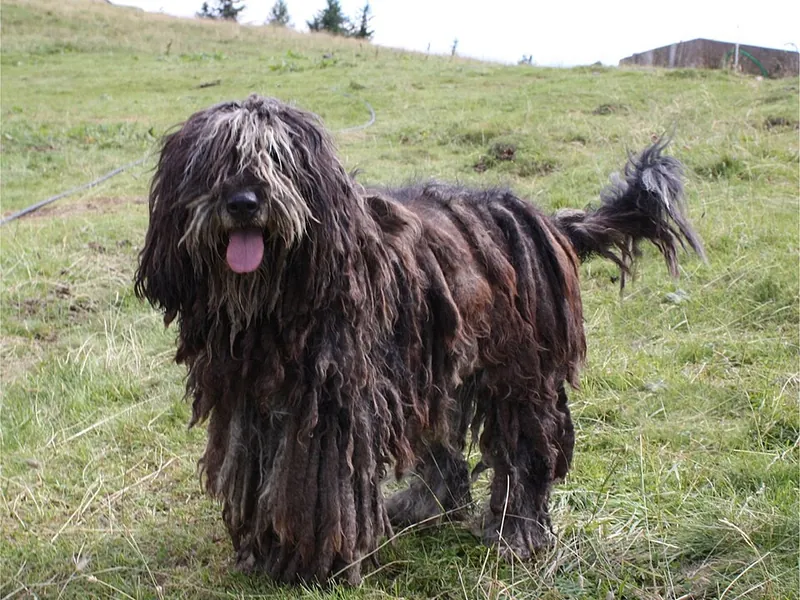
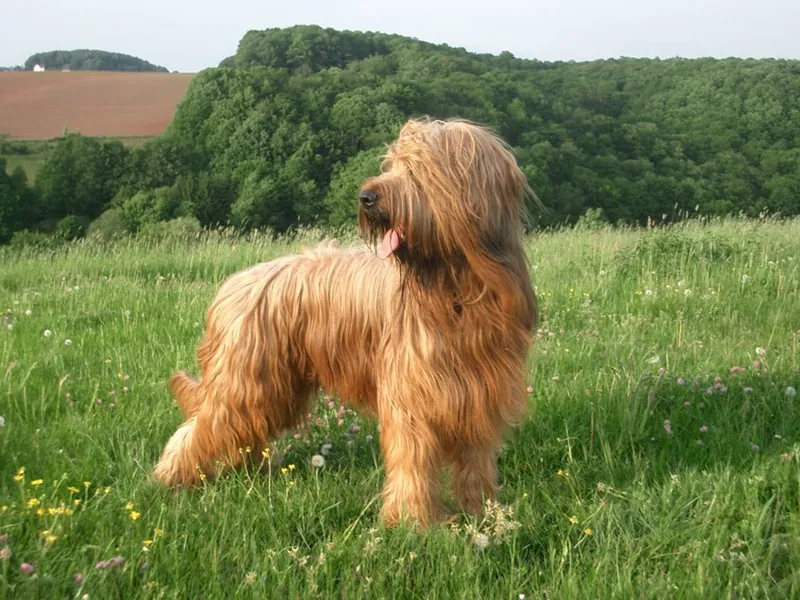
The Briard is a large, rugged herding dog standing 22 to 27 inches and weighing 55 to 99 lb. Its body is slightly longer than tall, with strong bone and a supple, gliding movement often described as quicksilver. The head is long and covered in hair, with a beard, mustache and eyebrows that veil the eyes.
Males are notably larger, typically 23 to 27 inches under the AKC standard, while females stand 22 to 25.5 inches.
The coat is long, coarse and dry, often compared to goat hair, lying in slight waves over a fine, tight undercoat. On the shoulders it reaches 6 inches or more. Accepted colors:
- Black
- Tawny, in shades from light to dark, sometimes with darker shading
- Gray
- Combinations of these, with no white except a few hairs on the chest
Tawny puppies often darken with age and gray dogs can lighten. A unique feature is the double dewclaws on each hind leg, required by the standard. Ears may be cropped in the US or left natural.
Temperament and Personality
Briards are devoted, protective and intelligent. They bond deeply with their families and are often reserved with strangers. They may try to herd children or other pets.
They are independent thinkers and need consistent guidance. Many are sensitive and need gentle but firm handling.
Briards are often described as a heart wrapped in fur. They are affectionate and playful with their own people but tend to keep a watchful eye on strangers. They have long memories and may hold a grudge if handled unfairly. Many prefer to stay close to their family and can become anxious or noisy when left alone for long periods.
With other dogs, they can be bossy, and same-sex tension may occur.
Are Briards Easy to Train?
Briards are intelligent and learn quickly, but they are not push-button dogs. They were bred to make independent decisions while guarding and moving flocks, so they want to understand why you are asking.
What works best:
- Reward-based training with food, toys and praise
- Clear, consistent rules from every family member
- Short, varied sessions instead of repetitive drills
- Early and ongoing socialization with people and places
Briards have long memories and can become wary after harsh handling. Herding, obedience and agility give them a structured outlet for their brains.
Are Briards Good With Other Dogs?
Briards often live peacefully with other dogs they are raised with, but they can be bossy, and same-sex tension may arise. Their protective nature means some are cautious with unfamiliar dogs entering their territory.
Early socialization with a variety of calm dogs helps a lot. When adding a second dog, opposite-sex pairings tend to work best. Supervise introductions and give each dog its own space for resting and eating. Some Briards try to herd other pets, which needs gentle redirection.
Do Briards Need a Yard?
A securely fenced yard is strongly recommended for a Briard. This is a large, active herding dog that needs space to move and patrol, and its protective instincts make it happiest in a home where it can watch over a territory.
A yard does not replace exercise, though. Briards still need daily walks, play and mental work, ideally at least an hour. Apartment life is difficult because of size, energy and the dog's tendency to alert to noises. Make sure fences are high and solid, as a bored Briard may roam or herd passing traffic.
Exercise and Training
Briards need at least an hour of daily exercise, with mental challenges. Herding, agility, obedience and tracking are good outlets.
- Socialize early and often.
- Use patient, reward-based training.
- Teach calm behavior around guests.
Daily walks should include off-leash time in safe areas, and many Briards enjoy jogging or hiking with their owners. Without enough work, they may herd children, chase cars or become destructive.
Grooming and Shedding
The long coat is coarse and dry, often compared to goat hair, with a fine undercoat. Brush thoroughly several times a week to prevent mats.
Shedding is light, but grooming is demanding. The breed standard requires double dewclaws on the hind legs; trim them regularly.
Brush in sections, from the skin outward, paying special attention to areas behind the ears and under the legs. The beard and eyebrows can collect food and debris; clean them regularly.
Professional grooming every few months can help, but most Briards are kept in a natural coat. Shaving is not recommended.
Feeding and Nutrition
A Briard's coat hides its body shape, so check condition by feel: ribs should be easy to find under a light layer of fat, with a defined waist behind them. Large herding dogs can become overweight when activity drops.
Puppies grow into a large frame over 18 months or more. A large-breed puppy diet with controlled calcium supports healthy hips and elbows, and lean growth is better than fast growth.
Bloat is a known risk:
- Feed two or three meals daily instead of one
- Avoid hard exercise for an hour before and after eating
- Use a slow feeder for fast eaters
Hypothyroidism, reported in the breed, can cause weight gain despite stable portions, so ask your vet if weight creeps up. Wipe the beard after meals, as food and water easily collect there. Count training treats in the daily ration.
| Adult weight | Less active | Typical adult | Very active |
|---|---|---|---|
| 55 lb | 1,090 kcal | 1,250 kcal | 1,560 kcal |
| 77 lb | 1,410 kcal | 1,610 kcal | 2,010 kcal |
| 99 lb | 1,700 kcal | 1,940 kcal | 2,430 kcal |
Estimates use the resting energy formula veterinarians work with (70 × body weight in kg0.75) and standard activity factors. Use the feeding guide on your food as a starting point and adjust to body condition. Puppies, seniors, pregnant animals and pets that need to lose weight have different needs, so ask your vet.
Health and Lifespan
Briards typically live 10 to 15 years. Hip dysplasia and bloat are concerns. Congenital stationary night blindness is inherited in the breed; a DNA test is available.
Hypothyroidism is also reported. Choose breeders who screen hips and eyes.
Congenital stationary night blindness, related to a mutation in the RPE65 gene, can affect vision in low light. DNA testing allows breeders to avoid producing affected puppies.
As a deep-chested breed, the Briard is at risk of bloat. Feed several smaller meals rather than one large meal, and avoid exercise right after eating.
Briard Price and Cost of Ownership
Typical breeder price in the US$1,500 to $3,000
A Briard puppy from a reputable US breeder typically costs about $1,500 to $3,000. Prices vary by breeder, region and lines. The breed is uncommon in the US, so expect to wait for a litter. Ask for hip scores, eye exams and a DNA test for congenital stationary night blindness (CSNB).
The Briard Club of America and regional rescues occasionally place adults.
Breed-specific ongoing costs:
- Grooming tools and occasional professional grooming for a long coat
- Food for a large dog up to about 99 lb
- Secure fencing
- Insurance for bloat and hip dysplasia
Herding lessons and dog sports are popular extras for this active breed.
Is the Briard Right for You?
The Briard suits experienced owners with space, time for grooming and training, and a wish for a loyal guardian companion.
It is not ideal for first-time owners or apartments.
Briards are best for people who want a devoted companion that can also act as a natural watchdog and who enjoy grooming and training.
Families with children can do well if the dog is socialized early, but the herding instinct means supervision is essential.
Briard Traits at a Glance
Briard FAQ
How big do Briards get?
They stand about 22 to 27 inches tall and weigh 55 to 99 lb.
Do Briards shed?
They shed lightly, but their long coat needs frequent brushing.
Are Briards good family dogs?
Yes, with experienced owners. They are loyal and protective.
How long do Briards live?
Typically 10 to 15 years.
Are Briards hypoallergenic?
No dog is fully hypoallergenic, but Briards shed little, which some allergy sufferers tolerate better.
Do Briards bark a lot?
They are usually not excessive barkers but will alert their owners to strangers.