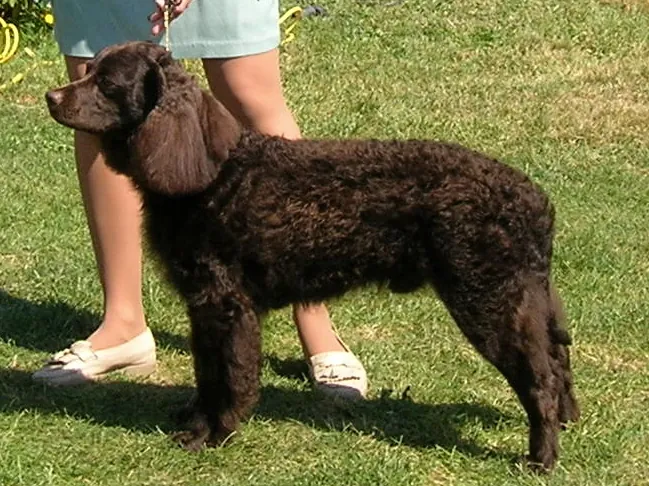
Irish Water SpanielThe curly clown of the spaniel world
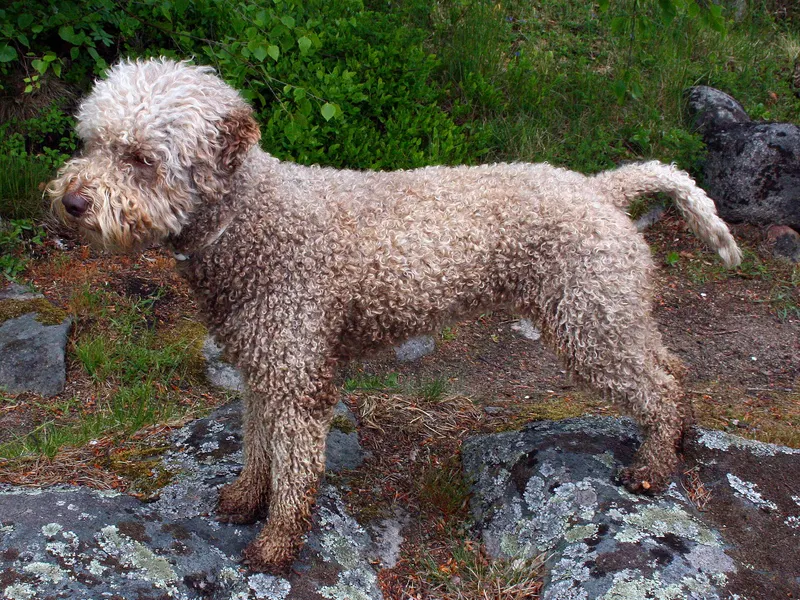
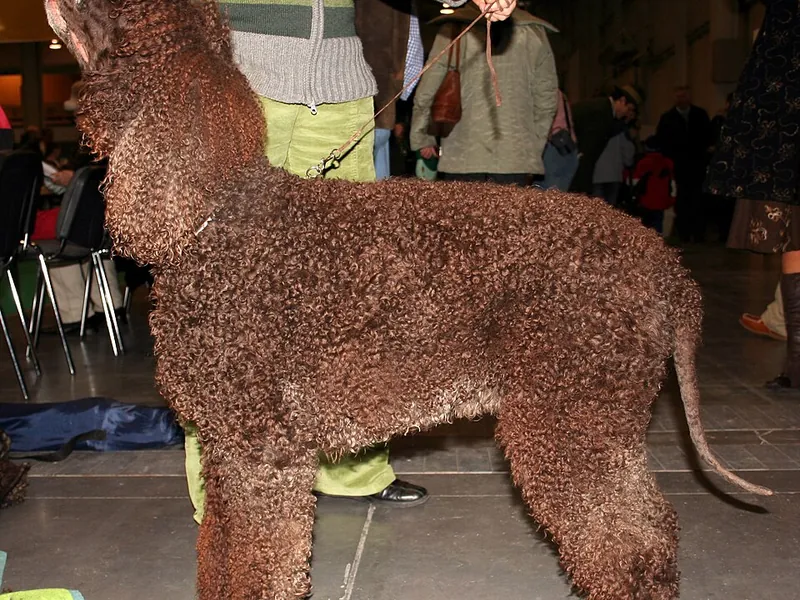
The Irish Water Spaniel is the tallest of the spaniels, with a tight liver-colored curly coat, a topknot and a smooth rat-like tail. Playful, smart and tireless in water, it suits active owners who enjoy training and do not mind regular coat care.
Why people love the Irish Water Spaniel
- Playful, clownish personality that stays fun for years
- Outstanding swimmer and natural water retriever
- Low-shedding curly coat keeps loose hair down
- Usually quiet, rarely barks without reason
- Bright learner that enjoys varied training
Things to consider
- Curly coat needs regular combing and trimming
- Prone to ear infections from swimming and heavy ears
- Can be reserved with strangers without socialization
- Bored dogs invent mischief and can be stubborn
- Rare breed with few US breeders
Is this breed right for you?
10 questions · live resultHistory and Origin
Curly-coated water dogs were used in Ireland for centuries, but the modern breed is credited to Justin McCarthy of Dublin, who developed it in the 1830s and 1840s. His dog Boatswain is considered the breed's founding sire. McCarthy left no breeding records, so the exact ancestry is unknown.
The dogs were bred to retrieve waterfowl in cold Irish marshes and rivers, and the oily, curly coat protected them in icy water. The breed was one of the earliest recognized by the AKC, in 1878. Today it is uncommon, and in the UK The Kennel Club lists it as a vulnerable native breed.
Size, Curly Coat and Color
The Irish Water Spaniel is the tallest of the spaniels, a strong, rangy water dog. Adults stand about 21 to 24 inches at the shoulder and weigh roughly 45 to 68 lb. Males are generally 22 to 24 inches and heavier, while females are about 21 to 23 inches and lighter.
The head features a clean-shaven face, a prominent topknot of long, loose curls and long ears covered with curls. The tail is the famous rat tail: thick at the root, covered in short curls for a few inches, then smooth and tapering to a point.
The coat is dense and crisp, with tight ringlets over the body and longer, looser curls on the legs. A natural oiliness helps repel water. The only accepted color is solid liver, often with a purplish tinge known as puce. White on the chest is permitted only in small amounts under the AKC standard. The coat should never be woolly or straight, and the dog should not look sculpted or overly trimmed.
Temperament and Personality
Irish Water Spaniels are known as clowns: playful, inventive and often mischievous. They are loyal and affectionate with family and can be reserved with strangers. Many are quiet and rarely bark without reason.
They are bright and quick to learn, but they can show a stubborn streak if bored. Early socialization helps them be confident with new people. They generally get along with considerate children and other dogs.
Owners often describe the IWS as a dog with a sense of humor: it may invent games, steal items to start a chase or perform a trick it learned without being asked. That spirit is part of its appeal.
Is the Irish Water Spaniel Good for First-Time Owners?
It can be, for active first-time owners who enjoy training and do not mind coat care. The IWS is affectionate and trainable but has a mind of its own.
First-time owners often underestimate two things. The coat is low-shedding but needs combing every week or two and trimming every six to eight weeks, either at home or by a groomer familiar with the breed. The temperament is clever and sometimes mischievous, so training must stay interesting. Early socialization helps a naturally reserved dog become comfortable with strangers. A first-time owner who connects with the breed club and stays consistent can do very well.
Are Irish Water Spaniels Easy to Train?
Yes and no. They learn quickly and enjoy working with their people, but they get bored with repetition and may invent their own version of an exercise.
The breed excels in hunting tests, obedience, rally, agility and dock diving when training is upbeat and varied. Use reward-based methods, keep sessions short and add new challenges regularly. Harsh corrections tend to shut the dog down or make it stubborn. Recall around water and birds needs extra practice, because an IWS that spots ducks may decide to retrieve first and listen later. Owners who enjoy a thinking dog usually find training rewarding.
Can Irish Water Spaniels Be Left Alone?
For several hours, yes, once the dog is mature and well exercised. Many adults settle well, but young or under-exercised dogs can get into trouble.
An IWS left alone with pent-up energy may chew, dig or explore countertops. Exercise before leaving, offer a food puzzle or durable chew, and use a crate or dog-proofed room while the dog is young. Increase alone time gradually from puppyhood. Owners away for long workdays should plan for a midday walk, as a bored, lonely IWS is more likely to become destructive or vocal.
Exercise and Training
Plan for an hour or more of daily exercise. Swimming and retrieving are ideal, and the breed excels in hunting tests, dock diving, agility, obedience and rally.
Training should be upbeat and varied. Reward-based methods work well, while repetitive drills invite creative disobedience. A tired IWS is a well-behaved one; an under-exercised one may invent its own entertainment.
Swimming is the breed's specialty. Many Irish Water Spaniels will happily retrieve from cold water, but always check currents and ice conditions, and rinse off salt or chlorine afterward to protect the coat.
Grooming and Shedding
The coat is dense, tightly curled and oily on the body, with long loose curls on the topknot and ears and a smooth face and tail. It sheds very little, which is why some allergy sufferers do well with the breed, but it still needs work.
- Brush or comb thoroughly every week or two to prevent mats
- Trim every six to eight weeks to keep the outline neat
- Clean and dry the ears after swimming
Avoid frequent bathing, which strips the protective oils.
Feeding and Nutrition
The Irish Water Spaniel is an athletic, muscular dog, and its food needs depend heavily on how much it swims, hunts and runs. A dog retrieving in cold water burns considerably more energy than one on leash walks, so adjust portions by season and workload. Keep the dog lean, with ribs easy to feel beneath the curly coat, which can hide weight gain.
Puppies should eat a complete food for medium to large breed puppies, three to four times a day at first, then twice daily from about six months. Steady growth supports healthy hips, which are screened in the breed.
- Avoid vigorous exercise or swimming right after meals.
- Offer fresh water after swimming; dogs that drink a lot of lake or seawater can develop stomach upset.
- The breed is reported to be sensitive to some drugs, so check with your vet before giving any supplements or medications.
Use small treats in training, and consider retrieving games or scent work with part of the daily ration to provide mental exercise.
| Adult weight | Less active | Typical adult | Very active |
|---|---|---|---|
| 45 lb | 940 kcal | 1,080 kcal | 1,340 kcal |
| 68 lb | 1,280 kcal | 1,470 kcal | 1,830 kcal |
Estimates use the resting energy formula veterinarians work with (70 × body weight in kg0.75) and standard activity factors. Use the feeding guide on your food as a starting point and adjust to body condition. Puppies, seniors, pregnant animals and pets that need to lose weight have different needs, so ask your vet.
Health and Lifespan
Irish Water Spaniels typically live 12 to 13 years. Hip dysplasia occurs, so hip X-rays of breeding dogs are recommended. Ear infections are common due to the heavy, curly ears and frequent swimming. Distichiasis, extra eyelashes that can irritate the eye, is also seen. The breed is reported to be sensitive to some drugs, including certain sedatives and sulfa drugs, so tell your vet the breed.
Irish Water Spaniel Price and Cost of Ownership
Typical breeder price in the US$1,500 to $3,000
An Irish Water Spaniel puppy from a reputable US breeder typically costs about $1,500 to $3,000, and prices vary by breeder, region and lines. The breed is rare, with only a handful of litters each year, so expect a waiting list and possibly travel. The breed club can help with rescue or retired adults.
Breed-specific ongoing costs include:
- Grooming: trimming every six to eight weeks, at home or with a groomer who knows the breed pattern.
- Ear care and treatment for recurring ear infections.
- Hip and eye screening when choosing a breeder.
- Hunting test, dock diving or field training fees for active owners.
Is the Irish Water Spaniel Right for You?
The IWS is a great match if you:
- Love outdoor activity, especially around water
- Want a low-shedding dog and accept regular trimming
- Enjoy a dog with personality and humor
It is less suited to sedentary owners or people who want a dog with no grooming needs.
Irish Water Spaniel Traits at a Glance
Irish Water Spaniel FAQ
Are Irish Water Spaniels hypoallergenic?
No dog is fully hypoallergenic, but this breed sheds very little and is often tolerated better by people with mild allergies.
Are Irish Water Spaniels good family dogs?
Yes, for active families. They are playful and loyal, though their energy and size need supervision around small children.
How big do Irish Water Spaniels get?
They stand about 21 to 24 inches tall and weigh roughly 45 to 68 lb.
Why do Irish Water Spaniels have a rat tail?
The tail is covered with short, smooth hair after the first few inches, a defining breed trait that sets it apart from other curly-coated dogs.
How long do Irish Water Spaniels live?
Typically 12 to 13 years.