HighlanderWild-looking, curl-eared and playful
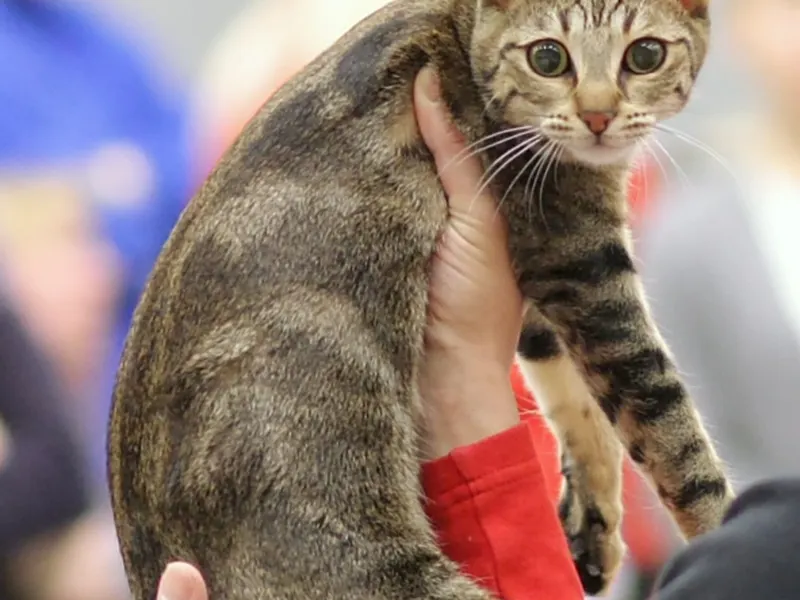
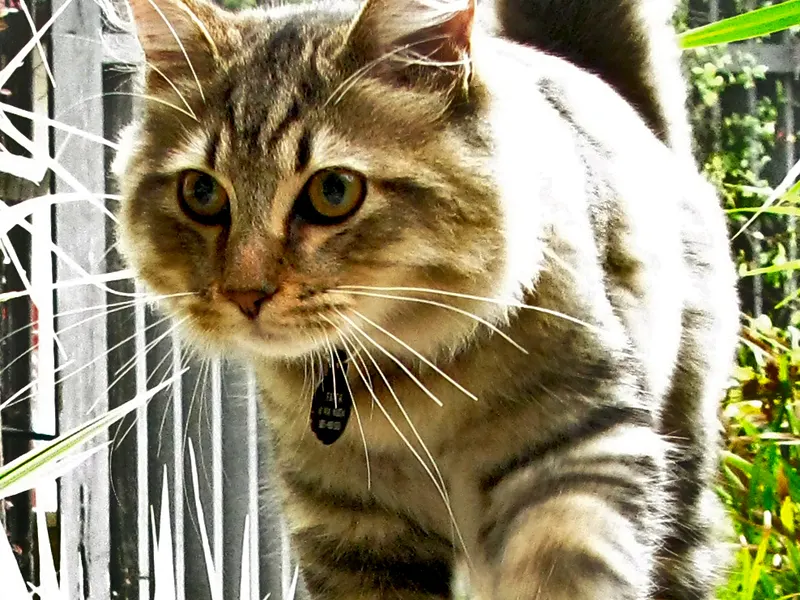
The Highlander is a large, muscular domestic cat with backward-curling ears, a short bobbed tail and often extra toes, bred to look like a small wild cat. Despite the look, it is outgoing, playful and affectionate, and suits active households that want a big, sociable cat.
Why people love the Highlander
- Large, striking cat with curled ears and bobbed tail
- Outgoing, playful and people-oriented
- Usually confident with visitors and travel
- Easy-care short coat in most cats
- Often enjoys water and harness training
Things to consider
- Very rare, with waiting lists and few breeders
- High energy needs daily play and climbing space
- Limited long-term health data for a new breed
- Polydactyl paws need extra claw care
- Needs sturdy furniture built for a heavy cat
Is this breed right for you?
10 questions · live resultHistory and Origin
The Highlander is a young American breed. In the early 2000s, breeder Joe Childers began crossing two experimental breeds, the Desert Lynx and the Jungle Curl, to create a cat with a wild appearance, curled ears and a bobbed tail. The breed was first called the Highland Lynx and was renamed Highlander in 2005.
TICA accepted the Highlander into its new breed program, and it remains rare, with a small number of breeders mainly in the United States. The breed is fully domestic. Its wild look comes from selection for body shape, ears, tail and pattern, not from recent wild cat crosses.
Size, Coat and Colors
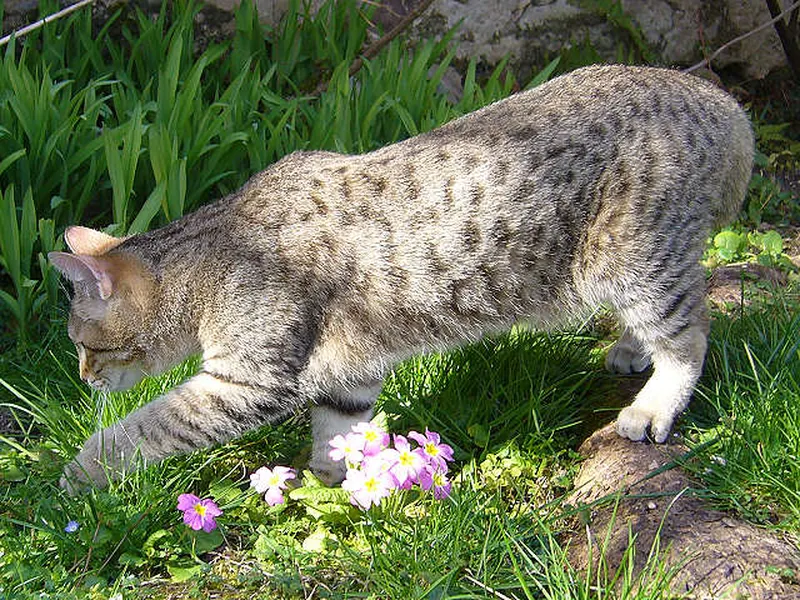
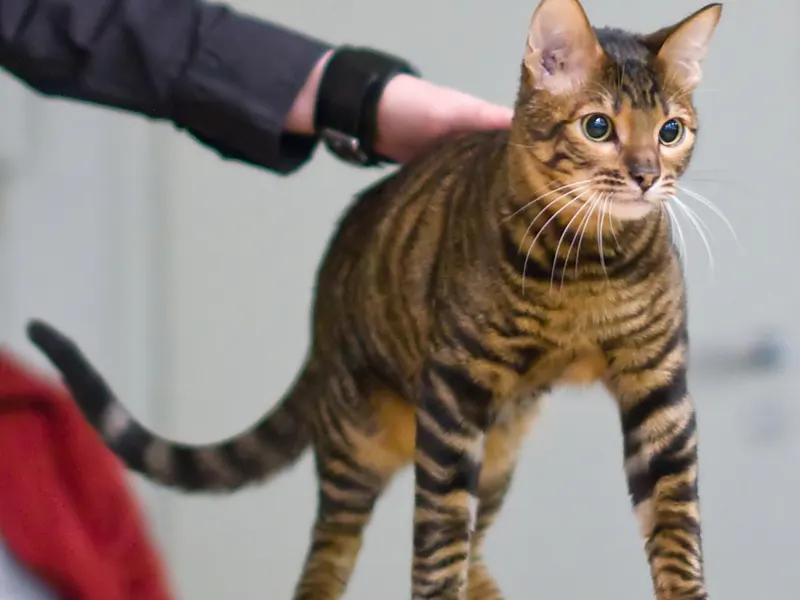
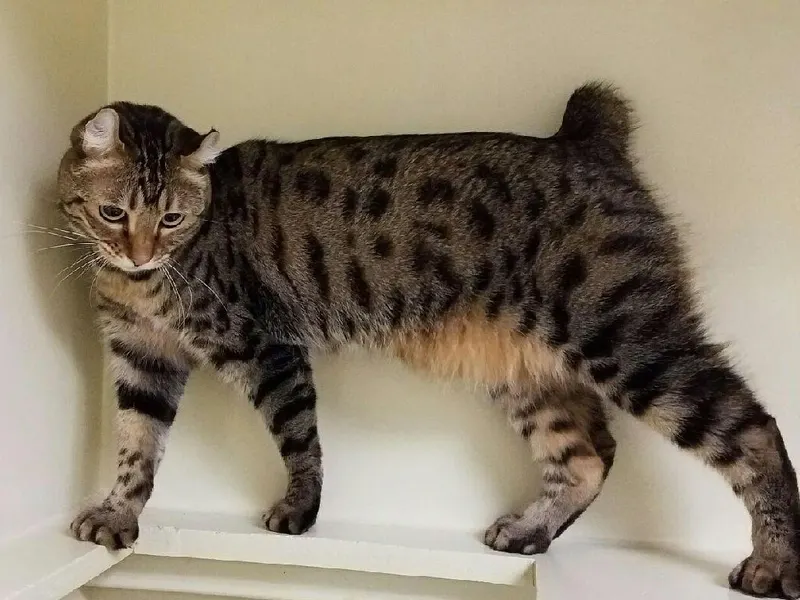
The Highlander is a large, muscular cat weighing about 10 to 20 lb, with males clearly bigger and heavier than females. It is long-bodied with heavy bone, a broad chest and strong hindquarters. The head is a long, sloping wedge with a blunt muzzle, and the distinctive ears curl loosely backward. The tail is naturally short, typically 1 to 6 inches, and often kinked or curled. Polydactyl paws with extra toes are accepted and common.
The breed comes in two coat lengths. The shorthair has a dense, slightly coarse coat that lies close to the body. The longhair has a semi-long, soft coat with shorter hair on the shoulders and fuller britches and tail.
All colors and patterns are accepted, though spotted and marbled tabby patterns, including lynx point, are especially common because they emphasize the wild look. Highlanders mature slowly and may not reach full size until about two to three years.
Personality and Temperament
Highlanders are confident, social and clownish. Breeders describe them as people-oriented cats that like to join in, play rough-and-tumble games and follow family members around. They tend to be quieter than their size might suggest.
- Usually good with children who are used to cats
- Generally friendly with cat-friendly dogs and other pets
- Often outgoing with visitors
Because the breed is young and rare, individual temperament can vary more than in long-established breeds.
Breeders often mention that Highlanders are confident during vet visits and travel, and that they enjoy games of chase with family members and other pets.
Are Highlander Cats Lap Cats?
Some are, but most Highlanders are better described as interactive companions than lap cats. Breeders describe them as people-oriented cats that like to join in, follow family members around and play rough-and-tumble games, and many enjoy cuddling once they have burned off energy.
Because the breed is young and rare, individual temperament varies more than in long-established breeds. A kitten from a breeder who handles cats daily and raises them in the home tends to be more relaxed with handling. If a lap cat is your priority, ask the breeder about the parents' personalities and choose a kitten whose temperament has been observed, rather than relying on breed descriptions alone.
Can Highlander Cats Live with Dogs?
Yes, Highlanders generally get along well with cat-friendly dogs. Their confidence and large size help them hold their own, and many enjoy playing with a dog that understands cat boundaries.
Gradual introductions still matter:
- Keep pets separated at first and swap bedding to share scents.
- Use a gate or leash for the first meetings.
- Provide sturdy cat trees and high resting places.
- Keep the cat's food and litter box out of the dog's reach.
Dogs with strong chase instincts are a riskier match for any cat. Highlanders play energetically, so watch early sessions to make sure both animals are comfortable.
Can Highlander Cats Be Left Alone?
Highlanders can be left alone during a normal workday, but they are social, energetic cats that do best with company and stimulation. A bored Highlander may find its own entertainment, such as climbing furniture or knocking things over.
To help a Highlander cope with alone time:
- Play actively before you leave.
- Provide sturdy cat trees, shelves and window perches.
- Leave puzzle feeders and rotate toys.
- Consider a second playful cat for company.
For longer absences, such as weekends away, arrange for a cat sitter to visit at least once a day for feeding, litter care and play.
Activity, Play and Enrichment
This is an energetic, athletic cat. Provide sturdy climbing structures built for a heavy cat, daily interactive play and food puzzles. Many Highlanders enjoy water and will play in a dripping tap or shallow dish. Some learn to walk on a harness.
An indoor home works with plenty of space and enrichment; a secure catio is a bonus.
Grooming and Shedding
Most Highlanders have a short, dense coat that needs a weekly brush; a longhaired variety also exists and needs combing two or three times a week. Check the curled ears gently and clean only if dirty. If your cat is polydactyl, trim the extra claws regularly, as they can curl and grow into the pad.
Feeding and Nutrition
Highlanders are large cats that mature slowly, often reaching full size at two to three years. Kittens need steady growth with frequent meals, typically three or four a day until about six months, then moving to two or more meals. Avoid pushing growth with extra food, as a large cat carrying excess weight strains its joints.
Adults should stay lean and muscular. Feed by body condition, feeling for ribs and a waist rather than relying on the scale alone, since healthy weight varies widely between a 10 lb female and a 20 lb male.
- Puzzle feeders and food scattered for foraging use energy and reduce boredom.
- Many Highlanders enjoy water. A fountain encourages drinking, which supports urinary health.
- Use part of the daily food for harness or trick training.
- Indoor cats need portion control as activity levels drop with age or after neutering.
| Adult weight | Indoor, less active | Typical adult | Active or intact |
|---|---|---|---|
| 10 lb | 220 kcal | 260 kcal | 300 kcal |
| 15 lb | 290 kcal | 350 kcal | 410 kcal |
| 20 lb | 370 kcal | 440 kcal | 510 kcal |
Estimates use the resting energy formula veterinarians work with (70 × body weight in kg0.75) and standard activity factors. Use the feeding guide on your food as a starting point and adjust to body condition. Kittens, seniors, pregnant animals and pets that need to lose weight have different needs, so ask your vet.
Health and Lifespan
Highlanders are expected to live around 10 to 15 years, but long-term health data are limited because the breed is new and small. Points to discuss with a breeder:
- The curled ears and short tail are bred-in traits; ask how the breeder checks for ear canal problems and spinal issues
- Polydactyly (extra toes) is accepted and usually harmless, but extra claws need care
- General screening such as heart checks for breeding cats
Choose a breeder who is open about health testing and the cats used in the program.
Highlander Price and Cost of Ownership
Typical breeder price in the US$800 to $2,000
Highlander kittens from US breeders typically cost about $800 to $2,000. Prices vary by breeder, region and lines, and because the breed is rare, waiting lists are common. Ask breeders which cats are in their program, how they check ears and spines, and whether breeding cats have heart screening.
Adoption of a Highlander is uncommon, but retired breeding cats are sometimes placed in pet homes.
Breed-specific cost drivers include heavy-duty cat trees and shelves built for a cat of up to about 20 lb, large litter boxes and carriers, extra claw care for polydactyl paws and toys for an energetic breed. Insurance is worth considering because long-term health data for the breed are limited.
Is the Highlander Right for You?
A Highlander suits active families and people who want a large, playful cat with a striking look and time to keep it entertained. It is not the best choice for a quiet home or someone wanting a low-energy lap cat.
Kittens are rare. Expect waiting lists and prices roughly in the $800 to $2,000 range in the US, varying by breeder and region.
Highlander Traits at a Glance
Highlander FAQ
Is the Highlander part wild cat?
No. It is a domestic breed developed from domestic experimental breeds, selected for a wild appearance.
How big do Highlander cats get?
They are large, muscular cats, typically 10 to 20 lb (about 4.5 to 9 kg), with males bigger than females.
Why do Highlanders have curled ears?
The ears curl backward from crossing in the Jungle Curl, which carries a curled-ear trait similar to the American Curl.
Do Highlander cats shed?
The shorthair sheds moderately and needs only weekly brushing.
How much does a Highlander cat cost?
Prices vary a lot because few breeders exist; roughly $800 to $2,000 in the US is typical.