Saint BernardGentle giant of the Swiss Alps
The Saint Bernard is a massive, calm and famously patient dog with a rescue legend behind it. It is a wonderful companion for families who have the room, the budget and the tolerance for drool that a dog of up to 180 lb brings.
Why people love the Saint Bernard
- Patient and gentle with children in its family
- Calm and easygoing indoors once mature
- Rarely barks, but its size deters intruders
- Two coat types, smooth and rough, to choose from
- Moderate exercise needs suit relaxed households
Things to consider
- Short lifespan of about 8 to 10 years
- Heavy shedding and lots of drool
- Overheats easily in warm weather
- Giant size raises food, vet and equipment costs
- Can be slow and stubborn in training
Is this breed right for you?
10 questions · live resultHistory and Origin
The breed takes its name from the hospice at the Great St Bernard Pass, a snowy route of about 8,000 feet (2,470 m) between Switzerland and Italy. Monks there kept large mountain dogs from at least the late 1600s, first as guards and later as companions on rescue patrols for lost or snowbound travelers.
The most famous of them, Barry, is credited with saving dozens of people in the early 1800s and is preserved at the Natural History Museum in Bern. The romantic image of a barrel around the neck is a later artistic invention. In the 1800s the hospice dogs were crossed with other large breeds, including Newfoundlands, which helped create the long-haired variety alongside the original smooth coat.
Size, Coat Types and Colors
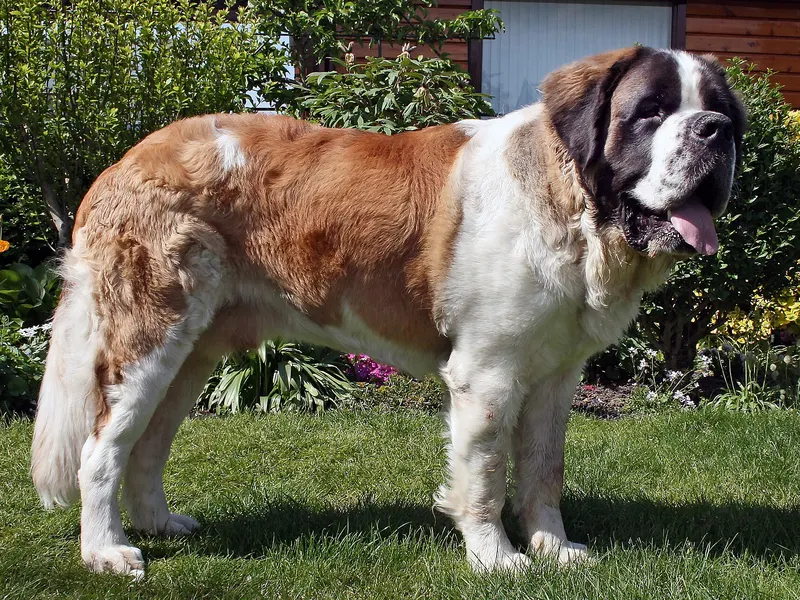
The Saint Bernard is a massive, muscular dog with a broad, powerful head, a short muzzle, a pronounced stop and a gentle, slightly wrinkled expression. Adults stand about 26 to 30 inches at the shoulder and weigh roughly 120 to 180 lb. The AKC standard sets a minimum of 27.5 inches for males and 25.5 inches for females, and males are noticeably heavier, with a bigger head and more substance.
The breed comes in two coat varieties. The smooth coat is short, very dense and lies close to the body, with slight feathering on the thighs. The rough coat is medium-long and plain to slightly wavy, with feathering on the legs and a bushy tail.
The color is white with red or red with white, and the red can range from light to dark brownish-yellow, including brindle patches. White is expected on the chest, feet, tail tip, noseband and collar or neck spot, and a dark mask and ears are typical.
Temperament and Personality
Saint Bernards are gentle, friendly and generally easygoing indoors. They tend to be tolerant with children and patient with household routines, though their size means a toddler can easily be knocked over by a happy tail or a lean.
They bark rarely, but their size and deep voice make them effective deterrents. They are sociable with guests once introduced and usually get along with other pets when raised with them. They do not enjoy long periods alone and can become destructive or vocal if bored.
Do Saint Bernards Shed a Lot?
Yes, Saint Bernards shed heavily. Both the smooth and the rough coat have a dense undercoat that comes out in large amounts during the twice-yearly seasonal sheds, and a moderate amount falls out year-round.
Brushing at least weekly, and several times a week during heavy sheds, keeps the hair on your floors manageable. An undercoat rake and a slicker brush are the most useful tools. The smooth variety is not a low-shedding option; it simply leaves shorter hairs. Combined with drool, this means a Saint Bernard is a poor match for anyone who wants a spotless home or has dog allergies.
Are Saint Bernards Good for First-Time Owners?
They can be, if the first-time owner is well prepared. Saint Bernards are typically good-natured and forgiving, but their size makes training non-negotiable and mistakes costly.
A puppy that jumps up or pulls is cute at 40 lb and a real problem at 150 lb. Start leash manners, polite greetings and a reliable recall in the first weeks, and attend puppy classes. Expect a slower, sometimes stubborn learner. First-time owners should also be ready for giant-breed costs, drool cleanup, heavy shedding and a short lifespan. If that all sounds manageable, a Saint Bernard can be a rewarding first dog.
Can Saint Bernards Live in Hot Climates?
They can, but hot climates make life harder for a Saint Bernard. The breed was developed in the Alps, and its large body, dense coat and relatively short muzzle make it prone to overheating.
In warm regions, walk early in the morning and late in the evening, provide shade and fresh water at all times, and keep the dog indoors with air conditioning during the hottest hours. Cooling mats and shallow pools can help. Do not shave the coat, which also protects against sunburn. Watch for heavy panting, drooling more than usual and weakness, which can signal heatstroke and need urgent veterinary care.
Exercise and Training
Adults need moderate daily exercise: one or two leisurely walks and some time to roam in a yard. They are not jogging partners and overheat easily, so walk in the cool part of the day and provide shade and water in summer.
Puppies grow extremely fast. Avoid forced running, repeated jumping and long stair sessions until growth plates close, typically around 18 months. Start leash training and polite greetings early. A 40 lb puppy pulling is manageable, a 150 lb adult is not. Saint Bernards respond to calm, consistent, reward-based training but can be slow and stubborn.
Grooming and Shedding
Both the smooth and rough coats are dense and shed heavily, especially twice a year. Brush at least weekly, and several times a week during seasonal sheds, with an undercoat rake and slicker brush.
Expect drool, particularly after drinking and eating or when excited. Many owners keep towels by the door and water bowl. Clean the facial folds and ears regularly, and keep nails short to help support heavy joints.
Feeding and Nutrition
Saint Bernard puppies grow at an extraordinary rate, and overly fast growth raises the risk of hip and elbow dysplasia and osteochondrosis. Choose a complete food formulated for large or giant breed puppies, which limits calcium and energy density, and avoid extra supplements unless your vet prescribes them. A lean puppy with a visible waist is healthier than a heavy, fluffy one.
As a deep-chested giant, the Saint Bernard is at risk of bloat. Feed two or three measured meals a day instead of one large one, avoid exercise around mealtimes and use a slow feeder if your dog eats quickly. Many owners prefer to feed in a calm spot away from other pets to reduce gulping.
Adults are fairly low-energy and gain weight easily, which strains heavy joints and the heart. Weigh your dog regularly, adjust portions as activity changes and keep training treats small. Food bowls on a washable mat help contain the inevitable drool.
| Adult weight | Less active | Typical adult | Very active |
|---|---|---|---|
| 120 lb | 1,960 kcal | 2,240 kcal | 2,810 kcal |
| 180 lb | 2,660 kcal | 3,040 kcal | 3,800 kcal |
Estimates use the resting energy formula veterinarians work with (70 × body weight in kg0.75) and standard activity factors. Use the feeding guide on your food as a starting point and adjust to body condition. Puppies, seniors, pregnant animals and pets that need to lose weight have different needs, so ask your vet.
Health and Lifespan
Like most giant breeds, Saint Bernards have a short life expectancy of about 8 to 10 years. Common health concerns include:
- Hip and elbow dysplasia, osteochondrosis (OCD) and cruciate ligament tears
- Bloat (gastric dilatation-volvulus), an emergency in deep-chested dogs
- Dilated cardiomyopathy
- Osteosarcoma (bone cancer)
- Eyelid problems such as entropion and ectropion, plus skin and ear infections
Keep your dog lean, feed measured meals rather than one large one, and learn the signs of bloat. Look for breeders who screen hips, elbows, hearts and eyes.
Saint Bernard Price and Cost of Ownership
Typical breeder price in the US$1,000 to $2,500
A Saint Bernard puppy from a reputable US breeder typically costs about $1,000 to $2,500. Prices vary by breeder, region and lines, and breeders who screen hips, elbows, hearts and eyes tend to charge more. Breed-specific rescues often have adults and young dogs surrendered because owners underestimated the size, so adoption is worth exploring.
Ongoing costs are shaped by giant size. Food is a major monthly expense, and weight-based medications, anesthesia and surgery all cost more for a 150 lb dog. Equipment, from an extra-large crate to an orthopedic bed and a vehicle with room for the dog, adds up.
Insurance is worth considering early, as joint surgery, bloat, eyelid corrections and heart disease are all known in the breed. Some owners also budget for a preventive gastropexy.
Is the Saint Bernard Right for You?
A Saint Bernard suits a family with a house, a yard, a large vehicle and a relaxed attitude to hair and slobber. It is not well suited to small apartments, hot climates without air conditioning or owners who want a running companion. Budget for higher costs in food, medication and vet care that scale with size. In return you get a calm, devoted and good-natured giant.
Saint Bernard Traits at a Glance
Saint Bernard FAQ
Are Saint Bernards good with kids?
Yes, they are typically patient and gentle with children. Supervise with toddlers because the dog's size alone can knock them over.
How big do Saint Bernards get?
Adults weigh about 120 to 180 lb and stand roughly 26 to 30 inches at the shoulder, with males noticeably larger than females.
Do Saint Bernards drool a lot?
Yes. Drooling is one of the most common complaints of owners, especially after drinking or in warm weather.
How long do Saint Bernards live?
Most live about 8 to 10 years, which is typical for giant breeds.
Can a Saint Bernard live in an apartment?
It is rarely a good fit. Their size, shedding and drool make a house with outdoor space far more practical.
Did Saint Bernards really carry brandy barrels?
No. The brandy barrel comes from 19th century paintings. Real hospice dogs found travelers by scent and guided rescuers to them.