LandseerGentle black-and-white water giant
The Landseer is a giant, black-and-white water dog closely related to the Newfoundland. Calm, friendly and family-oriented, it needs space, consistent training and owners prepared for a short-lived giant breed.
Why people love the Landseer
- Calm, gentle and devoted to family
- Usually patient with children
- Strong swimmer with a natural urge to retrieve
- Friendly with visitors and other pets
- Striking black and white coat
Things to consider
- Giant size and the costs that come with it
- Short lifespan of about 8 to 10 years
- Heavy shedding and some drooling
- Prone to hip, elbow and bloat problems
- Rare as the European type in the US
Is this breed right for you?
10 questions · live resultHistory and Origin
Large water dogs from Newfoundland arrived in Britain in the 18th and 19th centuries. White-and-black dogs became famous through the paintings of Sir Edwin Landseer, and the color pattern later carried his name.
In English-speaking countries, the Landseer is treated as a color of the Newfoundland, and neither the AKC nor The Kennel Club recognizes it as a separate breed. In continental Europe, breeders in Germany and Switzerland developed it as its own type, and the FCI recognizes the Landseer (European Continental Type) as a distinct breed. It is generally taller and lighter-built than the Newfoundland, with longer legs.
Size, Coat and Color
The Landseer (European Continental Type) is a giant water dog standing about 26 to 31 inches at the shoulder and weighing roughly 99 to 150 lb. Males are typically at the upper end and noticeably more massive, with a broader head, while females are lighter and smaller.
Compared with the Newfoundland, the Landseer is taller, longer in the leg and lighter in build, with a less heavy head. The body is strong and well balanced, the chest deep and broad, and the tail long and thick.
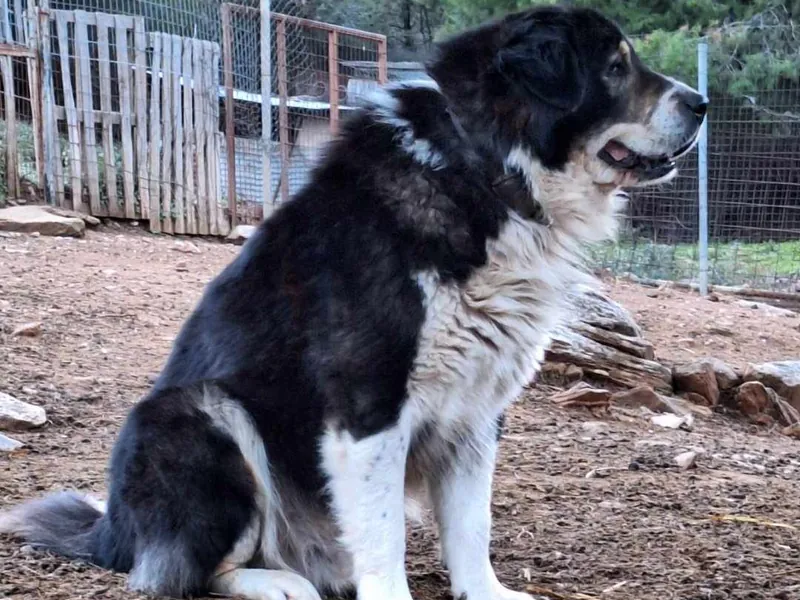
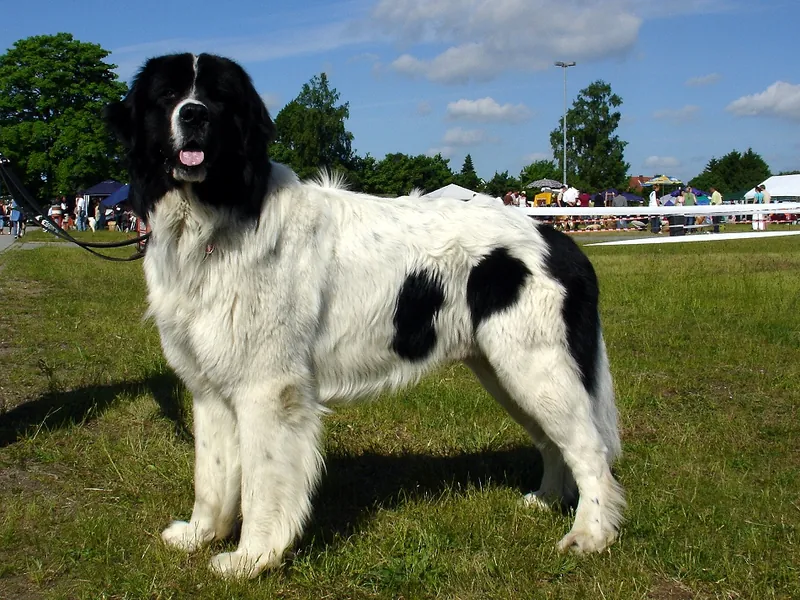
The coat is long, dense and soft, lying flat with an undercoat that is less dense than in the Newfoundland. The pattern is white with distinct black patches on the body and rump, and the head is black with a narrow, symmetrical white blaze. The tail is mostly white. Black ticking within the white areas is undesirable in the standard.
In the US and UK, the name Landseer also describes a white and black Newfoundland. These dogs follow the Newfoundland standard and are heavier and more compact than the FCI breed.
Temperament and Personality
Landseers are good-natured, calm and devoted to their family. They are usually patient with children and friendly with visitors once introduced, though they are alert and will notice anything unusual.
They have a strong love of water and an instinct to swim and retrieve. They need close contact with their people and do poorly when kept outside or left alone for long periods.
Their calm, kind expression reflects a generally steady temperament. Most are friendly with other dogs and household pets, and many have a natural urge to fetch people or objects out of the water.
Are Landseers Good for First-Time Owners?
They can be, for well-prepared first-time owners. Landseers are calm, gentle and generally easy to live with, but their giant size brings real challenges.
New owners should plan for early leash training, since adults are very strong, and consistent, reward-based training throughout adolescence. Costs for food, vet care and equipment are high. Shedding and drool are part of daily life. The shorter lifespan of 8 to 10 years is an emotional factor too. Owners who have space, time and a realistic budget often find the Landseer a loyal, easygoing companion.
Do Landseers Drool?
Yes, but usually less than some Newfoundlands. The Landseer's lighter head and tighter lips mean many drool moderately, mostly after drinking, eating, exercise or in warm weather.
Owners often keep towels in several rooms and wipe the dog's mouth after meals and drinks. Raised water bowls with spill mats help. Drool can stain the white areas of the coat, so regular cleaning keeps the face tidy. If a Landseer suddenly drools much more than usual, check with a vet, since dental problems, heat stress or other issues can be the cause.
Can a Landseer Live in an Apartment?
Generally not. A dog of 99 to 150 lb needs space to move, and stairs are hard on growing joints and large adults.
Landseers are calm indoors, so in rare cases a very large ground-floor apartment with easy outdoor access can work. However, shedding, drool, the need for daily walks and swimming and the difficulty of handling a giant dog in hallways and elevators make most apartments a poor fit. A house with a garden, ideally near water, suits the breed best.
Exercise and Training
Moderate daily exercise, such as long walks and swimming, keeps a Landseer fit. Puppies should not be overexercised while growing.
- Begin leash training early, because adults are very strong.
- Use consistent, reward-based training. They are willing but can be stubborn.
- Water rescue training and carting are rewarding activities for the breed.
Because of their size, avoid long runs or repetitive jumping until growth is complete, often around 18 months or later. Walks on soft ground and free swimming are kinder to developing joints.
Grooming and Shedding
The long, dense double coat needs thorough brushing a few times a week, more during seasonal sheds. Pay attention to the areas behind the ears, under the legs and on the trousers, where mats form.
After swimming, rinse and dry the coat and ears well. Some Landseers drool, especially after drinking or in warm weather.
The coat is predominantly white with distinct black patches; the head is black, ideally with a symmetrical white blaze. White areas show dirt, so expect to wash legs and paws after muddy walks.
Feeding and Nutrition
Feeding a giant-breed puppy correctly is one of the most important things a Landseer owner can do. Rapid growth and excess weight increase the risk of hip and elbow dysplasia. Feed a diet formulated for giant or large-breed puppies, in measured amounts, and aim for steady, slow growth. Many dogs stay on puppy food until 18 to 24 months; ask your vet when to switch.
As a giant, deep-chested breed, the Landseer is at risk of bloat (gastric dilatation-volvulus):
- Feed two or three smaller meals a day.
- Avoid exercise for an hour before and after eating.
- Use slow-feeder bowls if the dog gulps.
- Learn the warning signs, such as restlessness and unproductive retching.
Keep adults lean, with ribs easy to feel under the thick coat. Extra weight adds stress to joints and the heart. Avoid unnecessary supplements, especially calcium for puppies, unless your vet recommends them. Swimming is a great way to keep a Landseer fit without straining joints.
| Adult weight | Less active | Typical adult | Very active |
|---|---|---|---|
| 99 lb | 1,700 kcal | 1,940 kcal | 2,430 kcal |
| 150 lb | 2,320 kcal | 2,650 kcal | 3,320 kcal |
Estimates use the resting energy formula veterinarians work with (70 × body weight in kg0.75) and standard activity factors. Use the feeding guide on your food as a starting point and adjust to body condition. Puppies, seniors, pregnant animals and pets that need to lose weight have different needs, so ask your vet.
Health and Lifespan
Landseers typically live 8 to 10 years. As a giant breed they are prone to hip and elbow dysplasia and gastric dilatation-volvulus (bloat). A form of inherited muscular dystrophy has also been described in the breed.
Choose a breeder who screens hips and elbows and uses DNA tests. Keep dogs lean and feed smaller meals to reduce bloat risk.
Feed a large-breed puppy diet for slow growth and keep adults slim. Consider pet insurance early, since giant-breed treatments are costly.
Landseer Price and Cost of Ownership
The FCI Landseer is rare in the US, and most dogs of this type are imported from Europe. In the US, Landseer usually refers to the white and black Newfoundland, which is bred by Newfoundland breeders and priced like other Newfoundlands. Prices vary by breeder, region and lines. Ask for hip and elbow scores, heart checks and available DNA test results for both parents.
Newfoundland rescues occasionally place Landseer-colored dogs.
Breed-specific ongoing costs include:
- Food for a giant dog.
- Insurance that covers bloat surgery and joint problems.
- Professional grooming during heavy sheds.
- Larger beds, crates, vehicles and higher boarding fees.
- Higher medication and anesthesia costs, which scale with weight.
Is the Landseer Right for You?
The Landseer suits families with a house and garden, ideally near water, who want a gentle, sociable giant. It fits people who are home much of the day.
It is not suitable for apartments, households that dislike hair and drool, or owners unprepared for the cost and shorter lifespan of a giant breed.
Landseer Traits at a Glance
Landseer FAQ
Is a Landseer the same as a Newfoundland?
In the US and UK, Landseer refers to a white-and-black Newfoundland. In continental Europe, the FCI recognizes the Landseer as a separate breed.
How big do Landseers get?
They stand about 26 to 31 inches tall and weigh around 99 to 150 lb.
Are Landseers good family dogs?
Yes. They are typically gentle and patient with children, though their size requires supervision.
Do Landseers shed?
Yes, moderately year-round and more during seasonal sheds.
How long do Landseers live?
Typically 8 to 10 years.
Do Landseers like water?
Yes. Like the Newfoundland, they are strong swimmers with a natural urge to retrieve, and swimming is one of the best forms of exercise for them.